
Dussehra Celebrations in Indian Villages: 21 Traditional Ideas, Rituals, Folk Arts and Community Festivities
Explore Dussehra in Indian villages through temple rituals, Ramlila, folk music, traditional foods, village fairs and community celebrations, with 21 ideas, regional traditions from Kullu to Bastar, a one-day village plan and ways to preserve rural Hindu traditions this Vijayadashami.
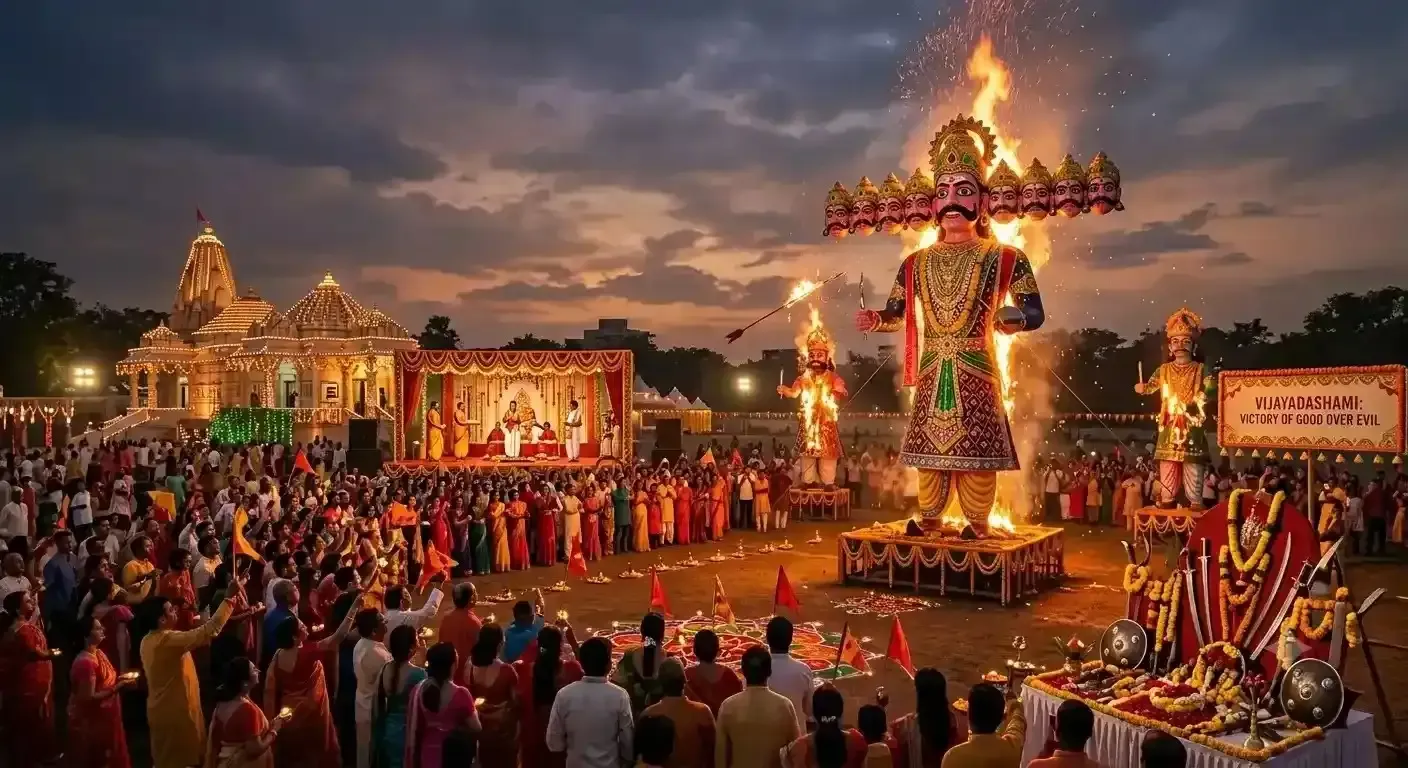
Explore Dussehra in Indian villages through temple rituals, Ramlila, folk music, traditional foods, village fairs and community celebrations, with 21 ideas, regional traditions from Kullu to Bastar, a one-day village plan and ways to preserve rural Hindu traditions this Vijayadashami.
Quick answer: Dussehra (Vijayadashami) 2026 is on Tuesday 20 October (Drik Panchang). Villages celebrate it with Gramadevata temple puja, Ramlila, Ravana Dahan or Goddess worship, village melas, folk music, Ayudha Puja and tool worship by farmers and artisans, Shami or Apta leaf exchange, and community meals. Customs differ by region, so follow your village temple and elders.
Dussehra, also known as Vijayadashami, is one of the most significant Hindu festivals, celebrating the victory of good over evil. Across India's villages, this festival brings families together, fills temple courtyards with devotion, brings traditional arts to life and creates opportunities for communities to celebrate their shared cultural heritage.
While cities may be known for grand processions and elaborate stage performances, village Dussehra celebrations often have a special charm. They may include worship at the local Gramadevata temple, folk songs, agricultural traditions, village fairs, community meals and rituals passed down through generations.
In 2026, Vijayadashami falls on Tuesday, 20 October, as listed by Incredible India and Drik Panchang. Local observances and auspicious timings should be confirmed with the regional panchang; see our Dussehra 2026 date and Vijay Muhurat guide.
Whether you live in an Indian village, grew up in a rural community or are an NRI Hindu looking to reconnect with your roots, these Dussehra celebration ideas can help you understand, enjoy and preserve India's rich village traditions.
What is the significance of Dussehra in Indian villages?
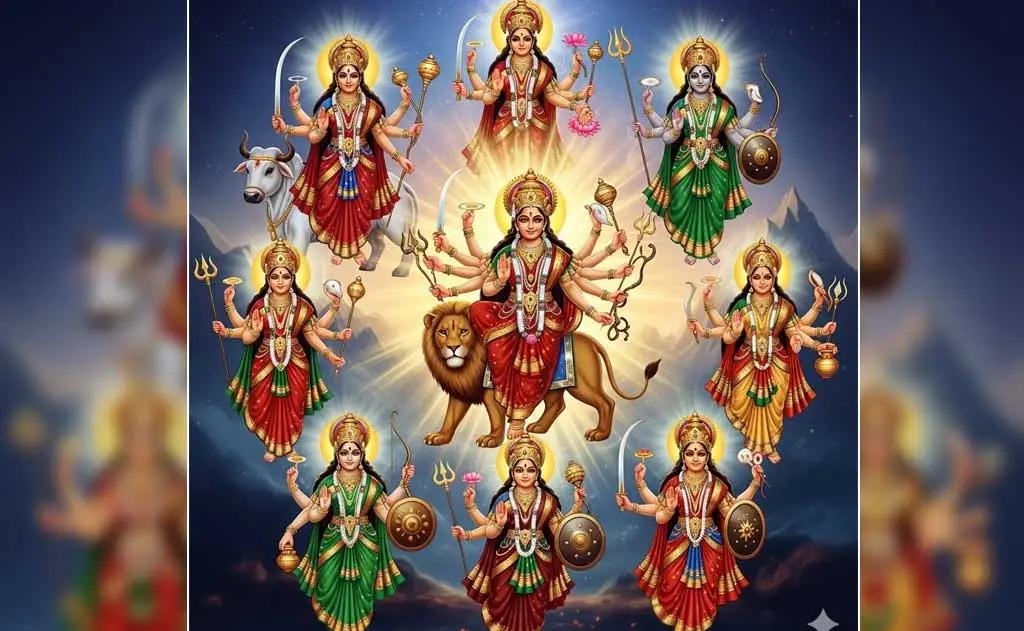
Dussehra represents the triumph of righteousness, courage and divine power over evil. In the Ramayana tradition, it commemorates Lord Rama's victory over Ravana. In traditions associated with Goddess Durga, Vijayadashami celebrates the victory of the Divine Mother over Mahishasura. Our explainer on Navratri, Durga Puja, Dussehra and Vijayadashami sets out how these names fit together.
The festival is celebrated in different ways across India. Some communities organise Ramlila performances and Ravana effigy ceremonies, while others focus on Goddess worship, temple processions, local deities and distinctive regional customs.
In rural communities, Dussehra can also be a time to express gratitude for the land, agricultural tools, livestock and the people whose work sustains village life.
The celebrations are not identical in every village. Customs vary by state, district, temple tradition, family practice and local history. This diversity is one of the most beautiful aspects of India's festival culture.
21 traditional Dussehra celebration ideas for Indian villages
1. Organise a grand village temple celebration
The local temple is often a natural gathering place during important Hindu festivals. Village residents can organise a special Dussehra celebration at the Gramadevata temple or another established village shrine. Possible activities include:
- Cleaning and decorating the temple premises.
- Arranging flowers, mango leaves and traditional decorations.
- Conducting puja according to the temple's customs.
- Organising devotional singing and bhajans.
- Offering prasadam to devotees.
- Inviting village elders to share the history of the temple.
In villages dedicated to Goddess Durga, Lakshmi, Saraswati, a village guardian deity or another local form of the Divine, the programme can reflect that temple's particular traditions.
Cultural idea: Create a small display describing the temple's history, annual festivals and traditional practices so younger generations can learn about their heritage.
2. Organise a traditional Ramlila performance
Ramlila is one of the best-known cultural traditions associated with Dussehra. It presents episodes from the Ramayana through drama, dialogue, music and costumes; read more in our guide to Ramlila, the living retelling of the Ramayana. A village can organise a simple performance in an open ground, school courtyard or community space, subject to local permissions. Possible scenes include:
- The birth and childhood of Lord Rama.
- Sita Swayamvara.
- Rama's exile.
- The meeting with Hanuman.
- The search for Goddess Sita.
- The battle between Rama and Ravana.
- The return of Rama and Sita to Ayodhya.
Children, students, local artists and experienced performers can participate. If a full performance is not practical, the village can present a short Ramayana storytelling session. The aim is to communicate the values of truth, duty, devotion, courage and compassion. For inspiration, see the month-long Ramnagar Ramlila of Varanasi.
3. Arrange a safe and symbolic Ravana Dahan
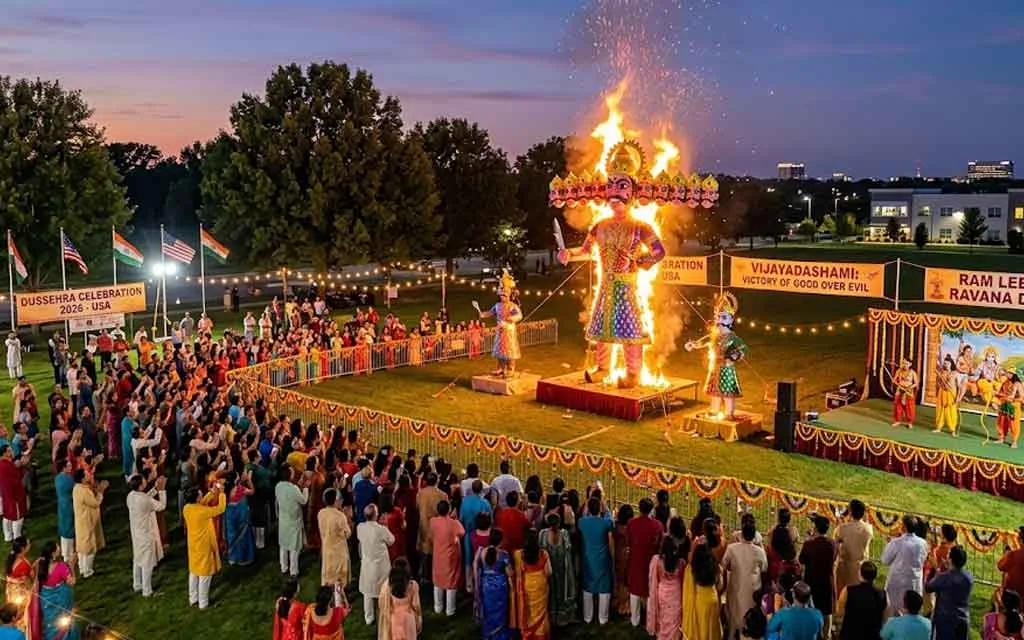
In communities that observe Ravana Dahan, the symbolic burning of Ravana's effigy represents the defeat of evil. Villagers can make a modest effigy from paper and other suitable materials, organise a short explanation of the tradition, and conduct the event in an authorised open area. For a safer and more environmentally responsible celebration:
- Obtain the required local permissions.
- Keep spectators at a safe distance.
- Use trained, authorised personnel for any permitted pyrotechnic activity.
- Avoid hazardous materials, plastic-filled effigies and uncontrolled fireworks.
- Consider a non-burning symbolic ceremony, such as removing ten paper symbols representing harmful qualities.
A particularly meaningful activity is to invite participants to identify ten qualities they want to overcome, such as anger, greed, jealousy, dishonesty, arrogance and hatred. This makes the festival a reminder that victory over evil begins with personal transformation. City-wise timings are in our Ravan Dahan 2026 guide.
4. Celebrate the village Goddess and Gramadevata traditions
Many rural communities maintain traditions dedicated to a local guardian deity or Gramadevata. Dussehra may coincide with special prayers or other observances, depending on local customs. Ideas for an appropriate celebration include:
- Traditional flower decorations.
- Devotional songs in the local language.
- Community participation in temple preparations.
- Storytelling about the village deity.
- Sharing prasadam.
- Recording oral histories from knowledgeable elders.
Do not assume every village performs the same ritual. The temple priest, community elders and local tradition should guide the programme.
5. Organise a village Dussehra mela
A village fair can bring together religious observance, local crafts, food, entertainment and small businesses. A community mela could feature:
- Handmade baskets, pottery and wooden crafts.
- Traditional textiles and locally produced goods.
- Children's games and cultural competitions.
- Folk music and dance.
- Regional vegetarian food stalls.
- Storytelling and puppet performances.
- Displays of traditional farming tools.
Provide clear pathways, drinking water, waste bins, first-aid access and safe spaces for children. Where possible, prioritise local artisans and small vendors so that festival spending benefits the village economy. The Kota Dussehra Mela in Rajasthan shows how big such a fair can grow.
6. Arrange folk music and traditional dance
Folk performances make village festivals lively while helping preserve local cultural identity. Depending on the region, communities may arrange traditional devotional singing, folk drumming, storytelling, dance or performances associated with Navaratri. Examples of regional forms include Garba and Dandiya Raas in Gujarat and regional devotional music and dance in southern and eastern India. A village programme can include:
- A folk-song competition.
- Traditional instrument demonstrations.
- Group devotional singing.
- A performance by local women's groups.
- A children's folk-dance presentation.
- An evening of regional storytelling.
Ask performers to explain the cultural meaning of their art so that the event becomes both entertaining and educational.
7. Celebrate Dussehra with agricultural traditions
Agriculture has a central place in village life. Dussehra can provide an opportunity for farming families to express gratitude and pray for prosperity. In Maharashtra, for example, farmers worship their agricultural tools on Dussehra, according to Maharashtra Tourism. Possible activities include:
- Cleaning and respectfully arranging farming tools.
- Offering prayers according to family tradition.
- Sharing knowledge about traditional crops and seeds.
- Displaying local agricultural products.
- Honouring experienced farmers.
- Organising a discussion about soil and water conservation.
Farmers can also explain how agricultural customs have changed over the years. These activities help children understand the relationship between food, nature, labour and cultural traditions.
8. Observe the tradition of Ayudha Puja where customary
In several regions, Ayudha Puja, the worship of tools and implements, is associated with Navaratri and Vijayadashami. Families, artisans, mechanics, farmers, shopkeepers and workers may worship the tools connected with their livelihoods according to local practice. Village residents could organise a small educational display showing traditional carpentry tools, agricultural implements, weaving equipment and other locally important objects. The message is simple: respect honest work and use our skills responsibly.
The timing and form of Ayudha Puja differ by region (Drik Panchang lists it on Tuesday 20 October 2026, and some families keep it on Maha Navami, 19 October), so it should not be presented as a universal ritual performed identically in every village. See our Ayudha Puja 2026 vidhi for tools, vehicles and books.
9. Keep the Shami tree or Apta leaf tradition
In Maharashtra, exchanging Shami or Apta leaves on Dussehra is associated with good wishes, prosperity and the legend of the Pandavas, who hid their weapons in a Shami tree during their exile (Maharashtra Tourism). Where this custom is observed, families can exchange leaves respectfully and offer one another wishes for happiness and success. A village environmental activity can accompany the tradition:
- Teach children to identify native trees.
- Explain the cultural significance of the Shami tree.
- Encourage protection of existing trees.
- Organise a native-tree awareness programme.
- Avoid damaging branches or stripping leaves excessively.
Never collect leaves from protected trees or places where collection is prohibited. The prayers are in our Ayudha, Vahana and Shami puja vidhi.
10. Hold a traditional village procession
Some villages organise processions featuring temple deities, devotional music, decorated vehicles or locally established ceremonial practices. A procession can be planned with the guidance of temple authorities and community elders. Include route planning, traffic coordination, first-aid arrangements, accessibility for older people and sufficient space for participants. If the village has a long-standing procession tradition, documenting its history can be a valuable cultural preservation project.
11. Organise a community annadanam or festive meal
Sharing food can be one of the most meaningful ways to celebrate Dussehra. A village community meal may include traditional dishes prepared according to local customs. Families can contribute ingredients, volunteers can help with cooking and serving, and organisers can ensure that everyone is treated with dignity. Consider:
- A vegetarian community meal.
- Food prepared by local women's self-help groups.
- Separate arrangements for people with dietary requirements.
- Clean drinking water and hygienic food handling.
- Reusable plates or suitable compostable alternatives.
- Distribution of prasadam according to temple practice.
The spirit of the meal should be service, gratitude and community unity.
12. Encourage women's participation in festival traditions
Women often play important roles in maintaining household rituals, devotional singing, food traditions, handicrafts and community celebrations. Village organisers can create opportunities for women to lead cultural activities, take part in planning and display traditional skills. Ideas include:
- Traditional rangoli competitions.
- Flower-decoration workshops.
- Devotional singing.
- Regional cooking demonstrations.
- Handloom and handicraft exhibitions.
- Storytelling sessions about women in the Ramayana and other Hindu traditions.
Ensure that participation is voluntary and that women have a meaningful role in decision-making. Our guide to Dussehra for women has prayers and ideas.
13. Organise children's Ramayana and cultural competitions
Dussehra is an opportunity to introduce children to India's epics and local heritage in an engaging way. Schools, temples and community groups can arrange:
- Ramayana storytelling.
- Drawing and painting competitions.
- Traditional dress presentations.
- Devotional song competitions.
- Quiz programmes about Hindu festivals.
- Short plays about truth and courage.
- Essay writing in regional languages.
Rather than focusing only on memorisation, encourage children to explain the values they learn from the stories. Ready-made material is in our Dussehra activities for kids and the read-aloud Dussehra story for kids.
14. Celebrate with traditional rangoli and village decorations
Decorating homes, temple entrances and community spaces creates a festive atmosphere. Families can prepare rangoli using traditional designs, flower petals or other locally appropriate materials. Village streets and gathering areas can feature reusable cloth decorations, handmade lanterns and traditional artwork. A friendly village competition can recognise creativity, regional motifs and environmentally responsible materials. Avoid blocking public roads, drains or emergency access routes.
15. Organise a traditional food festival
Every region of India has its own festive cuisine. A village Dussehra food festival can celebrate these culinary traditions. Depending on local customs, the menu may include sweets, savoury snacks, rice dishes, lentil preparations, seasonal vegetables and regional festive meals. For example, Maharashtrian families may prepare puran poli for festive occasions, while other regions have their own special dishes; see what India cooks for Dussehra.
Invite local cooks to demonstrate traditional recipes and explain their cultural background. A recipe booklet containing ingredients, preparation instructions, local names and family stories can preserve valuable culinary heritage.
16. Create a village heritage exhibition
Every village has stories worth preserving, and Dussehra is an excellent occasion to bring them together. A small exhibition could display:
- Photographs of older village festivals.
- Stories about the local temple.
- Traditional musical instruments.
- Agricultural implements.
- Handmade textiles and crafts.
- Oral histories from senior residents.
- Local-language devotional literature.
With permission, record short interviews with elders about how Dussehra was celebrated in their childhood. Label each item accurately and distinguish documented local history from religious stories and oral traditions.
17. Organise a bhajan sandhya or Harikatha programme
An evening of devotional singing or storytelling can bring people together in a calm and meaningful atmosphere. Depending on local tradition, the programme might feature bhajans dedicated to Lord Rama, Goddess Durga, Lord Hanuman or other deities. A Harikatha or similar storytelling performance can explain episodes from Hindu scriptures through music, narration and moral reflection. Invite knowledgeable performers and make the programme accessible to people of different ages; our Vijayadashami mantras and puja vidhi can open the evening.
18. Celebrate with eco-friendly festival practices
Traditional celebrations can be made more sustainable without losing their religious or cultural meaning. Villages can adopt practical measures such as:
- Using reusable decorations.
- Avoiding single-use plastics.
- Providing clearly marked waste collection points.
- Composting suitable food and flower waste.
- Protecting trees and local water bodies.
- Reducing unnecessary loud noise.
- Avoiding hazardous fireworks and uncontrolled fires.
- Cleaning public spaces after the festival.
A village-wide cleanliness drive before or after Dussehra can turn the message of renewal into a visible community achievement.
19. Honour village artisans and traditional occupations
Many rural crafts survive because a small number of families continue to practise them. Use the festival to recognise potters, weavers, carpenters, metalworkers, folk artists, musicians and other local craftspeople. A traditional crafts market can provide direct sales opportunities, and demonstrations can help children learn about the skills involved. Invite young people to interview artisans about their techniques, challenges and hopes for the future.
20. Include senior citizens and families living far away
Village traditions often survive through stories shared by grandparents and other elders. Organise a storytelling session where senior citizens describe past Dussehra celebrations, traditional foods, old folk songs and changes in village life. Families living in cities or abroad can take part through video calls, recorded greetings or contributions to community projects. A village cultural archive can preserve these stories for future generations, with the consent of everyone recorded.
21. Finish the festival with a community pledge
The deeper meaning of Dussehra can extend beyond a single day of festivities. At the end of the celebration, villagers can voluntarily take a simple pledge to promote:
- Honesty and responsibility.
- Respect for elders and children.
- Education for every child.
- Dignity for all community members.
- Protection of trees and water.
- Peaceful resolution of disagreements.
- Support for people in need.
A short pledge, followed by prayers or devotional singing, can help connect the festival's spiritual message with everyday life. Share it with relatives using our Dussehra 2026 wishes and messages.
How different regions celebrate Dussehra
India's Dussehra traditions vary significantly from region to region. These examples provide inspiration for village communities, but they should not be treated as practices followed by every village within a state.
Telangana and Andhra Pradesh
In Telangana, Vijayadashami follows the nine nights of Bathukamma and Navaratri, and Jammi (Shami) puja and the sighting of the Palapitta bird are much-loved customs; see our Dasara 2026 in Telangana guide. In Andhra Pradesh, the celebrations at Vijayawada's Kanaka Durga Temple on Indrakeeladri are particularly well known, and Proddatur in Kadapa district is also famous for its Dasara celebrations; see Dasara 2026 in Andhra Pradesh and Dasara at major temples. Village ideas inspired by these traditions include temple decorations, regional devotional songs, community processions and cultural programmes in Telugu.
Karnataka
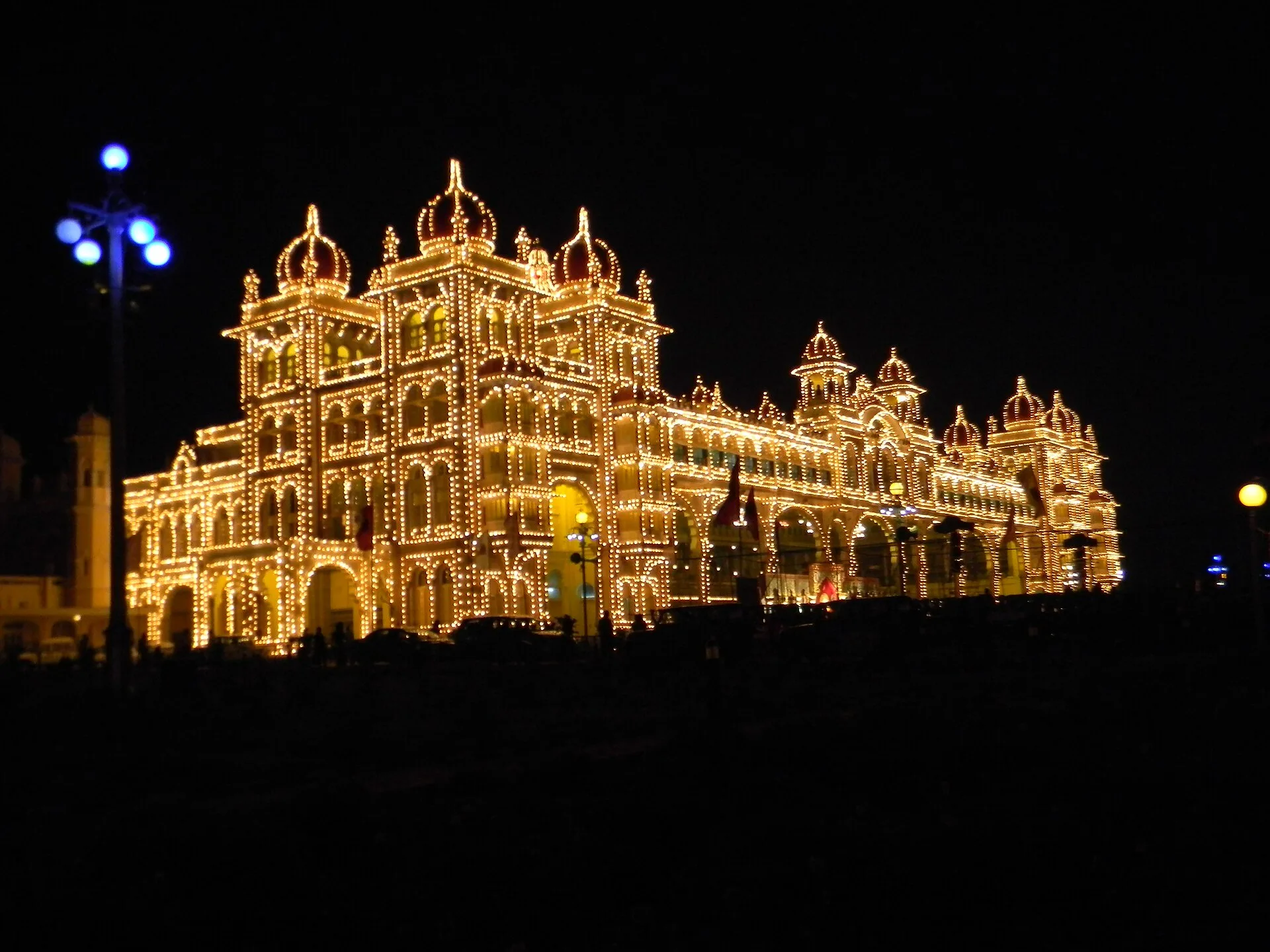
Mysuru is famous for its grand Dasara celebrations, which combine royal heritage, religious observance, cultural programmes and the Jamboo Savari procession; read the Mysuru Dasara 2026 news and the Karnataka district-wise Dasara guide. Village communities in Karnataka can draw inspiration from the region's folk arts, local temple traditions, traditional food and cultural storytelling. The exact practices of each community will depend on its own history and customs.
Maharashtra
Dussehra traditions in Maharashtra include the exchange of Apta or Shami leaves, the worship of tools and agricultural implements, and other local customs. Village celebrations can feature traditional food, folk music, local crafts and educational activities about the significance of the Shami tree.
Northern India
Many communities in northern India celebrate Dussehra through Ramlila performances and Ravana Dahan, from the Delhi Ramlilas to the neighbourhood effigies of Almora in Uttarakhand. Village organisers can arrange a Ramayana drama, a local fair, devotional music and children's cultural competitions, while following appropriate safety measures.
West Bengal and eastern India
In West Bengal, Vijayadashami marks the conclusion of Durga Puja, with Sindoor Khela and the immersion of the Goddess; in 2026, Drik Panchang lists Bengal Vijayadashami on Wednesday 21 October, a day after Dussehra elsewhere. Village communities can celebrate through devotional music, cultural performances, community gatherings and traditions connected with the worship of Goddess Durga, according to local practice.
Himachal Pradesh
Kullu Dussehra is known for its distinctive traditions, with village deities carried to Dhalpur Maidan to join Lord Raghunath. Villages elsewhere in Himachal Pradesh can preserve their own devotional music, traditional attire, crafts and local histories while respecting the customs specific to each community.
Central India
Some communities observe Dussehra traditions that differ considerably from the familiar Ravana Dahan. The best known is Bastar Dussehra in Chhattisgarh, a 75-day festival of Goddess Danteshwari. Before adopting a regional practice, organisers should learn about its cultural background and consult knowledgeable community members.
A simple one-day Dussehra celebration plan for a village
The following is a sample programme. Adjust the timings to the local panchang, temple schedule, climate, community needs and established customs.
| Suggested time | Activity |
|---|---|
| 7:00 AM | Temple and community-space preparations |
| 8:00 AM | Traditional puja and prayers |
| 9:30 AM | Children's cultural and drawing competitions |
| 11:00 AM | Village heritage and handicrafts exhibition |
| 12:30 PM | Community meal or annadanam |
| 2:30 PM | Folk songs, storytelling and cultural activities |
| 4:00 PM | Ramayana storytelling or Ramlila |
| 5:30 PM | Traditional procession or community gathering, if customary |
| 6:30 PM | Authorised symbolic Ravana Dahan or alternative ceremony |
| 7:00 PM | Bhajans, community pledge and closing prayers |
These times are illustrative, not prescribed auspicious timings. Confirm religious rituals with the local temple or panchang, and schedule outdoor activities around weather and safety requirements.
How to organise a low-budget Dussehra celebration in a village
A meaningful celebration does not need an expensive stage or elaborate decorations. A well-organised community programme can be created through volunteering, local participation and responsible spending.
- Step 1: Form a village festival committee. Include representatives from the temple, youth groups, women's groups, senior citizens and local organisers.
- Step 2: Prepare a realistic budget. Separate essential expenses such as sanitation, water, first aid and permissions from optional spending on decorations and entertainment.
- Step 3: Use local talent. Invite village singers, teachers, students, storytellers and artists to take part voluntarily if they wish.
- Step 4: Support local businesses. Source flowers, food ingredients, decorations and crafts from local vendors where practical.
- Step 5: Plan safety and accessibility. Keep emergency routes clear, arrange crowd management, provide seating for elderly visitors and ensure children are supervised.
- Step 6: Document the celebration. With permission, collect photographs, short videos and oral histories for the village's cultural archive.
- Step 7: Review the event. After the festival, discuss what worked well and how the next celebration can be improved.
Why village Dussehra celebrations matter for future generations
Village festivals are not only religious events. They can also help preserve languages, oral histories, regional arts, local crafts, traditional recipes and community relationships. Children who take part in a Ramlila performance may learn about the Ramayana. Young people who interview elders may discover customs that are no longer widely practised. Local artisans who display their work may find new customers. These experiences help ensure that traditions are understood rather than merely observed.
For Hindu families living abroad, village Dussehra stories can also provide a valuable connection to ancestral places and regional heritage. Parents can share photographs, explain the significance of local customs and organise small cultural activities in their own communities; our Dussehra 2026 guide for the USA, UK, Canada and Australia lists temples abroad. The goal is not to make every village celebration identical. It is to protect the diversity that makes India's cultural traditions meaningful.
Keep the spirit of village Dussehra alive
Dussehra in Indian villages is a celebration of devotion, tradition, community and the enduring message that good should prevail over evil. Whether a village organises a grand Ramlila, a simple temple puja, a traditional food gathering, a folk music programme or an exhibition of local heritage, the most important element is the spirit of participation and respect for local customs.
This Vijayadashami, families, young people, temple committees and community organisations can work together to protect traditional arts, honour local history and pass meaningful cultural practices on to future generations. Jai Shri Ram! Jai Mata Di! Shubha Vijayadashami!
Frequently asked questions
How do Indian villages celebrate Dussehra?
Village celebrations may include temple worship, prayers to local deities, Ramlila performances, folk music, community meals, village fairs, agricultural traditions and processions. The exact customs differ by region and community.
Why is Dussehra important in rural India?
Dussehra represents the victory of good over evil. In rural communities it is also a time to preserve local traditions, express gratitude, strengthen community bonds and honour agriculture and traditional occupations.
Do all villages burn Ravana's effigy?
No. Ravana Dahan is an important tradition in many communities, particularly in northern India, but it is not universal. Other regions celebrate Vijayadashami through Goddess worship, temple customs, local deity traditions and festivals such as Kullu and Bastar Dussehra.
How can villages celebrate Dussehra in an eco-friendly way?
Use reusable decorations, cut plastic waste, compost suitable organic waste, protect trees and water bodies, avoid hazardous fireworks and organise a community clean-up.
How can NRIs keep village Dussehra traditions alive?
Families abroad can share village photographs, arrange online storytelling with grandparents, cook regional festive dishes, teach children local songs and support cultural projects in their ancestral villages.
When is Dussehra in 2026?
Vijayadashami is on Tuesday 20 October 2026 (Drik Panchang; also listed by Incredible India). In Bengal, Vijayadashami is on Wednesday 21 October. Confirm local puja timings with your regional panchang.
Editor's note (10 October 2026)
Dates follow Drik Panchang for India. Regional details were checked against Incredible India and Maharashtra Tourism; village customs vary widely, so treat these as ideas rather than rules and follow your local temple and elders. Any Ravana Dahan or fireworks need local permission.
Related guides
You might also like
Navaratri and Vijayadashami 2026: Best Temples and Grand Celebrations in India, USA, UK, Canada and Australia
Navratri vs Durga Puja vs Dussehra vs Dasara vs Vijayadashami: The Differences Explained (2026)
Dussehra Essay for Students 2026: 100, 200 and 500 Words, 10 Lines and a Speech