Dussehra Story for Kids: Rama and Ravana, Durga and Mahishasura (Read-Aloud Versions)
Two gentle, read-aloud Dussehra stories for children aged 5 to 11: Rama, Sita, Lakshmana, Hanuman and Ravana, and Goddess Durga and Mahishasura, as traditionally told. Includes what the stories teach, five discussion questions for parents and teachers, and a 150-word bedtime version.
Two gentle, read-aloud Dussehra stories for children aged 5 to 11: Rama, Sita, Lakshmana, Hanuman and Ravana, and Goddess Durga and Mahishasura, as traditionally told. Includes what the stories teach, five discussion questions for parents and teachers, and a 150-word bedtime version.
Quick answer: Dussehra has two famous stories. In the first, Prince Rama rescues Sita from the ten-headed king Ravana with help from his brother Lakshmana and the brave monkey hero Hanuman. In the second, Goddess Durga defeats the buffalo demon Mahishasura after nine nights of battle. As traditionally told, both victories are celebrated on Vijayadashami, which falls on Tuesday 20 October 2026 in India (Drik Panchang). Both stories teach courage, truth and teamwork.
This page gives you two short stories written for children aged roughly 5 to 11, in simple language you can read aloud in about five minutes each. They are retold gently, without frightening detail, as the stories are told in the Ramayana and Devi Mahatmya traditions. These are retellings for children, not translations of scripture. After the stories you will find what they teach, five discussion questions and a 150-word bedtime version.
Story 1: Rama, Sita and the Ten-Headed King
Read-aloud time: about 5 minutes.
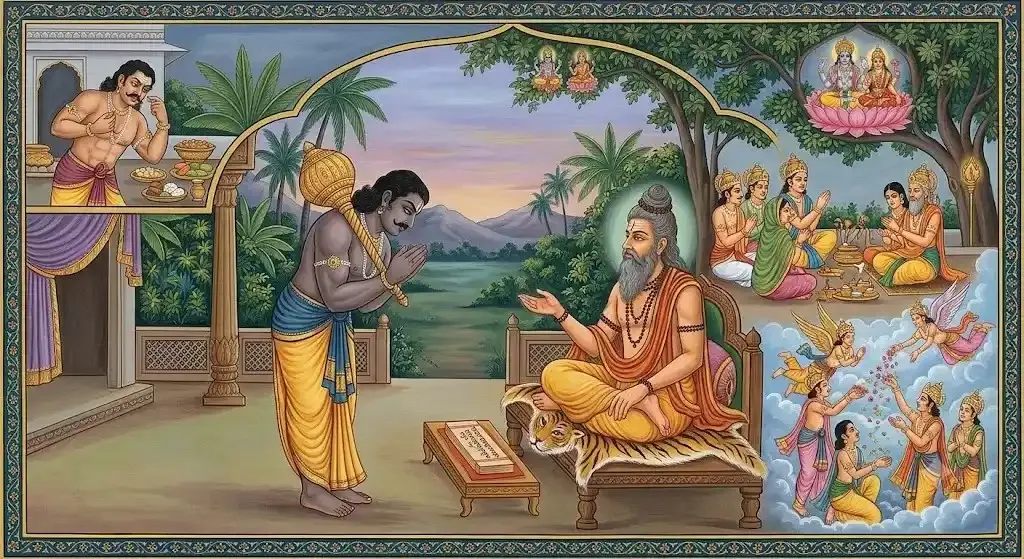
Long ago, in the beautiful city of Ayodhya, there lived a kind and brave prince called Rama. Everyone loved him. His wife Sita was gentle and wise, and his brother Lakshmana was his best friend.
One day, Rama's father, King Dasharatha, had to keep an old promise he had made to Queen Kaikeyi. Because of that promise, Rama had to leave the palace and live in the forest for fourteen years. Rama did not get angry. He said, "A promise is a promise." Sita and Lakshmana chose to go with him.
In the forest they lived simply, in a little hut among the trees. One day, a shining golden deer ran past. Sita had never seen anything so lovely. Rama went to catch it, and later Lakshmana went to look for Rama. But the deer was a trick. While Sita was alone, Ravana, the powerful king of Lanka, came in disguise and carried her away in his flying chariot. Ravana was very clever and very strong, and the stories say he had ten heads. But he was proud and did not listen to anyone.
Rama and Lakshmana searched everywhere. On the way they made new friends: Sugriva, king of the monkeys, and his loyal helper Hanuman. Hanuman was strong, fast and full of devotion to Rama.
Hanuman made a giant leap across the ocean to Lanka. There he found Sita sitting sadly in a garden. He gave her Rama's ring and said, "Do not worry. Rama is coming." Sita smiled for the first time in many days.
But how could an army cross the wide ocean? The monkeys and bears worked together. They carried rocks and stones, and, as the story is told, the stones floated on the water. Little by little, they built a bridge all the way to Lanka. Even a tiny squirrel helped by rolling in the sand and shaking it onto the bridge, and Rama gently thanked it.
Before the battle, Rama gave Ravana a chance to return Sita peacefully. Ravana refused. Ravana's own brother, Vibhishana, told him it was wrong, but Ravana would not listen, so Vibhishana joined Rama.
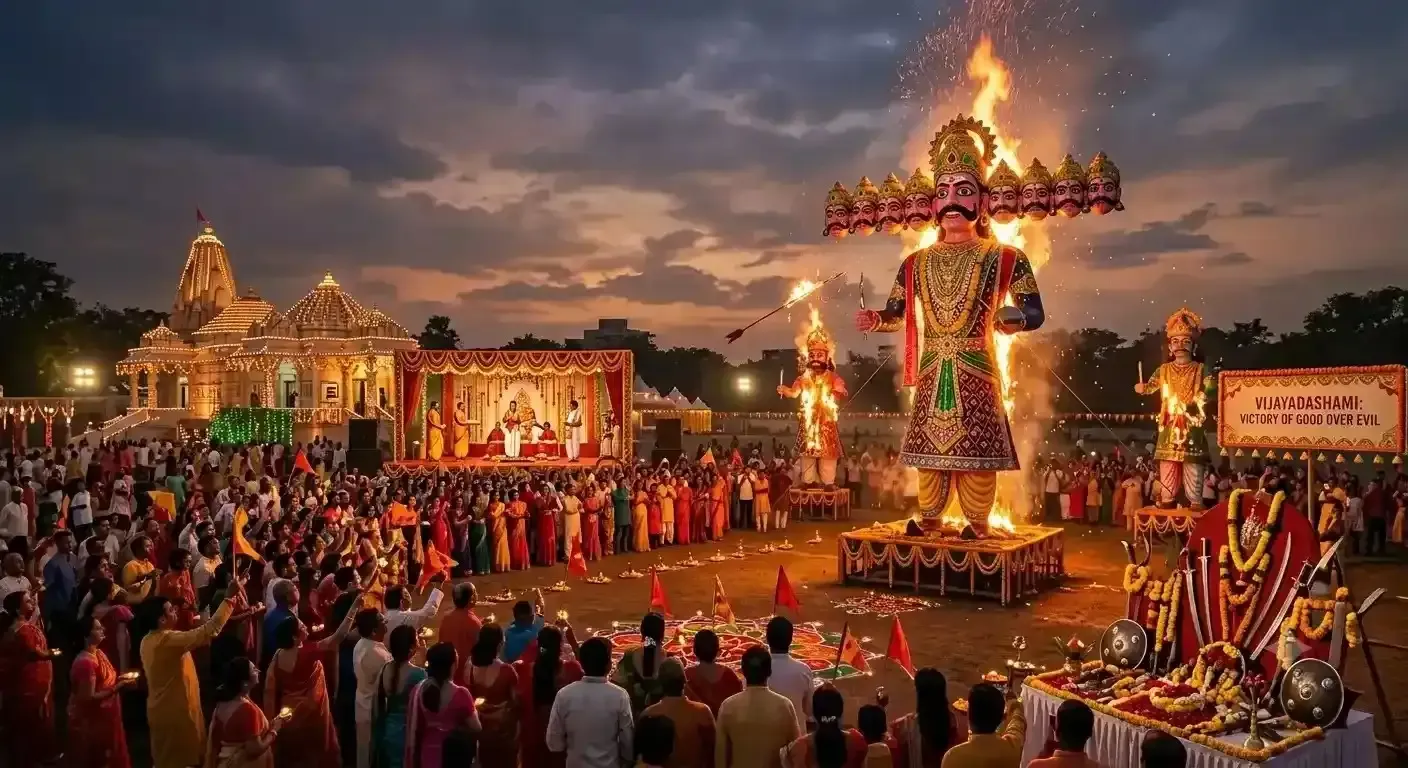
The battle was long and hard. Ravana's army was huge, but Rama's friends never gave up. In the end, Rama defeated Ravana. As traditionally told, this victory is remembered on Vijayadashami, the "tenth day of victory", which is why many people burn big figures of Ravana on Dussehra.
Rama, Sita and Lakshmana returned home to Ayodhya with Hanuman. The people were overjoyed and lit rows of little lamps to welcome them. Many families connect that happy homecoming with Diwali, which comes about three weeks after Dussehra (Sunday 8 November in 2026).
For a longer version, read The Ramayana simplified: the story of Lord Rama that leads to Dussehra.
Story 2: Goddess Durga and the Buffalo Demon
Read-aloud time: about 4 minutes.
Once upon a time, there was a demon called Mahishasura. He could change his shape, and he liked to become a huge, stamping buffalo. As the story is told, he had won a special blessing that made it very hard for the gods to defeat him. So he became proud and greedy. He chased the gods out of their heavenly home and made everyone unhappy.
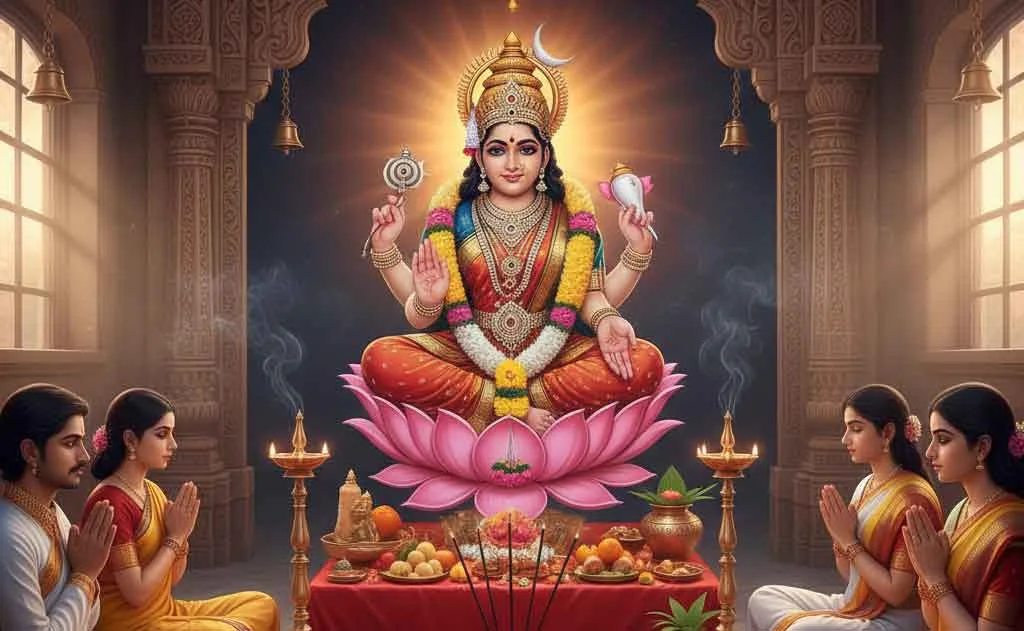
The gods met together. They were worried, but they did not give up. They thought very hard, and they joined all their powers into one great, shining light. From that light came a goddess, bright as a thousand suns. Her name was Durga.
Each god gave Durga a gift. Shiva gave her his trident. Vishnu gave her his spinning discus. Others gave her a bow and arrows, a sword, a shield and a conch shell. The mountain king gave her a mighty lion to ride. Durga had many arms, so she could hold all the gifts at once.
Durga rode out to meet Mahishasura. He laughed, because he did not believe anyone could beat him. But Durga was calm and brave. As traditionally told, the battle went on for nine nights. Mahishasura kept changing shape, from a buffalo to a lion to an elephant, trying to trick her. Durga was never fooled.
On the tenth day, Durga defeated Mahishasura, and peace returned to the world. The gods praised her and sang songs to thank her.
That is why, as traditionally told, Hindus pray to Goddess Durga during the nine nights of Navratri (Sunday 11 to Monday 19 October 2026 in India) and celebrate her victory on the tenth day. You can read a fuller version in The story of Goddess Durga and Mahishasura.
What does this story teach us?
- Courage. Rama walked into a hard battle, and Durga faced a demon nobody else could beat. Being brave means doing the right thing even when you feel scared.
- Truth and keeping promises. Rama left his home because a promise had to be kept. Being honest matters, even when it is hard.
- Teamwork. The monkeys and bears built a bridge together, and the gods joined their powers to make Durga. Big problems are solved when we work together, and even small helpers, like the squirrel, count.
- Respect for women. Ravana's biggest mistake was taking Sita away without her permission. Durga shows that women are strong. Everyone deserves respect and safety.
- Not giving up. The search for Sita was long, and Durga's battle took nine nights. Good things often take patience.
- Pride can trip us up. Ravana and Mahishasura were powerful, but their pride stopped them from listening. Being clever is not the same as being good.
A nice way to explain the burning of Ravana to children is that it is a reminder to say goodbye to a bad habit. Our Dussehra activities for kids: crafts and quiz page has a kindness challenge built on this idea.
5 discussion questions for parents and teachers
- Rama could have stayed in the palace. Why do you think he kept his father's promise? Have you ever kept a promise that was hard to keep?
- Hanuman was strong, but he used his strength to help others. What is something you are good at, and how could you use it to help someone?
- The gods could not win alone, but together they made Durga. Can you think of a time when working as a team helped you?
- Vibhishana told his brother Ravana that he was doing something wrong. Is it easy to tell a friend or family member they are making a mistake? How could you do it kindly?
- If you could burn one bad habit like Ravana, which one would you choose, and what good habit would you put in its place?
Bedtime version (150 words)
Long ago, kind Prince Rama lived in the forest with his wife Sita and his brother Lakshmana. One day, proud King Ravana, who had ten heads, took Sita far away to his island of Lanka. Rama was very sad, but he did not give up, and he did not stop looking. His brave friend Hanuman leapt across the sea and found Sita. The monkeys and bears built a bridge of stones, and even a little squirrel helped. Rama won the battle and brought Sita home, and everyone lit lamps to welcome them.
Far away, in another story, the gods joined their powers to make Goddess Durga. Riding her big lion, she was calm, kind and very brave. For nine nights she fought the buffalo demon Mahishasura, and on the tenth day she won. Now, every Dussehra, we remember: be brave, be kind, help each other, and goodnight.
Dussehra 2026 dates for families
| Day | Date in India (Drik Panchang) |
|---|---|
| Navratri begins | Sunday 11 October 2026 |
| Saddula Bathukamma (Telangana) | Sunday 18 October 2026 |
| Durga Ashtami and Maha Navami | Monday 19 October 2026 |
| Dussehra / Vijayadashami | Tuesday 20 October 2026 |
Outside India, dates can differ by a day; for example, Drik Panchang lists Durga Ashtami on 18 October in the USA, Canada and the UK. Check your local temple. For muhurat, rituals and celebrations around the world, see the Dussehra / Vijayadashami 2026 guide.
Tips for NRI parents telling these stories abroad
- Read the story a few days before Dussehra so children recognise it at the temple, Ramlila or school assembly.
- Keep it gentle. Young children do not need battle details; focus on Hanuman's leap, the floating bridge and Durga's lion.
- If classmates ask, a simple line works: "Dussehra is a Hindu festival about good winning over bad."
- For age-by-age tips, see Explaining Navratri and Dussehra to children: a parent's guide.
Also read: Diwali stories for kids, one for each night.
Frequently asked questions
What is the Dussehra story for kids in short?
Dussehra celebrates good winning over bad. In one story, Prince Rama, with Lakshmana, Hanuman and an army of monkeys and bears, rescues Sita from the ten-headed king Ravana. In the other, Goddess Durga, made from the powers of all the gods, defeats the buffalo demon Mahishasura. As traditionally told, both victories are remembered on Vijayadashami, the tenth day.
Which story is told on Dussehra, Rama or Durga?
Both. In North and West India, Dussehra is mostly linked with Rama's victory over Ravana, with Ramlila plays and Ravana effigies. In Bengal, Odisha, Assam and many other places, Navratri and Vijayadashami are mainly about Goddess Durga. Many families simply tell children both stories.
At what age can children hear the Ramayana story?
Children as young as four or five enjoy a simple version focused on friendship, courage and Hanuman's adventures. Add more detail as they grow.
Is the Dussehra story true?
For many Hindus, Rama and Durga are deeply real and worshipped with love. The stories come from the Ramayana tradition and the Devi Mahatmya tradition, and families explain them in different ways. A simple, honest answer for children is: this is a sacred story our family loves, and it teaches us how to be brave and good.
When is Dussehra 2026?
Dussehra (Vijayadashami) is on Tuesday 20 October 2026 in India, after Navratri from Sunday 11 to Monday 19 October (Drik Panchang). Families abroad should check their local temple calendar, as the date can differ slightly by country.
Editor's note (8 October 2026)
We wrote these read-aloud versions in October 2026 for children aged roughly 5 to 11. They are simplified retellings, as the stories are told in the Ramayana and Devi Mahatmya traditions, not translations of scripture, and details vary between regions and retellings. The link of Rama's victory with Vijayadashami and Durga's nine-night battle are given as traditionally told. Dates follow Drik Panchang for India.
Related guides
You might also like
Navratri Stories for Kids: One Story Every Night for the 9 Forms of Durga (2026)
Diwali Stories for Kids: One Story Every Night for the 5 Days of Diwali (2026)
Ten Heads of Ravana: Meaning, Stories and Interpretations Explained