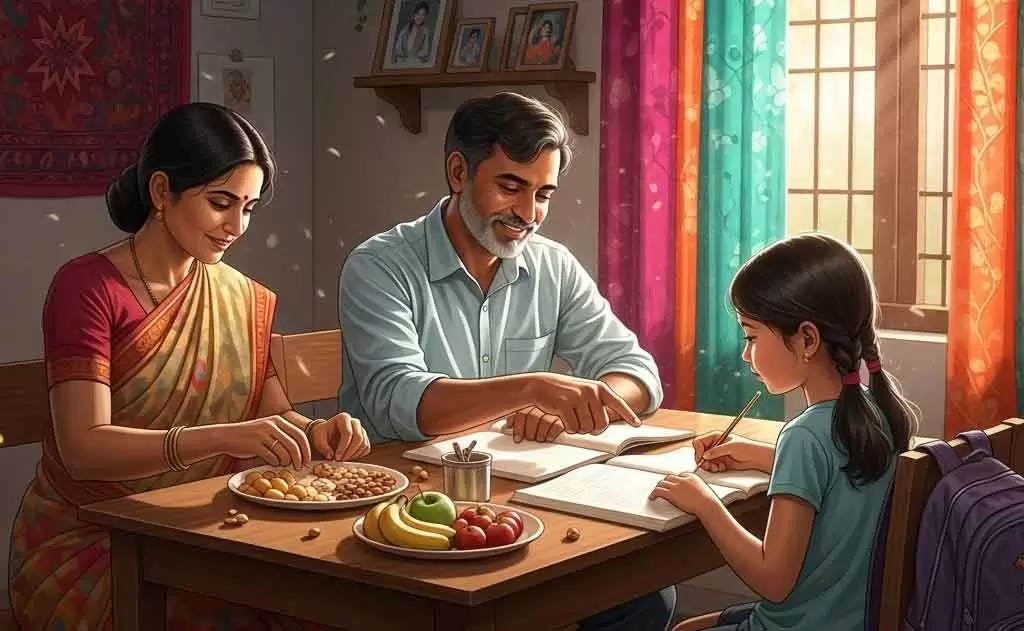
Diwali Stories for Kids: One Story Every Night for the 5 Days of Diwali (2026)
One gentle story for each night of Diwali 2026: Dhanvantari and the Yama Deepam on Dhanteras, Krishna and Satyabhama on Naraka Chaturdashi, Rama's return and Lakshmi on Diwali night, Govardhan hill, and Yamuna and Yama on Bhai Dooj. Each comes with a simple lesson, a one-line activity and a 5-day kids challenge.
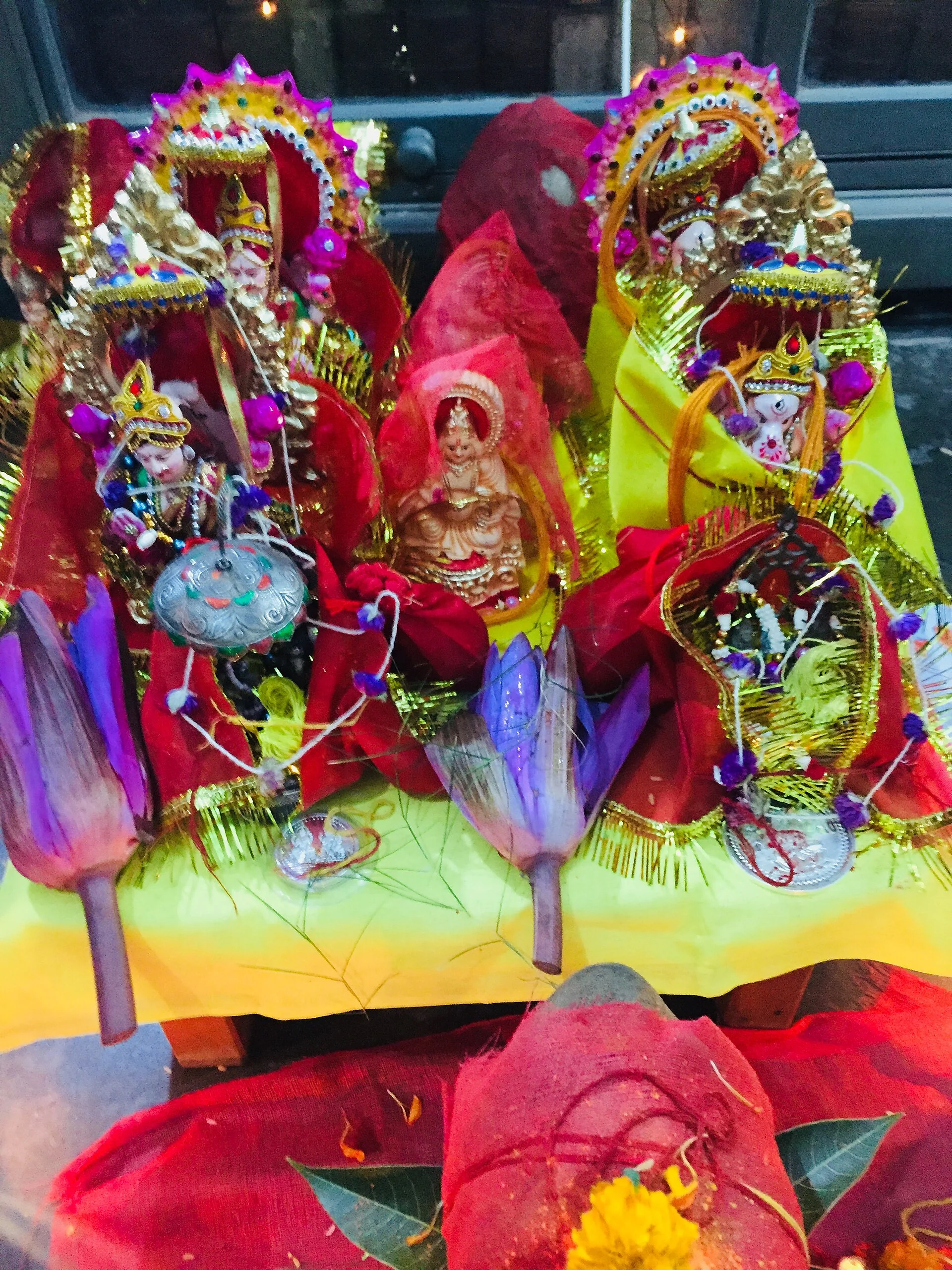
One gentle story for each night of Diwali 2026: Dhanvantari and the Yama Deepam on Dhanteras, Krishna and Satyabhama on Naraka Chaturdashi, Rama's return and Lakshmi on Diwali night, Govardhan hill, and Yamuna and Yama on Bhai Dooj. Each comes with a simple lesson, a one-line activity and a 5-day kids challenge.
Quick answer: Diwali is a five-day festival, and each day has its own story. In 2026 the festival runs in India from Dhanteras on Friday 6 November to Bhai Dooj on Wednesday 11 November, with Diwali and Lakshmi Puja on Sunday 8 November (Drik Panchang). Below are five short read-aloud stories, one for each night, for children aged about 5 to 11, each with a simple lesson and a one-line activity, plus a 5-day kids challenge.
Every story is retold gently, as traditionally told, not translated from scripture. If a grandparent tells it differently, that is part of the fun: ask them for their version too.
How to use these stories
- Read one story each evening, ideally after lighting the family lamp (with a grown-up).
- Ask your child to say the lesson in their own words, then try the one-line activity.
- Tick off each night in the 5-day Diwali kids challenge table below.
- Dates for every day are on the Diwali 2026 5-day calendar at a glance.
Night 1: Dhanvantari and the Pot of Amrit
Dhanteras: Friday 6 November 2026 (India, USA, Canada and UK)
Long, long ago, the gods and the asuras wanted amrit, the nectar that keeps you strong and well. The only place to find it was deep inside the great ocean of milk. So they made a deal: they would churn the ocean together.
They used the huge mountain Mandara as a churning stick and the serpent Vasuki as a rope. The gods pulled one end and the asuras pulled the other. Back and forth, back and forth, for a very long time. When the mountain began to sink, Lord Vishnu took the form of a giant turtle and held it up on his back.
As they churned, wonderful things came out of the ocean one by one. And then, as traditionally told, a shining figure rose from the waves holding a pot. It was Dhanvantari, the healer of the gods, carrying the pot of amrit. Families remember him on Dhanteras as the god of medicine and good health.
On Dhanteras evening many families also light one special lamp outside the house, facing south. It is called the Yama Deepam, a lamp for Yama, and people light it praying that everyone in the family stays safe and healthy.
What this story teaches (HinduTone's simple lesson): Good health is a treasure, and hard work done together brings good things.
Tonight's activity: Help a grown-up place the Yama Deepam outside (an LED tealight is fine), and say one thing you do to keep your body healthy.
Grown-ups' guide to this day: Dhanteras 2026: date, puja and Yama Deepam
Night 2: Krishna, Satyabhama and Narakasura
Naraka Chaturdashi: Sunday 8 November 2026 morning in India (Saturday 7 November in the USA, Canada and UK)
Once there was a powerful king called Narakasura. He grew proud and greedy. He bothered the gods, took things that were not his, and locked up thousands of people in his fortress so they could never go home.
Everyone was frightened, so they asked Lord Krishna for help. Krishna set off on his eagle, Garuda, and his brave wife Satyabhama went with him. In many tellings, especially in South India, Satyabhama herself plays the most important part in the battle.
Krishna and Satyabhama worked as a team. They got past the walls and the guards, and in the end Narakasura was defeated. The fortress gates swung open, and all the captive people walked out into the sunlight, free at last.
As traditionally told, before the end Narakasura understood his mistakes and asked that people remember the day with lights and joy. That is why, on Naraka Chaturdashi, families wake before sunrise, have a special oil bath and light lamps.
What this story teaches (HinduTone's simple lesson): Being brave and working as a team can set others free. And it is never too late to say sorry.
Tonight's activity: Wake up a little early for a warm bath with a grown-up, then help someone in your family with one small job.
Grown-ups' guide to this day: Naraka Chaturdashi 2026: Choti Diwali and Abhyanga Snanam
Night 3: Rama Comes Home, and Lakshmi Rises from the Ocean
Diwali and Lakshmi Puja: Sunday 8 November 2026 evening (India, USA, Canada and UK)
Prince Rama had lived in the forest for fourteen long years, together with his wife Sita and his brother Lakshmana. They had faced many dangers, and with the help of Hanuman and many friends they had won a great battle against the demon king Ravana.
At last, it was time to go home to Ayodhya. The people of Ayodhya were so happy that they cleaned every street and every house. When night came and the sky was dark, because it was a no-moon night, they lit rows and rows of little clay lamps. The whole city sparkled so that Rama could find his way home.
That is one reason we light diyas on Diwali: Deepavali means a row of lamps.
There is another Diwali story too. Remember the churning of the ocean of milk? In many tellings, Goddess Lakshmi also rose from that ocean, seated on a lotus, glowing with kindness. She chose Lord Vishnu, and she became the goddess of good fortune and plenty. On Diwali evening, families clean their homes, draw rangoli and do Lakshmi Puja to welcome her in.
What this story teaches (HinduTone's simple lesson): Light chases away darkness, and a clean, kind and welcoming home is the best way to celebrate.
Tonight's activity: Help draw a small rangoli at the door, and decide which window your family's lamp will shine from.
Grown-ups' guide to this day: Lakshmi Puja 2026: date and meaning
Night 4: Krishna Lifts Govardhan Hill
Govardhan Puja: Tuesday 10 November 2026 in India (Monday 9 November in the USA, Canada and UK)
In the village of Vrindavan, the cowherd families used to make offerings to Indra, the god of rain, every year. Young Krishna asked them: why not thank Govardhan hill instead? The hill gave their cows grass to eat and the village fresh water.
The villagers agreed. But Indra was upset and sent huge storms. Rain poured down, the wind howled, and the river began to rise.
Krishna walked calmly to Govardhan hill and lifted the whole hill, as traditionally told, on just one little finger, like a giant umbrella. All the families, cows and calves came underneath and stayed safe and dry for seven days.
Finally Indra understood that he had been proud. He stopped the rain and bowed to Krishna. Today, on Govardhan Puja, many families make a little hill of food called Annakut, which means mountain of food, and give thanks for nature.
What this story teaches (HinduTone's simple lesson): Be grateful to nature, and protect the people who need shelter.
Tonight's activity: Make a tiny Govardhan hill out of play dough or a heap of rice, and put toy animals safely underneath.
Grown-ups' guide to this day: Govardhan Puja and Annakut 2026
Night 5: Yamuna Welcomes Her Brother Yama
Bhai Dooj: Wednesday 11 November 2026 in India (Tuesday 10 November in the USA, Canada and UK)
Yama and Yamuna were brother and sister. Yama was very busy, because his job was very important, and he did not visit his sister for a long time. Yamuna missed him and kept inviting him.
One day, two days after the new moon of Diwali, Yama finally came. Yamuna was overjoyed. She welcomed him at the door, put a tilak on his forehead, did a little aarti and cooked all his favourite food.
Yama was so touched that he asked her to choose a gift. Yamuna said, as traditionally told: every year on this day, let brothers visit their sisters, and let them be blessed and protected.
That is why on Bhai Dooj, sisters put a tilak on their brothers and pray for them, and brothers promise to care for their sisters. In Maharashtra it is called Bhau Beej, and many families have their own name for it.
What this story teaches (HinduTone's simple lesson): Family love grows when we make time for each other.
Tonight's activity: Make a small card for a brother, sister, cousin or friend, and tell them one thing you like about them.
Grown-ups' guide to this day: Bhai Dooj 2026: date, story and tika vidhi
The 5-day Diwali kids challenge
Print this or copy it onto paper. Tick each box when it is done. Dates are for India; abroad, use your local temple's dates (see the FAQ).
| Night | Date (India, 2026) | Story | Challenge | Done? |
|---|---|---|---|---|
| 1 | Fri 6 Nov | Dhanvantari and the amrit | Name one healthy habit and help place the Yama Deepam | |
| 2 | Sun 8 Nov (morning) | Krishna, Satyabhama and Narakasura | Early bath, then help with one job | |
| 3 | Sun 8 Nov (evening) | Rama's return and Lakshmi | Draw a small rangoli at the door | |
| 4 | Tue 10 Nov | Govardhan hill | Build a mini Govardhan and say thank you to nature | |
| 5 | Wed 11 Nov | Yamuna and Yama | Make a card for a sibling, cousin or friend |
Need more ideas for the free evening on Saturday 7 November? Try the crafts and the 15-question quiz in Diwali activities for kids: crafts and quiz.
Lakshmi Puja time for families
If your child will join the family Lakshmi Puja on Sunday 8 November, the evening muhurat for New Delhi is 5:54 PM to 7:50 PM local time (Drik Panchang). Calculated times (HinduTone calculator, Drik method) are 6:28 PM to 8:28 PM for Mumbai and 6:08 PM to 8:09 PM for Hyderabad. Abroad, use your own city's local times: for example, Drik Panchang gives 5:04 PM to 6:52 PM for New York City and 4:35 PM to 6:12 PM for London. Never convert India's times to another country.
All cities are listed on the Diwali 2026 date and Lakshmi Puja muhurat page, and the simple steps are in the Lakshmi Puja vidhi 2026 step-by-step guide.
Safety first: lamps and crackers
Diyas and crackers are for grown-ups to light. Children should never light a lamp, candle or cracker on their own. Keep diyas away from curtains, rangoli powder and loose clothing, and keep a bucket of water or sand nearby when crackers are used. Young children can enjoy LED diyas and watch crackers from a safe distance with an adult. Read more in Diwali cracker safety precautions and eco-friendly, cracker-free Diwali ideas for families.
Tips for parents (in India and abroad)
- Keep it short. Let children ask questions afterwards rather than adding more detail.
- Before each new story, ask them to retell yesterday's. By Bhai Dooj they will know all five.
- Go gently with the battle story on Night 2: focus on teamwork and freedom.
- Abroad, Naraka Chaturdashi (Saturday 7 November) and Diwali (Sunday 8 November) make a relaxed weekend; Govardhan and Bhai Dooj fall on school nights, so read those earlier in the evening.
- Pair the stories with food: a sweet after Night 3, an Annakut-style plate on Night 4.
- Liked this format? We also have Navratri stories for kids: nine nights, nine forms of Durga.
Frequently asked questions
What are the five days of Diwali in 2026?
In India, per Drik Panchang: Dhanteras on Friday 6 November, Naraka Chaturdashi and Diwali (Lakshmi Puja) together on Sunday 8 November, Govardhan Puja on Tuesday 10 November and Bhai Dooj on Wednesday 11 November. Because two observances share Sunday, our five story nights run from Friday 6 to Wednesday 11 November, with Saturday 7 November free for crafts.
Are the dates different in the USA, Canada and the UK?
Yes, slightly. Drik Panchang lists Naraka Chaturdashi on Saturday 7 November, Diwali on Sunday 8 November, Govardhan Puja on Monday 9 November and Bhai Dooj on Tuesday 10 November for the USA, Canada and the UK. Dhanteras is Friday 6 November there too. Match the story nights to your local temple's calendar.
Is the Narakasura story too scary for young children?
It does not have to be. Our version leaves out the fighting details and focuses on bravery, teamwork and freeing people who were trapped. For a very young child, read just the first and last paragraphs.
Are these stories from scripture?
They are simplified retellings as traditionally told in families and temples, drawing on the Ramayana, the Bhagavata and other Puranic traditions. Details differ from region to region, and the lessons are HinduTone's own simple lessons, not quotations from scripture.
Which age group are these stories for?
They are written for children of about 5 to 11. Each story takes two or three minutes to read aloud. Older children can read them to younger siblings, which is a lovely Bhai Dooj tradition in itself.
Editor's note (8 October 2026)
We wrote these five stories for children aged roughly 5 to 11. They are simplified retellings as traditionally told; details vary between regions and families. The lessons are HinduTone's simple lessons. Festival dates follow Drik Panchang for India and for the USA, Canada and the UK; muhurat times marked as calculated come from the HinduTone calculator (Drik method) and should be confirmed for your city.
Related guides
- Diwali / Deepavali 2026: complete 5-day guide
- Diwali activities for kids: crafts and quiz
- Story of Narakasura and Krishna: the origin of Naraka Chaturdashi
- The story of Goddess Lakshmi's birth during Diwali
- How to celebrate Diwali at home in 2026: a day-by-day plan
- Dussehra story for kids: Rama and Ravana, Durga and Mahishasura
You might also like
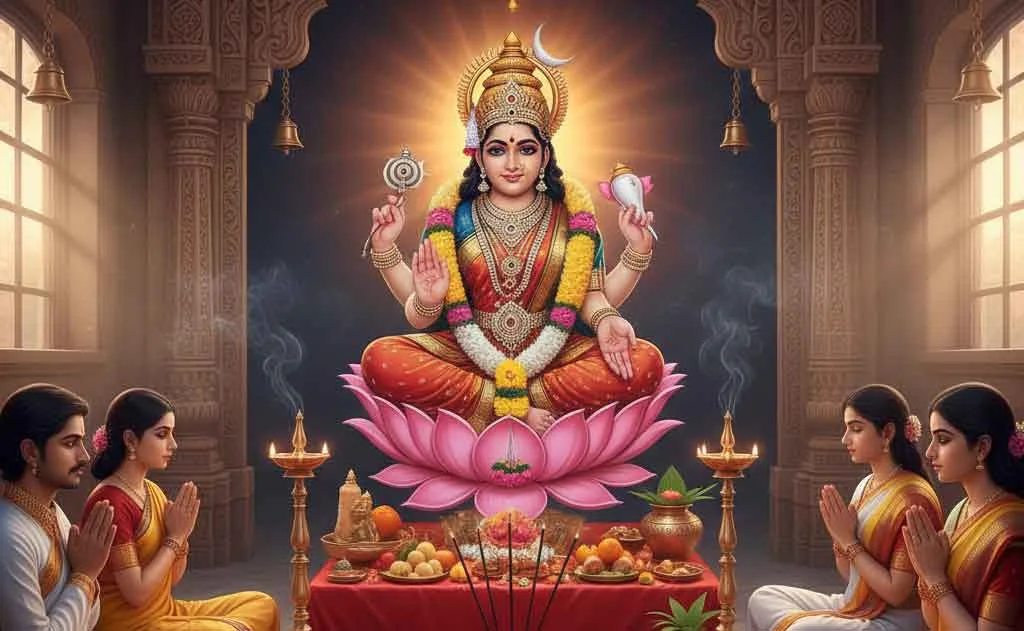
Navratri Stories for Kids: One Story Every Night for the 9 Forms of Durga (2026)
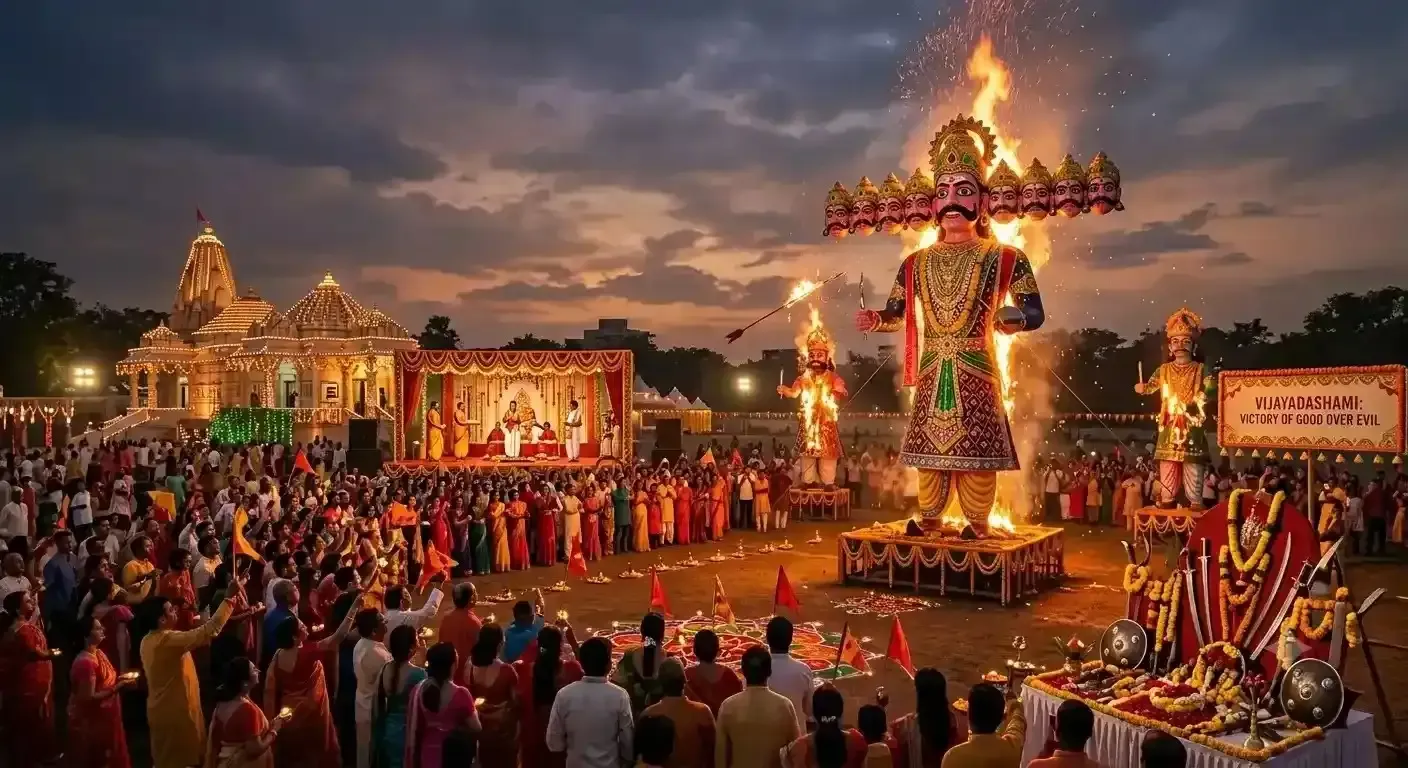
Dussehra Story for Kids: Rama and Ravana, Durga and Mahishasura (Read-Aloud Versions)
Ten Heads of Ravana: Meaning, Stories and Interpretations Explained