Prepaid Death: A Story Every Busy Son and Daughter Must Read
A lonely 70-year-old father, ignored by his busy children abroad, quietly "recharged" his own death — and left behind a diary and two letters that will break your heart. A moving moral story on honouring our parents.
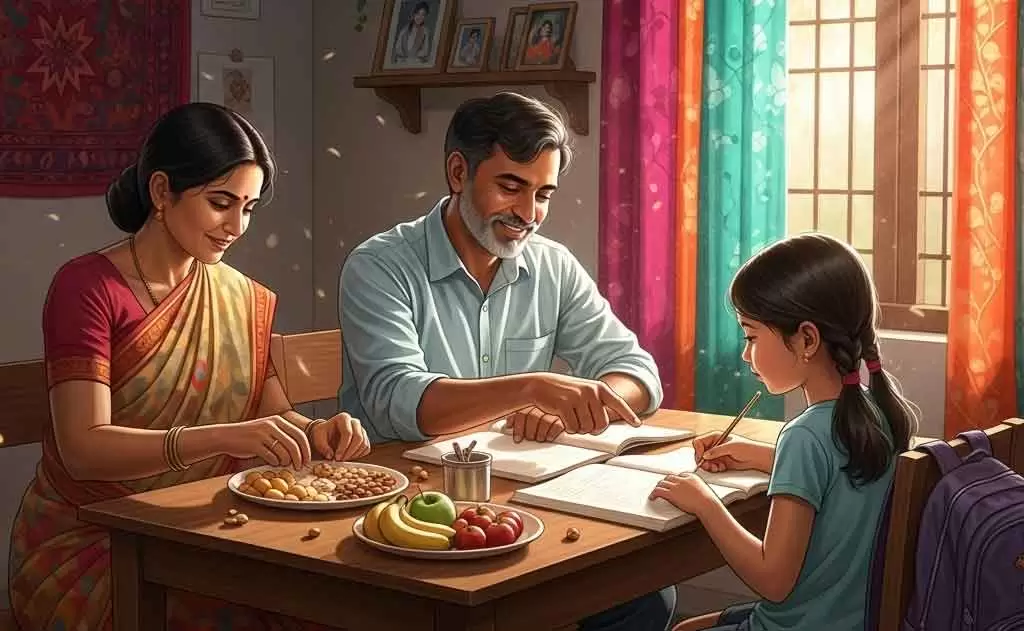
In Byatarayanapura, Bengaluru, lived a 70-year-old retired bus conductor named Narayanappa. His wife Lakshmi had passed away five years earlier. He had two children — his son Ramesh, a software engineer in America, and his daughter Suma, a nurse in Dubai.
Narayanappa lived alone. A pension of ₹18,000 arrived each month. Of it, ₹8,000 went to rent, and the remaining ₹10,000 barely covered his medicines, food and electricity bills.
Every Sunday he made a video call to his children. "How are you, Dad?" he would ask — and their answer was always the same…
"Busy, Dad… we'll talk later."
If only my life had a recharge
For two years Narayanappa had suffered kidney trouble. Twice a week he needed dialysis — about ₹2,000 each time, ₹16,000 a month.
One day the doctor told him: "Narayanappa-garu, a kidney transplant could give you a chance to live. The cost is about ₹10 lakh."
Narayanappa smiled and replied: "Doctor, my son earns ₹5 lakh a month. But he has no time to talk to me for even five minutes. So where will he find ₹10 lakh to spend on me?"
From that day, he made a decision. He stopped his dialysis. He told his children nothing.
The diary named "Prepaid Death"
Then he bought a diary and gave it a name — "Prepaid Death." On the very first page he wrote:
"Just like Jio and Airtel, my life too needs a recharge. But no one will do it. So I am paying for my own death, in advance."
Every day he completed one task and wrote beside it — "PAID."
- He got his photograph framed — PAID
- He chose his spot in the cremation ground and paid the advance — PAID
- He bought the firewood for his last rites — PAID
- He kept ready the dakshina envelopes for the 13th-day rituals — PAID
- He wrote the final letter to his children — PAID
The last 48 hours
Twenty days later his health collapsed. His neighbour Papanna admitted him to hospital.
The doctor phoned Ramesh: "Your father has only 48 hours. Come at once."
Ramesh: "Doctor, I'm in the middle of a project delivery. It will take three weeks. Please just do a video call."
The doctor was stunned. He called Suma. She said: "The ticket will cost a lakh rupees. I can't come right now. I'll send money."
Narayanappa heard all of this and only smiled. He opened the last page of his diary. On it was written:
Dialysis — stopped. PAID. Hopes upon my children — zero. PAID. Life — ends tomorrow. Paid in advance.
And below it, one more line:
"I recharged my own death. There is no one even to give me a missed call. So I have used up all my talk-time myself."
That very night, Narayanappa closed his eyes in peace.
Two letters
Three weeks later the children arrived. Papanna handed them two envelopes.
To Ramesh:
"My son, it costs a lakh rupees to come from America, doesn't it? Don't spend so much just to look at my dead body. Here is ₹500 for the bus fare. Stand at my grave for two minutes and then go. I have already PAID for your time, in advance. — Your Prepaid Appa"
To Suma:
"My daughter, you serve hundreds of people. But you could not come when your own father was on dialysis. It's all right. With this ₹500, buy a garland and lay it on my grave. I will not wait. I have already PAID and gone. — Your Prepaid Appa"
The last page
On the final page of the diary, in red letters, was written:
"Children… your love is like Incoming Calls — Free. But you did not give even one Missed Call. So I became Outgoing. Balance Zero. Validity Over. Number Not Reachable — Forever."
The lesson
Parents are like a prepaid SIM. If you do not give them the recharge of time, love and care, one day they go "Not Reachable." After that — no matter how much you grieve, how much money you spend, how many tears you shed — nothing will help.
"Busy" is not a reason.
Call your parents today. Show your love while they are still here. Because once they are gone, the only reply that remains is: "The number you are trying to reach is not available."
To serve one's mother and father is the greatest punya of all. 🙏
Frequently asked questions
Who is Narayanappa in the Prepaid Death story?
Narayanappa is a 70-year-old retired bus conductor from Byatarayanapura, Bengaluru, whose wife Lakshmi died five years earlier. His son Ramesh works in America and his daughter Suma is a nurse in Dubai.
Why did Narayanappa stop his dialysis?
He needed dialysis twice a week and a kidney transplant costing about ₹10 lakh. Hurt that his children had no time even to talk to him, he stopped treatment and told no one.
What was written in the diary called Prepaid Death?
Narayanappa wrote that, like a mobile plan, his life needed a recharge that no one would give, so he was paying for his own death in advance. Each completed task, such as his framed photo and firewood, was marked "PAID".
What did the two letters to Ramesh and Suma say?
Each letter enclosed ₹500, for Ramesh's bus fare and for Suma to buy a garland for the grave. Both were signed "Your Prepaid Appa" and said their time had already been paid for in advance.
What lesson does the Prepaid Death story teach about honouring parents?
Being "busy" is not a reason to neglect parents. Give them time, love and care while they are alive, because grief and money cannot help afterwards, and serving one's mother and father is called the greatest punya.
Share this with family and friends
Send it on WhatsApp, post it, or copy the link.
More from Stories
- Ten Heads of Ravana: Meaning, Stories and Interpretations Explained
- Nirjala Ekadashi Significance | Sage Vyasa's Teaching to Bhimasena | Ekadashi Vrat Story
- Hindu Priest Career Pathways 2026 — Vedapatashala Training, Modern Education, Global Opportunities & Long-Term Outlook
- Sita Navami 2026: Date, Muhurat, Puja Vidhi, Story of Mata Sita & Complete Vrat Guide
- Andal Ammawari Story: From Devotee to Goddess – The Hidden Story Behind Dhanurmasam
You might also like
Diwali Stories for Kids: One Story Every Night for the 5 Days of Diwali (2026)
Navratri Stories for Kids: One Story Every Night for the 9 Forms of Durga (2026)
Nirjala Ekadashi Mahatmyam | Bhima–Vyasa Dialogue | Pandava Nirjala Ekadashi Story