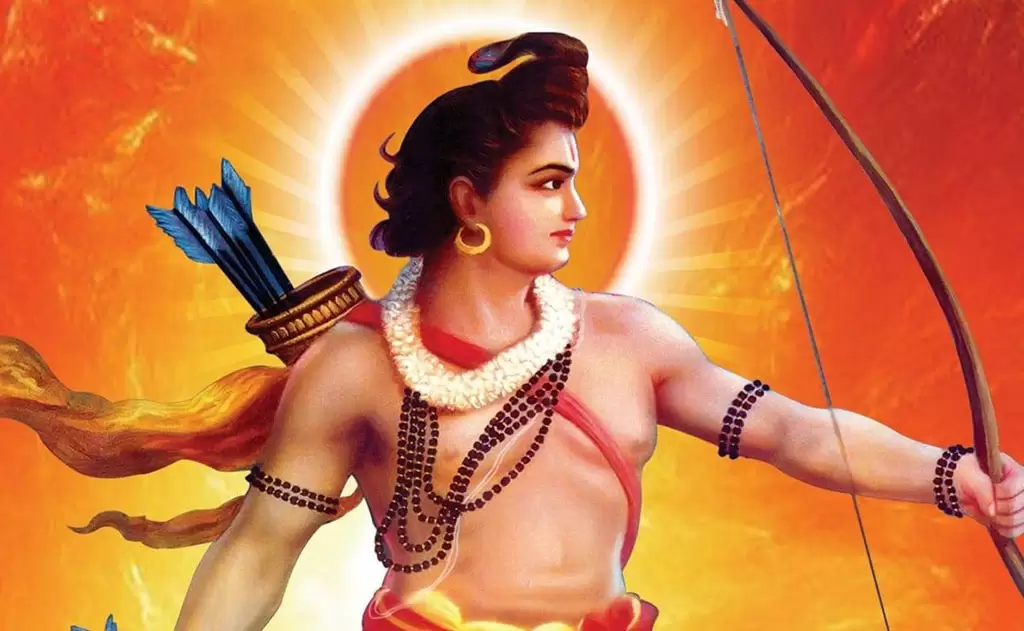
The Ramayana Simplified: The Story of Lord Rama That Leads to Dussehra
Discover the timeless epic that forms the spiritual foundation of Dussehra celebrations The festival of Dussehra, also known as Vijayadashami, celebrates the…
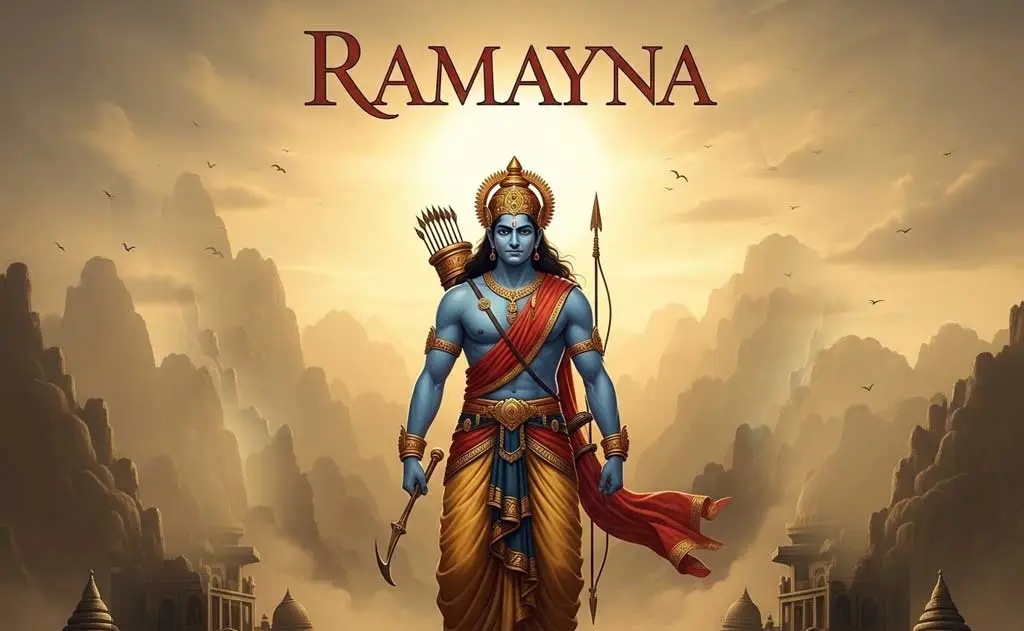
Discover the timeless epic that forms the spiritual foundation of Dussehra celebrations The festival of Dussehra, also known as Vijayadashami, celebrates the…
Discover the timeless epic that forms the spiritual foundation of Dussehra celebrations
The festival of Dussehra, also known as Vijayadashami, celebrates the ultimate triumph of good over evil. While many know it as the victory of Goddess Durga over the demon Mahishasura, the festival is equally rooted in another magnificent tale - the Ramayana. This ancient epic tells the story of Lord Rama's victory over the ten-headed demon king Ravana, a victory that continues to inspire millions during the ten-day Dussehra celebration.
The Beginning: A Prince Born to Fulfill Destiny
Long ago, in the prosperous kingdom of Ayodhya, ruled the noble King Dasharatha. After years of prayers and sacred rituals, he was blessed with four sons. The eldest, Rama, was the incarnation of Lord Vishnu himself, born to rid the world of evil. Rama grew up to be the perfect prince - brave, righteous, compassionate, and devoted to dharma (righteousness).
Alongside Rama were his three brothers: Bharata, known for his loyalty and sacrifice; Lakshmana, Rama's devoted companion; and Shatrughna, equally brave and noble. The four brothers were inseparable, but the bond between Rama and Lakshmana was particularly strong.
The Exile: A Test of Character
As Rama reached adulthood, King Dasharatha decided to crown him as the heir to the throne. However, fate had different plans. Queen Kaikeyi, one of Dasharatha's three wives, was influenced by her maid Manthara to demand two boons that the king had promised her long ago. Her demands were shocking: send Rama into exile for fourteen years and crown her son Bharata as king instead.
King Dasharatha was heartbroken, but a king's word was sacred. Rama, upon hearing of this decision, accepted it without question. This was his first great test - choosing duty and honor over personal desires. "A son's duty is to honor his father's word," Rama declared, preparing to leave the palace immediately.
Sita, Rama's beloved wife and the daughter of King Janaka, insisted on accompanying her husband into exile. "A wife's place is beside her husband, in joy and sorrow alike," she said with unwavering determination. Lakshmana, unable to bear separation from his beloved brother, also joined them, vowing to serve and protect Rama and Sita throughout their exile.
Life in the Forest: Challenges and Growth
The trio left the luxurious palace for the dense forests, where they would spend the next fourteen years. They built simple huts, lived on fruits and roots, and found peace in the simplicity of forest life. During this period, they encountered many sages and hermits, receiving their blessings and learning deeper spiritual truths.
However, the forest was not without dangers. Demons and evil spirits constantly threatened the peaceful sages who had chosen these woods for their meditation and prayers. Rama and Lakshmana, being skilled warriors, protected these holy men from harm, earning their gratitude and blessings.
The Golden Deer: The Beginning of Sorrow
One fateful day, while the three were living peacefully in the Panchavati forest, Sita spotted a beautiful golden deer. Enchanted by its beauty, she requested Rama to capture it for her. Though Lakshmana suspected it might be a demon in disguise, Rama could not refuse his beloved wife's innocent request.
As Rama pursued the deer deep into the forest, it revealed its true form - the demon Maricha, who had been sent by the ten-headed demon king Ravana. In his dying moments, Maricha cried out in Rama's voice, "Lakshmana! Sita! Help me!" The cry reached Sita, who became frantic with worry and begged Lakshmana to go help Rama.
Lakshmana knew it was a trick, but Sita's anguish and harsh words compelled him to leave, though not before drawing a protective circle around their hut with his arrow. "Do not step outside this circle under any circumstances," he warned Sita before departing.
The Abduction: Evil Strikes
This was exactly what Ravana had planned. The mighty demon king, who ruled over the golden city of Lanka, had become obsessed with Sita's beauty and purity. Approaching their hut in the disguise of a holy sage, he begged Sita for food and water.
Sita, following the sacred duty of hospitality to guests, stepped outside the protective circle to offer him refreshments. The moment she crossed the line, Ravana revealed his true, terrifying form and abducted her, carrying her away to his kingdom in Lanka.
When Rama and Lakshmana returned to find Sita missing, their world crumbled. The forest echoed with Rama's anguished cries as he searched everywhere for his beloved wife. Every tree, every bird, every creature in the forest witnessed his pain.
The Search: Hope in Friendship
In their desperate search for Sita, Rama and Lakshmana encountered Jatayu, the brave eagle who had tried to rescue Sita from Ravana. Mortally wounded in the battle, Jatayu used his last breath to tell Rama that Ravana had taken Sita towards the south.
Continuing their journey southward, the brothers met Sugriva, the exiled monkey king, and his devoted follower Hanuman. Rama helped Sugriva defeat his brother Vali and reclaim his kingdom. In gratitude, Sugriva pledged his entire army to help find Sita.
Hanuman's Great Leap: The Discovery
Among all of Sugriva's followers, Hanuman stood out for his incredible strength, devotion, and wisdom. Taking Rama's ring as a token of identification, Hanuman made a mighty leap across the ocean to reach Lanka. This leap itself became legendary, symbolizing the power of devotion and determination.
In Lanka, Hanuman found Sita in the Ashoka garden, guarded by demon women but refusing to submit to Ravana's demands. She had remained pure and faithful, drawing strength from her love for Rama and her unwavering faith in dharma. Hanuman delivered Rama's message and ring, assuring her that rescue was coming.
Before leaving Lanka, Hanuman decided to test the enemy's strength. He allowed himself to be captured, and when brought before Ravana, he delivered Rama's ultimatum: return Sita with honor, or face destruction. When Ravana ordered Hanuman's tail to be set on fire, the clever devotee used this opportunity to burn down large portions of Lanka before escaping.
Building the Bridge: The Impossible Made Possible
Rama's army, consisting of millions of monkeys and bears led by Hanuman, Angada, and other brave warriors, reached the shores of the ocean. The vast water body seemed impossible to cross with such a large army.
However, with unwavering faith and determination, the army began building a bridge across the ocean. Every stone they threw floated because they chanted Rama's name as they worked. This miraculous bridge, built in just five days, became known as Ram Setu or Adam's Bridge.
The Great War: Good vs Evil
The war that followed was epic in every sense. For ten days, the battle raged between the forces of good and evil. Ravana's army was powerful, filled with mighty demons and magical warriors. Ravana himself was nearly invincible, having received boons that made him immune to gods and demons.
Each day brought fierce battles. Lakshmana fell unconscious from a poisoned weapon, and only the life-giving herb Sanjeevani, brought by Hanuman from the Himalayas, could revive him. Ravana's son Indrajit and his brothers Kumbhakarna and Vibhishana (who had joined Rama's side) all played crucial roles in this cosmic battle.
The Final Confrontation: Rama vs Ravana
On the tenth day, Rama and Ravana faced each other in single combat. Despite all his power and magic, Ravana could not defeat Rama, who fought not just with weapons but with the strength of righteousness itself.
The turning point came when Rama used the divine arrow blessed by Brahma himself. This arrow found its mark in Ravana's heart - the one place where his life force resided. As the ten-headed demon king fell, his death cry shook the three worlds, and the forces of evil scattered in defeat.
The Victory: Dharma Restored
With Ravana's death, Lanka was liberated from the rule of evil. Vibhishana, Ravana's righteous brother who had sided with Rama, was crowned the new king of Lanka. Sita was finally reunited with Rama, though she had to prove her purity through a trial by fire, from which she emerged unharmed, blessed by Agni, the fire god himself.
The fourteen years of exile were complete, and the time had come to return to Ayodhya. The entire city celebrated their return with lights and festivities, marking the first celebration of Diwali. Rama was crowned king, and his reign, known as Ram Rajya, became synonymous with perfect governance, justice, and prosperity.
The Significance of Dussehra: Why We Celebrate
The ten days of Dussehra correspond to the ten days of battle between Rama's forces and Ravana's army. Each day represents the victory of a virtue over a vice:
Day 1: Victory over Pride (Ahankar) Day 2: Victory over Anger (Krodh) Day 3: Victory over Greed (Lobh) Day 4: Victory over Attachment (Moh) Day 5: Victory over Jealousy (Matsarya) Day 6: Victory over Selfishness (Swarth) Day 7: Victory over Injustice (Anyaya) Day 8: Victory over Cruelty (Kroorta) Day 9: Victory over Fear (Bhay) Day 10: Victory over Ego (Ahamkar) - The final defeat of Ravana
The Eternal Message: Good Always Triumphs
The Ramayana is not just an ancient story; it's a guide for living a righteous life. Through Rama's character, we learn the importance of keeping one's word, respecting parents, loving family, and standing up for what is right, no matter the personal cost.
Sita represents the ideal of purity, devotion, and strength in the face of adversity. Hanuman embodies perfect devotion, courage, and service. Lakshmana shows us the meaning of loyalty and sacrifice.
Even Ravana, despite being the antagonist, was a learned scholar and a powerful king. His downfall came not from lack of ability, but from his inability to control his desires and ego. This teaches us that knowledge and power without righteousness lead to destruction.
Celebrating Dussehra Today: Keeping the Spirit Alive
Every year, when we celebrate Dussehra by burning effigies of Ravana, we're not just commemorating an ancient victory. We're renewing our commitment to fight the Ravana within ourselves - our own negative qualities and tendencies.
The festival reminds us that no matter how powerful evil may seem, dharma (righteousness) will always prevail. Just as Rama's small army of monkeys defeated Ravana's mighty demon forces, we too can overcome any obstacle when we have truth, courage, and divine support on our side.
As we watch the ten-headed effigy burn on Dussehra night, we're reminded that this is not just a story from the past, but a eternal truth that plays out in our lives every day. The choice between right and wrong, between selfishness and service, between anger and compassion - these are the real battles we fight.
The Ramayana teaches us that victory is not just about defeating external enemies, but about conquering the demons within our own hearts. This is the true spirit of Dussehra - the celebration of the eternal victory of good over evil, light over darkness, and dharma over adharma.
May the blessings of Lord Rama guide us all on the path of righteousness, and may we always choose dharma over personal gain, just as our beloved Lord did throughout his divine life.
Share the Vijayadashami 2026 blessing
On Vijayadashami we remember the victory of dharma, of light over darkness. As commonly told, Maa Durga vanquished Mahishasura and Lord Rama triumphed over Ravana, reminding us that truth, patience and devotion always prevail in the end. Sharing a blessing on this sacred day is a way of passing that light to the people we love. Take a moment to send one of these heartfelt wishes to your family, elders and friends, and let the spirit of Rama's courage reach every home.
Shami shloka for Vijayadashami
शमी शमयते पापं शमी शत्रुविनाशिनी। अर्जुनस्य धनुर्धारी रामस्य प्रियदर्शिनी॥
Shami shamayate papam shami shatru-vinashini, arjunasya dhanurdhari ramasya priyadarshini.
Meaning: The Shami tree takes away sin and destroys enemies; it held Arjuna's bow and is dear to Lord Rama. Many families recite this while offering Shami (Jammi) leaves on Vijayadashami.
Rama mantra to chant on Dussehra
रामाय रामभद्राय रामचन्द्राय वेधसे। रघुनाथाय नाथाय सीतायाः पतये नमः॥
Ramaya ramabhadraya ramachandraya vedhase, raghunathaya nathaya sitayah pataye namah.
Meaning: Salutations to Rama, to Ramabhadra, to Ramachandra the creator, to the lord of the Raghu clan, to the husband of Sita.
Vijayadashami 2026 messages to share
🏹 Happy Vijayadashami to our whole family! May the light of this sacred day fill our home with love, harmony and the strength to always walk the path of dharma together. Share on WhatsApp
🙏 Dear Maa and Papa, on Dussehra I pray that Lord Rama and Maa Durga bless you with good health, peace of mind and many joyful years. Your love is my greatest blessing. Share on WhatsApp
✨ Happy Dussehra, my friend! May every Ravana of doubt and fear inside us burn away tonight, and may our friendship keep shining brighter with each passing year. Share on WhatsApp
Wishing you and your family a blessed Vijayadashami 🌼 May this day of victory bring fresh energy, clear purpose and success to all our work together in the year ahead. Share on WhatsApp
🔱 May Maa Durga, who triumphed over Mahishasura, give you the courage to face every challenge and the inner strength to rise above all negativity. Happy Vijayadashami! Share on WhatsApp
🏹 May Lord Rama's patience, truth and devotion guide your every step. Just as good triumphed over Ravana, may goodness win in your life too. Jai Shri Ram, Happy Dussehra! Share on WhatsApp
A short Vijayadashami prayer
Lord Rama, Maa Durga, I bow before you with a humble heart on this day of victory. Help me burn away the pride, anger and greed within me, as you overcame Ravana and Mahishasura. Give me the courage to choose what is right, the wisdom to act with kindness, and the patience to walk the path of dharma. Keep my family united, protected and free of negativity, and let your light guide our home always.
Use the share buttons on this page to send these blessings to your family and friends.
Also read: Dussehra story for kids and the ten heads of Ravana explained.
Frequently Asked Questions
Why is the Ramayana linked to Dussehra?
As commonly told, Dussehra marks the day Lord Rama defeated Ravana after a ten-day battle in Lanka. The festival celebrates this victory of dharma over adharma and of good over evil.
Why was Lord Rama sent into exile?
Queen Kaikeyi, influenced by her maid Manthara, asked King Dasharatha for two promised boons: fourteen years of exile for Rama and the throne for her son Bharata. Rama accepted without question to honour his father's word.
How did Ravana abduct Sita?
As commonly told, the demon Maricha lured Rama away in the form of a golden deer. Ravana then came disguised as a holy sage, and when Sita stepped outside Lakshmana's protective circle to offer him food, he carried her away to Lanka.
What role did Hanuman play in the Ramayana?
Hanuman leapt across the ocean to Lanka, found Sita in the Ashoka garden and gave her Rama's ring. He later brought the Sanjeevani herb from the Himalayas to revive the wounded Lakshmana.
How did Lord Rama defeat Ravana?
On the tenth day of the war, Rama used a divine arrow blessed by Brahma that struck Ravana's heart, where his life force resided, as commonly told. Vibhishana was then crowned king of Lanka.
When is Dussehra in 2026?
Dussehra, also called Vijayadashami, falls on Tuesday 20 October 2026 in India, right after Sharad Navratri, which runs from Sunday 11 to Monday 19 October.
You might also like
Divine Timing: First Glimpse of Nitesh Tiwari’s ‘Ramayana’ Unveiled on Hanuman Jayanti with Ranbir Kapoor as Lord Rama
Top 10 Hindu Mythological Stories Every Child Should Know
Sita Navami 2026: Date, Muhurat, Puja Vidhi, Story of Mata Sita & Complete Vrat Guide