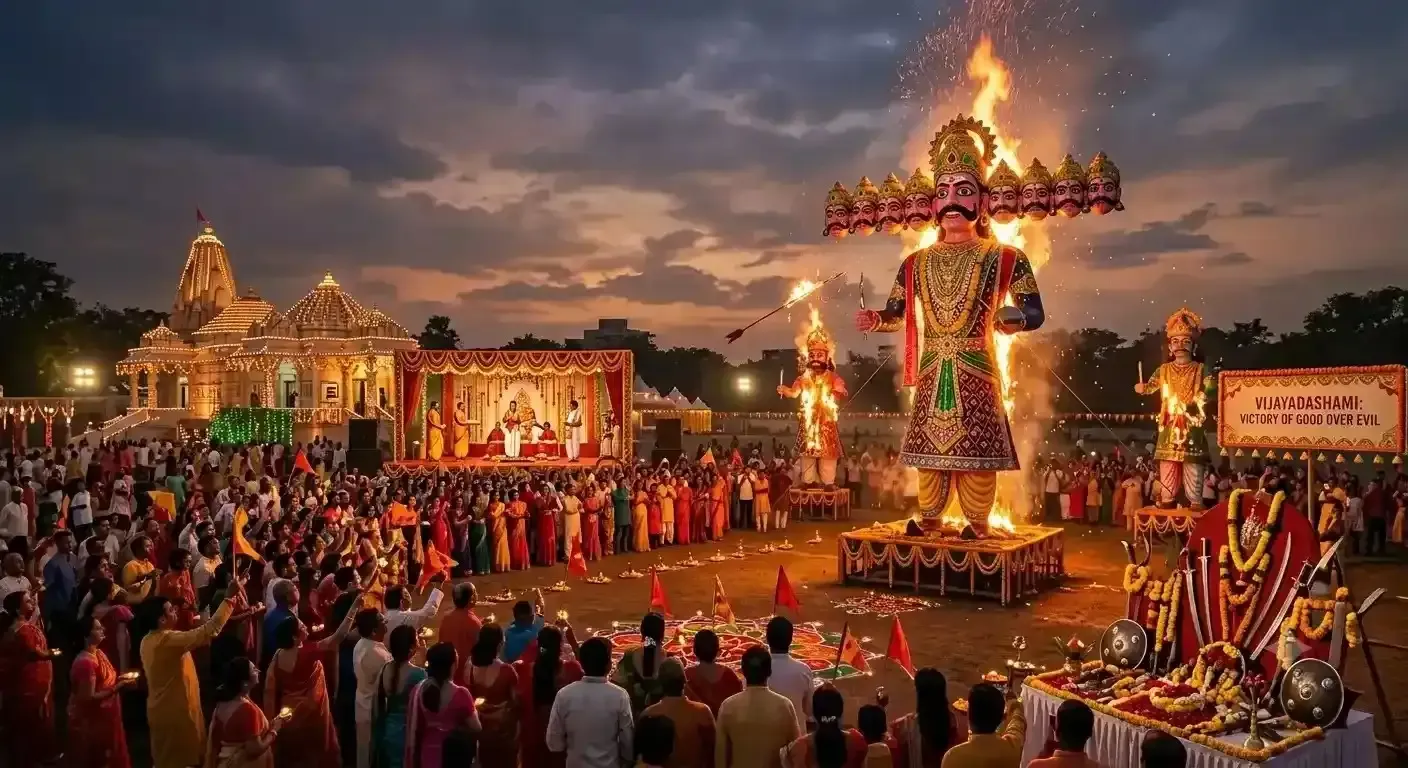
Ramnagar Ramlila, Varanasi 2026: The Month-Long Ramlila of Banaras, Its Traditions and Dussehra in Kashi
Across the Ganga from Varanasi, the town of Ramnagar stages one of India's most traditional Ramlilas: a month-long performance of Tulsidas's Ramcharitmanas, patronised by the royal family of Banaras, in which the audience walks with the story from one open-air location to the next. Here is what makes it unique, and how Varanasi celebrates Dussehra on Tuesday 20 October 2026.
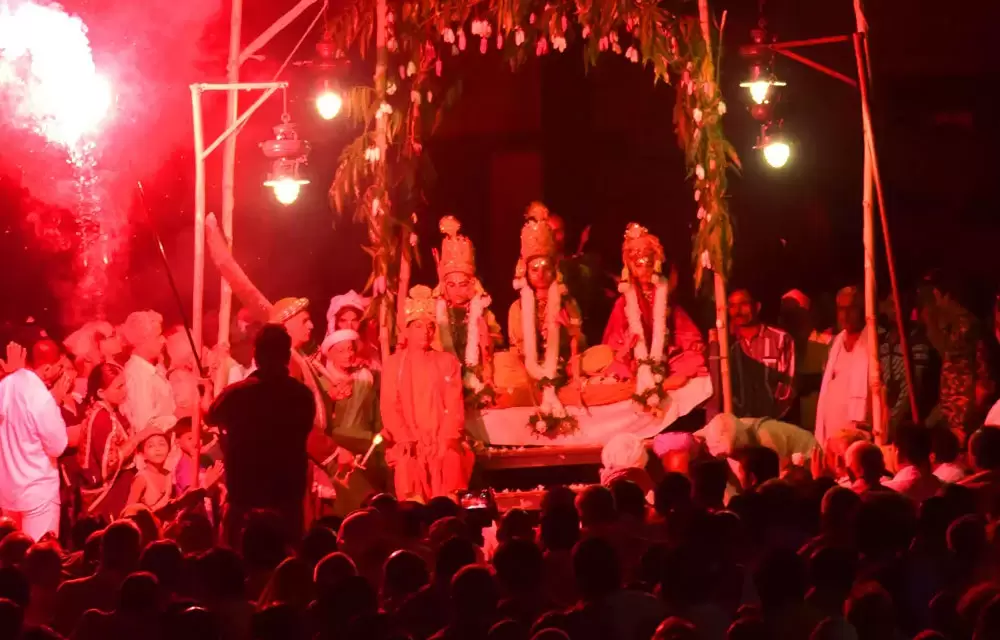
Across the Ganga from Varanasi, the town of Ramnagar stages one of India's most traditional Ramlilas: a month-long performance of Tulsidas's Ramcharitmanas, patronised by the royal family of Banaras, in which the audience walks with the story from one open-air location to the next. Here is what makes it unique, and how Varanasi celebrates Dussehra on Tuesday 20 October 2026.
Quick answer: The Ramnagar Ramlila is the month-long Ramlila of Ramnagar, across the Ganga from Varanasi, associated with the royal family of Banaras. Based on Tulsidas's Ramcharitmanas, it is staged at open-air locations all over the town, and the audience moves with the action. Ramlila was inscribed by UNESCO in 2008 as "Ramlila, the traditional performance of the Ramayana". Dussehra in 2026 is Tuesday 20 October (Drik Panchang), and the Vijay Muhurat for Varanasi is 1:37 to 2:23 PM. The Ramnagar performances follow their own calendar; check local announcements for 2026.
What makes the Ramnagar Ramlila different
Ramlilas are staged in thousands of towns across North India in the weeks before Dussehra. Most use a single stage. Ramnagar is different in almost every way, which is why it is so often held up as the classic example of the tradition:
- The whole town is the stage. Episodes are enacted at fixed locations around Ramnagar that stand for the places of the Ramayana, such as Ayodhya, Janakpur, Chitrakoot, Panchavati and Lanka. The audience walks from one to the next as the story moves.
- It lasts about a month. The cycle unfolds over roughly thirty evenings, so that the story is lived through slowly rather than watched in a single show.
- It follows the Ramcharitmanas closely. Reciters chant the verses of Tulsidas's text, and the actors speak dialogues drawn from it.
- Royal patronage. The Maharaja of Banaras, or a representative of the family, attends, and his arrival is part of the ritual.
- Simple staging. As traditionally described, the performances rely on natural light, torches and lamps rather than modern stage lighting and loudspeakers, which gives them an atmosphere unlike any modern production.
History as commonly told
Ramnagar is the seat of the Maharajas of Banaras, whose fort stands on the river bank opposite the city's ghats. As commonly told, the Ramlila took its present form in the nineteenth century under the patronage of the Maharajas, who built up the network of performance sites and the conventions still followed today. Accounts differ on the exact year and on which ruler began it, so precise dates should be treated with caution.
Behind it lies the older Ramlila tradition of Kashi, often linked in popular telling with Tulsidas himself, who composed much of the Ramcharitmanas in Varanasi in the sixteenth century. Many neighbourhoods of the city have their own long-running Ramlilas, some of them centuries old by local tradition.
The swaroops, the Ramayanis and the nemis
The young boys who play Rama, his brothers and Sita are called swaroops, meaning "forms" of the divine. As commonly described, they are chosen from Brahmin families, trained for the role and, once in costume, treated by devotees as embodiments of the deities themselves: people bow to them and seek their blessings. The Ramayanis are the reciters who chant the Ramcharitmanas in groups, and the story pauses between their verses for the actors' dialogue.
Some of the most devoted spectators, known as nemis (those who keep a vow), attend every evening of the cycle, following the swaroops from site to site, often carrying their own copy of the Manas to read along. For them the Ramlila is not entertainment but a month of worship.
Certain episodes are especially well known, including the scenes at Lanka and the Bharat Milap, the reunion of Rama with his brother Bharata. The final days include the coronation of Rama. Because the cycle follows a traditional lunar calendar, the battle with Ravana does not necessarily fall on the same evening as the city's Dussehra.
UNESCO recognition
In 2008, "Ramlila, the traditional performance of the Ramayana" was inscribed by UNESCO on the Representative List of the Intangible Cultural Heritage of Humanity (it had first been proclaimed a Masterpiece of the Oral and Intangible Heritage of Humanity in 2005). The UNESCO description highlights the Ramlilas of North India, among them those of Ayodhya, Ramnagar and Varanasi, Vrindavan and Almora. For more on the tradition, read Ramlila: a vibrant retelling of the Ramayana.
Dussehra in Varanasi
In Varanasi itself, Dussehra on Tuesday 20 October 2026 brings Ramlila climaxes and Ravan Dahan at grounds across the city, along with Durga Puja pandals, especially in areas with large Bengali communities, and Shami and Shastra Puja at home. Navratri runs from Sunday 11 to Monday 19 October, with Ashtami and Navami both on 19 October in India. The city's many Devi temples, including the Durga Kund temple, draw large numbers of devotees through Navratri.
Varanasi is also known for its Bharat Milap celebrations soon after Dussehra, notably at Nati Imli, where crowds gather to see the meeting of Rama and Bharata. Check local announcements for 2026 dates.
| Uttar Pradesh city | Vijay Muhurat (Tue 20 Oct 2026, local time) |
|---|---|
| Varanasi | 1:37–2:23 PM |
| Lucknow | 1:45–2:30 PM |
| Ayodhya | 1:40–2:25 PM |
| Prayagraj | 1:42–2:27 PM |
The Dashami tithi runs from 12:50 PM IST on 20 October to 2:11 PM IST on 21 October. More on the state in the Dussehra 2026 Uttar Pradesh guide, and on effigy burning in the Ravan Dahan 2026 city-wise guide and why we burn Ravana.
Tips for watching the Ramnagar Ramlila
- Check the current schedule locally before you go; the episodes follow a traditional calendar and locations change from evening to evening.
- Be ready to walk: the audience moves with the action, often over uneven ground.
- Treat it as worship. Dress modestly, keep your voice down during recitation and follow local cues when the swaroops pass.
- Photography may be restricted or unwelcome at certain moments; ask and respect the organisers' rules.
- Ramnagar is across the river from the main ghats; allow time for road traffic or for river crossings, and plan your return after dark.
For families abroad
Few diaspora communities can recreate a month-long, walking Ramlila, but many temples abroad stage short Ramlila plays in the days before Dussehra, often with children in the roles. Reading the Ramcharitmanas together through Navratri, a chapter a day, is a simple way to keep the Ramnagar spirit at home. Our Dussehra 2026 USA guide lists local muhurats; never convert Indian times abroad. See also the Dussehra / Vijayadashami 2026 pillar guide.
Frequently asked questions
What is the Ramnagar Ramlila?
It is a traditional Ramlila performed at Ramnagar, on the eastern bank of the Ganga opposite Varanasi, under the patronage of the royal family of Banaras. It is widely known for lasting about a month and for being staged at many open-air locations around the town, with the audience moving from place to place as the story unfolds.
When is the Ramnagar Ramlila in 2026?
The Ramnagar Ramlila follows its own traditional lunar calendar, which does not simply end on Dussehra. We do not publish a 2026 schedule; check local announcements in Varanasi for the current dates of each episode. Dussehra itself is on Tuesday 20 October 2026 (Drik Panchang).
Is Ramlila recognised by UNESCO?
Yes. "Ramlila, the traditional performance of the Ramayana" was inscribed by UNESCO in 2008 on the Representative List of the Intangible Cultural Heritage of Humanity. The Ramnagar Ramlila is among the best-known examples of the tradition.
Who started the Ramnagar Ramlila?
As commonly told, the Ramlila took its present form in the nineteenth century under the Maharajas of Banaras, whose fort and residence is at Ramnagar. The Maharaja's presence at the performances, often arriving in procession, remains a defining feature.
What text is the Ramnagar Ramlila based on?
It is based on the Ramcharitmanas of Goswami Tulsidas, the sixteenth-century Awadhi retelling of the Ramayana. Verses are chanted by a group of reciters, and the actors deliver dialogue between the recitations.
What is the Vijay Muhurat in Varanasi on Dussehra 2026?
On Tuesday 20 October 2026, the Vijay Muhurat for Varanasi is 1:37 to 2:23 PM local time, calculated by the Drik Panchang method.
Editor's note (9 October 2026)
This guide was written in October 2026. Dussehra and Vijay Muhurat details are from Drik Panchang calculations for India. The UNESCO details refer to the 2008 inscription of "Ramlila, the traditional performance of the Ramayana". The history and customs of the Ramnagar Ramlila are given as commonly told; we do not publish a 2026 schedule because the cycle follows its own calendar, which should be checked locally.
Related guides
You might also like
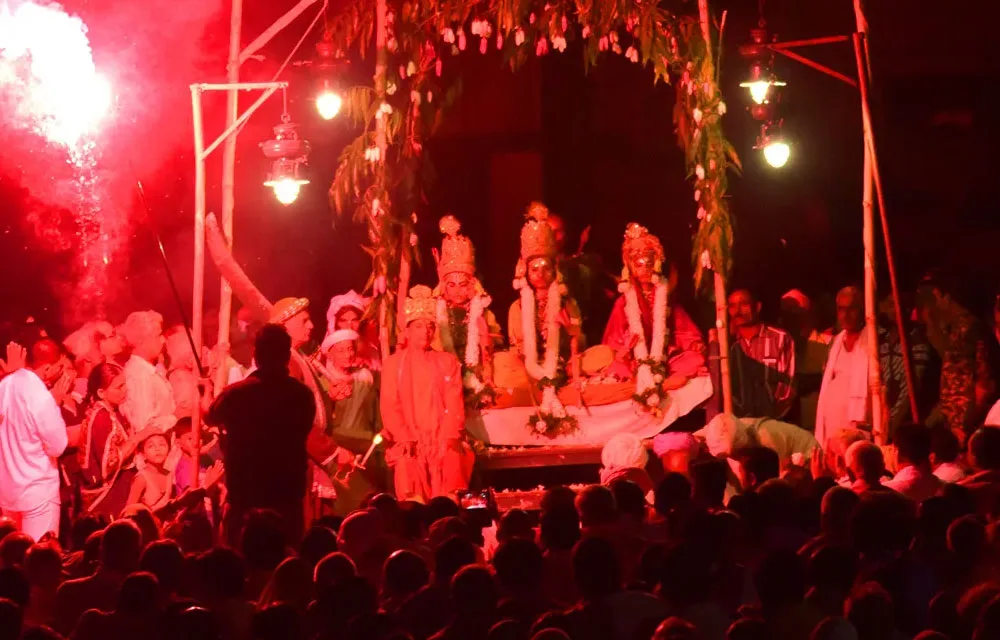
Almora Dussehra 2026, Uttarakhand: The Neighbourhood Effigies, the Bazaar Procession and Kumaoni Ramlila
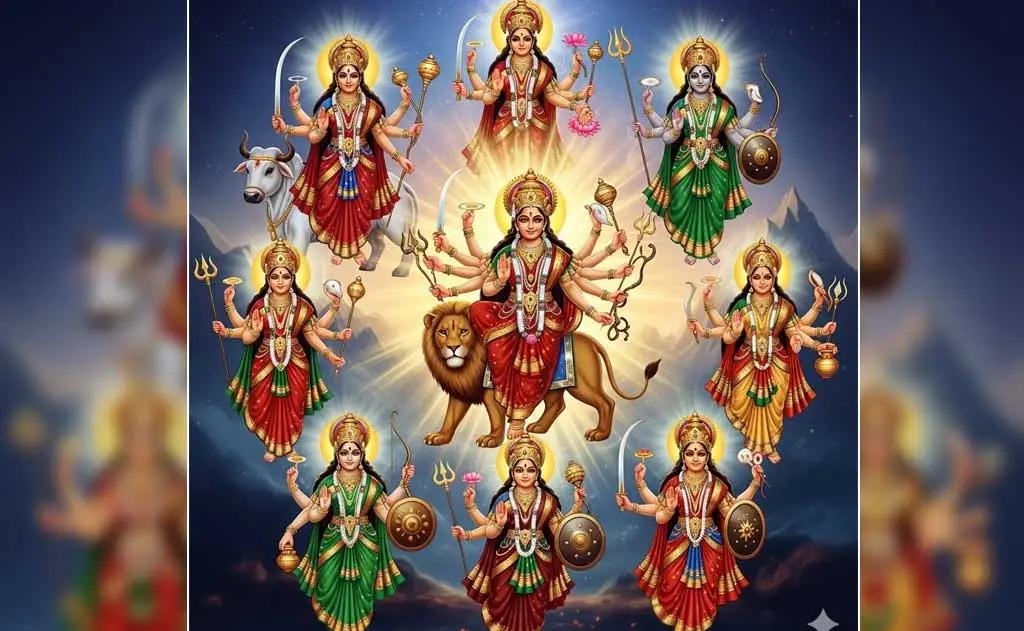
Navratri vs Durga Puja vs Dussehra vs Dasara vs Vijayadashami: The Differences Explained (2026)
Cuttack Durga Puja and Dussehra 2026: Silver Chandi Medha Pandals, Immersion and Vijay Muhurat