
Bhai Dooj 2026 in Germany, Europe and South Africa: Tuesday 10 November, a Day Before India, with Aparahna Tilak Times for 17 Cities
In Germany, the rest of continental Europe, Ireland and South Africa, Bhai Dooj 2026 falls on Tuesday 10 November, one day before India's Wednesday 11 November. Drik Panchang gives the afternoon (aparahna) tilak window for Frankfurt, Berlin, Munich, Amsterdam, Paris, Zurich, Durban, Johannesburg and more. Here is the full Diwali-week table, a simple tilak vidhi, the Yama and Yamuna story, and ideas for siblings who live in different countries.
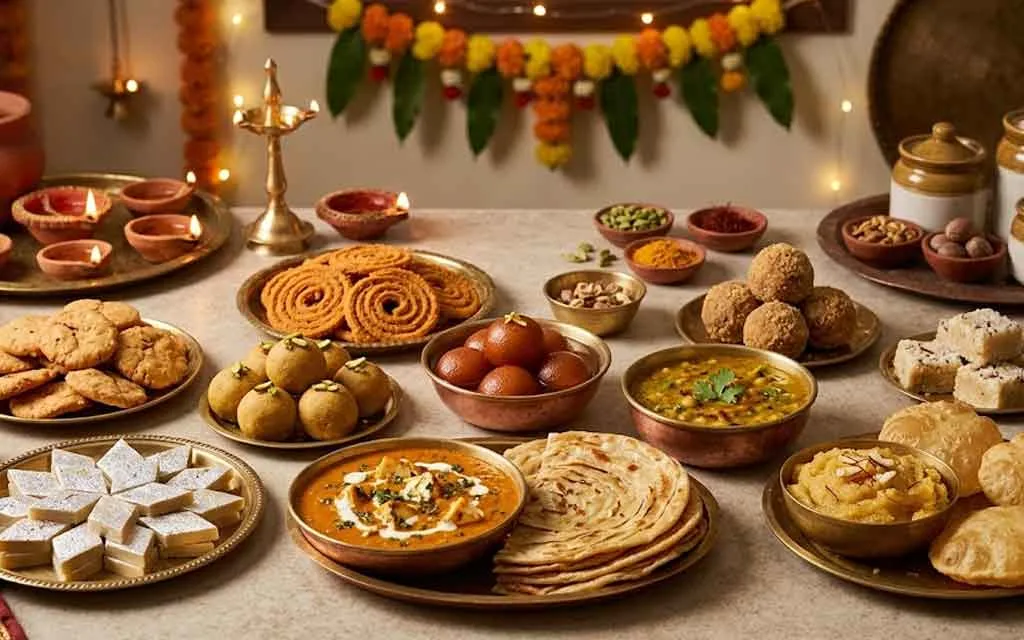
In Germany, the rest of continental Europe, Ireland and South Africa, Bhai Dooj 2026 falls on Tuesday 10 November, one day before India's Wednesday 11 November. Drik Panchang gives the afternoon (aparahna) tilak window for Frankfurt, Berlin, Munich, Amsterdam, Paris, Zurich, Durban, Johannesburg and more.
Quick answer: Bhai Dooj 2026 falls on Tuesday 10 November 2026 in Germany, across continental Europe, in Ireland and in South Africa. That is one day before India, where it is on Wednesday 11 November. Drik Panchang's afternoon (aparahna) tilak window is 1:05 to 2:56 PM in Frankfurt and 1:01 to 3:43 PM in Durban.
Last updated: 10 October 2026. Dates and times are from Drik Panchang's Bhai Dooj page for each city listed below.
Many families in Frankfurt, Munich, Berlin, Amsterdam, Paris, Zurich and Durban expect Bhai Dooj on the same day as India. In 2026 it is not. The lunar day Dwitiya begins on Tuesday morning in Europe and South Africa, so Tuesday afternoon is the right time for the tilak there. This guide gives the Diwali-week dates, Drik's aparahna times for 17 cities, a simple tilak vidhi, the story behind the day, and ideas for siblings who live in different countries. For the general guide, see Bhai Dooj 2026: date, story and tika vidhi.
Diwali week 2026: Europe and South Africa compared with India
| Day | Germany | Paris, Amsterdam | South Africa | India |
|---|---|---|---|---|
| Narak Chaturdashi | Sun 8 Nov | Sat 7 Nov | Sun 8 Nov | Sun 8 Nov |
| Diwali, Lakshmi Puja | Sun 8 Nov | Sun 8 Nov | Sun 8 Nov | Sun 8 Nov |
| Govardhan Puja | Mon 9 Nov | Mon 9 Nov | Mon 9 Nov | Tue 10 Nov |
| Bhai Dooj | Tue 10 Nov | Tue 10 Nov | Tue 10 Nov | Wed 11 Nov |
Sources: Drik Panchang dates for each location. For Lakshmi Puja times, see Lakshmi Puja muhurat 2026 in Europe and in South Africa. For Govardhan Puja, see our Govardhan Puja and Bali Pratipada 2026 guide.
Bhai Dooj aparahna tilak times for 17 cities
The aparahna is the afternoon portion of the day, the time traditionally preferred for the Bhai Dooj tilak and meal. All times are local on Tuesday 10 November 2026, from Drik Panchang.
| City | Aparahna tilak window, Tue 10 Nov |
|---|---|
| Frankfurt | 1:05 PM to 2:56 PM |
| Berlin | 12:44 PM to 2:32 PM |
| Munich | 12:54 PM to 2:48 PM |
| Hamburg | 12:57 PM to 2:44 PM |
| Stuttgart | 1:03 PM to 2:57 PM |
| Cologne | 1:11 PM to 3:02 PM |
| Amsterdam | 1:18 PM to 3:07 PM |
| Brussels | 1:21 PM to 3:12 PM |
| Paris | 1:31 PM to 3:24 PM |
| Zurich | 1:07 PM to 3:01 PM |
| Milan | 1:05 PM to 3:02 PM |
| Vienna | 12:35 PM to 2:29 PM |
| Stockholm | 12:20 PM to 1:56 PM |
| Dublin | 1:02 PM to 2:49 PM |
| Durban | 1:01 PM to 3:43 PM |
| Johannesburg | 1:12 PM to 3:51 PM |
| Cape Town | 1:53 PM to 4:38 PM |
Drik Panchang gives Dwitiya tithi from 9:30 AM on 10 November to 11:23 AM on 11 November in Central European cities (8:30 AM to 10:23 AM in Dublin), and from 10:30 AM on 10 November to 12:23 PM on 11 November in South Africa. If you cannot manage the afternoon window on a working Tuesday, many families do the tilak in the evening while Dwitiya is still running. For a town not listed, open the Drik page and choose your town.
Why the date differs from India in 2026
Bhai Dooj is kept on Kartika Shukla Dwitiya, the second lunar day of Kartika's bright fortnight, and the rule is that Dwitiya should cover the afternoon. The lunar day starts at the same instant everywhere: 2:00 PM IST on 10 November. In India that is already the middle of the afternoon on Tuesday, so the full afternoon in Dwitiya comes only on Wednesday. In Central Europe the same instant is 9:30 AM on Tuesday, and in South Africa 10:30 AM, so Tuesday afternoon is wholly in Dwitiya. That is why Europe and South Africa keep Bhai Dooj a day before India this year.
The UK, USA, Canada and the UAE are also on Tuesday 10 November. Singapore, Malaysia, Australia and New Zealand keep Wednesday 11 November with India; see our Bhai Dooj 2026 guide for Singapore, Malaysia and New Zealand.
Bhai Dooj tilak vidhi at home
- Prepare a thali with kumkum or roli, akshat (unbroken rice), a diya, sweets, a coconut or fruit and a small cloth or handkerchief.
- The brother sits facing his sister, often facing east or north. In some homes his head is covered with a cloth.
- The sister applies the tilak on his forehead, adds a few grains of rice, and waves the diya in aarti.
- She prays for his long life, health and success and feeds him a sweet.
- The brother gives his sister a gift and his blessing or promise of support.
- If possible, the brother eats a meal cooked by his sister. The day is also called Yama Dwitiya after this tradition.
In a working week, a Tuesday lunch or after-work dinner is a natural time. Families who prefer the aparahna window can use the table above.
A practical plan for a working Tuesday
Tuesday 10 November is an ordinary working and school day in Germany, the rest of Europe and South Africa, two days after the Diwali weekend. A few ideas that families use:
- Lunch-hour tilak: if siblings live or work near each other, the aparahna window in most European cities falls across the lunch hour and early afternoon. A short tilak and a shared sweet can fit into a long lunch.
- Evening tilak and dinner: Dwitiya runs until Wednesday morning, so an after-work tilak and a meal cooked by the sister keeps the spirit of the day. Many families do this.
- Prepare on Monday: Monday 9 November is Govardhan Puja in Europe and South Africa. Make the sweets and set out the thali that evening, so Tuesday is simple.
- Children at school: a small tilak before school, with the full ritual after school, lets younger siblings take part.
- Students far from home: a video call with a sister or brother, plus a sweet shared with friends in a hostel or flat, still marks the day.
What matters most is the intention: the sister's prayer for her brother's long life, and the brother's promise to stand by her.
The story of Yama and Yamuna, as commonly told
As commonly told, Yamuna, the river goddess, often invited her brother Yama, the god of death, to her home, but he was always busy. On the Dwitiya after Diwali he finally came. Yamuna welcomed him with a tilak, an aarti and a feast. Pleased, Yama granted that any brother who received his sister's tilak and ate at her home on this day would be free from the fear of untimely death. Another tradition tells of Krishna visiting his sister Subhadra after defeating Narakasura, and her welcoming him with a tilak. Read more in the story of Bhai Dooj.
Siblings in different countries
- Europe and India: India is four and a half hours ahead of Central Europe in November. A Tuesday evening call in Frankfurt is late Tuesday night in India. A Wednesday-morning call in Europe reaches India on Wednesday afternoon, when it is Bhai Dooj there.
- South Africa and India: India is three and a half hours ahead. A Tuesday lunchtime tilak in Durban is mid-afternoon on Tuesday in India; then a Wednesday call lets the Indian side keep its own day.
- Europe and the UK: both sides keep Tuesday 10 November, so a shared evening call is easy, with the UK one hour behind Central Europe.
- On a video call: keep a thali ready at both ends. The sister does the aarti on camera and the brother applies the tilak himself, or the sister applies tilak to his photo.
- Keep timings local: never convert India's muhurat to your own clock. Each sibling uses Drik Panchang for their own city.
Gift ideas
- Indian sweets from a local shop, or a delivery to your sibling's city.
- Something useful for a European winter: gloves, a scarf or a good flask.
- A book, a voucher, or tickets for something you can enjoy together.
- A donation in your sibling's name to a cause they care about.
- For siblings in India, use a delivery service inside India; international parcels may not arrive in time.
Names across communities
Families in Germany, the Netherlands, France and South Africa come from many regions, so you will hear several names. Gujarati families say Bhai Beej, Marathi families Bhau Beej, Bengali families Bhai Phonta (see Bhai Phonta 2026), and Nepali families keep Bhai Tika on the last day of Tihar. Customs and sometimes dates differ, so follow your family's calendar.
Frequently asked questions
When is Bhai Dooj 2026 in Germany?
Drik Panchang gives Tuesday 10 November 2026 for Frankfurt, Berlin, Munich, Hamburg, Stuttgart and Cologne. In India it is Wednesday 11 November.
What is the Bhai Dooj tilak time in Frankfurt?
Drik Panchang gives the aparahna (afternoon) window in Frankfurt as 1:05 PM to 2:56 PM on Tuesday 10 November 2026.
When is Bhai Dooj 2026 in South Africa?
Also Tuesday 10 November. Drik Panchang's aparahna window is 1:01 PM to 3:43 PM in Durban, 1:12 PM to 3:51 PM in Johannesburg and 1:53 PM to 4:38 PM in Cape Town.
Why is Europe a day before India?
Bhai Dooj is kept when Kartika Shukla Dwitiya covers the afternoon. In 2026, Dwitiya begins at 2:00 PM IST on 10 November, which is 9:30 AM in Central Europe and 10:30 AM in South Africa. It therefore covers Tuesday afternoon in Europe and South Africa, but only Wednesday afternoon in India.
My brother is in India. Which day should we celebrate?
Each sibling can keep the date for where they live. Many families do the tilak on Tuesday in Europe, then join a call on Wednesday when it is Bhai Dooj in India.
Is Bhai Dooj the same as Bhai Phonta and Bhau Beej?
They are regional names for the same sibling festival after Diwali: Bhau Beej in Maharashtra, Bhai Beej in Gujarat, Bhai Phonta in Bengal and Bhai Tika in Nepal. Bengali almanacs may date Bhai Phonta differently, so check.
Editor's note (10 October 2026)
This guide was published on 10 October 2026. Dates and aparahna times are from Drik Panchang's Bhai Dooj page for each named city, and Diwali-week dates follow Drik for each location. Stories are given as commonly told, and family customs vary. Please confirm with your temple or family elders.
Related guides
You might also like
Bhai Dooj 2026 in Singapore, Malaysia and New Zealand: Wednesday 11 November, the Same Day as India, with Aparahna Tilak Times for 9 Cities
Bhai Dooj 2026 in the UK: Tuesday 10 November, a Day Before India, with Tilak Vidhi, Story and Ideas for Siblings Apart
Bhai Dooj 2026 in the UAE: Tuesday 10 November, a Day Before India, with Tilak Vidhi and Ideas for Siblings Back Home