Maharaja Agrasen Jayanti 2026: Date (11 October), the Story of Agroha and How the Day Is Celebrated
Maharaja Agrasen Jayanti 2026 falls on Sunday 11 October, Ashwina Shukla Pratipada, the same day as Ghatasthapana. Here is the story of the king of Agroha as it is traditionally told, what history can and cannot confirm, the places linked with his name, and how the Agrawal community celebrates the day.
Maharaja Agrasen Jayanti 2026 falls on Sunday 11 October, Ashwina Shukla Pratipada, the same day as Ghatasthapana. Here is the story of the king of Agroha as it is traditionally told, what history can and cannot confirm, the places linked with his name, and how the Agrawal community celebrates the day.
Quick answer: Maharaja Agrasen Jayanti 2026 is on Sunday 11 October 2026, Ashwina Shukla Pratipada, which is also Ghatasthapana, the first day of Sharad Navratri. Drik Panchang lists Maharaja Agrasen Jayanti on this date; in Hyderabad, Pratipada lasts until 09:30 PM IST. The day honours the legendary king of Agroha in Haryana, revered by the Agrawal community, with prayers, processions and community service.
Last updated: 10 October 2026. The date is from Drik Panchang. The story below is presented as it is traditionally told, and we mark clearly where tradition and documented history part ways.
Every year, on the same morning that families across India set up the Navratri kalash, members of the Agrawal community in India and abroad gather to remember Maharaja Agrasen. For many it is a day of pride, gratitude and giving back. This guide explains the date, the story as it is handed down, the places associated with his name, and the ways the jayanti is celebrated today.
Agrasen Jayanti 2026 date and tithi
| Detail | 2026 |
|---|---|
| Date | Sunday, 11 October 2026 |
| Tithi | Ashwina Shukla Pratipada |
| Pratipada ends (Hyderabad, IST) | 09:30 PM on 11 October |
| Sunrise / sunset (Hyderabad) | 06:08 AM / 05:57 PM |
| Same day | Ghatasthapana and Navratri Day 1 (Maa Shailaputri) |
Source: Drik Panchang day panchang for Hyderabad. Because the jayanti is fixed by the lunar calendar, its Gregorian date moves every year. In 2026 it coincides with the start of Sharad Navratri, so many families combine the two observances, beginning the day with the kalash and Devi prayers and joining Agrasen Jayanti events later. Our Panchangam for 11 October 2026 has the full day's details.
Who was Maharaja Agrasen? The story as traditionally told
According to tradition, Agrasen was a king of the solar lineage, often described as a descendant of Lord Rama, who founded or ruled the kingdom of Agroha in north India. Community accounts place him in very ancient times, some linking him with the era of the Mahabharata. He is remembered for several qualities that the community still holds up as ideals:
- Just rule: Agrasen is described as a king who governed for the welfare of all his people and encouraged trade and enterprise, making Agroha a prosperous city of traders.
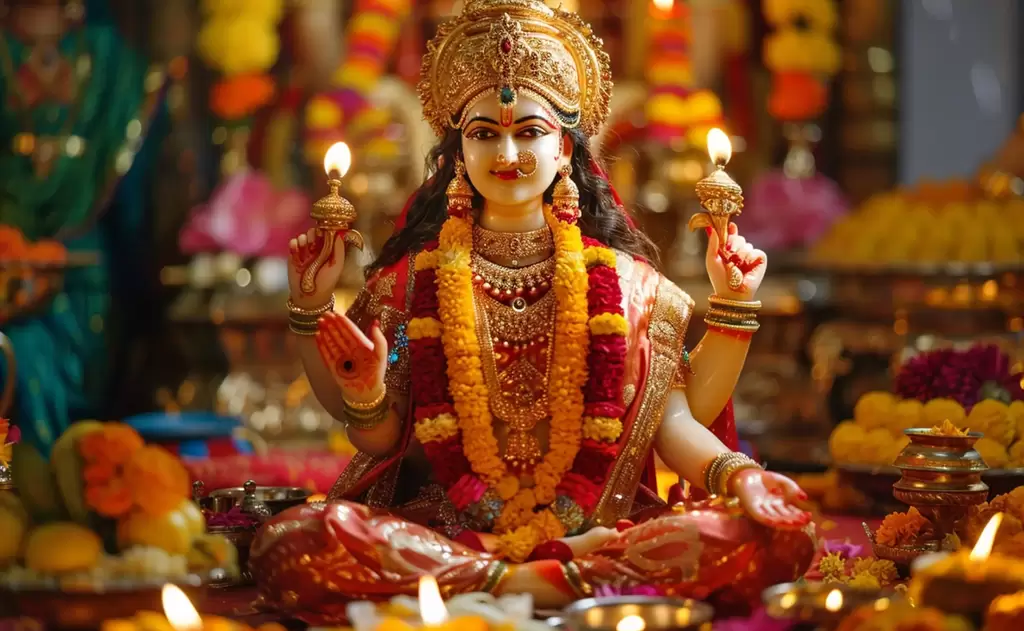
- Devotion to Lakshmi: In the traditional story, Agrasen performed austerities to Goddess Lakshmi, who blessed him and promised prosperity to his descendants. Lakshmi is therefore honoured as the family goddess (kuldevi) of many Agrawal families.
- Non-violence: Tradition says that Agrasen turned away from animal sacrifice during his yajnas, and the community connects its strong vegetarian customs with this memory.
- Mutual help: The best-known story is about how Agroha welcomed newcomers, described below.
The traditional account also says that the king's descendants came to be organised into family lineages (gotras), which many Agrawal families still name today. Details of the story differ between tellings.
The one brick and one coin story
Ask almost anyone in the community about Agroha and you will hear this story. When a new family came to settle in the city, each household is said to have given it one brick and one coin. With bricks from every home the newcomers could build a house, and with coins from every home they could start a trade. No one was made to feel like a stranger, and no family carried the burden alone.
It is a much-loved story told in the community rather than an event recorded in historical sources, but its message is the reason it is retold every Agrasen Jayanti: prosperity is meant to be shared, and a community is strong when it lifts up every new member.
Legend and history: what we can say
It is important to be honest about the sources. Historians generally describe Agrasen as a legendary figure: no inscriptions or securely dated records of his reign have been found, and the dates for his life given in community literature are matters of faith rather than documented history. The tradition was compiled in modern times by the Hindi writer Bharatendu Harishchandra, himself from the Agrawal community, in his 1871 essay Agarwalon ki Utpatti ("The origins of the Agrawals"), which drew on older traditions and texts.
| Topic | What tradition says | What can be documented |
|---|---|---|
| Agrasen's life | A just king of Agroha, devoted to Lakshmi, of the solar lineage | Regarded by historians as legendary; no dated records of his reign |
| Agroha | His capital and a city of traders | A town in Hisar district, Haryana, today home to the Agroha Dham temple |
| Agrasen ki Baoli, Delhi | Linked by tradition to Agrasen | The present stepwell is generally dated to the 14th century |
| Recognition | Revered as the ancestor of the Agrawal community | Government of India postage stamp in 1976; Hisar's airport bears his name |
Faith and history are different ways of knowing, and there is no need to set one against the other. For devotees the story's value lies in its ideals: fairness, generosity, non-violence and devotion.
Places associated with Maharaja Agrasen
Agroha, Haryana
Agroha, in Hisar district, is the place traditionally identified as Agrasen's capital. The modern Agroha Dham temple complex is a major centre of devotion and heritage for the community; its eastern wing is dedicated to Maharaja Agrasen. Many families visit Agroha around the jayanti and on other occasions to pay their respects. Check local announcements for any events and arrangements.
Agrasen ki Baoli, Delhi
This elegant stepwell in central New Delhi carries Agrasen's name. Tradition links its origin to the king, though the structure seen today is generally dated to the 14th century. It is a protected monument and a well-known landmark of the city.
Other tributes
In 1976 the Government of India issued a postage stamp in Maharaja Agrasen's honour, and the airport at Hisar is named after him. Schools, colleges, hospitals and charitable institutions bearing his name are found across north India, many of them founded by community trusts.
How Agrasen Jayanti is celebrated
Celebrations are organised by local community associations and families, so the details vary from city to city. Common features include:
- Prayer and aarti: a portrait of Maharaja Agrasen is garlanded and worshipped, often alongside Goddess Lakshmi.
- Shobha yatra: processions with decorated tableaux, music and devotional songs move through neighbourhoods.
- Seva: health check-up camps, blood donation drives, distribution of food, clothes and study material, and support for those in need, in the spirit of the one brick and one coin story.
- Community meals: bhandaras and shared vegetarian meals open to all.
- Cultural programmes: talks on the king's ideals, children's competitions and felicitation of students and volunteers.
Agrasen Jayanti is a public or gazetted holiday in several North Indian states, including Haryana. Holiday lists are issued by each state every year, so please check your state's list for 2026.
A simple observance at home
If there is no community event near you, you can mark the day at home in a few minutes:
- After your Navratri Ghatasthapana, place a picture of Maharaja Agrasen beside a picture of Goddess Lakshmi.
- Light a lamp, offer flowers and a simple vegetarian sweet.
- Chant Lakshmi's name mantra a few times, given below, with a prayer for the wellbeing of your family and community.
- Tell the children the one brick and one coin story and ask them how they could help a new family in your neighbourhood.
- Do one act of seva: donate food, support a local cause or help someone who is new to your city.
A widely used name mantra of Goddess Lakshmi:
ॐ श्रीं महालक्ष्म्यै नमः॥
oṃ śrīṃ mahālakṣmyai namaḥ||
Meaning: Om, salutations to Mahalakshmi. It is a prayer of devotion and gratitude, not a promise of wealth or any particular result. Our Lakshmi Puja vidhi guide explains fuller worship.
Agrasen Jayanti and Navratri on the same day
Because Agrasen Jayanti falls on Ashwina Shukla Pratipada, it always shares its date with the first day of Sharad Navratri. In 2026 that means Ghatasthapana and the worship of Maa Shailaputri on Navratri Day 1 on the same Sunday. A practical way to plan the day:
- Morning: set up the Navratri kalash and offer prayers to Maa Shailaputri, following your family's custom or your priest's guidance on timing.
- Late morning or afternoon: join your local Agrasen Jayanti prayer, procession or seva programme.
- Evening: Navratri aarti at home or at a temple.
For the full festival calendar of the coming weeks, see our October 2026 Hindu festivals guide.
Agrasen Jayanti abroad
Agrawal families in the USA, UK, Canada, the Gulf, Singapore and elsewhere often mark the jayanti through community associations and temples, frequently on the nearest weekend. Since the date in 2026 falls on a Sunday, many groups may celebrate on the day itself. Lunar dates can shift by a day in other time zones, so follow the date your local association or temple announces.
Wherever it is kept, the heart of the day is the same: remembering a king whose story teaches that prosperity is a blessing to be shared, and turning that memory into service for others.
Frequently asked questions
When is Maharaja Agrasen Jayanti in 2026?
Maharaja Agrasen Jayanti 2026 is on Sunday 11 October. It is observed on Ashwina Shukla Pratipada, the first day of Sharad Navratri. Drik Panchang lists the jayanti on this date; in Hyderabad, Pratipada lasts until 09:30 PM IST.
Who was Maharaja Agrasen?
In tradition, Maharaja Agrasen was the king of Agroha, in present-day Hisar district of Haryana, and is revered by the Agrawal community as its ancestor. He is remembered as a just ruler devoted to Goddess Lakshmi. Historians regard him as a legendary figure, since no securely dated records of his reign have been found.
Where is Agroha?
Agroha is in Hisar district, Haryana. It is the place traditionally identified as Maharaja Agrasen's capital and is home to the Agroha Dham temple complex, whose eastern wing is dedicated to him.
What is the one brick and one coin story?
It is a much-loved story told in the community: every family in Agroha is said to have welcomed a newcomer by giving one brick and one coin, so that the new family could build a home and start a livelihood. It is a cherished tradition of mutual help rather than a documented historical fact.
Is Agrasen Jayanti a public holiday?
Agrasen Jayanti is a public or gazetted holiday in several North Indian states, including Haryana. Holiday lists change from year to year, so check your state government's list for 2026.
How is Agrasen Jayanti celebrated?
Celebrations usually include prayers and aarti before a portrait of Maharaja Agrasen, worship of Goddess Lakshmi, shobha yatras (processions), community meals and seva activities such as health camps, blood donation drives and help for those in need. Customs vary from city to city.
Editor's note (10 October 2026)
The date and tithi in this guide are from Drik Panchang (Hyderabad, IST), as of 10 October 2026. The account of Maharaja Agrasen is presented as it is traditionally told in the community; where history cannot confirm a story, we say so. Holiday status and local celebrations vary by state and city, so please check official and community announcements.
You might also like

Madhvacharya Jayanti 2026: Date, Life of Sri Madhvacharya, Dvaita Philosophy and Udupi
Chhath Puja 2026 in New Zealand, Singapore, Malaysia, Mauritius and South Africa: Dates, a Day Later in NZ, and Arghya Times for 8 Cities

December 2026 Hindu Festivals in Germany: Daily Tithi, Frankfurt Sunrise and Festival Dates