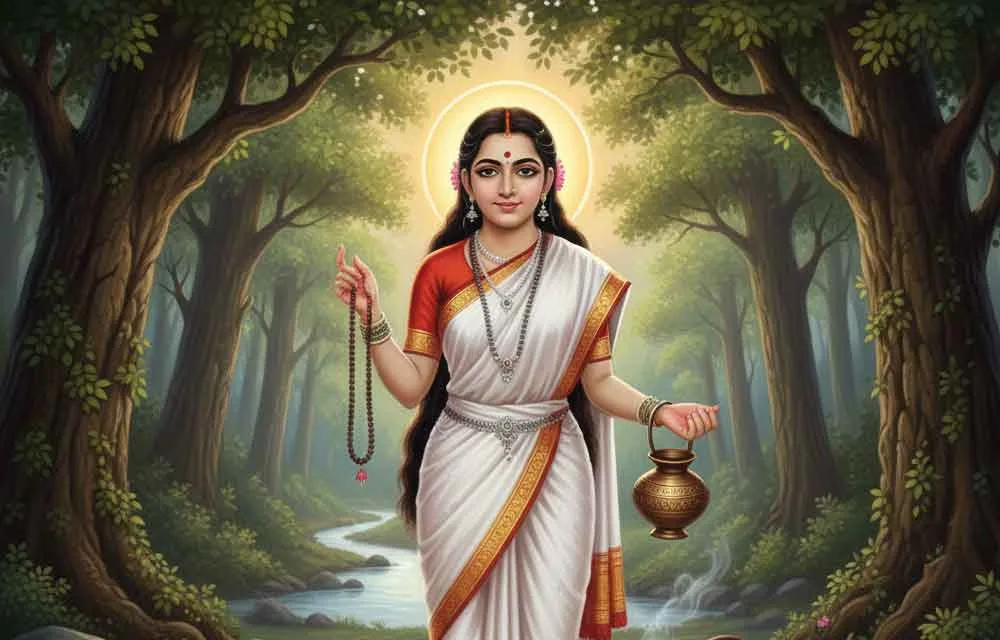
Navratri 2026 Day 1: Maa Shailaputri Mantra, Colour, Bhog and Puja Vidhi (Sunday 11 October)
Navratri 2026 begins on Sunday 11 October (Pratipada) with Maa Shailaputri, the daughter of the mountains. Here are her naam mantra, dhyana shloka and stuti in Devanagari and transliteration with meanings, four beloved Devi mantras, the popular orange colour, ghee bhog, a simple apartment-friendly puja vidhi, fasting tips and an NRI evening routine.
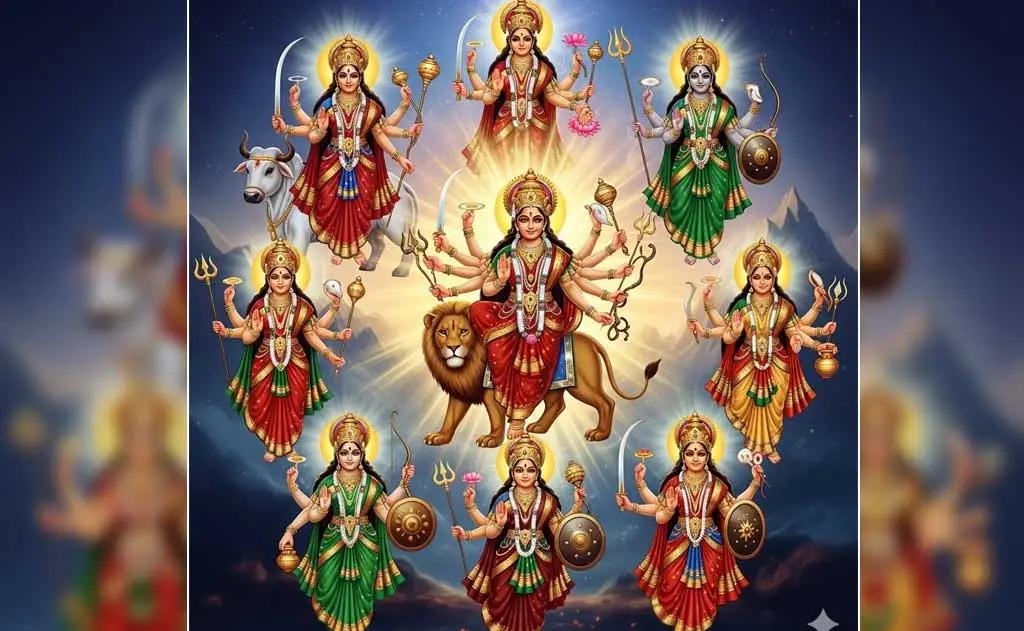
Navratri 2026 begins on Sunday 11 October (Pratipada) with Maa Shailaputri, the daughter of the mountains. Here are her naam mantra, dhyana shloka and stuti in Devanagari and transliteration with meanings, four beloved Devi mantras, the popular orange colour, ghee bhog, a simple apartment-friendly puja vidhi, fasting tips and an NRI evening routine.
Quick answer: your Navratri Day 1 2026 Shailaputri mantra, colour and bhog in brief: Day 1 is Sunday 11 October 2026 (Ashwin Shukla Pratipada in India, per Drik Panchang). The Goddess of the day is Maa Shailaputri, the popular colour is orange, the customary bhog is pure cow ghee, and her naam mantra is "Om Devi Shailaputryai Namah". Ghatasthapana, the setting up of the sacred kalash, is done on the same day.
Navratri opens with a homecoming: devotees welcome the Goddess as Shailaputri, the daughter of the mountain king, for nine nights of prayer. Whether you light your lamp in Hyderabad or New Jersey, this guide walks you gently through the day.
Navratri Day 1 2026 Shailaputri mantra, colour and bhog at a glance
| Detail | Day 1 |
|---|---|
| Date (India) | Sunday 11 October 2026 |
| Tithi (India) | Pratipada |
| Goddess | Maa Shailaputri |
| Colour of the day | Orange (popular custom; lists vary) |
| Bhog / naivedya | Cow ghee, offered and later given in charity (popular custom; lists vary) |
| Naam mantra | Om Devi Shailaputryai Namah |
| Also on this day | Ghatasthapana / Kalash Sthapana |
Navratri 2026 runs from Sunday 11 to Monday 19 October in India, with Durga Ashtami and Maha Navami both on Monday 19 October and Dussehra on Tuesday 20 October. For the full nine-day colour list, see Navratri 2026 colours for all 9 days.
Who is Maa Shailaputri? Her form and story
"Shaila" means mountain and "putri" means daughter, so Shailaputri is the daughter of the mountains. She is the first of the nine forms of Durga, the Navadurga, and is honoured at the very start of Navratri.
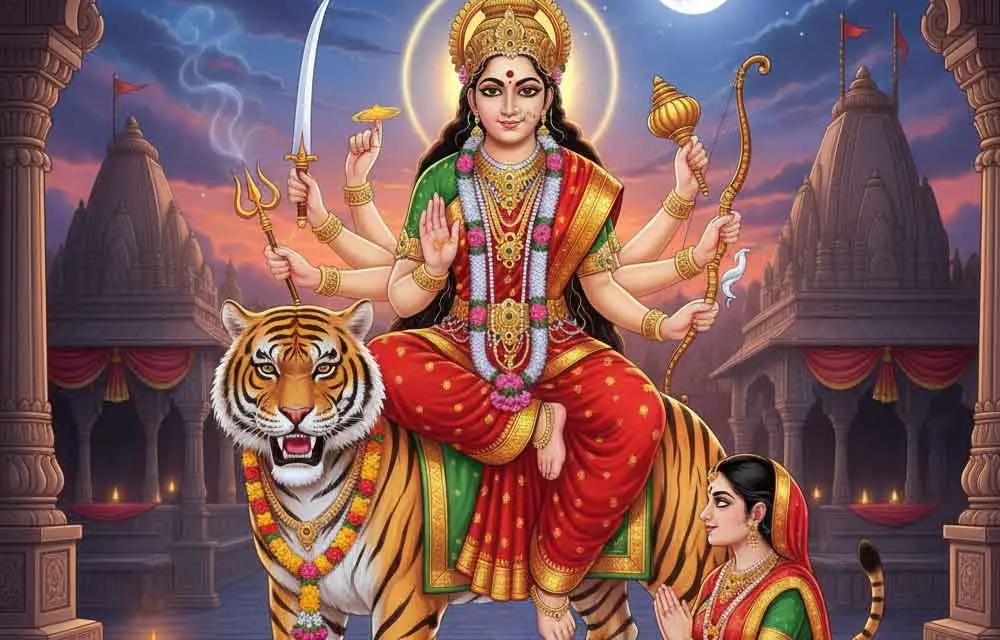
Her form: she is usually shown riding a bull (Vrishabha, often identified with Nandi), holding a trident (trishul) in her right hand and a lotus in her left, with a crescent moon on her crown. Her dhyana shloka below describes exactly this image.
Her story, as commonly told: in an earlier life the Goddess was Sati, the daughter of Daksha and the beloved wife of Lord Shiva. When Daksha held a great yajna and insulted Shiva by leaving him out, Sati could not bear the dishonour and gave up her body in the sacrificial fire. She was then reborn as the daughter of Himavan, king of the Himalayas, and of Queen Mena, and was called Parvati, Haimavati and Shailaputri. In this new life she was again united with Shiva. Devotees see in her the steadiness of a mountain and a devotion that endures across lifetimes.
Spiritual significance of Day 1
As traditionally described, Day 1 is linked with the Muladhara, the root chakra at the base of the spine, associated with grounding and stability: before we climb, we steady our feet.
Devotees believe that worshipping Shailaputri first helps them begin the festival with a settled mind. The spirit of the day is simple: make a clean start and offer the nine days to the Mother.
Maa Shailaputri mantras with meaning
These are the traditional texts as commonly recited. Light the lamp first and chant slowly; sincerity matters more than perfect pronunciation.
Naam mantra of Maa Shailaputri
ॐ देवी शैलपुत्र्यै नमः॥
Om Devi Shailaputryai Namah
Meaning: "Om, salutations to Goddess Shailaputri."
How to chant: this short mantra is ideal for daily japa. Chant it 108 times with a rudraksha, sphatik or tulsi mala after lighting the ghee lamp, or 11 or 21 times if time is short.
Dhyana shloka (meditation verse)
वन्दे वाञ्छितलाभाय चन्द्रार्धकृतशेखराम्। वृषारूढां शूलधरां शैलपुत्रीं यशस्विनीम्॥
Vande vanchhita-labhaya chandrardha-krita-shekharam, vrisharudham shuladharam shailaputrim yashasvinim.
Meaning: "I bow to the glorious Shailaputri, who wears the half-moon as an ornament on her head, who rides a bull and holds a trident, praying for the fulfilment of the heart's good wishes."
How to chant: recite it once or three times before the naam mantra while picturing her form, so that the japa that follows has a clear focus.
Stuti: Ya Devi Sarvabhuteshu Maa Shailaputri
या देवी सर्वभूतेषु माँ शैलपुत्री रूपेण संस्थिता। नमस्तस्यै नमस्तस्यै नमस्तस्यै नमो नमः॥
Ya Devi sarvabhuteshu Maa Shailaputri rupena samsthita, namastasyai namastasyai namastasyai namo namah.
Meaning: "To the Goddess who abides in all beings in the form of Mother Shailaputri: salutations to her, salutations to her, salutations to her, again and again."
How to chant: chant it three times with folded hands, either just before the aarti or at the close of the puja.
Devi mantras to chant on all nine days
Many families also chant one or two of these well-loved Devi mantras on every day of Navratri.
Navarna mantra
ॐ ऐं ह्रीं क्लीं चामुण्डायै विच्चे॥
Om Aim Hreem Kleem Chamundayai Vichche
Meaning: the nine-syllable mantra of the Devi in the Chandi (Durga Saptashati) tradition. As traditionally explained, its seed syllables invoke the Mother as Saraswati, Lakshmi and Kali.
How to chant: in many families this mantra is received from a guru or the family priest before regular japa. If that is your tradition, follow it; otherwise, the simpler mantras below are a lovely daily practice.
Om Dum Durgayai Namah
ॐ दुं दुर्गायै नमः॥
Om Dum Durgayai Namah
Meaning: "Om, salutations to Durga," with "Dum" as the Durga beeja (seed) syllable.
How to chant: a gentle mantra for 108 repetitions with a mala, morning or evening, through all nine days.
Sarva Mangala Mangalye
सर्वमङ्गलमाङ्गल्ये शिवे सर्वार्थसाधिके। शरण्ये त्र्यम्बके गौरि नारायणि नमोऽस्तु ते॥
Sarva-mangala-mangalye shive sarvartha-sadhike, sharanye tryambake gauri narayani namostu te.
Meaning: "O Narayani, the auspiciousness in all that is auspicious, O gracious one who brings every worthy aim to fulfilment, O refuge of all, three-eyed Gauri, salutations to you." This verse comes from the Narayani Stuti of the Devi Mahatmya.
How to chant: many families recite it at the start of the puja, before meals offered as prasad, or at the end of the aarti.
Ya Devi Sarvabhuteshu Shakti Rupena
या देवी सर्वभूतेषु शक्तिरूपेण संस्थिता। नमस्तस्यै नमस्तस्यै नमस्तस्यै नमो नमः॥
Ya Devi sarvabhuteshu shakti-rupena samsthita, namastasyai namastasyai namastasyai namo namah.
Meaning: "To the Goddess who abides in all beings in the form of power: salutations to her, again and again." It comes from the Aparajita Stuti of the Devi Mahatmya.
How to chant: chant it three or eleven times, ideally while offering a flower at each repetition.
For the mantras of all nine forms in one place, see Navratri day-wise mantras and their significance.
Simple Day 1 puja vidhi at home (apartment-friendly)
Day 1 adds the step of Ghatasthapana. Keep it simple; the Mother looks at the heart.
- Prepare: bathe, wear clean clothes (orange if you like), and clean the puja corner. Spread a red or yellow cloth on a low stool and place a picture or idol of Maa Durga or Maa Shailaputri.
- Ghatasthapana: at the muhurat for your city, place a kalash of water with mango leaves and a coconut wrapped in red cloth. Many families sow barley or wheat seeds in a tray of soil beside it. Check Drik Panchang or your priest for the muhurat where you live.
- Sankalpa: hold a little water, rice and a flower, and quietly state your intention to worship the Goddess for these nine days.
- Lamp: light a ghee lamp (akhand jyoti if your family keeps one, otherwise a regular diya morning and evening) and an incense stick.
- Invite and offer: offer kumkum, haldi, akshata (unbroken rice), a red chunri if you have one, and flowers.
- Chant: recite the dhyana shloka, then the naam mantra 108 times, then the stuti.
- Bhog: offer pure cow ghee, or a sweet made with ghee, along with fruit and water.
- Aarti: sing the Durga aarti your family knows, wave the lamp and bow.
- Close: ask forgiveness for any mistakes, share prasad with the family.
Apartment safety: place the lamp on a metal plate away from curtains, keep a glass chimney over an akhand jyoti, and do not leave a flame unattended. For a full nine-day plan, see our apartment-friendly Navratri 2026 puja vidhi.
Bhog, flowers and colour for Maa Shailaputri
Bhog: by popular custom, Day 1's offering is pure cow ghee. Some families place a small bowl of ghee before the Goddess and later give ghee in charity; others light the lamp with it. Bhog lists vary by tradition, so your family's custom always comes first. For recipe ideas, see Navratri day-wise prasadam recipes.
Flowers: white jasmine, red hibiscus and marigold are all commonly offered. There is no single rule; choose fresh, clean flowers.
Colour: orange, the Sunday colour in the popular weekday pattern. It is a joyful community custom rather than a scriptural requirement.
Fasting on Day 1: what to do and avoid
- Many devotees keep a fruit-and-milk fast or eat one sattvic meal made with vrat ingredients such as kuttu (buckwheat), singhara (water chestnut) flour, sabudana, potatoes and rock salt (sendha namak).
- Commonly avoided: onion, garlic, meat, eggs, alcohol and, in many families, regular grains and table salt.
- Drink plenty of water. If you are pregnant, elderly, diabetic, on medication or unwell, choose a light fast or speak to your doctor first.
- For day-by-day meal ideas, see Sharad Navratri 2026 day-wise vrat recipes.
A short prayer and sankalpa for Day 1
You may say this in your own words: "Maa Shailaputri, daughter of the mountains, I welcome you into my home today. Give me the steadiness to keep these nine days with a clean heart. Bless my family, keep us kind to one another, and let my prayers be offered with love. I bow to you again and again."
NRI angle: keeping Day 1 abroad
In the USA, Canada, the UK and most other countries, Drik Panchang also lists Navratri as beginning on Sunday 11 October 2026, so Day 1 lands on a weekend almost everywhere. Ghatasthapana muhurats are local, so look up your own city on Drik Panchang rather than using India's time. One difference to note for later in the week: in the USA, Canada and the UK, Drik lists Durga Ashtami on 18 October and Maha Navami on 19 October.
- If Monday is a busy workday, set up the kalash on Sunday and plan a 15-minute evening routine for the rest of the week: lamp, naam mantra, stuti, aarti.
- City-wise details: Navratri 2026 in the USA, city by city and Navratri 2026 in Canada, city by city.
Before and after Day 1
Day 1 opens the festival, so there is no earlier day post. For preparation, read the Navratri 2026 complete guide for NRIs. Tomorrow, Monday 12 October, continue with Navratri 2026 Day 2: Maa Brahmacharini.
Frequently asked questions
What is the colour of Navratri Day 1 2026?
Orange. Navratri Day 1 falls on Sunday 11 October 2026, and in the popular weekday colour pattern Sunday is orange. This is a modern custom that spread from Maharashtra, not a scriptural rule, so lists can vary and wearing the colour is entirely optional.
Which mantra is chanted for Maa Shailaputri?
The simplest is her naam mantra, "Om Devi Shailaputryai Namah" (ॐ देवी शैलपुत्र्यै नमः॥), often chanted 108 times with a mala after lighting the lamp. Many families also recite her dhyana shloka, "Vande vanchhita-labhaya...", and the stuti, "Ya Devi sarvabhuteshu Maa Shailaputri rupena samsthita...".
What bhog is offered on Day 1 of Navratri?
By popular custom, pure cow ghee is offered to Maa Shailaputri on Day 1, and many families later give ghee in charity. Some households also offer ghee-based sweets or simply light the lamp with ghee. Bhog lists vary by tradition, so follow your family's practice.
Is Ghatasthapana on Navratri Day 1 in 2026?
Yes. Ghatasthapana (Kalash Sthapana) is done on Pratipada, Sunday 11 October 2026, which is also the day of Maa Shailaputri. The muhurat depends on your city, so check Drik Panchang for your location or ask your family priest.
Which flower is offered to Maa Shailaputri?
There is no single fixed rule. Many families offer white flowers such as jasmine, while others offer red hibiscus, a flower dear to the Goddess, or fresh marigolds. Any clean, fresh flower offered with love is welcome; lists vary by region.
Can I do the Day 1 puja in the evening if I live in the USA or UK?
Yes. Navratri begins on Sunday 11 October in the USA, Canada and the UK too, and a Sunday makes it easier. If you set up the kalash in the morning, you can still do the main lamp, mantra and aarti in the evening. Families with a working day ahead often keep the evening puja short and sincere.
Editor's note
Editor's note (6 October 2026): This page has been restored at its original address. India dates and tithis are from Drik Panchang. The mantras are traditional texts as commonly recited; meanings are our plain-English renderings. Colours and bhog follow popular custom and lists vary. Please follow your family priest and your own family tradition, and check your temple directly for its programme.
Related guides
You might also like
Navratri 2026 Day 8: Maa Mahagauri Mantra, Colour, Bhog and Puja Vidhi (Sunday 18 October)
Navratri 2026 Day 7: Maa Kalaratri Mantra, Colour, Bhog and Puja Vidhi (Saturday 17 October)
Navratri 2026 Day 3: Maa Chandraghanta Mantra, Colour, Bhog and Puja Vidhi (Tuesday 13 October)