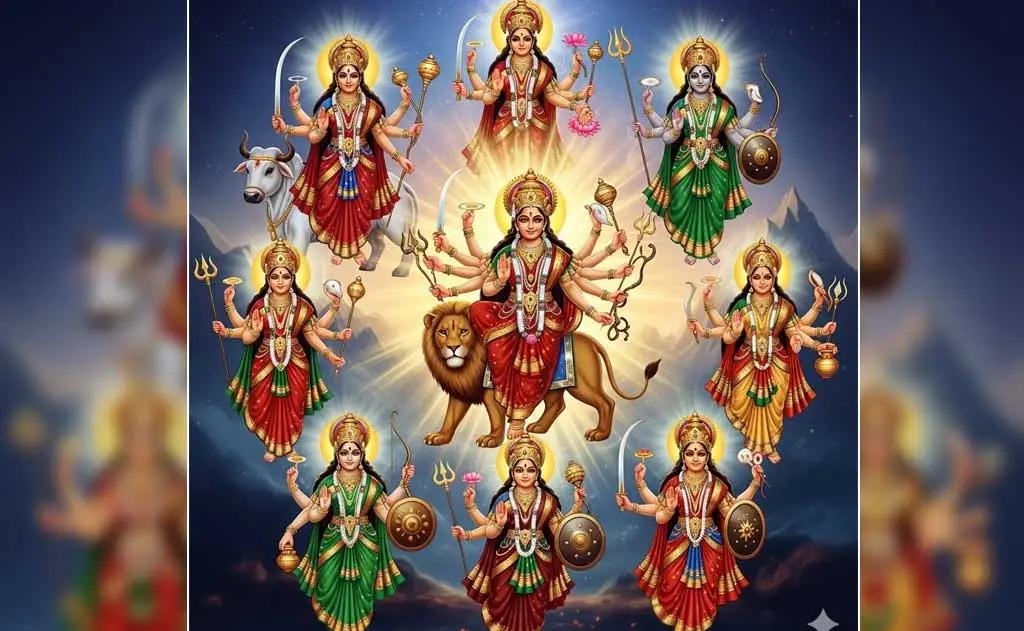
Navratri 2026 Day 3: Maa Chandraghanta Mantra, Colour, Bhog and Puja Vidhi (Tuesday 13 October)
Day 3 of Navratri 2026 is Tuesday 13 October (Tritiya), dedicated to Maa Chandraghanta, who wears the bell-shaped half-moon on her forehead. Here are her naam mantra, dhyana shloka and stuti in Devanagari and transliteration with meanings, four Devi mantras for every day, the popular red colour, milk or kheer bhog, an easy evening puja vidhi, fasting tips and notes for NRIs.
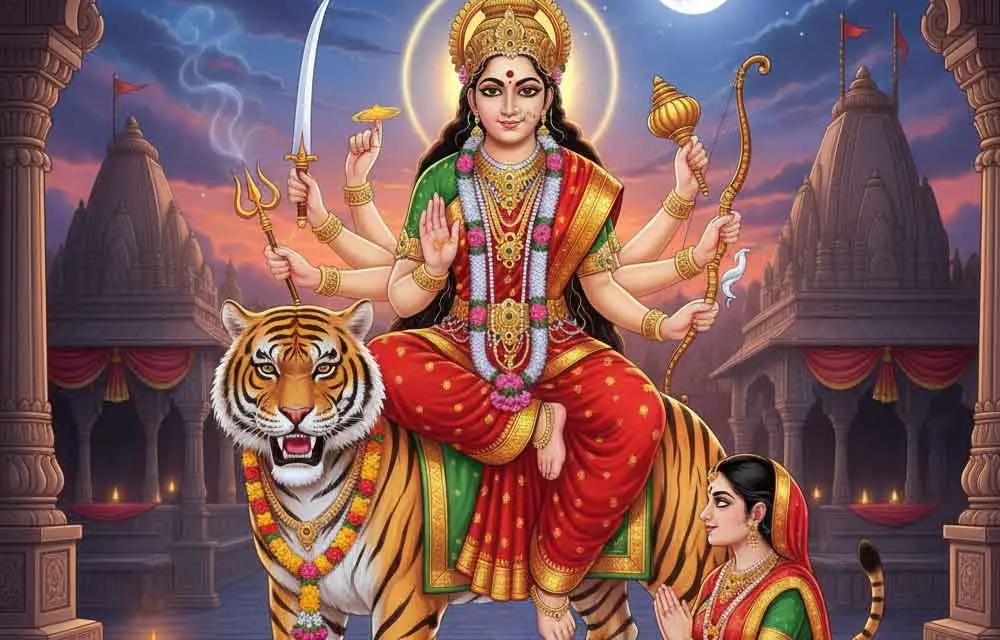
Day 3 of Navratri 2026 is Tuesday 13 October (Tritiya), dedicated to Maa Chandraghanta, who wears the bell-shaped half-moon on her forehead. Here are her naam mantra, dhyana shloka and stuti in Devanagari and transliteration with meanings, four Devi mantras for every day, the popular red colour, milk or kheer bhog, an easy evening puja vidhi, fasting tips and notes for NRIs.
Quick answer: your Navratri Day 3 2026 Chandraghanta mantra, colour and bhog in brief: Day 3 is Tuesday 13 October 2026 (Ashwin Shukla Tritiya in India, per Drik Panchang). The Goddess of the day is Maa Chandraghanta, the popular colour is red, the customary bhog is milk or kheer, and her naam mantra is "Om Devi Chandraghantayai Namah".
On the third day the gentle ascetic of Day 2 appears ready to protect her devotees. Maa Chandraghanta is fierce towards wrongdoing and tender towards those who come to her, and many families feel the festival gathering strength from today. Here is how to welcome her at home.
Navratri Day 3 2026 Chandraghanta mantra, colour and bhog at a glance
| Detail | Day 3 |
|---|---|
| Date (India) | Tuesday 13 October 2026 |
| Tithi (India) | Tritiya |
| Goddess | Maa Chandraghanta |
| Colour of the day | Red (popular custom; lists vary) |
| Bhog / naivedya | Milk or kheer (popular custom; lists vary) |
| Naam mantra | Om Devi Chandraghantayai Namah |
All nine days are listed in Navratri 2026 colours for all 9 days. In India, Navratri 2026 runs from 11 to 19 October, Durga Ashtami and Maha Navami both fall on Monday 19 October, and Dussehra is on Tuesday 20 October.
Who is Maa Chandraghanta? Her form and story
"Chandra" is the moon and "ghanta" is a bell. She is the third of the Navadurga, named for the half-moon, shaped like a bell, that shines on her forehead.
Her form: she is usually pictured with a golden complexion and ten arms holding weapons such as a trident, sword, mace and bow, with one hand often raised in blessing. She rides a lion or tiger; her dhyana shloka below calls her mount "the best of beasts" and describes her armed for battle. Her stance is that of a warrior ready to defend, yet her face is calm.
Her story, as commonly told: after her long tapas, Parvati was to marry Lord Shiva. One popular telling says that Shiva arrived for the wedding in a fearsome form, with ash, serpents and a procession of ghosts and spirits, and Queen Mena fainted at the sight. Parvati then took the radiant form of Chandraghanta and gently asked Shiva to appear in a pleasing form, and the wedding went ahead with joy. Other tellings describe her as the married form of Parvati who wears the half-moon on her brow, and as a protector whose bell terrifies demons. Devotees cherish both sides of her: brave and full of grace.
Spiritual significance of Day 3
As traditionally described, Day 3 is associated with the Manipura chakra at the navel, linked with willpower, confidence and inner fire. Devotees believe that remembering Chandraghanta helps them face fears with a steady heart, and many speak of the sound of her bell as a call to wake up and pay attention. The ringing of the puja bell during today's aarti can be a small, meaningful reminder of her.
Maa Chandraghanta mantras with meaning
These are the traditional texts as commonly recited. Light the lamp, ring the bell once if you have one, and chant slowly.
Naam mantra of Maa Chandraghanta
ॐ देवी चन्द्रघण्टायै नमः॥
Om Devi Chandraghantayai Namah
Meaning: "Om, salutations to Goddess Chandraghanta."
How to chant: chant it 108 times with a mala after lighting the lamp. If time is short on a weekday, 11 or 21 times is fine.
Dhyana shloka (meditation verse)
पिण्डजप्रवरारूढा चण्डकोपास्त्रकैर्युता। प्रसादं तनुते मह्यं चन्द्रघण्टेति विश्रुता॥
Pindaja-pravararudha chandakopastrakairyuta, prasadam tanute mahyam chandraghanteti vishruta.
Meaning: "She who rides the finest of beasts and bears weapons of fierce wrath against evil, renowned as Chandraghanta, may she extend her grace to me."
How to chant: recite it once or three times while picturing her form, then move to the naam mantra.
Stuti: Ya Devi Sarvabhuteshu Maa Chandraghanta
या देवी सर्वभूतेषु माँ चन्द्रघण्टा रूपेण संस्थिता। नमस्तस्यै नमस्तस्यै नमस्तस्यै नमो नमः॥
Ya Devi sarvabhuteshu Maa Chandraghanta rupena samsthita, namastasyai namastasyai namastasyai namo namah.
Meaning: "To the Goddess who abides in all beings in the form of Mother Chandraghanta: salutations to her, again and again."
How to chant: chant it three times with folded hands, just before the aarti.
Devi mantras for all nine days
Along with the mantras of the day, many households chant one or two of these through the whole festival.
Navarna mantra
ॐ ऐं ह्रीं क्लीं चामुण्डायै विच्चे॥
Om Aim Hreem Kleem Chamundayai Vichche
Meaning: the nine-syllable Devi mantra of the Chandi (Durga Saptashati) tradition, addressed to the Mother as Chamunda.
How to chant: it is traditionally received from a guru or family priest before regular japa in many families; follow your tradition.
Om Dum Durgayai Namah
ॐ दुं दुर्गायै नमः॥
Om Dum Durgayai Namah
Meaning: "Om, salutations to Durga," with "Dum" as her beeja (seed) syllable.
How to chant: 108 times with a mala, morning or evening, on every day of Navratri.
Sarva Mangala Mangalye
सर्वमङ्गलमाङ्गल्ये शिवे सर्वार्थसाधिके। शरण्ये त्र्यम्बके गौरि नारायणि नमोऽस्तु ते॥
Sarva-mangala-mangalye shive sarvartha-sadhike, sharanye tryambake gauri narayani namostu te.
Meaning: "O Narayani, the auspiciousness of all that is auspicious, gracious one who fulfils every worthy aim, refuge of all, three-eyed Gauri, salutations to you." From the Narayani Stuti of the Devi Mahatmya.
How to chant: once or three times as you begin the puja or as you offer the bhog.
Ya Devi Sarvabhuteshu Shakti Rupena
या देवी सर्वभूतेषु शक्तिरूपेण संस्थिता। नमस्तस्यै नमस्तस्यै नमस्तस्यै नमो नमः॥
Ya Devi sarvabhuteshu shakti-rupena samsthita, namastasyai namastasyai namastasyai namo namah.
Meaning: "To the Goddess who abides in all beings as power: salutations to her, again and again." From the Aparajita Stuti of the Devi Mahatmya.
How to chant: three or eleven times, offering a red flower with each recitation if you can.
For every day's mantras in one place, see Navratri day-wise mantras and their significance.
Simple Day 3 puja vidhi at home
- Prepare: bathe, wear clean clothes (red if you like) and tidy the altar. Replace old flowers and check the water in the kalash.
- Lamp and bell: light the ghee lamp and incense, and ring the puja bell gently to begin.
- Offer: kumkum, haldi, akshata, a red chunri if you have one, and red flowers.
- Chant: dhyana shloka, naam mantra 108 times, then the stuti.
- Bhog: a cup of milk or a small bowl of kheer, with fruit and water.
- Aarti: sing the Durga aarti your family knows, ringing the bell as you wave the lamp.
- Close: ask forgiveness for any mistake and share the prasad.
Use a metal plate under every lamp, keep flames away from curtains and smoke alarms, and never leave them unattended. For a complete routine see the apartment-friendly Navratri 2026 puja vidhi and our evergreen Navratri Day 3: Maa Chandraghanta puja complete rituals guide.
Bhog, flowers and colour for Maa Chandraghanta
Bhog: by popular custom, milk or kheer. Many families make kheer with rice or sabudana, sweetened with sugar and flavoured with cardamom, so that it also suits the fast. Bhog lists vary by tradition; see Navratri day-wise prasadam recipes.
Flowers: red hibiscus, red roses, lotus and marigold are all commonly offered.
Colour: red, the Tuesday colour in the popular weekday pattern, and a colour long associated with the Goddess. Wearing it is a joyful custom, not a requirement.
Fasting on Day 3: what to do and avoid
- Typical vrat foods: fruit, milk, curd, sabudana, kuttu or singhara flour, potatoes and rock salt (sendha namak).
- Commonly avoided: onion, garlic, meat, eggs, alcohol and, in many families, grains and table salt.
- By Day 3 tiredness can set in, so rest well, drink water and keep meals regular. Anyone pregnant, elderly, diabetic, on medication or unwell should keep a light fast or check with a doctor.
- Recipes: Sharad Navratri 2026 day-wise vrat recipes.
A short prayer and sankalpa for Day 3
In your own words: "Maa Chandraghanta, whose bell rings out against every darkness, I bow to you. Give me courage where I am afraid and calm where I am restless. Watch over my family, and let my worship today be offered with a pure heart."
NRI angle: Day 3 abroad
Day 3 is Tuesday 13 October in the USA, Canada and the UK too, a regular working day. Many families do a quick lamp and naam mantra in the morning and the full puja with kheer and aarti in the evening, when children can join in ringing the bell. Plan ahead for the end of the festival: Drik Panchang lists Durga Ashtami on 18 October and Maha Navami on 19 October in the USA, Canada and the UK, whereas in India both fall on 19 October.
For local details, see Navratri 2026 in the USA, city by city and Navratri 2026 in Canada; check your temple's website for its programme.
Previous and next day
- Previous: Navratri 2026 Day 2: Maa Brahmacharini (Monday 12 October)
- Next: Navratri 2026 Day 4: Maa Kushmanda (Wednesday 14 October)
Frequently asked questions
What is the colour of Navratri Day 3 2026?
Red. Day 3 falls on Tuesday 13 October 2026, and in the popular weekday colour pattern Tuesday is red. This is a modern community custom rather than a scriptural rule, so lists can vary and wearing it is optional.
Which mantra is chanted for Maa Chandraghanta?
Her naam mantra is "Om Devi Chandraghantayai Namah" (ॐ देवी चन्द्रघण्टायै नमः॥), often chanted 108 times with a mala after lighting the lamp. Many devotees also recite her dhyana shloka, "Pindaja-pravararudha...", and the stuti, "Ya Devi sarvabhuteshu Maa Chandraghanta rupena samsthita...".
What bhog is offered on Day 3 of Navratri?
By popular custom, milk or kheer (rice pudding made with milk) is offered to Maa Chandraghanta. Some families offer milk sweets instead. Bhog lists vary by tradition, so follow your family's custom.
Why is she called Chandraghanta?
"Chandra" means moon and "ghanta" means bell. She is described wearing a half-moon shaped like a bell on her forehead, which gives her the name. As commonly told, the sound of her bell drives away negative forces.
Which flower is offered to Maa Chandraghanta?
Red flowers such as hibiscus or red roses are popular on Day 3, matching the colour of the day; lotus and marigold are also offered. There is no single fixed rule and lists vary.
Is Navratri Day 3 on the same date in the USA and Canada?
Yes. Navratri begins on 11 October in the USA, Canada and the UK too, so Day 3 is Tuesday 13 October there as well. Most families abroad keep the main puja in the evening after work.
Editor's note
Editor's note (6 October 2026): This page has been restored at its original address. India dates and tithis are from Drik Panchang. The mantras are traditional texts as commonly recited, with plain-English meanings by our editors. Colours and bhog follow popular custom and lists vary. Please follow your family priest and your own tradition.
Related guides
You might also like
Navratri 2026 Day 8: Maa Mahagauri Mantra, Colour, Bhog and Puja Vidhi (Sunday 18 October)
Navratri 2026 Day 7: Maa Kalaratri Mantra, Colour, Bhog and Puja Vidhi (Saturday 17 October)
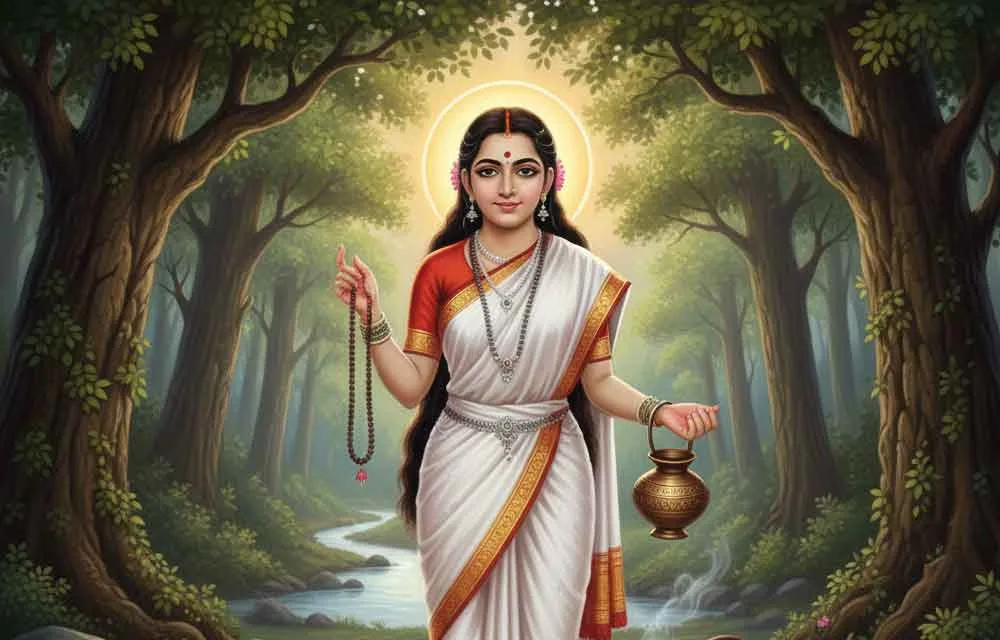
Navratri 2026 Day 2: Maa Brahmacharini Mantra, Colour, Bhog and Puja Vidhi (Monday 12 October)