Navratri Day-Wise Mantras and Their Significance: Dhyana Shloka and Naam Mantra for All 9 Forms of Durga (2026)
One mantra page for all nine nights. For each form of Durga, from Shailaputri on Day 1 to Siddhidatri on Day 9, you get the 2026 date, the dhyana shloka and naam mantra in Devanagari with transliteration and plain-English meaning, when to chant it, and a link to that day's puja guide. Plus five Devi mantras for every night and a simple pronunciation guide.
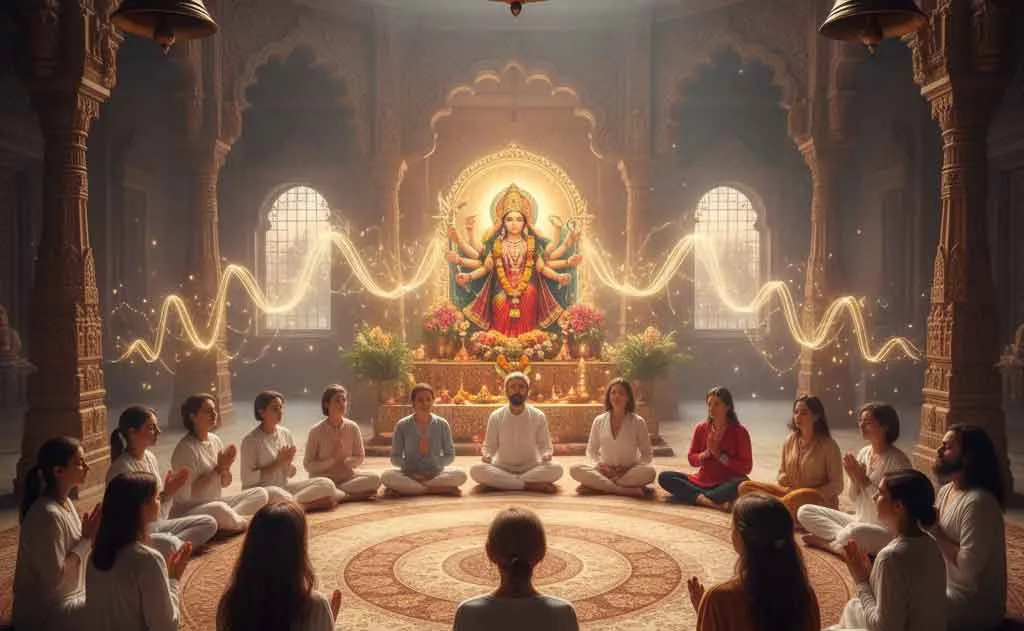
Quick answer: Each of the nine nights of Navratri honours one form of Durga (the Navadurga), and each form has two short texts: a dhyana shloka (meditation verse describing her) and a naam mantra (a salutation to her name, chanted 108 times). In 2026, Sharad Navratri runs from Sunday 11 to Monday 19 October in India, with Dussehra on Tuesday 20 October (Drik Panchang). Below are all nine pairs with meaning, followed by five Devi mantras you can chant on any night.
Navratri 2026 day by day: which goddess, which date
Dates are for India (Drik Panchang). Saptami prevails at sunrise on both 17 and 18 October this year, and Durga Ashtami and Maha Navami both fall on Monday 19 October.
| Day | Date (India) | Goddess |
|---|---|---|
| Day 1 | Sunday 11 October 2026 | Maa Shailaputri |
| Day 2 | Monday 12 October 2026 | Maa Brahmacharini |
| Day 3 | Tuesday 13 October 2026 | Maa Chandraghanta |
| Day 4 | Wednesday 14 October 2026 | Maa Kushmanda |
| Day 5 | Thursday 15 October 2026 | Maa Skandamata |
| Day 6 | Friday 16 October 2026 | Maa Katyayani |
| Day 7 | Saturday 17 October 2026 | Maa Kalaratri |
| Day 8 | Sunday 18 October 2026 | Maa Mahagauri |
| Day 9 | Monday 19 October 2026 | Maa Siddhidatri |
How to use these mantras
Light the lamp, recite the day's dhyana shloka once while picturing the goddess, then chant her naam mantra on a mala, 108 times if you can or 11 or 21 if the evening is short. Close with a general Devi mantra and the aarti. Devotion matters more than speed or perfection.
Day 1, Sunday 11 October 2026: Maa Shailaputri
Shailaputri, "daughter of the mountain", is Parvati as the daughter of Himavan, the king of the Himalayas; as commonly told, she is Sati reborn. She rides the bull Nandi and holds a trident and a lotus, and is traditionally associated with the root (Muladhara) chakra.
Shailaputri dhyana shloka
वन्दे वाञ्छितलाभाय चन्द्रार्धकृतशेखराम्। वृषारूढां शूलधरां शैलपुत्रीं यशस्विनीम्॥
Vande vanchhita-labhaya chandrardha-krita-shekharam, vrisharudham shuladharam shailaputrim yashasvinim.
Meaning: For the attainment of my heart's wishes, I bow to the glorious Shailaputri, who wears the crescent moon on her head, rides a bull and holds a trident.
Shailaputri naam mantra
ॐ देवी शैलपुत्र्यै नमः॥
Om Devi Shailaputryai Namah
Meaning: Om, salutations to Devi Shailaputri. When: on Pratipada, right after Ghatasthapana (Kalash Sthapana) and the first lamp of Navratri. Day 1 puja guide.
Day 2, Monday 12 October 2026: Maa Brahmacharini
Brahmacharini is Parvati in her long penance to win Shiva as her husband. She walks barefoot, holding a rosary and a water pot. Devotees remember her for tapas, patience and steady devotion.
Brahmacharini dhyana shloka
दधाना करपद्माभ्यामक्षमालाकमण्डलू। देवी प्रसीदतु मयि ब्रह्मचारिण्यनुत्तमा॥
Dadhana kara-padmabhyam akshamala-kamandalu, devi prasidatu mayi brahmacharinyanuttama.
Meaning: May the supreme Devi Brahmacharini, who holds a rosary (akshamala) and a water pot (kamandalu) in her lotus hands, be gracious to me.
Brahmacharini naam mantra
ॐ देवी ब्रह्मचारिण्यै नमः॥
Om Devi Brahmacharinyai Namah
Meaning: Om, salutations to Devi Brahmacharini. When: on Dwitiya, often in the morning puja, by those who are fasting or taking up a daily japa vow. Day 2 puja guide.
Day 3, Tuesday 13 October 2026: Maa Chandraghanta
Chandraghanta wears a half-moon shaped like a bell (ghanta) on her forehead. Ready for battle, her bell is said to drive away fear; devotees associate her with courage and a calm mind.
Chandraghanta dhyana shloka
पिण्डजप्रवरारूढा चण्डकोपास्त्रकैर्युता। प्रसादं तनुते मह्यं चन्द्रघण्टेति विश्रुता॥
Pindaja-pravararudha chandakopastrakairyuta, prasadam tanute mahyam chandraghanteti vishruta.
Meaning: Riding the noblest of creatures (her tiger or lion, as commonly depicted), bearing fierce weapons, she who is renowned as Chandraghanta: may she extend her grace to me.
Chandraghanta naam mantra
ॐ देवी चन्द्रघण्टायै नमः॥
Om Devi Chandraghantayai Namah
Meaning: Om, salutations to Devi Chandraghanta. When: on Tritiya, with the ringing of the puja bell during aarti. Day 3 puja guide.
Day 4, Wednesday 14 October 2026: Maa Kushmanda
Kushmanda is the Goddess who, as traditionally told, brought the cosmic egg (brahmanda) into being with her gentle smile when there was only darkness. She has eight arms and rides a lion.
Kushmanda dhyana shloka
सुरासम्पूर्णकलशं रुधिराप्लुतमेव च। दधाना हस्तपद्माभ्यां कूष्माण्डा शुभदास्तु मे॥
Surasampurna-kalasham rudhiraplutameva cha, dadhana hasta-padmabhyam kushmanda shubhadastu me.
Meaning: Holding in her lotus hands one pot brimming with nectar and another filled with blood, may Kushmanda be auspicious to me.
Kushmanda naam mantra
ॐ देवी कूष्माण्डायै नमः॥
Om Devi Kushmandayai Namah
Meaning: Om, salutations to Devi Kushmanda. When: on Chaturthi, often while offering malpua or another sweet as bhog. Day 4 puja guide.
Day 5, Thursday 15 October 2026: Maa Skandamata
Skandamata is the mother of Skanda (Kartikeya, Murugan), whom she holds on her lap. She represents a mother's protective love.
Skandamata dhyana shloka
सिंहासनगता नित्यं पद्माञ्चितकरद्वया। शुभदास्तु सदा देवी स्कन्दमाता यशस्विनी॥
Simhasanagata nityam padmanchita-karadvaya, shubhadastu sada devi skandamata yashasvini.
Meaning: Ever seated on a lion throne, her two hands adorned with lotuses: may the glorious Devi Skandamata always be auspicious.
Skandamata naam mantra
ॐ देवी स्कन्दमातायै नमः॥
Om Devi Skandamatayai Namah
Meaning: Om, salutations to Devi Skandamata. When: on Panchami; many families with young children make this a family chant. Day 5 puja guide.
Day 6, Friday 16 October 2026: Maa Katyayani
Katyayani is the Goddess born, as commonly told, in the hermitage of the sage Katyayana, and in many tellings she is the form who slays Mahishasura. The gopis of Vrindavan worship her in the Bhagavata Purana, so she is prayed to for a good marriage.
Katyayani dhyana shloka
चन्द्रहासोज्ज्वलकरा शार्दूलवरवाहना। कात्यायनी शुभं दद्याद् देवी दानवघातिनी॥
Chandrahasojjvala-kara shardula-vara-vahana, katyayani shubham dadyad devi danava-ghatini.
Meaning: Her hand shining with the Chandrahasa sword, riding the noble tiger: may Devi Katyayani, slayer of demons, grant what is auspicious.
Katyayani naam mantra
ॐ देवी कात्यायन्यै नमः॥
Om Devi Katyayanyai Namah
Meaning: Om, salutations to Devi Katyayani. When: on Shashthi; in Bengal this day also begins Durga Puja. Day 6 puja guide.
Day 7, Saturday 17 October 2026: Maa Kalaratri
Kalaratri is the darkest and fiercest of the nine forms, the "night of time" that swallows darkness itself. She is also called Shubhankari, the one who does good.
Kalaratri dhyana shloka
एकवेणी जपाकर्णपूरा नग्ना खरास्थिता। लम्बोष्ठी कर्णिकाकर्णी तैलाभ्यक्तशरीरिणी॥ वामपादोल्लसल्लोहलताकण्टकभूषणा। वर्धनमूर्धध्वजा कृष्णा कालरात्रिर्भयङ्करी॥
Ekaveni japakarnapura nagna kharasthita, lambosthi karnikakarni tailabhyakta-sharirini. Vamapadollasal-loha-latakantaka-bhushana, vardhana-murdha-dhvaja krishna kalaratrir-bhayankari.
Meaning: I meditate on Kalaratri, the dark and awe-inspiring one: with a single braid, hibiscus flowers at her ears, unclad, riding a donkey, long-lipped and large-eared, her body glistening with oil; her left foot adorned with a shining iron ornament, her banner raised high.
Kalaratri naam mantra
ॐ देवी कालरात्र्यै नमः॥
Om Devi Kalaratryai Namah
Meaning: Om, salutations to Devi Kalaratri. When: on Saptami, often in the evening puja; some temples hold special night worship. Day 7 puja guide.
Day 8, Sunday 18 October 2026: Maa Mahagauri
Mahagauri is radiant and white. As commonly told, Shiva bathed Parvati in the Ganga after her long penance, restoring her shining form. She stands for purity and peace.
Mahagauri dhyana shloka
श्वेते वृषे समारूढा श्वेताम्बरधरा शुचिः। महागौरी शुभं दद्यान्महादेवप्रमोददा॥
Shvete vrishe samarudha shvetambaradhara shuchih, mahagauri shubham dadyan mahadeva-pramodada.
Meaning: Seated on a white bull, clothed in white, pure: may Mahagauri, who gives joy to Mahadeva, grant what is auspicious.
Mahagauri naam mantra
ॐ देवी महागौर्यै नमः॥
Om Devi Mahagauryai Namah
Meaning: Om, salutations to Devi Mahagauri. When: on Day 8; many families also perform Kanya Pujan around Ashtami. Day 8 puja guide.
Day 9, Monday 19 October 2026: Maa Siddhidatri
Siddhidatri is the giver of siddhis, spiritual accomplishments. As traditionally told, even Shiva received his powers through her grace, becoming Ardhanarishvara, half-Shiva and half-Shakti.
Siddhidatri dhyana shloka
सिद्धगन्धर्वयक्षाद्यैरसुरैरमरैरपि। सेव्यमाना सदा भूयात् सिद्धिदा सिद्धिदायिनी॥
Siddha-gandharva-yakshadyair asurair amarair api, sevyamana sada bhuyat siddhida siddhidayini.
Meaning: May she who is ever served by siddhas, gandharvas, yakshas and others, by asuras and by the gods too, Siddhidatri, the giver of perfection, be ever gracious.
Siddhidatri naam mantra
ॐ देवी सिद्धिदात्र्यै नमः॥
Om Devi Siddhidatryai Namah
Meaning: Om, salutations to Devi Siddhidatri. When: on Day 9 (Maha Navami), usually before the closing havan or Kanya Pujan. Day 9 puja guide.
Five Devi mantras for every night of Navratri
These are not tied to one day; many households recite one or more every evening after the day's naam mantra.
The Navarna mantra
ॐ ऐं ह्रीं क्लीं चामुण्डायै विच्चे॥
Om Aim Hreem Kleem Chamundayai Vichche
Meaning: A nine-syllable mantra addressed to Chamunda, the form of Durga who slew the demons Chanda and Munda. Its seed syllables are traditionally linked with Mahasaraswati, Mahalakshmi and Mahakali.
Source and use: the Navarna mantra of Devi from the Chandi (Durga Saptashati) tradition. Some traditions hold that it should be received from a guru; if you are unsure, ask your family priest before taking it up as a regular japa.
The Durga beeja mantra
ॐ दुं दुर्गायै नमः॥
Om Dum Durgayai Namah
Meaning: Om, salutations to Durga. "Dum" is the seed (beeja) syllable of Durga, the one who protects from difficulty (durga literally means a fortress or a hard-to-reach place).
Source and use: the Durga beeja mantra, widely chanted by devotees on a mala, especially on Tuesdays, Fridays and during Navratri.
Sarva Mangala Mangalye (Narayani Stuti)
सर्वमङ्गलमाङ्गल्ये शिवे सर्वार्थसाधिके। शरण्ये त्र्यम्बके गौरि नारायणि नमोऽस्तु ते॥
Sarva-mangala-mangalye shive sarvartha-sadhike, sharanye tryambake gauri narayani namostu te.
Meaning: O auspiciousness of all that is auspicious, consort of Shiva, fulfiller of every aim, giver of refuge, three-eyed Gauri, Narayani, salutations to you.
Source and use: from the Devi Mahatmya (Narayani Stuti); often sung at the end of a puja.
Ya Devi Sarvabhuteshu (Aparajita Stuti)
या देवी सर्वभूतेषु शक्तिरूपेण संस्थिता। नमस्तस्यै नमस्तस्यै नमस्तस्यै नमो नमः॥
Ya Devi sarvabhuteshu shakti-rupena samsthita, namastasyai namastasyai namastasyai namo namah.
Meaning: To the Goddess who dwells in all beings in the form of power (shakti): salutations to her, salutations to her, salutations to her, again and again.
Source and use: from the Devi Mahatmya (Aparajita Stuti). The hymn repeats the line with other qualities, and the day pages give its version for each Navadurga.
Jayanti Mangala Kali (Argala Stotram)
जयन्ती मङ्गला काली भद्रकाली कपालिनी। दुर्गा क्षमा शिवा धात्री स्वाहा स्वधा नमोऽस्तु ते॥
Jayanti mangala kali bhadrakali kapalini, durga kshama shiva dhatri svaha svadha namostu te.
Meaning: Salutations to you, who are Jayanti (the victorious), Mangala (the auspicious), Kali, Bhadrakali, Kapalini, Durga, Kshama (forbearance), Shiva (the gracious), Dhatri (the sustainer), Svaha and Svadha (the offerings to gods and ancestors).
Source and use: the opening verse of the Argala Stotram, traditionally recited before reading the Durga Saptashati.
Pronunciation guide in plain English
- Vowels: long vowels are not marked here, so listen to a priest or trusted recording once. A name-ending "a" (Durga) is long as in "father"; a final "i" (Devi) is a long "ee".
- The ending -yai: rhymes with "sky" with a soft y in front: Shailaputryai is shai-la-pu-tryai.
- Namah: the final h is a gentle echo of breath (visarga), almost "na-ma-ha" with a very light final syllable.
- Aspirated letters: dh, bh, gh and th carry a puff of air: "dh" in dhyana is not the English "th", and "gh" in Chandraghanta is said with breath.
- Seed syllables: in the Navarna mantra, Aim rhymes with "time", Hreem and Kleem have a long "ee", and Vichche is said vich-chay.
- Pace: even and unhurried.
How to include the mantras in your home puja
- Wash, and sit facing the altar or kalash on a clean mat.
- Light the lamp and incense, and offer a flower or a little kumkum to the goddess of the day.
- Recite the day's dhyana shloka once (or three times), picturing her form.
- Chant the naam mantra on a mala: 108 times, or 11 or 21 if you are short of time. A tulsi, rudraksha or sphatika mala is commonly used.
- Add one general Devi mantra from the list above, then offer the day's bhog and perform aarti.
Devotees chant for peace and closeness to the Divine Mother, not as a formula for any outcome. See also the apartment-friendly Navratri puja vidhi and the japamala guide.
Going further: stotras, Garba prayers and Vijayadashami
For a longer hymn, the Mahishasura Mardini Stotram with English meaning is a favourite on Ashtami. For prayers before Garba, see Navratri mantras before Garba. For Tuesday 20 October, see Vijayadashami 2026 mantras and Shami Puja vidhi. For children: Navratri stories for kids.
For NRI families chanting abroad
The mantras are the same everywhere, but the last dates can differ: Drik Panchang lists Durga Ashtami on Sunday 18 October and Maha Navami on Monday 19 October in the USA, Canada and the UK, while in India both fall on Monday 19 October. Many families abroad chant after work; 15 calm minutes with the lamp and one round of the naam mantra is enough. Country-wise dates are in the Navratri 2026 NRI guide.
Frequently asked questions
Which mantra should I chant on each day of Navratri?
On each day, chant the naam mantra of that day's goddess, ideally after reciting her dhyana shloka once. In 2026 (India) that is Shailaputri on Sunday 11 October, Brahmacharini on 12 October, Chandraghanta on 13 October, Kushmanda on 14 October, Skandamata on 15 October, Katyayani on 16 October, Kalaratri on 17 October, Mahagauri on 18 October and Siddhidatri on Monday 19 October. All nine texts are given above.
How many times should a Navratri mantra be chanted?
The most common practice is 108 times, one full round of a mala. If time is short, 11 or 21 repetitions said with attention are perfectly acceptable in most households. The dhyana shloka is usually recited once (or three times) before the naam mantra, not 108 times.
What is the difference between a dhyana shloka and a naam mantra?
A dhyana shloka is a meditation verse: it describes the goddess's form, mount and what she holds, so you can picture her before worship. A naam mantra is a short salutation built on her name, which is easy to repeat many times on a mala. Most families recite the dhyana shloka first and then do japa of the naam mantra.
Can I chant the Navarna mantra without initiation?
Traditions differ. Some teachers say the Navarna mantra of Chamunda should be received from a guru, while many households chant it freely during Navratri. If you are unsure, ask your family priest; meanwhile the naam mantras and the other Devi prayers on this page are widely recited by everyone.
Can women chant these mantras during periods, or can children chant them?
Customs vary by family and community, and there is no single rule that applies to every household, so follow your own family tradition. Children are warmly encouraged to learn the short naam mantras; one round of 11 is plenty for a young child.
Are the Navratri 2026 dates the same in the USA, UK and Canada?
Mostly, but not on the last days. In India, Navratri runs from Sunday 11 to Monday 19 October 2026, with Durga Ashtami and Maha Navami both on 19 October (Drik Panchang). Drik lists Durga Ashtami on Sunday 18 October and Maha Navami on Monday 19 October in the USA, Canada and the UK. The mantras themselves are the same everywhere.
Editor's note (8 October 2026)
This page was revised on 8 October 2026 for Navratri 2026. The dhyana shlokas, naam mantras and the five Devi mantras were checked against standard sources and are given as commonly recited; meanings are plain-English renderings, and legends are given as traditionally told. India dates are from Drik Panchang. Recitation customs vary between families and sampradayas, so follow your family priest or guru where they differ.
Related guides
Share this with family and friends
Send it on WhatsApp, post it, or copy the link.
More from Navratri
- Today's Sankalpam, 25 October 2026: Sandhyavandanam Sankalpam and Traditional Panchangam (Sunday)
- Every Day Vijayadashami: The Real Invitation of Navaratri and How to Live Its Victory Daily
- How to Wish Happy Vijayadashami 2026 on WhatsApp, Instagram, Facebook and Telegram: A Complete Guide for NRIs in the USA, UK, Australia and New Zealand
- How to Wish Happy Vijaya Dasami on WhatsApp, Telegram, Instagram and Facebook in 2026
- Happy Dussehra 2026: Heartfelt Vijayadashami Wishes to Hindus Around the World
You might also like
How Hindus Should Celebrate Dussehra and Diwali 2026
Navratri 2026 — Sharad Navaratri Dates (October 11-19), 9 Goddess Forms, Garba Events & Complete NRI Celebration Guide
Narasimha Jayanti 2026 – Date, Significance, Story, Rituals & Powerful Mantras