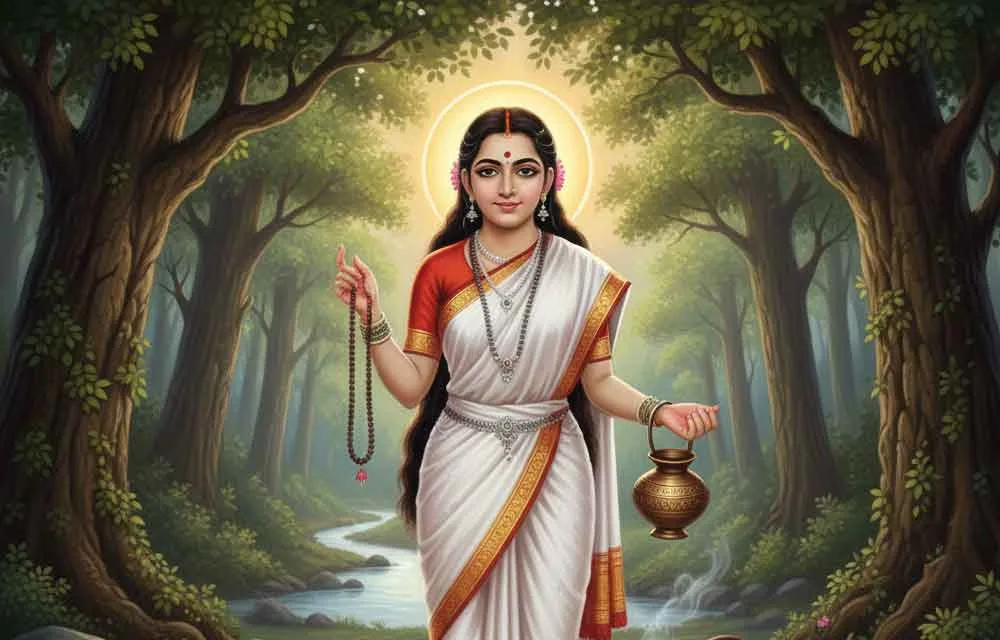
Navratri 2026 Day 5: Maa Skandamata Mantra, Colour (Yellow), Bhog and Puja Vidhi for Thursday 15 October
Navratri 2026 Day 5 falls on Thursday 15 October (Panchami tithi in India). It is the day of Maa Skandamata, the loving mother of Lord Skanda (Kartikeya). Here are her naam mantra, dhyana shloka and stuti with meanings, the yellow colour, banana bhog, a step-by-step home puja and fasting tips for families abroad.
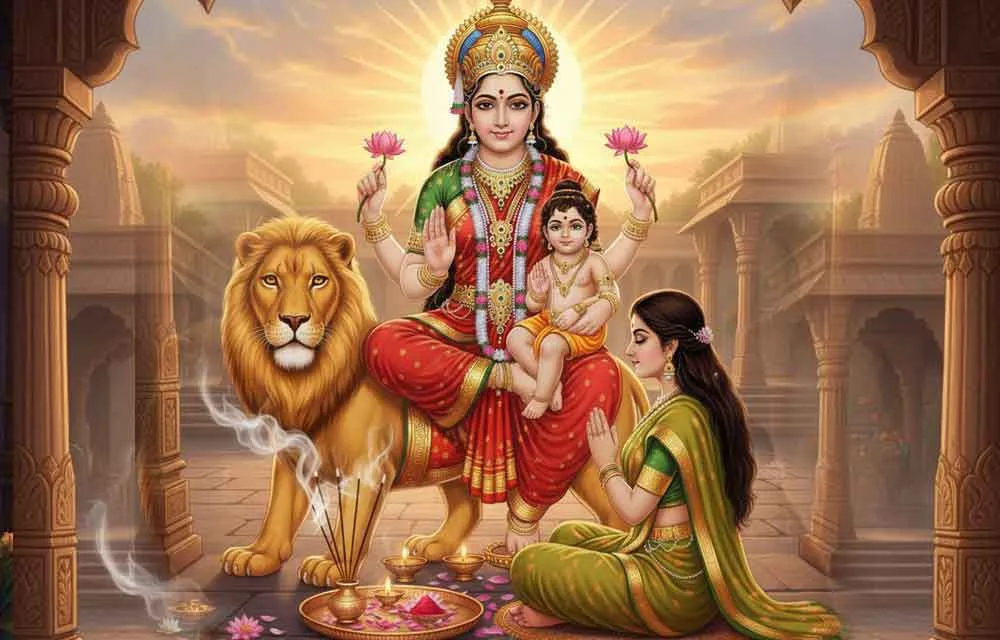
Navratri 2026 Day 5 falls on Thursday 15 October (Panchami tithi in India). It is the day of Maa Skandamata, the loving mother of Lord Skanda (Kartikeya).
Quick answer: for the Navratri Day 5 2026 Skandamata mantra colour and date: Day 5 falls on Thursday 15 October 2026 (Panchami tithi in India). The Goddess of the day is Maa Skandamata, the colour is yellow, the traditional bhog is banana, and her naam mantra is "Om Devi Skandamatayai Namah", chanted 108 times after lighting the lamp.
The fifth day of Navratri has a special tenderness. Maa Skandamata is the Goddess as a mother holding her child, and many parents feel especially close to her. In India, the day also coincides with Lalita Panchami. Whether you pray in a temple hall or at a small shelf shrine in an apartment abroad, here is everything you need for Day 5: her form, her story, her mantras and a simple puja the whole family can join.
Navratri Day 5 2026 Skandamata mantra colour and date at a glance
| Detail | Navratri 2026 Day 5 |
|---|---|
| Date (India) | Thursday 15 October 2026 |
| Tithi (India) | Panchami (also Lalita Panchami) |
| Goddess | Maa Skandamata (fifth Navadurga) |
| Colour of the day | Yellow (by popular custom; lists vary) |
| Bhog / naivedya | Banana (common list; varies by tradition) |
| Naam mantra | Om Devi Skandamatayai Namah |
| Previous / next day | Day 4 Kushmanda (Wed 14 Oct) / Day 6 Katyayani (Fri 16 Oct) |
The full nine-day colour list is on our Navratri 2026 colours page. Navratri 2026 runs from Sunday 11 to Monday 19 October in India, with Dussehra on Tuesday 20 October.
Who is Maa Skandamata? Her form and iconography
Skandamata simply means "the mother of Skanda". Skanda is Lord Kartikeya, also called Murugan, Subrahmanya and Kumara, the commander of the gods' army. In this form, Parvati is honoured above all as a mother.
She is usually shown with four arms. In her lap sits the infant Skanda, often with six faces. Two of her hands hold lotus flowers, one rests in a gesture of blessing, and one supports her child. She rides a lion and is also shown seated on a lotus, which is why she is sometimes called Padmasana Devi. Her complexion is described as fair and luminous.
The story of Maa Skandamata, as commonly told
As commonly told, the demon Tarakasura had won a boon that only a son of Shiva could defeat him. At that time Shiva was absorbed in deep meditation after the loss of Sati, and Taraka's cruelty spread through the worlds. Parvati's long devotion won Shiva's heart, and from their union Skanda was born. Raised with love, the young Skanda led the gods into battle and defeated Tarakasura.
Devotees see in Skandamata the strength of a mother's love: she nurtures the child who will go out and protect the world. As commonly said, when we worship Skandamata, the child Skanda in her lap is worshipped too, so she is dear to devotees of Murugan as well.
Spiritual significance of Day 5
As traditionally described in yoga-based teachings, Day 5 is associated with the Vishuddha (throat) chakra, the centre of pure expression and truthful speech. Devotees believe Maa Skandamata blesses the family with peace and affection, and many parents offer special prayers for their children on this day.
Yellow, the colour of the day, is often linked with warmth, learning and cheer. It suits a day that celebrates the bond between parent and child.
Navratri Day 5 mantras: Maa Skandamata
Below are the traditional texts as commonly recited. The Devanagari and transliteration are given exactly; the English meanings are plain-language explanations. Chant slowly, with the lamp lit.
1. Skandamata naam mantra
ॐ देवी स्कन्दमातायै नमः॥
Transliteration: Om Devi Skandamatayai Namah
Meaning: Om, salutations to Goddess Skandamata, the mother of Skanda.
How to chant: after lighting the lamp, chant 108 times with a mala, or 11 or 21 times if time is short. Children can chant it with you.
2. Skandamata dhyana shloka
सिंहासनगता नित्यं पद्माञ्चितकरद्वया। शुभदास्तु सदा देवी स्कन्दमाता यशस्विनी॥
Transliteration: Simhasanagata nityam padmanchita-karadvaya, shubhadastu sada devi skandamata yashasvini.
Meaning: Ever seated on the lion throne, her two hands adorned with lotuses, may the glorious Goddess Skandamata always be the giver of auspiciousness.
How to chant: recite once or three times at the start of the puja while picturing the Goddess with Skanda in her lap.
3. Skandamata stuti (Ya Devi...)
या देवी सर्वभूतेषु माँ स्कन्दमाता रूपेण संस्थिता। नमस्तस्यै नमस्तस्यै नमस्तस्यै नमो नमः॥
Transliteration: Ya Devi sarvabhuteshu Maa Skandamata rupena samsthita, namastasyai namastasyai namastasyai namo namah.
Meaning: To the Goddess who dwells in all beings in the form of Maa Skandamata: salutations to her, salutations to her, salutations to her, again and again.
How to chant: three, nine or eleven times, with folded hands, after the naivedya is offered.
4. Navarna mantra
ॐ ऐं ह्रीं क्लीं चामुण्डायै विच्चे॥
Transliteration: Om Aim Hreem Kleem Chamundayai Vichche
Meaning: The nine-syllable mantra of the Devi in the Chandi (Durga Saptashati) tradition. Aim, Hreem and Kleem are seed syllables traditionally linked with Mahasaraswati, Mahalakshmi and Mahakali; the mantra bows to Chamunda.
How to chant: many families chant one mala each day of Navratri. Some traditions prefer that it be learned from a teacher, so follow your family's practice.
5. Ya Devi sarvabhuteshu Shakti rupena
या देवी सर्वभूतेषु शक्तिरूपेण संस्थिता। नमस्तस्यै नमस्तस्यै नमस्तस्यै नमो नमः॥
Transliteration: Ya Devi sarvabhuteshu shakti-rupena samsthita, namastasyai namastasyai namastasyai namo namah.
Meaning: To the Goddess who dwells in all beings as power (Shakti): salutations to her again and again. (From the Aparajita Stuti of the Devi Mahatmya.)
How to chant: three times, or as many times as you like, at any point in the day.
6. Sarva Mangala Mangalye
सर्वमङ्गलमाङ्गल्ये शिवे सर्वार्थसाधिके। शरण्ये त्र्यम्बके गौरि नारायणि नमोऽस्तु ते॥
Transliteration: Sarva-mangala-mangalye shive sarvartha-sadhike, sharanye tryambake gauri narayani namostu te.
Meaning: O auspiciousness of all that is auspicious, O gracious one who fulfils every worthy aim, O refuge of all, three-eyed Gauri, Narayani, salutations to you. (From the Narayani Stuti of the Devi Mahatmya.)
How to chant: recite three times at the end of the puja, just before the aarti.
Step-by-step home puja vidhi for Day 5
This simple, apartment-friendly puja takes about 20 to 30 minutes. If you have a family priest or a set tradition, follow that first.
- Bathe, wear clean clothes (yellow if you like) and tidy the puja space.
- Refresh the kalash water if you set one up on Day 1, and check the akhand jyoti or light a fresh ghee lamp.
- Take a moment of sankalpa: say your name and family, and state that you are worshipping Maa Skandamata on the fifth day of Navratri.
- Recite the dhyana shloka while picturing the Goddess with her child.
- Offer kumkum, haldi, akshata and fresh flowers; yellow flowers suit the day.
- Light incense, then chant the naam mantra 108 times (or 11 or 21).
- Offer bananas as bhog with a little water, and recite the Ya Devi stuti.
- Recite Sarva Mangala Mangalye, then perform aarti with camphor or a ghee lamp, singing the Durga or Ambe aarti your family knows.
- Close with a prayer for the children of the family, ask forgiveness for any mistakes, and share the prasad.
For a nine-day plan for small homes, see our apartment-friendly Navratri puja vidhi, and for a deeper reading, our Maa Skandamata complete rituals guide.
Bhog, flowers and aarti
Bhog: by popular custom, bananas are offered to Maa Skandamata. Lists vary by tradition. Fruit is easy to find anywhere in the world and suits a fasting day perfectly. More ideas are in our Sharad Navratri 2026 day-wise vrat recipes and day-wise prasadam recipes.
Flowers: yellow flowers such as marigolds match the day's colour; red flowers like hibiscus are always loved by the Goddess.
Aarti: use the Durga or Ambe aarti your family sings every day of Navratri.
Fasting on Day 5: what to do and avoid
- Common vrat foods: fruit, milk, curd, sabudana, kuttu, singhara and rajgira flour, samak rice, potatoes, and rock salt.
- Usually avoided: wheat, rice, lentils, onion, garlic, meat, eggs and alcohol. Rules vary by family; follow yours.
- Stay gentle with yourself: drink enough water and choose a one-meal or fruit fast on a working Thursday if needed.
- Health first: children, pregnant women, older people and anyone with diabetes or on medication should keep a light fast or speak to a doctor.
- In spirit: spend unhurried time with your children or parents; that, too, is worship of the Mother.
A short prayer and sankalpa for Day 5
You can say this in English after the mantras:
"Maa Skandamata, loving mother who holds Skanda close, I bow to you on this fifth day of Navratri. Please accept this lamp, these flowers and this offering of fruit. Hold our family in your care as you hold your child. Let our children grow in goodness and our home be filled with affection. Forgive whatever I have done wrong, knowingly or unknowingly. Jai Mata Di."
For NRIs: keeping Day 5 on a Thursday abroad
- Light the lamp and chant the naam mantra before school and work; keep the full puja for the evening.
- Bananas need no cooking, so the bhog is ready in seconds even on the busiest day.
- Let children draw Skandamata with baby Skanda, or tell them the story of Tarakasura at bedtime.
- Many temples abroad hold evening Navratri programmes on weekdays; check the temple's website for timings.
Dates abroad: tithis begin at different local times outside India, so check your local temple panchang. Drik Panchang lists Durga Ashtami on 18 October and Maha Navami on 19 October in the USA, Canada and UK, whereas in India both fall on 19 October. City details are in our Navratri 2026 USA guide, Canada guide and Navratri 2026 complete NRI guide.
Yesterday was Day 4, Maa Kushmanda. Tomorrow is Day 6, Maa Katyayani.
Frequently asked questions
Which goddess is worshipped on Navratri Day 5 2026?
Maa Skandamata, the fifth of the Navadurga forms and the mother of Lord Skanda (Kartikeya). Day 5 of Sharad Navratri 2026 is Thursday 15 October in India, with Panchami tithi at sunrise.
What is the colour of Navratri Day 5 2026?
Yellow, by the popular weekday colour pattern (Thursday is yellow). Colour lists vary between publishers and regions, and wearing the colour is a joyful custom, not a rule of the puja.
What is the mantra of Maa Skandamata?
Her naam mantra is "Om Devi Skandamatayai Namah" (ॐ देवी स्कन्दमातायै नमः॥). Many devotees also recite her dhyana shloka, "Simhasanagata nityam...", and the stuti "Ya Devi sarvabhuteshu Maa Skandamata rupena samsthita...".
What bhog is offered to Maa Skandamata?
By popular custom, bananas are the bhog of Day 5. Lists vary by family and region; any clean, sattvic offering made with love is acceptable.
Is Lalita Panchami on Navratri Day 5 in 2026?
Yes. Lalita Panchami (Upang Lalita Vrat) falls on Thursday 15 October 2026, the same day as Navratri Day 5 in India. Families who worship Goddess Lalita often add her worship to the day's puja.
Is Navratri Day 5 on the same date in the USA, Canada and UK?
The nine-day count usually lines up, but tithis begin at different local times abroad, so check your local temple calendar. For example, Drik Panchang lists Durga Ashtami on 18 October and Maha Navami on 19 October in the USA, Canada and UK, while in India both fall on 19 October.
Editor's note
Editor's note (6 October 2026): India dates and tithi are from Drik Panchang. The mantras are traditional texts as commonly recited, and the colour and bhog follow popular custom; lists vary between regions and families. Please follow your family priest and tradition where they differ.
Related guides
You might also like
Navratri 2026 Day 8: Maa Mahagauri Mantra, Colour, Bhog and Puja Vidhi (Sunday 18 October)
Navratri 2026 Day 7: Maa Kalaratri Mantra, Colour, Bhog and Puja Vidhi (Saturday 17 October)
Navratri 2026 Day 3: Maa Chandraghanta Mantra, Colour, Bhog and Puja Vidhi (Tuesday 13 October)