Navratri 2026 Day 8: Maa Mahagauri Mantra, Colour, Bhog and Puja Vidhi (Sunday 18 October)
Navratri Day 8 is Sunday 18 October 2026 by the day count, but in India the Saptami tithi still prevails at sunrise and Durga Ashtami falls on Monday 19 October. Here is how families honour Maa Mahagauri either way: her story as commonly told, her mantras in Devanagari with transliteration and meaning, colour, coconut bhog and a simple home puja.
Navratri Day 8 is Sunday 18 October 2026 by the day count, but in India the Saptami tithi still prevails at sunrise and Durga Ashtami falls on Monday 19 October. Here is how families honour Maa Mahagauri either way: her story as commonly told, her mantras in Devanagari with transliteration and meaning, colour, coconut bhog and a simple home puja.
Quick answer: Navratri Day 8 2026 is Sunday 18 October 2026 by the nine-day count, dedicated to Maa Mahagauri. In India the Saptami tithi still prevails at sunrise on 18 October and Ashtami begins later that day, so Drik Panchang lists Durga Ashtami on Monday 19 October, together with Maha Navami. The colour is purple, pink or peacock green (lists differ), the customary bhog is coconut, and her naam mantra is "Om Devi Mahagauryai Namah".
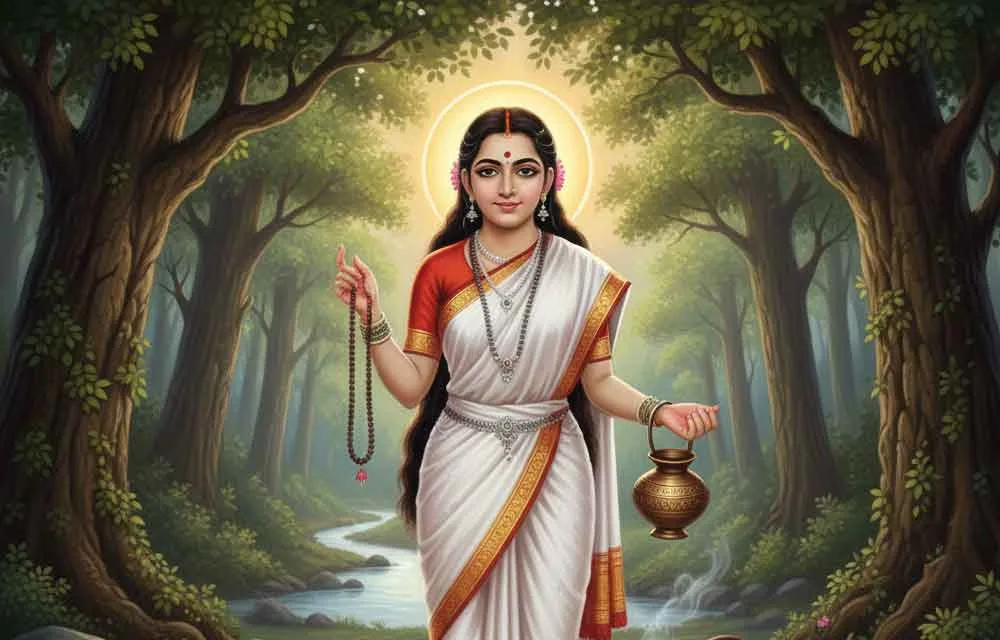
Mahagauri is the radiant, peaceful form of the Mother, dressed in white and shining like the moon. After the fierce night of Kalaratri, her day feels like dawn: calm, clean and full of grace.
Navratri Day 8 2026 at a glance
| Detail | Day 8 |
|---|---|
| Day-count date (India) | Sunday 18 October 2026 |
| Tithi note | Saptami continues at sunrise; Ashtami begins later that day |
| Durga Ashtami (India, Drik) | Monday 19 October 2026 (with Maha Navami) |
| Goddess | Maa Mahagauri (eighth Navadurga) |
| Colour (popular custom) | Purple, pink or peacock green (lists differ) |
| Bhog (common) | Coconut |
| Naam mantra | Om Devi Mahagauryai Namah |
Colours and bhog follow popular custom and lists vary. See the full Navratri 2026 colours list.
Day 8 or Ashtami? Why Mahagauri has two dates this year
A Hindu day takes its tithi from the moon's phase at sunrise. In 2026 the Saptami tithi spans two sunrises in India, Saturday 17 and Sunday 18 October. The Ashtami tithi starts later on Sunday 18 October and runs until about 10:52 AM IST on Monday 19 October, when Navami begins. Because Ashtami is not present at sunrise on 18 October but is present at sunrise on 19 October, Drik Panchang places Durga Ashtami on 19 October, the same day as Maha Navami.
This gives two equally devoted ways of keeping the day:
- Day-count families worship one form per night and honour Mahagauri on Day 8, Sunday 18 October, then Siddhidatri on Day 9, Monday 19 October.
- Tithi-following families keep Mahagauri with Durga Ashtami on Monday 19 October, so Mahagauri and Siddhidatri are worshipped together that day, often with Kanya Pujan. Bengal's Durga Puja calendar for Kolkata also keeps Maha Ashtami, Kumari Puja and Sandhi Puja on 19 October.
Neither way is wrong. Ask your family priest or follow your temple's calendar. If you wish, you can honour Mahagauri on the 18th with a simple puja and again on the 19th with Ashtami rites.
For families outside India the picture is different: in the USA, Canada and the UK, Drik Panchang lists Durga Ashtami on Sunday 18 October and Maha Navami on Monday 19 October, so for many NRI families Day 8, Mahagauri and Ashtami all fall together on Sunday the 18th. Check your local temple's calendar.
Who is Maa Mahagauri? Form and iconography
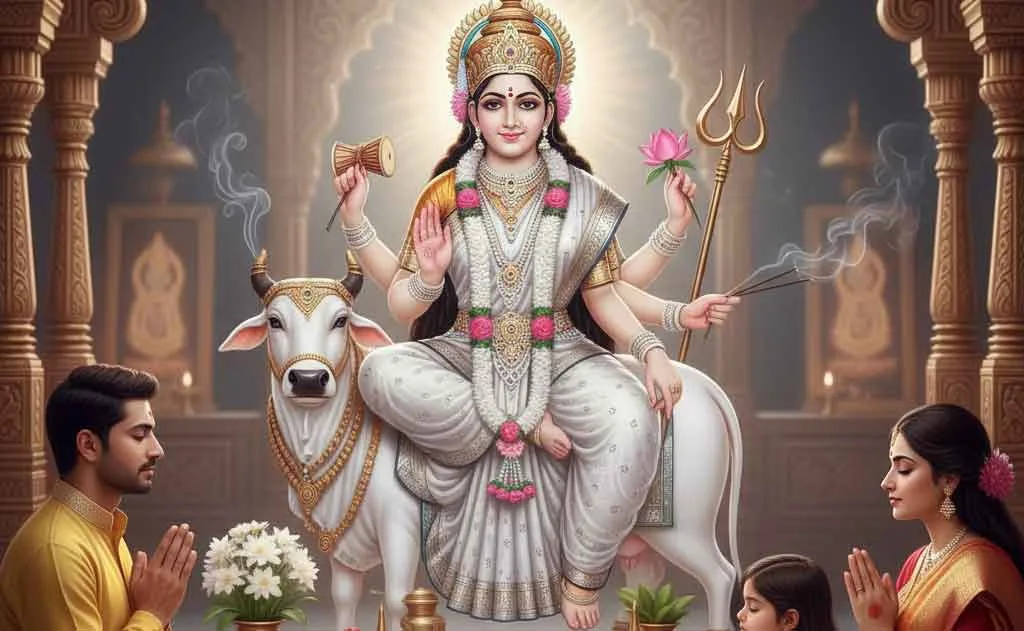
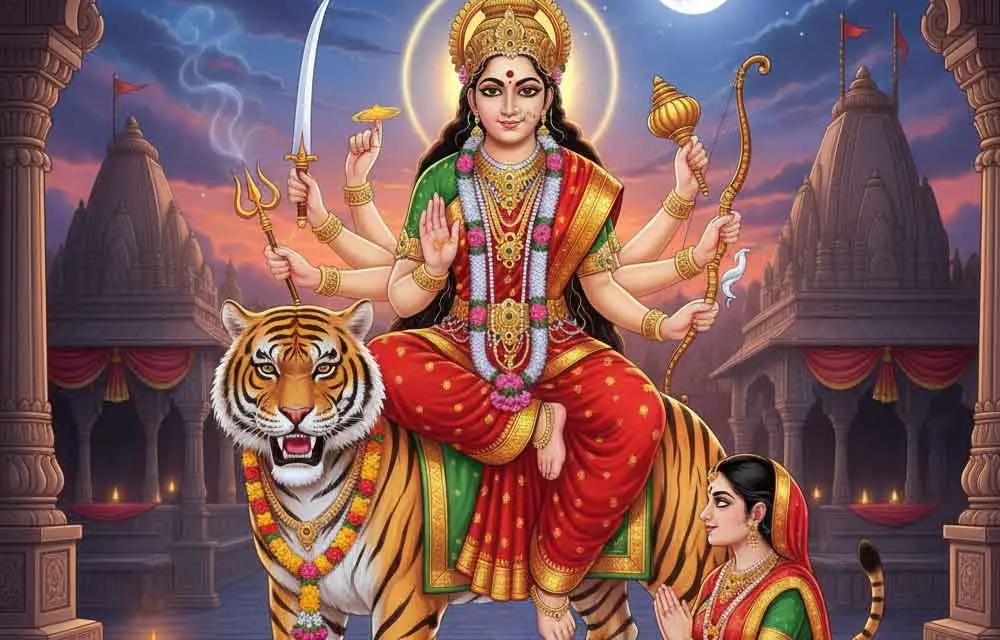
Mahagauri is pictured as dazzlingly fair, often compared to the conch, the moon and the white jasmine flower. She wears white garments and white ornaments and rides a white bull, the same mount as Shiva. She has four hands: one holds a trident (trishul), one a small drum (damaru), and the other two show the abhaya mudra of fearlessness and the varada mudra of blessing. Her expression is serene and tender.
Her whiteness stands for purity of heart: the clarity that comes after effort and surrender. Devotees see in her the Mother who washes away the dust of the past.
The story of Maa Mahagauri, as commonly told
As commonly told, Parvati performed long and severe penance to win Shiva as her husband. Living in the forests through sun, rain and cold, her body grew dark with dust and hardship. Pleased with her devotion, Shiva accepted her and bathed her with the waters of the Ganga, and her complexion became radiant and white. From then on she was known as Mahagauri, the "greatly fair" or "supremely radiant" one.
Some traditions tell the story differently, and many regions have their own versions. All of them share one message: sincere devotion, however long the road, is never wasted in the Mother's eyes.
Spiritual significance of Day 8
As traditionally described, Mahagauri represents purity, peace and forgiveness. In some yoga-oriented Navratri teachings she is associated with a subtle centre above or within the crown, sometimes called the Soma chakra, though teachers map these differently. Devotees believe her worship brings calm to a troubled mind, and many use the day to forgive someone or to let go of an old hurt. Ashtami is also a day of deep reverence for girl children as forms of the Goddess, which is why Kanya Pujan is so widely linked with it.
Maa Mahagauri mantras for Navratri Day 8
These texts are given exactly as traditionally recited, with plain-English meanings. If Sanskrit is new to you, the naam mantra alone, said with love, is complete. See also Navratri day-wise mantras and their significance.
Naam mantra of Maa Mahagauri
ॐ देवी महागौर्यै नमः॥
Om Devi Mahagauryai Namah
Meaning: Om, salutations to Devi Mahagauri.
How to chant: after lighting the lamp, 108 times on a mala; 11 or 21 times if you are short of time.
Dhyana shloka (meditation verse)
श्वेते वृषे समारूढा श्वेताम्बरधरा शुचिः। महागौरी शुभं दद्यान्महादेवप्रमोददा॥
Shvete vrishe samarudha shvetambaradhara shuchih, mahagauri shubham dadyan mahadeva-pramodada.
Meaning: Seated on a white bull, clothed in white, pure: may Mahagauri, who gives joy to Mahadeva (Shiva), grant what is auspicious.
How to chant: recite once or three times before the japa, picturing her form.
Stuti: Ya Devi Sarvabhuteshu Maa Mahagauri
या देवी सर्वभूतेषु माँ महागौरी रूपेण संस्थिता। नमस्तस्यै नमस्तस्यै नमस्तस्यै नमो नमः॥
Ya Devi sarvabhuteshu Maa Mahagauri rupena samsthita, namastasyai namastasyai namastasyai namo namah.
Meaning: To the Goddess who abides in all beings in the form of Mother Mahagauri: salutations to her, again and again.
How to chant: 3, 11 or 21 times with folded hands before the aarti.
Navarna mantra
ॐ ऐं ह्रीं क्लीं चामुण्डायै विच्चे॥
Om Aim Hreem Kleem Chamundayai Vichche
Meaning: the nine-syllable mantra of the Devi from the Chandi (Durga Saptashati) tradition, saluting Chamunda; Aim, Hreem and Kleem are traditionally linked with Mahasaraswati, Mahalakshmi and Mahakali.
How to chant: 108 times on a mala; some traditions prefer it be learned from a guru, so follow your family custom.
Om Dum Durgayai Namah
ॐ दुं दुर्गायै नमः॥
Om Dum Durgayai Namah
Meaning: Om, with Durga's seed syllable Dum, salutations to Goddess Durga.
How to chant: simple enough for children; 108 times or quietly through the day.
Sarva Mangala Mangalye
सर्वमङ्गलमाङ्गल्ये शिवे सर्वार्थसाधिके। शरण्ये त्र्यम्बके गौरि नारायणि नमोऽस्तु ते॥
Sarva-mangala-mangalye shive sarvartha-sadhike, sharanye tryambake gauri narayani namostu te.
Meaning: O auspiciousness of all that is auspicious, O gracious one who fulfils every good aim, O refuge, three-eyed Gauri, O Narayani, salutations to you. (Narayani Stuti, Devi Mahatmya.) It names her as Gauri, so it is especially loved on Mahagauri's day.
How to chant: three times at the close of the puja.
Ya Devi Sarvabhuteshu Shakti-rupena
या देवी सर्वभूतेषु शक्तिरूपेण संस्थिता। नमस्तस्यै नमस्तस्यै नमस्तस्यै नमो नमः॥
Ya Devi sarvabhuteshu shakti-rupena samsthita, namastasyai namastasyai namastasyai namo namah.
Meaning: To the Goddess who abides in all beings as power: salutations to her again and again. (Aparajita Stuti, Devi Mahatmya.)
How to chant: 3 or 11 times.
Simple home puja vidhi for Day 8 (apartment-friendly)
- Prepare: bathe, wear clean clothes (white or the colour your family follows) and tidy the altar. Refresh the kalash water.
- Lamp: light a ghee diya on a metal plate, away from curtains and smoke alarms.
- Sankalpa: with a little water in your right palm, say your name and that you are worshipping Maa Mahagauri on the eighth day (or on Durga Ashtami) of Navratri, and release the water.
- Invocation: recite the dhyana shloka and offer kumkum, turmeric, sandal paste and akshata.
- Flowers: by popular custom, white flowers such as jasmine or mogra suit her white form. Any fresh flower is welcome.
- Japa: the naam mantra 108 times, then the stuti and a Devi mantra or two.
- Bhog: a coconut, whole or broken, or a simple coconut sweet, with water. Share it as prasad afterwards.
- Aarti: sing the Durga or Ambe aarti your family knows and close with Sarva Mangala Mangalye.
- If you keep Ashtami on 19 October: you may repeat this puja that morning, adding Kanya Pujan if it is your custom.
For a full nine-day set-up see the Navratri 2026 apartment-friendly puja vidhi, our evergreen Maa Mahagauri puja rituals guide and the Kanya Pujan 2026 date and vidhi.
Fasting on Day 8: what to do and avoid
- Many devotees keep a phalahar fast of fruit, milk, curd, nuts, sabudana, kuttu, singhara flour and potatoes, with rock salt.
- Commonly avoided: grains, onion, garlic, meat, eggs and alcohol. Customs vary by family and region.
- Some families who fast all nine days break the fast after Ashtami or Navami puja; others continue until Dashami. Follow your own tradition.
- Drink enough water. Pregnant women, older people, children and anyone with a health condition should fast lightly or ask a doctor.
Recipe ideas: day-wise Navratri vrat recipes.
A short prayer for Day 8
"Maa Mahagauri, radiant and pure, I bow to you. As Mahadeva washed away the dust of your long penance, wash away the heaviness I carry. Give my mind your calm and my heart your forgiveness. Stay with this family always. Jai Maa Mahagauri."
NRI tips for Navratri Day 8
Sunday 18 October is a weekend day, and if your temple keeps Ashtami that day, as explained above, it may be the busiest temple day of Navratri. Go early, car-pool and take a simple coconut prasad to share. If you follow India's calendar while living abroad, keep a quiet Mahagauri puja on Sunday and your Ashtami rites on Monday morning before work.
More ideas in our Navratri 2026 NRI guide.
Previous and next day
Frequently asked questions
Is Navratri Day 8 2026 on 18 or 19 October?
By the day count, Day 8 is Sunday 18 October 2026. In India, however, the Saptami tithi still prevails at sunrise that day, and Drik Panchang lists Durga Ashtami on Monday 19 October, the same day as Maha Navami. Families who follow the day count honour Mahagauri on 18 October; tithi-following families honour her with Ashtami on 19 October.
When is Durga Ashtami 2026?
In India, Durga Ashtami (Maha Ashtami) is Monday 19 October 2026 per Drik Panchang. The Ashtami tithi begins later on 18 October and runs until about 10:52 AM IST on 19 October, after which Navami begins.
What is the colour of Navratri Day 8 2026?
Lists differ for Days 8 and 9 this year: purple, pink or peacock green are all commonly given. Choose the one your family or community follows; the colour is a popular custom, not a rule.
What is the mantra of Maa Mahagauri?
Her naam mantra is "Om Devi Mahagauryai Namah" (ॐ देवी महागौर्यै नमः॥). Devotees also recite her dhyana shloka "Shvete vrishe samarudha" and the stuti "Ya Devi sarvabhuteshu Maa Mahagauri rupena samsthita".
What bhog is offered to Maa Mahagauri?
Coconut is the most common offering on Day 8, whole or as a coconut sweet. Bhog lists vary by tradition; share the prasad afterwards and, if you can, give some in charity.
Should I do Kanya Pujan on 18 or 19 October 2026?
In India most families who do Kanya Pujan on Ashtami or Navami will do it on Monday 19 October, since both tithis fall that day. Follow your family custom and local temple; see our Kanya Pujan 2026 guide for the vidhi.
Editor's note
Editor's note (6 October 2026): This guide has been restored at its original address. India dates, including Durga Ashtami and Maha Navami on 19 October, are from Drik Panchang; the sunrise tithi note and the approximate Ashtami end time are from our panchang calculator for New Delhi. The mantras are traditional texts as commonly recited, given without additions. Customs vary; please follow your family priest or temple.
Related guides
You might also like
Navratri 2026 Day 1: Maa Shailaputri Mantra, Colour, Bhog and Puja Vidhi (Sunday 11 October)
Navratri 2026 Day 7: Maa Kalaratri Mantra, Colour, Bhog and Puja Vidhi (Saturday 17 October)
Navratri 2026 Day 3: Maa Chandraghanta Mantra, Colour, Bhog and Puja Vidhi (Tuesday 13 October)