
Diwali 2026 in Tanzania: Lakshmi Puja Muhurat City by City, Dhanteras Times and Temples
Lakshmi Puja falls on the evening of Sunday 8 November 2026 across Tanzania. Local muhurat for Dar es Salaam, Zanzibar City, Arusha, Mwanza and Dodoma, verified mandirs, and how Gujarati-heritage families mark Diwali and the new year here.
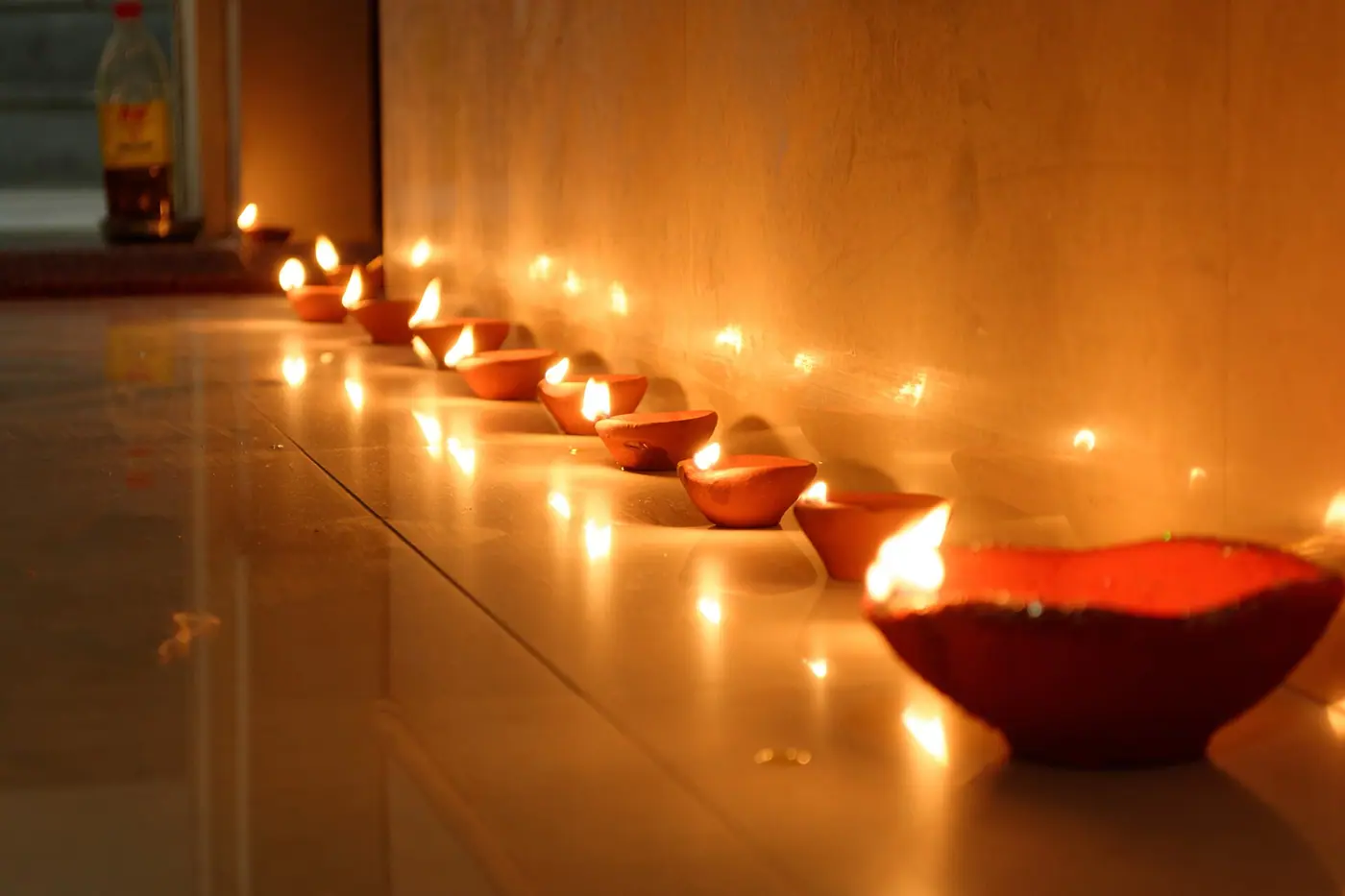
Lakshmi Puja falls on the evening of Sunday 8 November 2026 across Tanzania. Local muhurat for Dar es Salaam, Zanzibar City, Arusha, Mwanza and Dodoma, verified mandirs, and how Gujarati-heritage families mark Diwali and the new year here.
Quick answer: Diwali (Lakshmi Puja) 2026 in Tanzania is on Sunday 8 November. In Dar es Salaam the Lakshmi Puja window is 6:48 PM – 8:37 PM East Africa Time, and Dhanteras is on Friday 6 November.
Editor's note: this guide was last checked on 10 October 2026. The local times were calculated by HinduTone using the Drik Panchang method (Pradosh Kaal with the Vrishabha lagna); checked against Drik Panchang for major world cities to within one to two minutes; confirm with your temple. Information about temples and community bodies comes from their own websites or established listings, and any event details come only from organisers' own announcements. Mandirs in Tanzania often fix their own Diwali, Annakut and new-year programmes, so please confirm timings with your temple before you plan the evening.
Tanzania's Hindu story is an old one. Families from Kutch and Kathiawad sailed to Zanzibar and the Tanganyika coast as merchants, sailors and workers from the early nineteenth century, and their descendants now light diyas in Dar es Salaam apartments, in Arusha below Mount Meru, and on Temple Street in Mwanza. For many of these Gujarati-heritage households Diwali is also the close of the business year, with Chopda Pujan of the new account books on Lakshmi Puja night. Because the whole country sits close to the equator on a single time zone, every city's muhurat falls in the same early-evening stretch, yet the gap between the coast and Lake Victoria is still about twenty minutes.
Diwali 2026 in Tanzania: the five days
| Day | Date | What is observed |
|---|---|---|
| Dhanteras (Yama Deepam) | Friday 6 November | Puja of Dhanvantari and Lakshmi-Kubera in the evening; a lamp for Yama at the doorway; buying metal or a new utensil |
| Kali Chaudas | Saturday 7 November | Gujarati tradition of protection rites and Hanuman or Mahakali worship |
| Diwali / Lakshmi Puja | Sunday 8 November | Lakshmi-Ganesh puja in Pradosh Kaal, Chopda / Sharda Puja, diyas; also Narak Chaturdashi and Tamil Deepavali oil bath in the morning, and Kali Puja for Bengali families |
| Govardhan Puja, Annakut, Gujarati New Year | Tuesday 10 November (in India) | Annakut offerings to Krishna, Bali Pratipada, new-year greetings (Saal Mubarak); local temples may announce their own day |
| Bhai Dooj / Yama Dwitiya | Wednesday 11 November (in India) | Sisters apply tilak and pray for their brothers; local temples may announce their own day |
In India's calendar, the Amavasya tithi runs from 11:27 AM IST on Sunday 8 November to 12:31 PM IST on Monday 9 November. Lakshmi Puja is done in the evening while Amavasya prevails, which is why every Tanzanian city keeps Diwali on Sunday 8 November. There is a gap day on Monday 9 November, so in India Govardhan Puja and the Gujarati New Year move to Tuesday 10 November and Bhai Dooj to Wednesday 11 November. Mandirs in Tanzania sometimes set Annakut or new-year darshan for a convenient day, so follow your own temple's notice.
The days recall Dhanvantari, Krishna's victory over Narakasura, Lakshmi's welcome and Rama's return to Ayodhya, Krishna lifting Govardhan, and King Bali and Vamana. Jain families mark Mahavira's nirvana on Diwali night, and Sikh families celebrate Bandi Chhor Divas.
Lakshmi Puja muhurat 2026, city by city
All times are East Africa Time (UTC+3), which Tanzania keeps all year, calculated by HinduTone using the Drik Panchang method (Pradosh Kaal with the Vrishabha lagna); checked against Drik Panchang for major world cities to within one to two minutes; confirm with your temple.
| City | Region | Lakshmi Puja (Sun 8 Nov) | Pradosh Kaal | Dhanteras puja (Fri 6 Nov) |
|---|---|---|---|---|
| Dar es Salaam | Dar es Salaam | 6:48 PM – 8:37 PM | 6:18 PM – 8:37 PM | 6:57 PM – 8:37 PM |
| Zanzibar City | Zanzibar | 6:47 PM – 8:37 PM | 6:17 PM – 8:37 PM | 6:56 PM – 8:37 PM |
| Arusha | Arusha | 6:54 PM – 8:45 PM | 6:24 PM – 8:45 PM | 7:02 PM – 8:45 PM |
| Mwanza | Mwanza | 7:08 PM – 9:00 PM | 6:38 PM – 9:00 PM | 7:16 PM – 8:59 PM |
| Dodoma | Dodoma | 7:01 PM – 8:51 PM | 6:31 PM – 8:51 PM | 7:10 PM – 8:51 PM |
Sunset on 8 November is at 6:18 PM in Dar es Salaam, 6:17 PM in Zanzibar City, 6:24 PM in Arusha, 6:31 PM in Dodoma and 6:38 PM in Mwanza. Near the equator, sunset hardly moves from week to week, so the Friday and Sunday sunsets are the same in each city.
Pradosh Kaal is the period of roughly two and a quarter hours after sunset, when day turns into night. Scriptures and the Drik Panchang tradition treat it as the right time for Lakshmi Puja on Amavasya. Vrishabha lagna is the stretch of time when the sign Taurus (Vrishabha) is rising on the eastern horizon. It is a 'fixed' (sthira) sign, and puja done in it is believed to make Lakshmi stay in the home. The recommended window is where the two overlap: it starts when Vrishabha begins to rise, about half an hour after sunset in Tanzania, and ends when Pradosh Kaal ends. If you cannot start in that window, any time during Pradosh Kaal on Sunday evening is still traditional.
For Dhanteras on Friday 6 November, the puja window is similar but starts a few minutes later, because Vrishabha rises about four minutes earlier each day. In Dar es Salaam it is 6:57 PM – 8:37 PM. Light the Yama Deepam lamp facing south at the entrance after sunset.
The Hindu community in Tanzania
According to the Indian Ministry of External Affairs' India–Tanzania brief (April 2026), Tanzania is home to about 40,000 people of Indian origin, concentrated in Dar es Salaam, Arusha, Mwanza, Dodoma, Morogoro, Zanzibar and Mbeya, plus about 15,000–20,000 Indian nationals, mostly professionals. The same brief says the vast majority trace their roots to Gujarat, mainly Kutch and Kathiawad, and that about twenty Indian and Asian community organisations regularly hold Indian festivals. Not everyone of Indian origin is Hindu: the figure also includes Muslim, Jain, Sikh and Christian families.
Within the Hindu community, Gujarati is the main heritage language, and many families follow Swaminarayan, Vaishnav or Sanatan traditions, with Jain neighbours who mark Mahavira's nirvana on Diwali night. Punjabi, Sindhi, South Indian and Bengali families add their own customs, and Nepali families celebrate the season as Tihar. Newer arrivals from across India, working in industry, banking and services, often join the established mandirs for Lakshmi Puja. Swahili is the everyday language for almost everyone, and children growing up here commonly switch between Swahili, English and Gujarati or Hindi.
Zanzibar has a separate history. Hinduism Today reported in 1996 that the island's Hindu community shrank sharply after 1964, while Dar es Salaam remained the main centre, with the Shree Hindu Mandal (founded 1910) running a hospital, youth activities and a crematorium.
Where to celebrate: temples and community organisations
The temples and organisations below are confirmed by their own websites or established listings. We give name and area only; check their websites or social pages for opening hours and Diwali plans. Temples and community associations usually announce Diwali programmes from mid-October — check their websites and social pages. If you are also following the Navratri season, our Dussehra 2026 in Tanzania guide covers the same cities.
Dar es Salaam
Dar es Salaam has mandirs close together in the city centre. At Diwali, Swaminarayan mandirs typically hold Chopda Pujan on Lakshmi Puja night and a large Annakut of many dishes offered to the deities around the new year, while Sanatan and ISKCON centres hold Lakshmi puja, aarti and kirtan.
- BAPS Shri Swaminarayan Mandir — Kisutu Street / Pramukh Swami Street, city centre. A ten-storey mandir was inaugurated in December 2024 on the site of the first mandir opened in 1977.
- Shree Swaminarayan Temple — Morogoro Road. Consecrated in 1958 and run by the Shree Tanzania Swaminarayan Mandal; its own page says the government has recognised it as a historical and heritage building.
- ISKCON Dar es Salaam — city centre. The Hare Krishna centre, opened in January 2016 with Sri Sri Gaura Nitai as presiding deities.
- Shree Hindu Mandal — Ilala, city centre. The community body behind the Shree Hindu Mandal Hospital, schools and Hindu welfare and cremation services.
Zanzibar City
Stone Town's lanes once held a much larger Hindu community. Today a small number of families keep the lamps burning, and Diwali here is usually a quiet temple and home celebration.
- Shree Shiv Shakti Temple — Stone Town. Dated to 1958 in the Aga Khan Visual Archive at MIT; it is tucked among narrow streets, so ask locally for directions.
Arusha
Arusha's Hindu families combine town life with a cooler highland climate, and Diwali evenings at the mandirs typically end with aarti, prasad and greetings for the new year.
- BAPS Shri Swaminarayan Mandir — central Arusha, listed by BAPS among its Tanzanian mandirs.
- ISKCON Arusha Preaching Center — off Njiro Road. ISKCON News describes festivals for its Indian congregation and a large Food for Life programme.
Mwanza
Mwanza's BAPS mandir stands on Temple Street in the city centre, and the lake city has the latest Lakshmi Puja window in the country, 7:08 PM – 9:00 PM.
- BAPS Shri Swaminarayan Mandir — Temple Street, central Mwanza, listed by BAPS.
Dodoma
The capital has a smaller Indian-origin community, which the MEA brief lists among the main urban centres. We could not confirm a mandir in Dodoma from an official website or established listing, so we do not name one. Families there often celebrate at home, by video call with relatives, or by travelling to a larger community; ask Indian community members locally about any Diwali gathering.
Celebrating at home in Tanzania
A simple Lakshmi Puja at home, done within your city's window, is fully traditional. A short order of worship:
- Clean the house in the days before, and make a rangoli or a few lamp positions at the entrance.
- Set up a raised platform with a red or yellow cloth, a Lakshmi-Ganesh murti or picture, a kalash with water and mango or betel leaves, and a few coins or silver.
- At the start of the window, light the main diya, pray to Ganesha first, then invoke Lakshmi with kumkum, rice, flowers and a lotus if you can find one.
- Offer sweets, puffed rice (lai or dhani), fruit and a little money; Gujarati families place the new account books or a notebook for Chopda Pujan.
- Recite the Lakshmi mantra or Shri Suktam, do aarti, then light diyas around the house and share prasad.
For a fuller vidhi with mantras, see our Lakshmi Puja 2026 step-by-step guide.
Apartments and lamps: many families in Dar es Salaam and Arusha live in apartment blocks. Keep oil diyas on a metal tray away from curtains and mosquito nets, never leave them burning unattended, and use electric fairy lights or LED diyas on balconies and in shared corridors. If your building has smoke alarms, keep diyas and incense away from them, and check your lease or building rules before putting up lights in common areas. Power cuts do happen, so keep a few battery lights ready.
Weather: early November is warm across Tanzania and hot and humid on the coast in Dar es Salaam and Zanzibar, so evening aarti with doors open will draw insects; a mosquito coil outside and screens on windows help. The short-rains season can bring evening showers in the north and around Lake Victoria, so keep outdoor diyas in a sheltered spot. Arusha's higher altitude makes its evenings noticeably cooler.
Food and decorations you can find locally
Indian grocers are part of the fabric of Dar es Salaam, Arusha and Mwanza, and you will usually find ghee, besan, sugar, spices, kumkum, agarbatti and clay diyas, with stock improving in the weeks before Diwali. Sweet shops in the larger cities prepare mithai and farsan for the season, but popular items sell out, so order early. Smaller towns have fewer specialist shops, so families there often bring supplies back from a trip to the coast or Arusha.
Coconuts, bananas, sugarcane and fresh flowers are easy to buy in local markets, and Zanzibar's cloves and cinnamon suit Indian sweets. Many families make chakri, mathiya and ghughra at home with the children.
Diwali with children and second-generation families
Because Lakshmi Puja is on a Sunday, children can join the whole evening and still be ready for school on Monday 9 November, which is a normal school and working day. Dhanteras on Friday 6 November also falls on a school night, so a short puja after sunset works better than a late one. Students at international schools may be able to share a Diwali presentation or bring sweets for classmates; ask the teacher in advance.
Diwali is a natural moment to keep heritage languages alive. Let grandparents tell the stories of Rama, Krishna and Lakshmi in Gujarati, Hindi or Punjabi, teach children to say Saal Mubarak or Nutan Varshabhinandan for the new year, and write the new year's first page of the family notebook together. The Swami Vivekananda Cultural Centre in Dar es Salaam, run by India's cultural council according to the MEA brief, offers Hindi and Indian music classes, and many mandirs run Gujarati, bal sabha or Sunday school classes for children.
Fireworks, safety and local rules
We could not find an official Tanzanian government page that sets out rules for consumer fireworks or sky lanterns at Diwali, so we do not state one here. Rules on fireworks, sky lanterns and open flames are set nationally or locally, and readers should check the official guidance with the police or their local authority before buying or lighting anything.
- Never release sky lanterns near homes, thatch, dry grass or airports.
- Keep a bucket of water or sand nearby when lighting diyas outdoors, and keep children and loose clothing away from flames.
- Respect neighbours: Diwali night is Sunday, and Monday is a working day for most people.
- Follow the organisers' instructions at any temple or community event.
Celebrating far from family
Many Tanzanian Hindus have parents and siblings in India, the UK, Canada or elsewhere in East Africa. A video-call puja works well: agree a time in advance, keep in mind that each household should still follow its own local muhurat, and let one person read the aarti while others join in. Many large temples stream Lakshmi Puja and Annakut darshan online, which helps elders who cannot travel.
Diwali is also a time for daan. Mandirs, community bodies and charitable hospitals across Tanzania welcome seva and donations; giving food, clothes or school supplies locally, or volunteering, is a meaningful way to share the festival's light.
Diwali checklist for Tanzania
- Note your city's Lakshmi Puja window for Sunday 8 November from the table above.
- Note the Dhanteras puja window for Friday 6 November and plan a small metal purchase.
- Check your mandir's website or social pages for its Diwali, Annakut and new-year programme.
- Buy diyas, wicks, ghee, kumkum and flowers early from Indian grocers in Dar es Salaam, Arusha or Mwanza.
- Order mithai and farsan early, or plan a home sweets day with the children.
- Prepare new account books or a family notebook for Chopda Pujan.
- Have LED diyas and battery lights ready in case of a power cut.
- Keep a mosquito coil, water bucket and sand near any outdoor lamps.
- Check the official guidance before using any fireworks or sky lanterns.
- Schedule video calls with family abroad around both households' muhurat.
- Set aside a donation or seva for a temple, hospital or local charity.
Frequently asked questions
When is Diwali 2026 in Tanzania?
Lakshmi Puja, the main night of Diwali, is on the evening of Sunday 8 November 2026 in every Tanzanian city, from Dar es Salaam and Zanzibar to Mwanza on Lake Victoria. Dhanteras is on Friday 6 November. The whole country is on East Africa Time all year, so there is no clock change to worry about.
What is the Lakshmi Puja muhurat in Dar es Salaam, Zanzibar, Arusha, Mwanza and Dodoma?
On Sunday 8 November 2026: Dar es Salaam 6:48 PM – 8:37 PM, Zanzibar City 6:47 PM – 8:37 PM, Arusha 6:54 PM – 8:45 PM, Mwanza 7:08 PM – 9:00 PM and Dodoma 7:01 PM – 8:51 PM. These were calculated by HinduTone using the Drik Panchang method (Pradosh Kaal with the Vrishabha lagna) and checked against Drik Panchang for major world cities to within one to two minutes. Confirm with your temple.
Is Diwali a public holiday in Tanzania?
No. Diwali is not among the days in the Schedule of Tanzania's Public Holidays Act, although the President can proclaim extra holidays. In 2026 Lakshmi Puja falls on a Sunday, so most families can celebrate without taking leave; Monday 9 November onwards is a normal working and school week.
Why is Mwanza's muhurat later than Dar es Salaam's?
Tanzania uses a single time zone, but Mwanza lies far to the west of the coast, so the sun sets there about 20 minutes later than in Dar es Salaam. Because the muhurat is built on local sunset, Mwanza's Lakshmi Puja starts at 7:08 PM while Dar es Salaam's starts at 6:48 PM.
Can I use India's Diwali muhurat in Tanzania?
No. The Pradosh Kaal and the Vrishabha lagna depend on your own sunset and location, so India's times do not carry over, even after adjusting for the clock difference. Use your own city's window from the table on this page, or your mandir's announcement.
When do Gujarati families in Tanzania celebrate the new year and Chopda Pujan?
Chopda / Sharda Puja, the worship of new account books, is done on Diwali night, Sunday 8 November. In India, Govardhan Puja, Annakut and the Gujarati New Year fall on Tuesday 10 November 2026. Tanzanian mandirs set their own Annakut and new-year darshan days, so check your temple's announcement.
Related guides
- Diwali / Deepavali 2026: complete 5-day guide
- The 5 days of Diwali 2026 explained
- Lakshmi Puja 2026: date, muhurat and step-by-step vidhi
- Dhanteras 2026: date, significance and Yama Deepam
- Diwali 2026 in Kenya: Lakshmi Puja muhurat city by city
- Lakshmi Puja muhurat 2026 in South Africa, city-wise
- How Mauritius celebrates Diwali 2026
Sources
- Ministry of External Affairs, India — India–Tanzania bilateral relations (9 April 2026)
- The Citizen — New BAPS mandir inauguration, Dar es Salaam (December 2024)
- BAPS Swaminarayan Sanstha — Global network: Africa
- Shree Hindu Mandal — About
- Shree Swaminarayan Temple, Dar es Salaam — Temple page
- ISKCON News — East Africa's rising jewel (ISKCON Dar es Salaam)
- ISKCON News — Temple profile: Arusha, Tanzania
- MIT Libraries, Aga Khan Visual Archive — Shree Shiv Shakti Temple, Zanzibar
- Hinduism Today — Hindus stand strong in ancient Tanzania (February 1996)
- Tanzania Laws — Public Holidays Act, Cap. 35
Muhurat: HinduTone calculation (Drik Panchang method)
You might also like
Diwali 2026 in Bahrain: Lakshmi Puja Muhurat City by City, Dhanteras Times and Temples
Diwali 2026 in Finland: Lakshmi Puja Muhurat City by City, Dhanteras Times and Temples
Diwali 2026 in Poland: Lakshmi Puja Muhurat City by City, Dhanteras Times and Temples