
Dussehra 2026 in Tanzania, City by City: Date, Vijay Muhurat and Hindu Temples
Vijayadashami falls on Tuesday 20 October 2026 across Tanzania. Local Vijay Muhurat, Aparahna and Dashami times for Dar es Salaam, Zanzibar City, Arusha, Mwanza and Dodoma, Hindu temples from Stone Town to Temple Street, and how to mark the day at home.
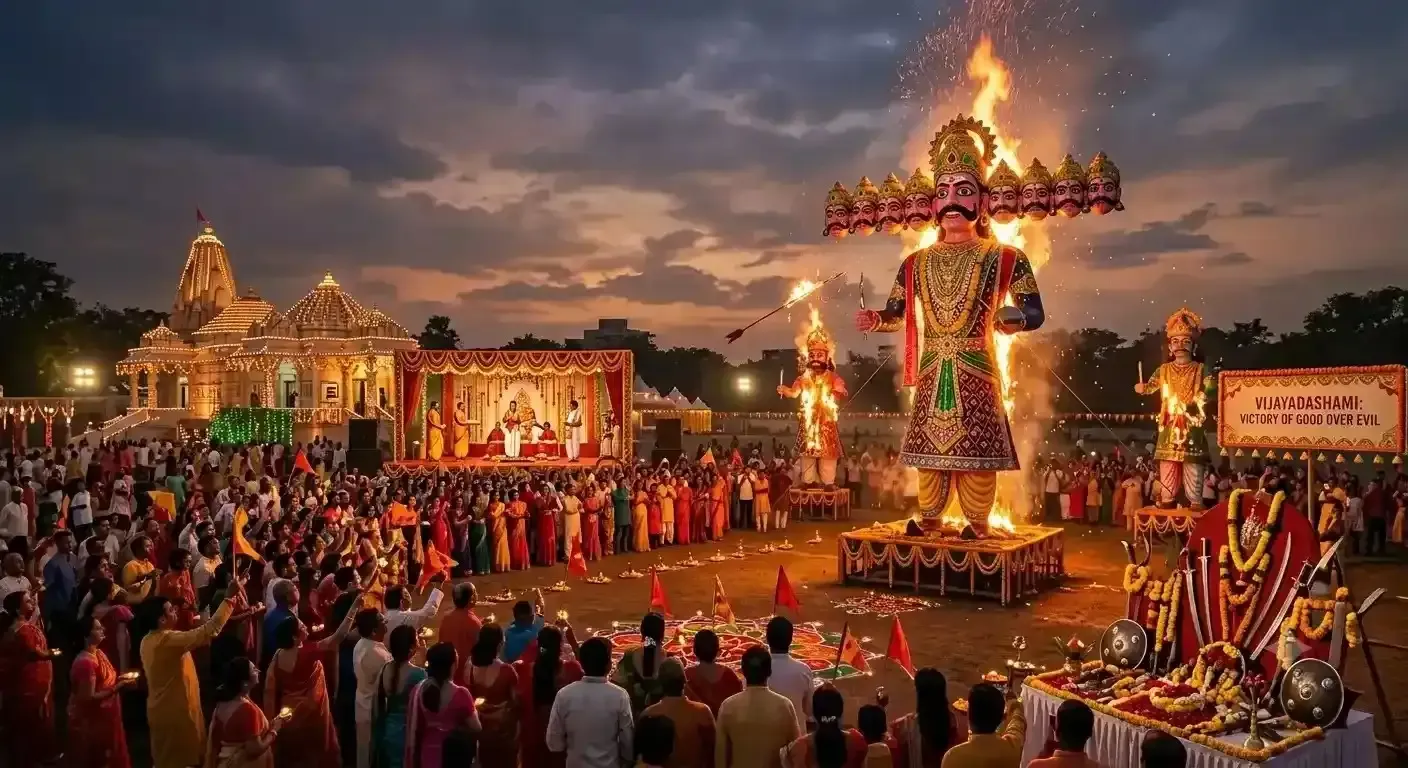
Vijayadashami falls on Tuesday 20 October 2026 across Tanzania. Local Vijay Muhurat, Aparahna and Dashami times for Dar es Salaam, Zanzibar City, Arusha, Mwanza and Dodoma, Hindu temples from Stone Town to Temple Street, and how to mark the day at home.
Quick answer: Dussehra (Vijayadashami) 2026 in Tanzania is on Tuesday 20 October 2026 in every city. The Vijay Muhurat, calculated by the Drik Panchang method, is 2:10 PM – 2:59 PM in Dar es Salaam and Zanzibar City, 2:20 PM – 3:08 PM in Arusha, 2:24 PM – 3:13 PM in Dodoma and 2:34 PM – 3:23 PM in Mwanza (East Africa Time, UTC+3). Navratri runs from Sunday 11 to Monday 19 October 2026.
Editor's note (5 October 2026): The local times on this page were calculated for each city from the Drik Panchang tithi (Dashami from 12:50 PM IST on 20 October to 2:11 PM IST on 21 October 2026), using East Africa Time, which does not change for daylight saving. The Vijay Muhurat is the 11th of the 15 daytime muhurtas, calculated by the Drik Panchang method. We do not list 2026 event schedules, because temples and associations announce their own programmes; please check with them directly.
Tanzania's Hindu community is one of the oldest in Africa. Indian Ocean trade linked the Swahili coast with Gujarat and the Konkan for many centuries, and Hindu merchants were settled in Zanzibar long before the colonial era. Larger migration followed in the late nineteenth and early twentieth centuries, when Gujarati traders, and later Punjabi and other Indian families, spread along the railway and caravan routes to Dar es Salaam, Tanga, Morogoro, Dodoma, Tabora, Mwanza, Arusha and Moshi. Many families left after the 1964 Zanzibar revolution and the nationalisations of the late 1960s and early 1970s, but a well-organised community remains, estimated at tens of thousands, centred on Dar es Salaam. It is now joined by Indian professionals, engineers, doctors and business people on work assignments, including South Indian, Bengali and North Indian families.
The community's character is strongly Gujarati. Navratri garba and dandiya are the high point of the autumn festival season, Swaminarayan and Sanatan mandirs anchor religious life, and community bodies such as the Hindu Mandal in Dar es Salaam and the Hindu Union in Arusha and Mwanza have long run charitable hospitals, schools and sports activities alongside temple worship.
Dussehra 2026 in Tanzania: dates and Vijay Muhurat by city
All of Tanzania, including Zanzibar, is on East Africa Time (UTC+0300) all year. The Dashami tithi begins and ends at the same moment everywhere, so only the sun-based windows differ from city to city. Dar es Salaam and Zanzibar on the coast have the earliest Vijay Muhurat; Mwanza on Lake Victoria, far to the west, is about 24 minutes later.
| Region | City | Dussehra date | Vijay Muhurat (Drik Panchang method) | Dashami begins → ends |
|---|---|---|---|---|
| Dar es Salaam | Dar es Salaam | Tue 20 Oct | 2:10 PM – 2:59 PM | Tue 20 Oct, 10:20 AM → Wed 21 Oct, 11:41 AM |
| Zanzibar | Zanzibar City | Tue 20 Oct | 2:10 PM – 2:59 PM | Tue 20 Oct, 10:20 AM → Wed 21 Oct, 11:41 AM |
| Arusha | Arusha | Tue 20 Oct | 2:20 PM – 3:08 PM | Tue 20 Oct, 10:20 AM → Wed 21 Oct, 11:41 AM |
| Dodoma | Dodoma | Tue 20 Oct | 2:24 PM – 3:13 PM | Tue 20 Oct, 10:20 AM → Wed 21 Oct, 11:41 AM |
| Mwanza | Mwanza | Tue 20 Oct | 2:34 PM – 3:23 PM | Tue 20 Oct, 10:20 AM → Wed 21 Oct, 11:41 AM |
The Aparahna (afternoon period) is the traditional window for Aparajita and Shami puja, and sunset marks the time for any evening Ravan Dahan or aarti:
| City | Aparahna, 20 Oct | Sunset, 20 Oct |
|---|---|---|
| Dar es Salaam | 1:21 PM – 3:49 PM | 6:16 PM |
| Zanzibar City | 1:21 PM – 3:48 PM | 6:15 PM |
| Arusha | 1:31 PM – 3:57 PM | 6:23 PM |
| Dodoma | 1:35 PM – 4:02 PM | 6:29 PM |
| Mwanza | 1:46 PM – 4:12 PM | 6:38 PM |
Key Navratri and Dussehra dates 2026
| Observance | Date (2026) |
|---|---|
| Navratri begins (Ghatasthapana) | Sunday 11 October |
| Durga Ashtami and Maha Navami | Monday 19 October |
| Dussehra / Vijayadashami in Tanzania | Tuesday 20 October |
| Dashami tithi, Tanzanian time | Tue 20 Oct, 10:20 AM → Wed 21 Oct, 11:41 AM |
| Bijoya Dashami / Sindoor Khela (India, Bengal tradition) | Wednesday 21 October |
Ashtami and Navami share Monday 19 October in India's calendar this year, so families who do Kanya pujan on either day will hold it then. In every Tanzanian city the Dashami tithi covers the whole Aparahna on 20 October, by about two and a half hours, so there is no doubt about the date.
Hindu temples in Tanzania for Navratri & Dussehra
These temples and organisations have been confirmed to exist in or near each city. We list name and area only; check their own websites or social pages for opening hours and festival plans. Temples and community groups usually announce Navratri garba, Durga Puja, Ramlila and Ravan Dahan programmes a few weeks ahead — check their websites/social pages.
Dar es Salaam
Dar es Salaam's Vijay Muhurat is 2:10 PM – 2:59 PM, with the Aparahna from 1:21 PM – 3:49 PM and sunset at 6:16 PM. Tanzania's commercial capital is home to the large majority of the country's Hindus, concentrated in and around the city centre, Upanga and Kariakoo, and it has the widest choice of mandirs and community events.
- BAPS Shri Swaminarayan Mandir — city centre, Dar es Salaam. A long-established Swaminarayan mandir, a focus for Gujarati families at Navratri, Dussehra and Diwali.
- Shree Sanatan Dharma Sabha — city centre, Dar es Salaam. One of the city's main Sanatan Hindu temples, with shrines to the major deities and Devi worship through Navratri.
- ISKCON Dar es Salaam — Dar es Salaam. The Hare Krishna centre, opened in 2016, with Sri Sri Gaura Nitai as presiding deities.
- Shree Hindu Mandal — Dar es Salaam. The community body founded in 1910 that runs the Shree Hindu Mandal Hospital and religious, educational and youth activities.
At Navratri, Dar es Salaam's mandirs typically hold nightly aarti and Mataji pujas, and garba and dandiya are often held in halls, school grounds and community compounds, especially on weekends. North Indian and Bengali families working in the city may also organise Durga Puja, Ramlila-themed programmes or small symbolic Ravan Dahan events where permitted.
Zanzibar: Zanzibar City (Stone Town)
Zanzibar City's Vijay Muhurat is 2:10 PM – 2:59 PM (Aparahna 1:21 PM – 3:48 PM, sunset 6:15 PM). Hindu traders lived in Stone Town for centuries, and many old houses with carved doors in the town's lanes were built by Indian merchant families. The community is now small, as most families left after 1964, but its temples are still cared for.
- Shree Shiv Shakti Temple — Stone Town. Built in 1958 with distinctive small towers, it is the best-known Hindu temple on the island and is important to the Gujarati community; it is tucked among narrow lanes, so ask locally.
- Arya Samaj — Stone Town. The island's other long-standing Hindu institution, following Vedic havan-based worship.
Families on Zanzibar typically mark Navratri with aarti and Devi puja at the temple and at home, and many travel to Dar es Salaam by ferry for larger garba evenings.
Arusha and Kilimanjaro: Arusha and Moshi
Arusha's Vijay Muhurat is 2:20 PM – 3:08 PM (Aparahna 1:31 PM – 3:57 PM, sunset 6:23 PM). Arusha, gateway to the northern safari circuit, has a Gujarati community that goes back generations, along with Indian professionals in tourism, trade and NGOs. Moshi, at the foot of Kilimanjaro, also has a Swaminarayan mandir and uses times very close to Arusha's.
- BAPS Shri Swaminarayan Mandir Arusha — Naura Street, central Arusha, opposite the Shree Hindu Union.
- Shree Hindu Union — central Arusha. The community body that runs a charitable hospital and hosts Hindu social and religious activities.
- ISKCON Arusha — Arusha. A Hare Krishna preaching centre holding kirtan and festival programmes.
Arusha's community typically celebrates with garba nights, Mataji aarti at the mandirs and Dussehra prayers, with weekend gatherings drawing families from Moshi and nearby towns.
Mwanza
Mwanza's Vijay Muhurat is 2:34 PM – 3:23 PM (Aparahna 1:46 PM – 4:12 PM, sunset 6:38 PM), the latest in Tanzania because the city lies so far west. Mwanza's Indian trading community gave its name to Temple Street in the city centre, where several mandirs stand close together.
- BAPS Shri Swaminarayan Mandir Mwanza — Temple Street, central Mwanza. Established in 1977 and active in festival celebrations through the year.
- Hindu temple of the Gujarati community (Hindu Union) — Temple Street, central Mwanza. Started in 1958 and one of the older temples in Tanzania; the community also runs the Hindu Union Hospital.
- Vaishnava Sanatan Mandir — Temple Street, central Mwanza.
With three temples on one street, Mwanza's Navratri is compact and neighbourly: evening aarti, garba in temple and community halls, and Dussehra prayers shared across the community.
Dodoma
Dodoma's Vijay Muhurat is 2:24 PM – 3:13 PM (Aparahna 1:35 PM – 4:02 PM, sunset 6:29 PM). Tanzania's official capital has an old Indian trading community and a growing number of officials, diplomats and professionals as government offices move there. We could not confirm a Hindu temple in Dodoma through reliable listings, so we do not name one here. Families usually mark Navratri and Dussehra at home or through informal community groups, or travel to Dar es Salaam for the larger mandir celebrations.
How Tanzania celebrates Navratri and Dussehra
Because 11–20 October are ordinary working days, much of Tanzania's community celebration moves to evenings and the weekends around Navratri. Gujarati garba and dandiya are the heart of the season: circles of dancers around a Mataji image, live or recorded garba songs, colourful clothing and late-night snacks. Mandirs hold Devi pujas and aarti every evening, and many families keep the Navratri fast, eating vrat food and ending it with Kanya pujan.
Bengali families working in Tanzania may hold a Durga Puja with an idol or picture, pushpanjali, bhog and Bijoya greetings. Tamil, Telugu, Kannada and Malayali families often set up Golu (Bommai Kolu) displays at home, perform Saraswati Puja and Ayudha Puja near the end of Navratri, and begin children's learning with Vidyarambham on Vijayadashami. Telugu families may celebrate Bathukamma with flower stacks and circle songs. North Indian families tell the Ramayana story, watch the Ramlila online and, where permitted, burn a small symbolic Ravana effigy after sunset. Large public Ravan Dahan as seen in India is rare in Tanzania.
Dussehra puja at home
If you cannot reach a mandir on a Tuesday, a short puja at home in the afternoon is entirely traditional. Ideally do it during your city's Vijay Muhurat, or at least within the Aparahna:
- Aparajita puja: draw an eight-petalled lotus with kumkum or rice flour, place a lamp, and worship Devi Aparajita, the goddess of victory, with flowers, akshat and a simple prayer for success over obstacles.
- Shami puja: if you have Shami leaves (or a substitute such as apta/bauhinia leaves), offer them to the Devi and exchange them with family as "gold" — a Maharashtrian and Karnataka custom.
- Ayudha Puja / Shastra puja: clean and decorate tools, books, laptops, shop ledgers and the car, apply kumkum and offer flowers, thanking them for their service. Many Gujarati business families also honour their account books.
- Vidyarambham: Vijayadashami is the traditional day for small children to begin learning — writing "Om" or the first letters of the alphabet in rice.
- Seemollanghan and new beginnings: a short walk beyond your street, starting a course or signing a new venture are traditional symbols of victory on this day.
A simple order: bathe, light a lamp, pray to Ganesha, do the Aparajita and Shami puja, then Ayudha puja, offer naivedya (sweets, fruit), do aarti and share prasad. For full step-by-step vidhi and the stories behind the festival, see our Dussehra / Vijayadashami 2026 pillar guide.
Practical tips for Dussehra in Tanzania
- Working day: Tuesday 20 October is a normal working and school day. The Vijay Muhurat falls in early to mid-afternoon, so consider a short break or doing the puja later within the Aparahna if you can.
- Fire and fireworks: rules on open fires, effigy burning and fireworks are set by the local authorities and police. Do not burn effigies or set off fireworks without permission, and keep any symbolic effigy small and well away from buildings.
- Getting to temples: traffic in central Dar es Salaam is heavy in the evening, and parking near city-centre mandirs is limited on festival nights, so car-share or use a ride-hailing app where you can. In Stone Town, the lanes are too narrow for cars, so walk from the edge of the old town.
- Weather: late October is warm and humid on the coast and Zanzibar, and pleasant in Arusha; it can be the start of the short rains in some areas, so bring an umbrella for outdoor garba.
- Puja items: Indian shops in Dar es Salaam, Arusha and Mwanza stock flowers, kumkum, incense and sweets, but buy a few days early before Navratri weekends.
- Muhurat: use your own city's times from the table above; never convert India's times into Tanzanian time.
Frequently asked questions
When is Dussehra 2026 in Tanzania?
Tuesday 20 October 2026 in every Tanzanian city, including Zanzibar. The Dashami tithi begins at 10:20 AM East Africa Time on 20 October and ends at 11:41 AM on Wednesday 21 October, so it covers the whole afternoon of the 20th.
What is the Vijay Muhurat in Dar es Salaam and Arusha?
Calculated by the Drik Panchang method for each city: Dar es Salaam 2:10 PM – 2:59 PM and Arusha 2:20 PM – 3:08 PM on Tuesday 20 October 2026. Zanzibar City is 2:10 PM – 2:59 PM, Dodoma 2:24 PM – 3:13 PM and Mwanza 2:34 PM – 3:23 PM, all in East Africa Time (UTC+3).
Can I convert India's Dussehra muhurat into Tanzanian time?
No. The Vijay Muhurat depends on local sunrise and sunset, so it has to be calculated for your own city. Use the Tanzanian times on this page or your mandir's calendar, not India's times shifted by the two-and-a-half-hour time difference.
When is Bijoya Dashami and Sindoor Khela for Bengali families in Tanzania?
In India, Bengal-tradition Bijoya Dashami and Sindoor Khela fall on Wednesday 21 October 2026 (Drik Panchang, Kolkata). Any Durga Puja held in Tanzania follows its own committee's schedule, so check their announcements.
Where will garba and Ravan Dahan take place in Tanzania?
Temples and community groups usually announce Navratri garba, Durga Puja, Ramlila and Ravan Dahan programmes a few weeks ahead, so check their websites and social pages. Open fires and fireworks are subject to permission from the local authorities.
Is Dussehra a public holiday in Tanzania?
No. Tuesday 20 and Wednesday 21 October 2026 are normal working and school days in Tanzania, so many families do the afternoon puja at home or at the mandir and join community celebrations in the evening or on the following weekend.
Related guides
- Dussehra / Vijayadashami 2026: complete guide
- Navratri 2026: complete guide for NRI families
- Dussehra 2026 in Kenya, city by city
- Dussehra 2026 in Uganda, city by city
- Dussehra 2026 in South Africa, city by city
- Dussehra 2026 in Mauritius, city by city
- Dussehra 2026 in Gujarat
- Dussehra 2026 in Dubai & UAE, emirate by emirate
- October 2026 Hindu festival calendar
You might also like
Dussehra 2026 in Victoria, BC: Date, Vijay Muhurat, Temples and Navratri Celebrations
Dussehra 2026 in Surrey: Date, Vijay Muhurat, Temples and Navratri Celebrations
Dussehra 2026 in Vancouver: Date, Vijay Muhurat, Temples and Navratri Celebrations