
Dussehra 2026 in Uganda, City by City: Date, Vijay Muhurat and Hindu Temples
Vijayadashami falls on Tuesday 20 October 2026 across Uganda. Local Vijay Muhurat, Aparahna and Dashami times for Kampala, Jinja and Mbarara, verified Hindu temples and organisations, and how to mark the day at home.
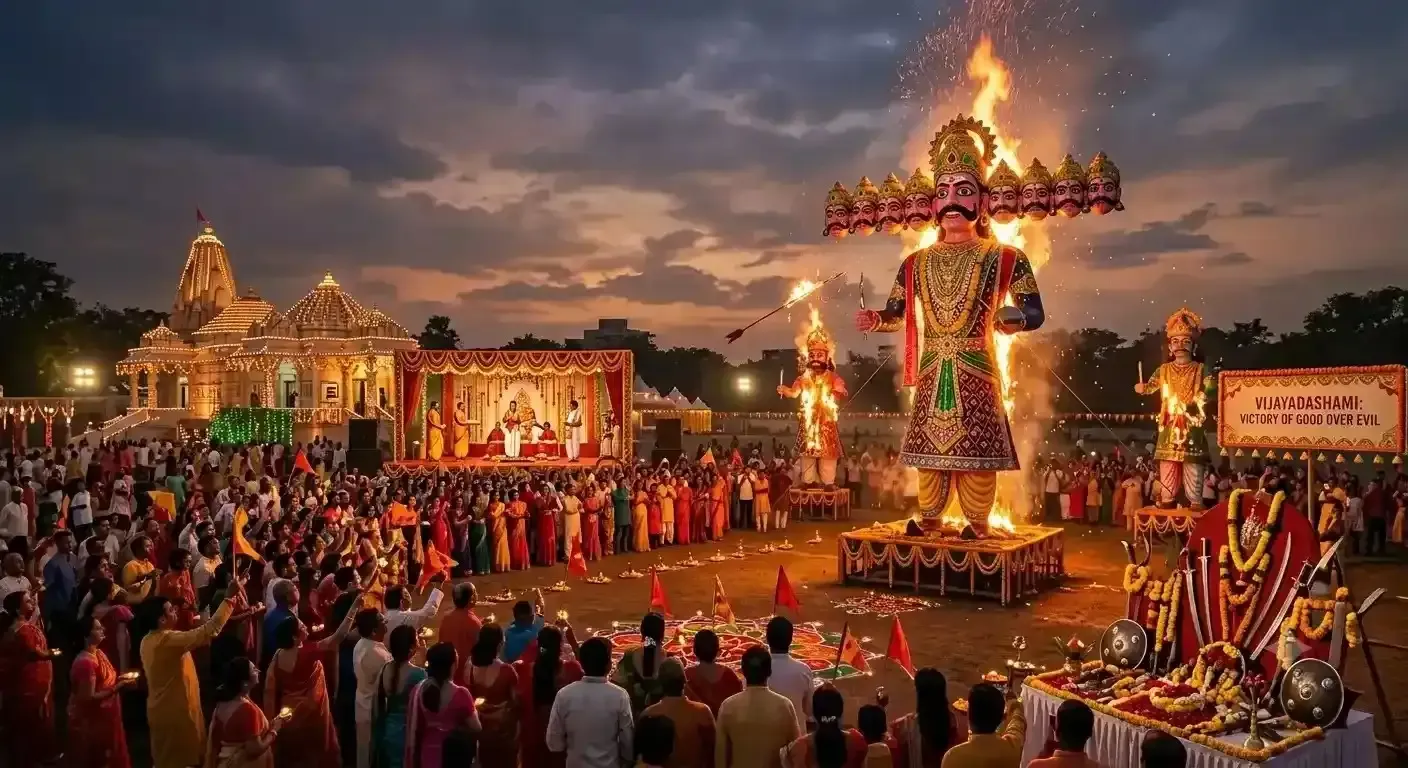
Vijayadashami falls on Tuesday 20 October 2026 across Uganda. Local Vijay Muhurat, Aparahna and Dashami times for Kampala, Jinja and Mbarara, verified Hindu temples and organisations, and how to mark the day at home.
Quick answer: Dussehra (Vijayadashami) 2026 in Uganda is on Tuesday 20 October 2026 across the whole country. The Vijay Muhurat, calculated by the Drik Panchang method, is 2:35 PM – 3:24 PM in Kampala, 2:33 PM – 3:21 PM in Jinja and 2:43 PM – 3:32 PM in Mbarara (East Africa Time, UTC+3). Navratri runs from Sunday 11 to Monday 19 October 2026.
Editor's note (5 October 2026): The local times on this page were calculated for each town from the Drik Panchang tithi (Dashami from 12:50 PM IST on 20 October to 2:11 PM IST on 21 October 2026), using East Africa Time, which stays at UTC+3 all year with no daylight saving. The Vijay Muhurat is the 11th of the 15 daytime muhurtas, calculated by the Drik Panchang method. We do not list 2026 event schedules, because temples and organisations announce their own programmes; please check with them directly.
Uganda's Hindu community is small but long-established. Indian traders were active on the East African coast for centuries, and from the 1890s many more people from Gujarat and Punjab came with the building of the Uganda Railway and stayed on as shopkeepers, builders and professionals. By the 1960s Kampala, Jinja and the up-country towns had thriving Gujarati, Punjabi and other Indian communities with their own mandirs, schools and halls. The 1972 expulsion of Asians under Idi Amin scattered most of them to the UK, Canada and India, but many families returned from the 1990s onwards, and newer arrivals from across India, including Bengali, Tamil, Telugu, Malayali and Marathi professionals, have joined them. Today Hindu life is centred on Kampala, with an important historic community in Jinja.
Dussehra 2026 in Uganda: dates and Vijay Muhurat by city
All of Uganda is on East Africa Time (UTC+0300). The Dashami tithi begins and ends at the same moment everywhere, so only the sun-based windows differ. Jinja, east of Kampala, sees everything two or three minutes earlier on the clock; Mbarara, in the west, about eight minutes later.
| Region | City | Dussehra date | Vijay Muhurat (Drik Panchang method) | Dashami begins → ends |
|---|---|---|---|---|
| Central | Kampala | Tue 20 Oct | 2:35 PM – 3:24 PM | Tue 20 Oct, 10:20 AM → Wed 21 Oct, 11:41 AM |
| Eastern | Jinja | Tue 20 Oct | 2:33 PM – 3:21 PM | Tue 20 Oct, 10:20 AM → Wed 21 Oct, 11:41 AM |
| Western | Mbarara | Tue 20 Oct | 2:43 PM – 3:32 PM | Tue 20 Oct, 10:20 AM → Wed 21 Oct, 11:41 AM |
The Aparahna (afternoon period) is the traditional window for Aparajita and Shami puja, and sunset marks the time for any evening aarti or Ravan Dahan:
| City | Aparahna, 20 Oct | Sunset, 20 Oct |
|---|---|---|
| Kampala | 1:47 PM – 4:12 PM | 6:37 PM |
| Jinja | 1:44 PM – 4:09 PM | 6:35 PM |
| Mbarara | 1:55 PM – 4:20 PM | 6:46 PM |
Key Navratri and Dussehra dates 2026
| Observance | Date (2026) |
|---|---|
| Navratri begins (Ghatasthapana) | Sunday 11 October |
| Durga Ashtami and Maha Navami | Monday 19 October |
| Dussehra / Vijayadashami in Uganda | Tuesday 20 October |
| Dashami tithi, Uganda time | Tue 20 Oct, 10:20 AM → Wed 21 Oct, 11:41 AM |
| Bijoya Dashami / Sindoor Khela (India, Bengal tradition) | Wednesday 21 October |
Ashtami and Navami share Monday 19 October in India's calendar this year, so families who do Kanya pujan on either day will hold it then. In every Ugandan town the Dashami tithi begins in the mid-morning of 20 October and covers the entire Aparahna, by well over two hours, so there is no doubt about the date and the Vijay Muhurat falls comfortably within Dashami. Bengali-style Durga Puja committees follow their own calendar for Bijoya Dashami, which in India falls on Wednesday 21 October.
Hindu temples in Uganda for Navratri & Dussehra
These temples and organisations have been confirmed to exist in each area. We list name and area only; check their own websites or social pages for opening hours and festival plans. Temples and community groups usually announce Navratri garba, Durga Puja, Ramlila and Ravan Dahan programmes a few weeks ahead — check their websites/social pages.
Central Uganda: Kampala
Kampala's Vijay Muhurat is 2:35 PM – 3:24 PM, with the Aparahna from 1:47 PM to 4:12 PM and sunset at 6:37 PM. The capital is home to most of Uganda's Hindus and almost all of its major temples, many of them in and around the old commercial heart of Nakasero.
- Shree Sanatan Dharma Mandal (SSDM) Hindu Temple — Nakasero, central Kampala. Built between the mid-1950s and 1961 as a replica of the Somnath temple in Gujarat, with Lord Shiva as the main deity, it is the city's best-known landmark mandir and a hub for the wider Hindu community.
- BAPS Shri Swaminarayan Mandir, Kampala — Kampala. Inaugurated in 1960 by Yogiji Maharaj, it is one of the oldest BAPS mandirs in Africa and a centre of Gujarati community life.
- Shree Swaminarayan Temple (SKSS Temple) — Bukoto, Kampala. A Swaminarayan temple of the Kalupur (Ahmedabad) tradition, serving many Kutchi and Gujarati families.
- ISKCON Kampala (Hare Krishna temple) — Dewinton Road, central Kampala. Known for its daily aartis, Sunday programmes and its popular annual Ratha Yatra through the city.
- Indian Association Uganda — Nakasero, Kampala. Founded in 1922, the community's umbrella body; its grounds have long hosted festival gatherings, including the Bengali community's Durga Puja in past years.
In Kampala, Navratri usually brings garba and dandiya evenings run by Gujarati groups and temple committees, Devi aarti and bhajan at the Sanatani and Swaminarayan mandirs, and a Bengali-style Durga Puja with a pratima, pushpanjali and, at the end, a ceremonial immersion. Tamil, Telugu and Kannada families keep Golu displays, Saraswati Puja and Ayudha Puja at home or in small community groups, and Telugu families may mark Bathukamma with flower arrangements and circle songs.
Eastern Uganda: Jinja
Jinja's Vijay Muhurat is 2:33 PM – 3:21 PM, with the Aparahna from 1:44 PM to 4:09 PM and sunset at 6:35 PM. Jinja, at the source of the Nile on Lake Victoria, was once a major centre of Indian commerce and industry, and its Main Street still has many buildings from that era. The community is smaller than before 1972, but it remains active.
- BAPS Shri Swaminarayan Mandir, Jinja — Oboja Road, Jinja. A traditional mandir known for its carved interiors, and a focal point for Hindu families in the eastern region.
Jinja families often celebrate the main Navratri evenings locally and travel to Kampala, about two hours away by road, for larger garba nights or Durga Puja. On Dussehra, a home or mandir puja during the afternoon Vijay Muhurat is the usual practice.
Western Uganda: Mbarara
Mbarara's Vijay Muhurat is 2:43 PM – 3:32 PM, with the Aparahna from 1:55 PM to 4:20 PM and sunset at 6:46 PM. Mbarara is the main city of western Uganda and has Indian-run businesses and professionals, but we could not confirm a Hindu temple there from a reliable source, so we do not name one. Hindu residents usually mark Navratri and Dussehra with a home puja using the local times above, gather with other families informally, or travel to Kampala for the larger temple programmes.
How Uganda celebrates Navratri and Dussehra
For most Ugandan Hindus, Navratri is the high point of the year after Diwali. Gujarati families, the largest group, celebrate with nine nights of garba and dandiya around a decorated image of Amba Mata, usually in temple halls, school halls or hotel ballrooms, with live music, traditional chaniya choli and kediyu outfits, and food stalls run by volunteers. Sanatani mandirs hold daily Devi puja, aarti and bhajan, and many households keep the nine-day fast, light an akhand diya and do Kanya pujan on Ashtami or Navami.
The Bengali community has for years organised Durga Puja in Kampala, at times bringing an idol and a priest from Kolkata, with the pratima later immersed in Lake Victoria. South Indian families set up Golu (Bommai Kolu) steps of dolls at home and invite friends for haldi-kumkum, and observe Saraswati Puja and Ayudha Puja, when books, tools, laptops and vehicles are blessed. Marathi and Kannada families exchange Shami or apta leaves as "gold" on Dasara, and Punjabi and North Indian families remember the Ramayana with Ramcharitmanas path and stories of Rama's victory over Ravan.
Large open-air Ramlila and Ravan Dahan of the kind seen in North India are uncommon in Uganda. Where groups mark Dussehra publicly, it is usually with a modest effigy or symbolic burning at a temple or community ground, subject to local permission, followed by prasad and the exchange of greetings. Because Dussehra is a working day, many of these events move to the weekend around 20 October.
Dussehra puja at home
If you cannot reach a temple on a Tuesday, a short puja at home in the afternoon is entirely traditional. Ideally do it during your town's Vijay Muhurat, or at least within the Aparahna:
- Aparajita puja: draw an eight-petalled lotus with kumkum or rice flour, place a lamp, and worship Devi Aparajita, the goddess of victory, with flowers, akshat and a prayer for success over obstacles.
- Shami puja: if you have Shami leaves (or apta/bauhinia leaves), offer them to the Devi and exchange them with family as "gold"; if not, a simple prayer with any sacred leaf or flower is fine.
- Ayudha Puja / Shastra puja: clean and decorate tools, books, laptops, shop scales and the car or boda boda, apply kumkum and offer flowers, thanking them for their service.
- Vidyarambham: Vijayadashami is the traditional day for small children to begin learning — writing "Om" or the first letters of the alphabet in rice.
- Seemollanghan and new beginnings: a short walk beyond your street, starting a course or opening new account books are traditional symbols of victory on this day, especially in business families.
A simple order: bathe, light a lamp, pray to Ganesha, do the Aparajita and Shami puja, then Ayudha puja, offer naivedya (sweets, fruit), do aarti and share prasad. For full step-by-step vidhi and the stories behind the festival, see our Dussehra / Vijayadashami 2026 pillar guide.
Practical tips for Dussehra in Uganda
- Working day: Tuesday 20 and Wednesday 21 October are normal working and school days. The Vijay Muhurat falls in the mid-afternoon, so plan a short break, or do the puja at another time within the Aparahna.
- Fire and fireworks: rules on open fires, effigy burning and fireworks are set by the local authorities and police. Do not burn effigies or set off fireworks in public spaces without permission.
- Getting to temples: central Kampala traffic is heavy in the evening rush, and parking near Nakasero is limited on festival nights. Leave early, share rides, or use a trusted taxi or ride-hailing app rather than driving yourself.
- Weather: October falls in Uganda's second rainy season, so afternoon and evening showers are common. Keep an umbrella handy and expect outdoor garba to move indoors if it rains.
- Puja items: Indian grocers in Kampala stock flowers, kumkum, diyas and sweets, but buy a few days early, especially if you live in Jinja or Mbarara where choice is limited.
- Muhurat: use your own town's times from the table above; never convert India's times into Ugandan time.
Frequently asked questions
When is Dussehra 2026 in Uganda?
Tuesday 20 October 2026 everywhere in Uganda. The Dashami tithi begins at 10:20 AM East Africa Time on 20 October and ends at 11:41 AM on Wednesday 21 October, so it covers the whole afternoon of the 20th in every town.
What is the Vijay Muhurat in Kampala?
Calculated by the Drik Panchang method, the Vijay Muhurat on Tuesday 20 October 2026 is 2:35 PM – 3:24 PM in Kampala, 2:33 PM – 3:21 PM in Jinja and 2:43 PM – 3:32 PM in Mbarara, all in East Africa Time (UTC+3).
Why is the Vijay Muhurat later in Mbarara than in Jinja?
The whole country uses one clock time, but Mbarara lies further west than Kampala and Jinja, so the sun rises and sets later there (sunset on 20 October is at 6:46 PM, against 6:35 PM in Jinja). Every sun-based window, including the Vijay Muhurat and Aparahna, shifts by the same few minutes.
Can I convert India's Dussehra muhurat into Ugandan time?
No. The Vijay Muhurat depends on local sunrise and sunset, so it has to be calculated for your own location. Use the Ugandan times on this page or your temple's calendar, not India's times shifted by the time difference.
Is Dussehra a public holiday in Uganda?
No. Tuesday 20 October 2026 is a normal working and school day in Uganda. Many families do a short afternoon puja at home or at the office and visit the mandir in the evening, and community programmes often move to the nearest weekend.
Where will Navratri garba, Durga Puja and Ravan Dahan be held in Uganda?
Temples and community groups usually announce Navratri garba, Durga Puja, Ramlila and Ravan Dahan programmes a few weeks ahead — check their websites/social pages. Any open fire, effigy burning or fireworks is subject to the rules of the local authorities and police.
Related guides
- Dussehra / Vijayadashami 2026: complete guide
- Navratri 2026: complete guide for NRI families
- Dussehra 2026 in Kenya, city by city
- Dussehra 2026 in Tanzania, city by city
- Dussehra 2026 in South Africa, city by city
- Dussehra 2026 in Mauritius, city by city
- Dussehra 2026 in Gujarat: Vijay Muhurat and garba
- Durga Puja and Bijoya Dashami 2026 in West Bengal
- October 2026 Hindu festival calendar
You might also like
Dussehra 2026 in Victoria, BC: Date, Vijay Muhurat, Temples and Navratri Celebrations
Dussehra 2026 in Surrey: Date, Vijay Muhurat, Temples and Navratri Celebrations
Dussehra 2026 in Vancouver: Date, Vijay Muhurat, Temples and Navratri Celebrations