
Dussehra 2026 in Sri Lanka, City by City: Date, Vijay Muhurat and Hindu Temples
Vijayadashami falls on Tuesday 20 October 2026 across Sri Lanka. Local Vijay Muhurat, Aparahna and Dashami times for Colombo, Jaffna, Trincomalee, Batticaloa, Kandy and Nuwara Eliya, verified kovils, Navaratri and Saraswati Puja traditions, and how to mark the day at home.
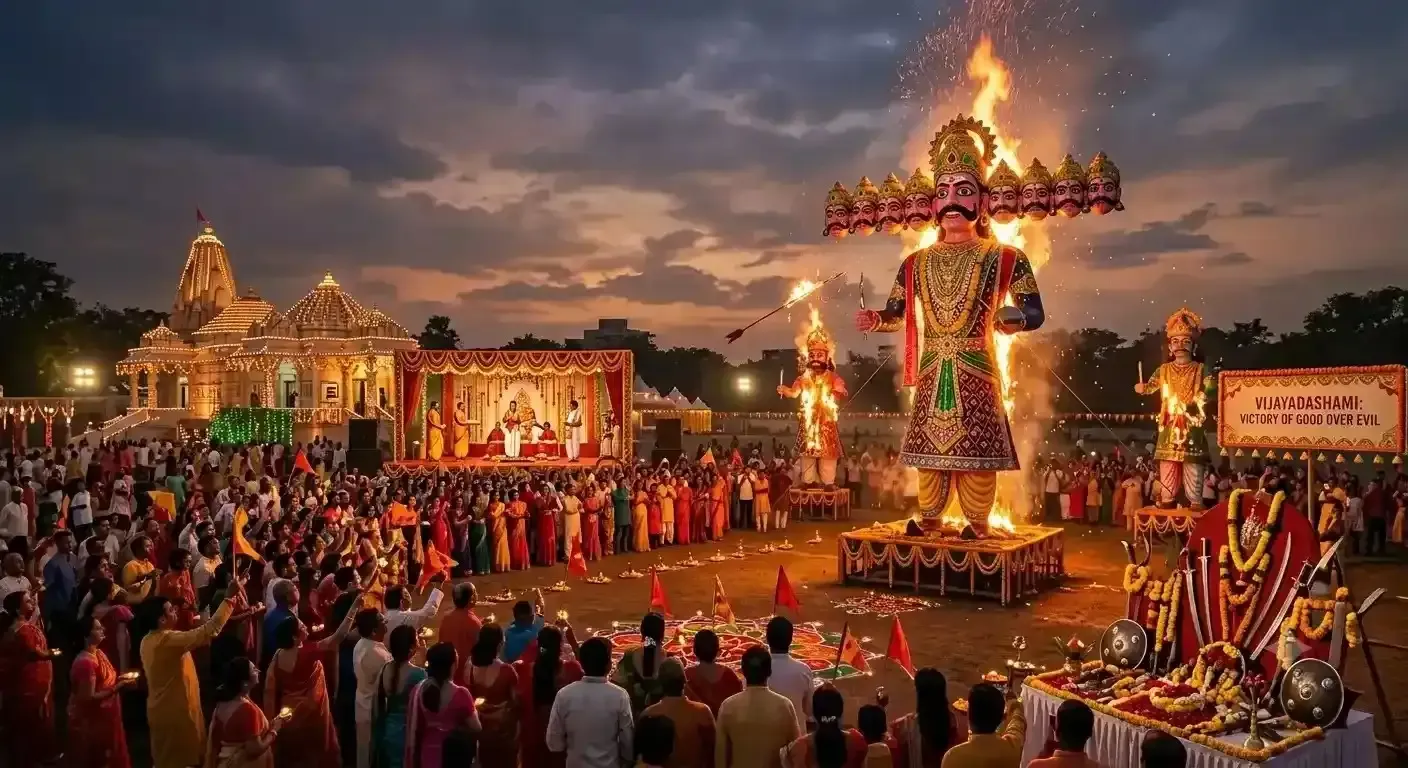
Vijayadashami falls on Tuesday 20 October 2026 across Sri Lanka. Local Vijay Muhurat, Aparahna and Dashami times for Colombo, Jaffna, Trincomalee, Batticaloa, Kandy and Nuwara Eliya, verified kovils, Navaratri and Saraswati Puja traditions, and how to mark the day at home.
Quick answer: Dussehra (Vijayadashami) 2026 in Sri Lanka is on Tuesday 20 October 2026 across the whole country. The Vijay Muhurat, calculated by the Drik Panchang method, is 1:54 PM – 2:42 PM in Colombo, 1:53 PM – 2:41 PM in Jaffna and 1:51 PM – 2:39 PM in Kandy (Sri Lanka Time, UTC+5:30), with the east coast a few minutes earlier. Navaratri runs from Sunday 11 to Monday 19 October 2026.
Editor's note (5 October 2026): The local times on this page were calculated for each city from the Drik Panchang tithi (Dashami from 12:50 PM IST on 20 October to 2:11 PM IST on 21 October 2026). Sri Lanka Time is UTC+5:30 all year, the same as India, so the Dashami start and end read identically on the clock. The Vijay Muhurat is the 11th of the 15 daytime muhurtas, calculated by the Drik Panchang method from each city's own sunrise and sunset. We do not list 2026 event schedules, because kovils and organisations announce their own programmes; please check with them directly.
Hindus make up roughly an eighth of Sri Lanka's population, and the island's Hindu heritage is among the oldest in the world. Most Sri Lankan Hindus are Tamil Saivites, concentrated in the Northern and Eastern Provinces, in Colombo, and among the Malaiyaha (Hill Country) Tamil community of the central tea districts, whose ancestors came from South India in the nineteenth century. Sri Lanka is home to the Pancha Ishwarams, five ancient coastal Shiva shrines, and to sites linked by tradition to the Ramayana. Navaratri here is a Saivite and Shakta festival above all: nine nights of worship of Durga, Lakshmi and Saraswati, ending on Vijayadashami with Vidyarambham and new beginnings.
Dussehra 2026 in Sri Lanka: dates and Vijay Muhurat by city
The whole country is on Sri Lanka Time (UTC+0530) with no daylight saving. The Dashami tithi begins and ends at the same moment everywhere, so only the sun-based windows differ, and they vary by just a few minutes between the west coast and the east coast.
| Region | City | Dussehra date | Vijay Muhurat (Drik Panchang method) | Dashami begins → ends |
|---|---|---|---|---|
| Western | Colombo | Tue 20 Oct | 1:54 PM – 2:42 PM | Tue 20 Oct, 12:50 PM → Wed 21 Oct, 2:11 PM |
| Northern | Jaffna | Tue 20 Oct | 1:53 PM – 2:41 PM | Tue 20 Oct, 12:50 PM → Wed 21 Oct, 2:11 PM |
| Eastern | Trincomalee | Tue 20 Oct | 1:49 PM – 2:36 PM | Tue 20 Oct, 12:50 PM → Wed 21 Oct, 2:11 PM |
| Eastern | Batticaloa | Tue 20 Oct | 1:47 PM – 2:35 PM | Tue 20 Oct, 12:50 PM → Wed 21 Oct, 2:11 PM |
| Central | Kandy | Tue 20 Oct | 1:51 PM – 2:39 PM | Tue 20 Oct, 12:50 PM → Wed 21 Oct, 2:11 PM |
| Central | Nuwara Eliya | Tue 20 Oct | 1:51 PM – 2:38 PM | Tue 20 Oct, 12:50 PM → Wed 21 Oct, 2:11 PM |
The Aparahna (afternoon period) is the traditional window for Aparajita and Shami puja, and sunset marks the time for evening deeparadhana:
| City | Aparahna, 20 Oct | Sunset, 20 Oct |
|---|---|---|
| Colombo | 1:07 PM – 3:30 PM | 5:53 PM |
| Jaffna | 1:06 PM – 3:28 PM | 5:51 PM |
| Trincomalee | 1:01 PM – 3:24 PM | 5:47 PM |
| Batticaloa | 12:59 PM – 3:22 PM | 5:45 PM |
| Kandy | 1:03 PM – 3:27 PM | 5:50 PM |
| Nuwara Eliya | 1:03 PM – 3:26 PM | 5:50 PM |
Key Navaratri and Vijayadashami dates 2026
| Observance | Date (2026) |
|---|---|
| Navaratri begins (Ghatasthapana / Kalasa sthapanam) | Sunday 11 October |
| Durga Ashtami and Maha Navami (Saraswati Puja, Ayudha Puja) | Monday 19 October |
| Vijayadashami in Sri Lanka | Tuesday 20 October |
| Dashami tithi, Sri Lanka time | Tue 20 Oct, 12:50 PM → Wed 21 Oct, 2:11 PM |
| Bijoya Dashami / Sindoor Khela (India, Bengal tradition) | Wednesday 21 October |
Ashtami and Navami share Monday 19 October in India's calendar this year, so Saraswati Puja and Ayudha Puja on Navami fall on that day. In every Sri Lankan city the Dashami tithi begins just before the Aparahna and covers all of it on 20 October, so there is no doubt about the date, and the Vijay Muhurat falls comfortably within Dashami. Kovils follow their own Tamil panchangam, which may differ by a day for some observances, so follow your temple.
Hindu temples in Sri Lanka for Navratri & Dussehra
These kovils and organisations have been confirmed to exist in each area. We list name and area only; check their own websites or social pages for opening hours and festival plans. Temples and community groups usually announce Navratri garba, Durga Puja, Ramlila and Ravan Dahan programmes a few weeks ahead — check their websites/social pages.
Western Province: Colombo
Colombo's Vijay Muhurat is 1:54 PM – 2:42 PM, with the Aparahna from 1:07 PM to 3:30 PM and sunset at 5:53 PM. The capital has a large Tamil Hindu population, especially in Wellawatte, Bambalapitiya, Kotahena and the old trading streets of Pettah, as well as Indian expatriate families from many states.
- Sri Ponnambalawaneswaram Kovil — Kotahena. A Shiva temple built entirely of grey granite in the late nineteenth century, often described as the largest kovil in Colombo.
- New Kathiresan and Old Kathiresan Kovils — Sea Street, Pettah. Neighbouring Murugan temples on the street of the goldsmiths, alongside the Sri Muthu Vinayagar Swamy Kovil.
- New Kathiresan Kovil, Bambalapitiya — Galle Road, Bambalapitiya. The Murugan temple that receives the famous Vel procession from Pettah each Aadi.
- Mayurapathy Sri Bathirakaali Amman Kovil — Wellawatte (Colombo 6). A busy Amman (Devi) temple that is a natural focus for Navaratri worship.
- Ramakrishna Mission — Wellawatte (Colombo 6). A centre for worship, study and cultural programmes.
Northern Province: Jaffna
Jaffna's Vijay Muhurat is 1:53 PM – 2:41 PM, with the Aparahna from 1:06 PM to 3:28 PM and sunset at 5:51 PM. The Jaffna Peninsula is the heartland of Sri Lankan Tamil Saivism, and almost every village has its own Pillaiyar, Murugan or Amman kovil, so Navaratri is observed in every neighbourhood.
- Nallur Kandaswamy Kovil — Nallur, Jaffna. The peninsula's largest and most important temple, dedicated to Murugan, with a golden gopuram that dominates the town.
- Nainativu Nagapooshani Amman Kovil — Nainativu island, off the Jaffna Peninsula. Counted among the Shakti Peethas, this Devi temple celebrates Navaratri among its major festivals.
In Jaffna kovils, Navaratri is usually marked with nightly abhishekam and alankaram of the Amman, Saraswati Puja and Ayudha Puja at the end of the nine nights, and Vidyarambham for small children on Vijayadashami. Many kovils also hold a ritual on Vijayadashami evening in which the deity symbolically slays the demon, often by an arrow shot at a banana stem.
Eastern Province: Trincomalee and Batticaloa
Trincomalee's Vijay Muhurat is 1:49 PM – 2:36 PM (Aparahna 1:01 PM to 3:24 PM, sunset 5:47 PM). Batticaloa's is 1:47 PM – 2:35 PM (Aparahna 12:59 PM to 3:22 PM, sunset 5:45 PM), the earliest in the country. The east coast has a large Tamil Hindu population with distinctive temple traditions of its own.
- Koneswaram Temple — Konesar Malai (Swami Rock), Trincomalee. The most sacred of the Pancha Ishwarams, a Shiva temple on a headland above the Indian Ocean, with references in Tamil Sangam literature.
- Mamangam Pillaiyar Kovil (Amirthakali Mamangeswarar) — Amirthakali, Batticaloa. An ancient Ganesha temple that tradition holds stands where Rama worshipped Shiva.
Central Province: Kandy and Nuwara Eliya
Kandy's Vijay Muhurat is 1:51 PM – 2:39 PM (Aparahna 1:03 PM to 3:27 PM, sunset 5:50 PM), and Nuwara Eliya's is 1:51 PM – 2:38 PM (Aparahna 1:03 PM to 3:26 PM, sunset 5:50 PM). The hill country is home to the Malaiyaha Tamil community of the tea estates, where Amman worship is especially strong and estate kovils hold Navaratri pujas.
- Kataragama Devalaya — Kotugodella Vidiya, central Kandy. One of Kandy's four historic devalayas, venerated by Buddhists and Hindus alike and run by Hindu priests.
- Kattukale Sri Selva Vinayagar Kovil — Kandy. A Ganesha temple with long links to the Sri Dalada Maligawa and the Esala Perahera.
- Sri Muthumariamman Temple — Matale, north of Kandy. A major Mariamman temple with a 108-foot raja gopuram.
- Seetha Amman Kovil — Seetha Eliya, about 5 km from Nuwara Eliya on the Welimada road. Built at a spot linked by tradition to Sita's captivity in the Ramayana.
How Sri Lanka celebrates Navaratri and Vijayadashami
Navaratri in Sri Lanka follows the Tamil Saivite pattern. The first three nights are devoted to Durga, the next three to Lakshmi and the last three to Saraswati. Kovils hold evening abhishekam, alankaram and special pujas, often with devotional music and dance by students of local Bharatanatyam and Carnatic music schools. Families fast or eat simple vegetarian food, and many visit a different kovil each night.
Saraswati Puja is the best-known part of the festival on the island. Schools with Hindu students, offices, universities and even Parliament have held Saraswati Puja to mark Navaratri, with books, instruments and pens placed before the goddess. Ayudha Puja on Navami honours tools, machinery and vehicles, which are cleaned and decorated with sandal paste, kumkum and flowers. Some families keep Golu (Kolu) displays of dolls on stepped shelves, a custom shared with Tamil Nadu.
On Vijayadashami, children begin their education with Vidyarambham, tracing their first letters in rice, and kovils hold the evening ritual of victory, with the deity taken out to symbolically defeat the demon. North Indian-style Ramlila and Ravan Dahan are not part of Sri Lankan tradition, where Ravana is a familiar figure of local legend; Indian expatriate groups in Colombo sometimes organise garba, dandiya or Durga Puja evenings, so watch community announcements if you are looking for these.
Dussehra puja at home
If you cannot reach a kovil on a Tuesday afternoon, a short puja at home is entirely traditional. Ideally do it during your city's Vijay Muhurat, or at least within the Aparahna:
- Aparajita puja: draw an eight-petalled lotus with kumkum or rice flour, place a lamp, and worship Devi Aparajita, the goddess of victory, with flowers, akshat and a prayer for success over obstacles.
- Shami puja: if you can find Shami (vanni) leaves, offer them to the Devi; the vanni tree is honoured in Tamil tradition on this day.
- Ayudha Puja: clean and decorate tools, books, laptops, fishing gear, three-wheelers and cars, apply sandal paste and kumkum and offer flowers.
- Vidyarambham: help a young child write "Om" or the first letters of the Tamil alphabet in a plate of rice; then take the books from the Saraswati Puja back up to study.
- New beginnings: starting a course, a business or a new piece of work is traditional on this day of victory.
A simple order: bathe, light a lamp, pray to Pillaiyar (Ganesha), do the Aparajita and Shami puja, then Ayudha Puja, offer naivedya such as sundal, pongal, fruit and sweets, do aarti and share prasad. For full step-by-step vidhi and the stories behind the festival, see our Dussehra / Vijayadashami 2026 pillar guide.
Practical tips for Vijayadashami in Sri Lanka
- Working day: Tuesday 20 and Wednesday 21 October are normal working and school days. The Vijay Muhurat falls in the early afternoon, so plan a short break or do the puja later within the Aparahna.
- Fire and fireworks: rules on fireworks and open fires are set by local authorities and the police; check before you plan anything outdoors.
- Getting to kovils: Sea Street and Galle Road in Colombo are crowded and parking is scarce, so a three-wheeler or bus is often easier. Allow extra time for the ferry to Nainativu and for hill-country roads.
- Weather: October brings the inter-monsoon rains, with afternoon thunderstorms common, so carry an umbrella, and a warm layer for evenings in Nuwara Eliya.
- Temple etiquette: dress modestly, remove footwear, and at many Jaffna and east-coast kovils men remove their shirts before entering.
- Muhurat: use your own city's times from the table above; never take India's times, even though the clock is the same.
Frequently asked questions
When is Dussehra (Vijayadashami) 2026 in Sri Lanka?
Tuesday 20 October 2026 everywhere in Sri Lanka. The Dashami tithi begins at 12:50 PM Sri Lanka time on 20 October and ends at 2:11 PM on Wednesday 21 October, so it covers the whole afternoon of the 20th. Sri Lanka uses the same clock time as India (UTC+5:30), so the tithi times match India's.
What is the Vijay Muhurat in Colombo and Jaffna?
Calculated by the Drik Panchang method, the Vijay Muhurat on Tuesday 20 October 2026 is 1:54 PM – 2:42 PM in Colombo and 1:53 PM – 2:41 PM in Jaffna. Trincomalee is 1:49 PM – 2:36 PM, Batticaloa 1:47 PM – 2:35 PM, Kandy 1:51 PM – 2:39 PM and Nuwara Eliya 1:51 PM – 2:38 PM.
Why are the times slightly earlier in the east?
The whole country uses one clock time, but the sun rises and sets a few minutes earlier on the east coast. Sunset on 20 October is at 5:45 PM in Batticaloa against 5:53 PM in Colombo, so every sun-based window, including the Vijay Muhurat and Aparahna, is a few minutes earlier in Batticaloa and Trincomalee.
Is Vijayadashami a public holiday in Sri Lanka?
No. Deepavali is a public holiday in Sri Lanka, but Tuesday 20 October 2026 is a normal working and school day. Many schools and offices with Hindu staff and students hold Saraswati Puja near the end of Navaratri, and families do a short afternoon puja on Vijayadashami.
Is Ravan Dahan held in Sri Lanka?
Burning Ravana effigies is not a Sri Lankan tradition. Sri Lankan Tamil Hindus mark the end of Navaratri with Saraswati Puja, Ayudha Puja, Vidyarambham and temple rituals on Vijayadashami. Temples and community groups usually announce Navratri garba, Durga Puja, Ramlila and Ravan Dahan programmes a few weeks ahead — check their websites/social pages.
Can I use India's Vijay Muhurat in Sri Lanka because the clocks are the same?
No. Even with the same clock time, the Vijay Muhurat depends on local sunrise and sunset. Use the Sri Lankan times on this page or your kovil's panchangam, not the times published for an Indian city.
Related guides
- Dussehra / Vijayadashami 2026: complete guide
- Navratri 2026: complete guide for NRI families
- Vijayadashami 2026 in Tamil Nadu
- Navaratri and Vijayadashami 2026 in Kerala
- Dussehra 2026 Singapore, area by area
- Dussehra 2026 Malaysia, state by state
- Dussehra 2026 in Mauritius, city by city
- Dussehra 2026 in Bangladesh, city by city
- October 2026 Hindu festival calendar
You might also like
Dussehra 2026 in Victoria, BC: Date, Vijay Muhurat, Temples and Navratri Celebrations
Dussehra 2026 in Surrey: Date, Vijay Muhurat, Temples and Navratri Celebrations
Dussehra 2026 in Vancouver: Date, Vijay Muhurat, Temples and Navratri Celebrations