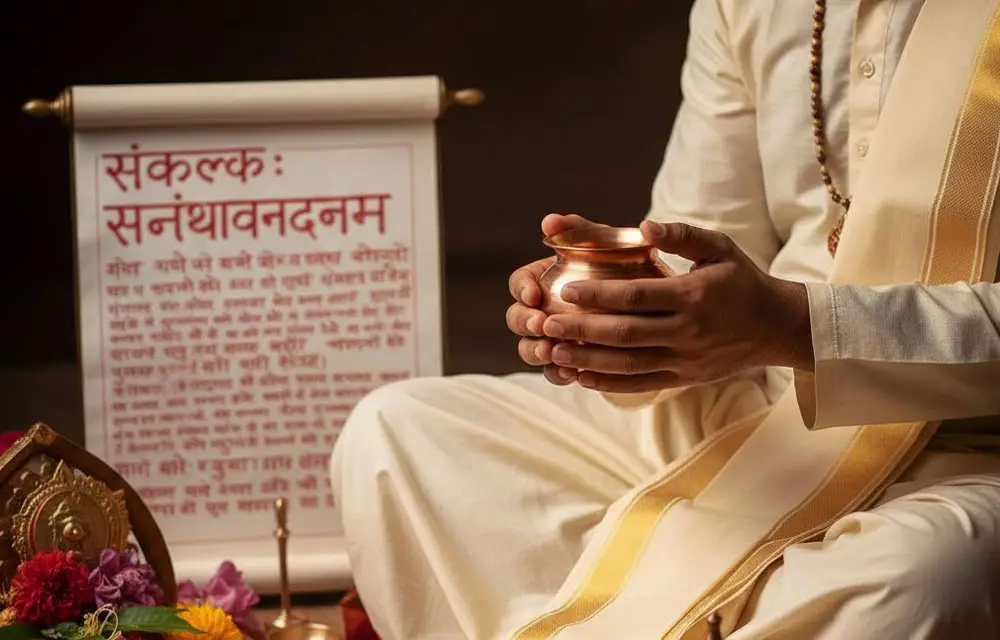
Devi Mahatmya (Durga Saptashati): A Complete Guide to the 13 Chapters
A complete guide to the Devi Mahatmya, also called Durga Saptashati or Chandi Path: where it sits in the Markandeya Purana, its 13 chapters and roughly 700 verses, the three charitas with Mahakali, Mahalakshmi and Mahasaraswati, the great battles, and how families in India and abroad recite it during Navratri (11 to 19 October 2026).
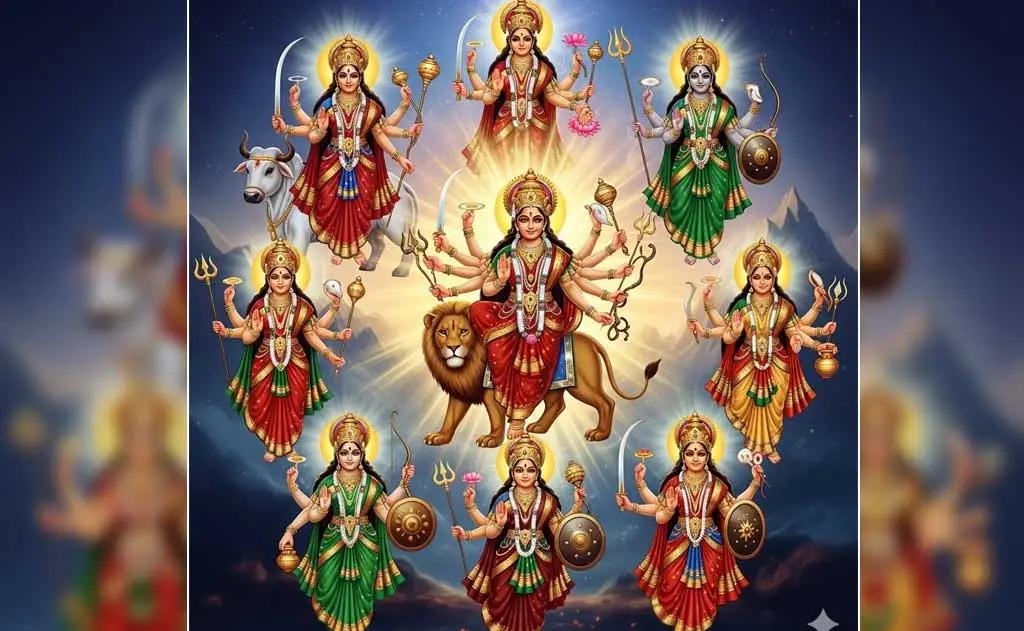
A complete guide to the Devi Mahatmya, also called Durga Saptashati or Chandi Path: where it sits in the Markandeya Purana, its 13 chapters and roughly 700 verses, the three charitas with Mahakali, Mahalakshmi and Mahasaraswati, the great battles, and how families in India and abroad recite it during Navratri (11 to 19 October 2026).
Quick answer: The Devi Mahatmya, also called Durga Saptashati or Chandi Path, is a Sanskrit text of 13 chapters and about 700 verses forming chapters 81 to 93 of the Markandeya Purana. It celebrates the Divine Mother as the supreme power behind the universe and is arranged in three sections (charitas): the slaying of Madhu and Kaitabha (presided over by Mahakali), the defeat of Mahishasura (Mahalakshmi), and the destruction of Shumbha and Nishumbha and their generals Chanda, Munda and Raktabija (Mahasaraswati). It is the central scripture recited during Navratri, which in 2026 runs from Sunday 11 to Monday 19 October, with Dussehra on Tuesday 20 October.
This guide has been restored at its original hindutone.com address. It explains the structure and story of the text, its key hymns, and a practical way for families in India and abroad to bring it into their Navratri worship.
What the Devi Mahatmya is
The Devi Mahatmya is one of the earliest texts to present the Goddess as the ultimate reality rather than as the consort of a male deity. In it, the Devi is at once the cosmic sleep (Yoganidra) that holds even Vishnu, the blazing power formed from the energies of all the gods, and the inner consciousness present in every being. Her battles against asuras are read on two levels: as sacred history, and as a picture of the inner struggle against ignorance, ego and desire.
The text is so central to Shakta worship that it is treated almost like a Veda in its own right. It is recited in temples and homes across India, from Bengal's Chandi Path during Durga Puja to the Navaratri parayana of South Indian households, and in Hindu temples around the world.
The frame story: a king, a merchant and a sage
The Devi Mahatmya is told within a frame. King Suratha, defeated by enemies and betrayed by his ministers, wanders into the forest and reaches the hermitage of the sage Medhas. There he meets a merchant named Samadhi, who has been thrown out by his own greedy family. Both men are puzzled: why do they still worry about the kingdom and the family that rejected them?
The sage explains that this attachment is the work of Mahamaya, the Goddess's power of illusion, and that the same Goddess, when pleased, grants liberation. To show who she is, he narrates her three great deeds. In the final chapter the king and the merchant worship her, and she grants each the boon he asks for.
Structure: 13 chapters in three charitas
| Section | Chapters | Presiding form | Main episode |
|---|---|---|---|
| Prathama Charita (first) | 1 | Mahakali | Madhu and Kaitabha; the hymn to Yoganidra |
| Madhyama Charita (middle) | 2 to 4 | Mahalakshmi | Mahishasura and his army; the gods' hymn of praise |
| Uttama Charita (final) | 5 to 13 | Mahasaraswati | Shumbha and Nishumbha; Dhumralochana, Chanda-Munda, Raktabija; the Narayani Stuti; the boons |
The roughly 700 verses (which give the name Saptashati, 'seven hundred') are counted by a traditional method that includes short utterances and half-verses, which is why printed editions can differ slightly in their numbering.
The first charita: Madhu and Kaitabha
At the end of a cosmic cycle, Vishnu lies in yogic sleep on the cosmic waters. From the dirt of his ears arise two asuras, Madhu and Kaitabha, who try to kill Brahma, seated on the lotus springing from Vishnu's navel. Brahma praises the Goddess as Yoganidra, the sleep that holds Vishnu, and asks her to release him. She withdraws from Vishnu, he awakes, and after a long battle the asuras, bewildered by her power, are slain.
The lesson of this short chapter is that even the preserver of the universe acts only when the Goddess's power moves him. Mahakali presides over this section.
The middle charita: Mahishasura
The buffalo-demon Mahishasura defeats the gods and takes over heaven. In anger, the energies of Brahma, Vishnu, Shiva and all the gods pour out as light and unite into a single radiant Goddess. Each god gives her a weapon: Shiva's trident, Vishnu's discus, Indra's thunderbolt and more, and she rides a lion.
In chapters 2 and 3 she destroys Mahishasura's generals and armies, and finally Mahishasura himself as he changes from buffalo to lion to man to elephant and back. In chapter 4 the grateful gods, led by Indra, praise her in the hymn often called the Shakradi Stuti. This is the episode behind the image of Mahishasuramardini and the Durga Puja pandals of Bengal. Mahalakshmi presides over this section.
The final charita: Shumbha, Nishumbha and their generals
The longest section begins in chapter 5 with the gods, again driven from heaven by the brothers Shumbha and Nishumbha, praising the Goddess on the banks of the Ganga. Their hymn contains the famous refrain:
Ya Devi sarvabhuteshu Vishnumayeti shabdita, namas tasyai namas tasyai namas tasyai namo namah.
'To the Goddess who is called Vishnumaya in all beings, salutations to her, salutations to her, salutations to her again and again.' The verses that follow salute her as consciousness, intelligence, sleep, hunger, power, forgiveness, peace, faith, compassion, mother and many other forms in all beings.
- Dhumralochana (chapter 6): Sent to drag the Goddess to Shumbha, he is reduced to ashes by a single sound from her.
- Chanda and Munda (chapter 7): From the Goddess's furrowed brow springs the fierce Kali, who beheads both generals. The Devi names her Chamunda for this deed.
- Raktabija (chapter 8): Every drop of this asura's blood that touches the ground produces a new Raktabija. The Matrikas, the powers of the gods, join the battle, and Kali drinks his blood before it can fall until he is destroyed.
- Nishumbha and Shumbha (chapters 9 and 10): Nishumbha falls first. Shumbha taunts the Goddess for relying on others' strength; she draws all her forms back into herself, declaring that she alone exists, and slays him.
In chapter 11 the gods sing the Narayani Stuti, which includes the beloved verse Sarva mangala mangalye shive sarvartha sadhike, sharanye tryambake gauri narayani namostu te ('O auspiciousness of all that is auspicious, O Shiva, accomplisher of every aim, refuge, three-eyed Gauri, Narayani, salutations to you'). The Devi promises to return whenever evil arises. In chapter 12 she herself describes the merit of hearing and reciting her deeds, and in chapter 13 King Suratha and the merchant Samadhi receive their boons.
The prayers recited with the text
In common practice the 13 chapters are surrounded by supporting prayers. Traditions differ, but many editions include:
- Before the text: the Devi Kavacham (armour), Argala Stotram and Kilaka Stotram, often with the Navarna mantra Om Aim Hreem Kleem Chamundayai Vichche and the Ratri Suktam.
- After the text: the Devi Suktam, a further round of the Navarna mantra, and in some traditions the three Rahasyas (secret teachings).
If your family follows a specific lineage or a printed edition such as the widely used Gita Press text, follow its order. Ask your temple priest if you are unsure.
Reciting the Devi Mahatmya during Navratri
Many devotees complete the whole text once during Navratri. Some read all 13 chapters on one day, often Ashtami or Navami; others spread it over several days. One commonly followed seven-day division is:
| Day | Chapters |
|---|---|
| 1 | Chapter 1 |
| 2 | Chapters 2 and 3 |
| 3 | Chapter 4 |
| 4 | Chapters 5 to 8 |
| 5 | Chapters 9 and 10 |
| 6 | Chapter 11 |
| 7 | Chapters 12 and 13 |
For Navratri 2026 (India dates per Drik Panchang): Navratri begins Sunday 11 October, Durga Ashtami and Maha Navami fall on Monday 19 October, and Dussehra / Vijayadashami is Tuesday 20 October. In Bengal's Durga Puja calendar, Maha Ashtami is 19 October and Bijoya Dashami 21 October. For the full festival guide, see Navratri 2026 NRI guide.
Home parayana for NRI families
- Keep it simple and regular: A lamp, a picture or murti of the Devi, flowers and a clean seat are enough. Consistency matters more than elaborate arrangements.
- Use a reliable edition: Choose a printed text with Devanagari and transliteration, and a translation so children can follow the story.
- Share it as a family: Divide chapters among family members or friends, in person or over a video call, so the whole text is completed together.
- Tell the story to children: The battles of the Goddess are vivid. Telling one episode each evening helps children connect the text with Navratri, Garba and Durga Puja.
- Join your temple: Many Hindu temples abroad hold Chandi Path or Durga Saptashati parayana and homa during Navratri. Check your temple's official website for its schedule.
- Listen if you cannot recite: A recorded recitation heard with attention and devotion is a respectful way to begin.
Frequently asked questions
Are Devi Mahatmya, Durga Saptashati and Chandi Path the same text?
Yes. Devi Mahatmya ('the glory of the Goddess') is the name used in the Markandeya Purana. Durga Saptashati ('seven hundred verses to Durga') refers to its roughly 700 verses, and Chandi or Chandi Path is the common name in Bengal and much of North India. They all refer to the same 13-chapter text.
Where is the Devi Mahatmya found?
It forms chapters 81 to 93 of the Markandeya Purana in the commonly cited numbering. Some editions number the chapters slightly differently, but the 13-chapter text itself is the same.
Can I recite the Devi Mahatmya at home without a priest?
Many families do, with devotion and care. Traditionally the full parayana is preceded by preparatory prayers and the Navarna mantra, and those who are unsure begin by learning from a teacher or a temple priest. If reciting the Sanskrit is difficult, reading a faithful translation with devotion, or listening to a recitation, is a widely accepted starting point.
Who are Mahakali, Mahalakshmi and Mahasaraswati in the text?
They are the presiding forms of the Goddess for the three sections (charitas): Mahakali for the first (chapter 1), Mahalakshmi for the middle (chapters 2 to 4) and Mahasaraswati for the final section (chapters 5 to 13). They are understood as three aspects of the one Devi.
When is Navratri 2026?
Sharad Navratri 2026 runs from Sunday 11 October to Monday 19 October (Durga Ashtami and Maha Navami both on 19 October in India), and Dussehra / Vijayadashami is Tuesday 20 October 2026, per Drik Panchang. Temples abroad may follow local calendars, so check your temple's official website.
Which chapter contains 'Ya Devi Sarvabhuteshu'?
The famous refrain is part of the hymn the gods sing in chapter 5, at the start of the third section, often called the Aparajita Stuti. Each verse salutes the Goddess as dwelling in all beings in a different form, such as consciousness, power, compassion and peace.
Editor's note
Editor's note (5 October 2026): This guide has been restored at its original address after the earlier version was lost. Chapter divisions follow the commonly cited numbering of the Markandeya Purana (chapters 81 to 93); some editions differ slightly in chapter and verse numbering. Recitation orders and day-wise divisions vary by tradition, so follow your family lineage or teacher. Navratri dates are India dates from Drik Panchang.
Related guides
You might also like
The Ten Mahavidyas: Complete Guide to the Ten Wisdom Goddesses, Their Forms, Meaning and Temples
Goddess Kali: Complete Guide to Her Origins, Forms, Symbolism, Mantra and Kali Puja 2026
Hare Krishna Mahamantra Complete Guide: Meaning, Japa Method, ISKCON, 16 Rounds & Spiritual Benefits