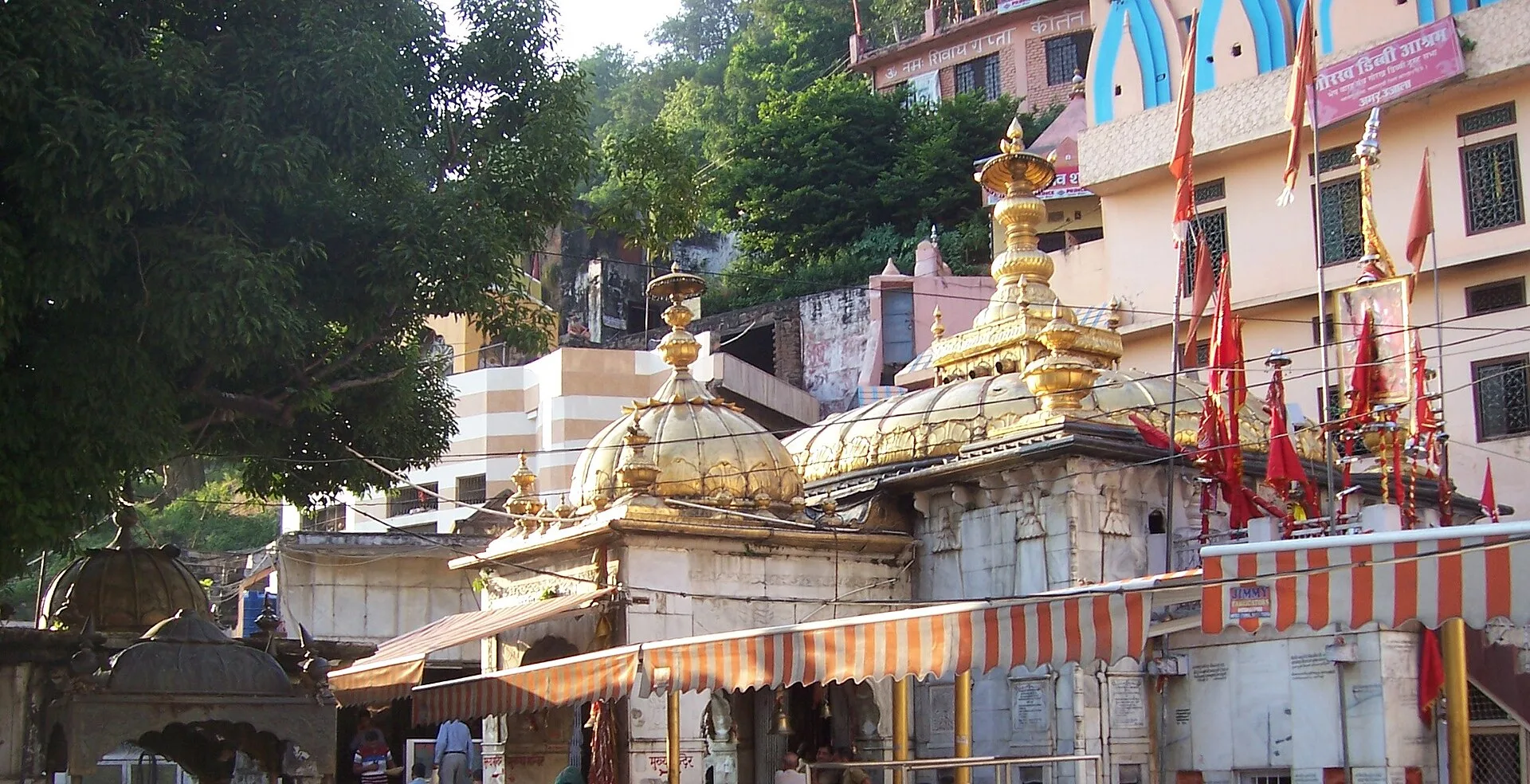
Kamakhya Temple, Guwahati: Complete Guide to the Shakti Peetha on Nilachal Hill
A guide to the Kamakhya temple on Nilachal Hill in Guwahati, Assam: the Shakti Peetha legend of Sati, the cave sanctum with its natural stone and spring, the shrines of the ten Mahavidyas, Ambubachi Mela, Durga Puja, how to reach, darshan, dress and nearby temples.
A guide to the Kamakhya temple on Nilachal Hill in Guwahati, Assam: the Shakti Peetha legend of Sati, the cave sanctum with its natural stone and spring, the shrines of the ten Mahavidyas, Ambubachi Mela, Durga Puja, how to reach, darshan, dress and nearby temples.
Quick answer: The Kamakhya temple stands on Nilachal Hill in Guwahati, Assam, above the Brahmaputra. It is one of the most important Shakti Peethas, where tradition says the yoni of Sati fell. The goddess has no idol: she is worshipped as a natural stone fissure in a cave sanctum, kept moist by an underground spring. The hill also holds shrines of the ten Mahavidyas. The great annual festival is Ambubachi Mela, held every year in June on dates announced by the temple. Check the temple's official website for current timings and darshan arrangements.
Kamakhya is unlike almost any other Hindu temple. Its sanctum is a dark cave rather than a lit shrine, its central festival celebrates the fertility of the Earth and of the Goddess, and it has been a great centre of Shakta and Tantric worship for many centuries. For pilgrims from across India and the diaspora, a visit to Nilachal is often a long-held dream.
Kamakhya temple at a glance
| Detail | Information |
|---|---|
| Deity | Goddess Kamakhya, worshipped as a natural yoni-shaped stone |
| Location | Nilachal Hill, Guwahati, Assam |
| Significance | Shakti Peetha; centre of Mahavidya and Shakta worship |
| Associated scriptures | Kalika Purana, Yogini Tantra (traditional) |
| Main festival | Ambubachi Mela, every year in June |
| Other festivals | Durga Puja / Navratri and other Shakta observances |
| Nearby | Bhubaneswari temple on Nilachal; Umananda in the Brahmaputra |
The legend: Sati and the Shakti Peethas
The story of Kamakhya begins with Sati, daughter of Daksha Prajapati and wife of Shiva. When Daksha insulted Shiva at his great sacrifice, Sati gave up her body in the sacrificial fire. Shiva, overcome with grief, carried her body across the universe in a dance of sorrow. To restore the balance of creation, Vishnu used his Sudarshana Chakra to divide Sati's body, and the places where its parts fell became the Shakti Peethas, the seats of the Goddess.
According to tradition, the yoni of Sati fell on Nilachal Hill. Kamakhya is therefore revered as the source of creative power, the womb of the universe, and as one of the most powerful of all the Peethas. Another tradition links the place to Kamadeva, the god of love, who regained his form here after being burnt by Shiva's third eye, giving the area the ancient name Kamarupa.
The sanctum: stone and spring
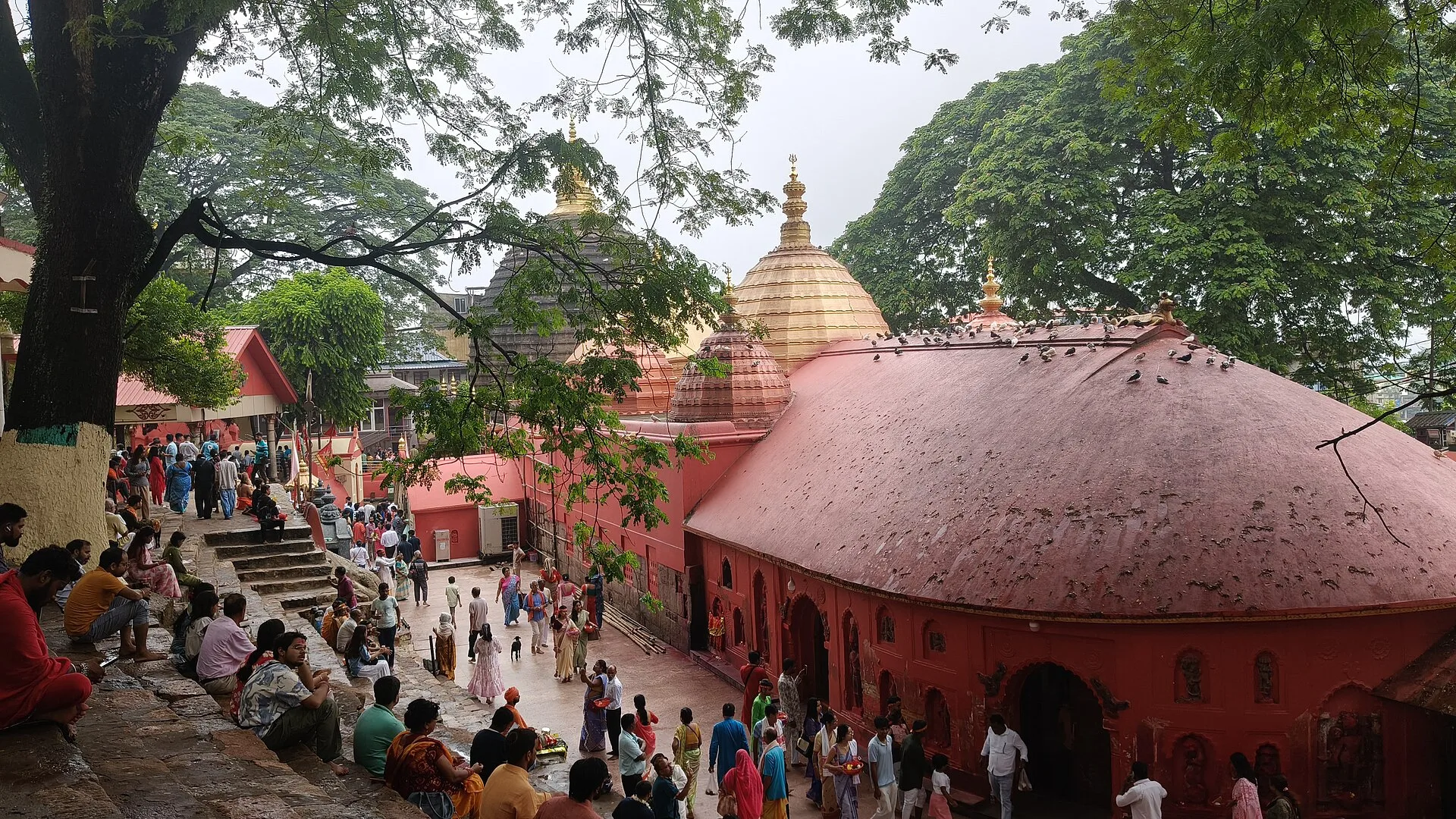
The main temple's architecture is distinctive, with a rounded, beehive-like shikhara and sculpted panels, and it is usually described as a fine example of the Nilachal style. The present structure is traditionally dated to the sixteenth century, when it was rebuilt under the Koch kings after the earlier temple was destroyed.
Inside, pilgrims descend into the garbhagriha, a cave below ground level. There is no image. The goddess is worshipped as a sloping, yoni-shaped cleft in the rock, kept moist by a natural underground spring, and usually covered with a red cloth and flowers. The sanctum is dark and lit by lamps, and darshan is brief because of the crowds, but many pilgrims describe it as one of the most powerful experiences of their lives.
The Mahavidya shrines of Nilachal
Kamakhya is the foremost centre of worship of the ten Mahavidyas: Kali, Tara, Tripura Sundari (Shodashi), Bhuvaneshwari, Bhairavi, Chhinnamasta, Dhumavati, Bagalamukhi, Matangi and Kamala. Separate shrines dedicated to them are spread across the hill, and according to temple tradition some, including Matangi and Kamala, are worshipped within the main temple alongside Kamakhya. Kamakhya herself is often identified with Tripura Sundari. Many pilgrims make a point of visiting as many of the Mahavidya shrines as they can. For Kali, see our Goddess Kali guide.
Ambubachi Mela
The most famous festival at Kamakhya is Ambubachi Mela, held every year in June, during the Assamese month of Ahaar (Ashadha). It marks the annual menstrual period of the goddess, a celebration of the fertility of the Earth as the monsoon arrives. For three days the temple doors are closed and no worship takes place inside; agricultural work such as ploughing is traditionally paused in parts of Assam. On the fourth day the temple reopens, and devotees receive prasad, often a piece of red cloth considered especially sacred.
Ambubachi draws very large numbers of pilgrims, including sadhus and Tantric practitioners from across India, and the authorities usually make special arrangements for crowds. The exact dates each year are announced by the temple; check official announcements before planning a trip.
Durga Puja and Navratri at Kamakhya
Navratri and Durga Puja are major occasions at Kamakhya, celebrated with special worship of the Goddess according to the temple's own Shakta traditions. In 2026, Sharad Navratri runs from Sunday 11 October to Monday 19 October, with Vijayadashami on Tuesday 20 October (Drik Panchang, India); the temple announces its own schedule of rituals. Some rituals at Kamakhya follow ancient Shakta practice, which visitors should observe respectfully. See our Navratri 2026 guide for the festival in general.
How to reach Kamakhya
By air: Guwahati's Lokpriya Gopinath Bordoloi International Airport is the nearest airport, approximately 20 km from the temple. Taxis and app cabs are available.
By rail: Guwahati railway station is roughly 6 to 8 km away, depending on the route, and Kamakhya railway station is close to the foot of Nilachal Hill. Both are connected to major Indian cities.
By road: Buses, taxis and auto-rickshaws run from the city to the foot of the hill and up to the temple area by road. There is also a traditional footpath of steps for pilgrims who prefer to climb.
Guwahati traffic can be heavy, especially during festivals, so allow extra time.
Darshan, dress and conduct
- Darshan types: there is a general queue, which can take several hours on busy days, and in recent years the temple has offered faster paid entry. Arrangements, charges and timings change, so check the temple's official website before you go.
- Timing your visit: festival days, weekends and Ambubachi are the busiest. Weekday mornings outside festival periods are usually quieter.
- Dress: wear modest traditional clothes. Footwear must be left outside; avoid carrying leather items.
- In the sanctum: the steps into the cave are narrow, wet and dimly lit. Move carefully, especially with elderly parents or children, and follow the priests' directions.
- Photography: photography is not allowed inside the sanctum. Follow posted rules elsewhere in the complex.
- Priests and offerings: use official counters for pujas and donations, and agree on any priest's dakshina clearly beforehand.
Nearby temples
Bhubaneswari temple: higher up on Nilachal Hill, dedicated to Bhuvaneshwari, one of the Mahavidyas, with views over Guwahati and the Brahmaputra.
Umananda temple: a Shiva temple on Peacock Island in the middle of the Brahmaputra, reached by ferry from the Guwahati riverfront. Ferry services depend on the river and weather.
Guwahati has many other temples, and pilgrims to the Northeast often combine Kamakhya with travel to Shillong in Meghalaya; see our Dussehra 2026 Meghalaya guide.
Tips for NRI pilgrims
- Plan at least half a day for Kamakhya and the Mahavidya shrines, and more during festivals.
- Book flights and hotels early if you are travelling for Ambubachi or Navratri.
- Carry a light shawl; the cave sanctum can feel humid, and evenings in winter are cool.
- Keep valuables to a minimum in crowded queues.
- If you cannot travel, many diaspora temples honour the Shakti Peethas during Navratri; dates and muhurat quoted for India apply only in India.
Also read: Kamakhya in Navratri and Durga Puja 2026.
Frequently asked questions
Why is Kamakhya temple famous?
Kamakhya on Nilachal Hill in Guwahati is one of the most revered Shakti Peethas. Tradition holds that the yoni of Sati fell here, and the goddess is worshipped not as an idol but as a natural stone in a cave sanctum, kept moist by an underground spring. It is also the foremost centre of worship of the ten Mahavidyas.
When is Ambubachi Mela?
Ambubachi Mela is held every year in June, during the Assamese month of Ahaar (Ashadha). The temple remains closed for three days, as the goddess is believed to be in her annual menstrual period, and reopens on the fourth day. Exact dates are announced by the temple each year.
Is there an idol in the Kamakhya temple?
No. The sanctum holds no image of the goddess. She is worshipped in the form of a yoni-shaped stone fissure in a cave below ground level, over which water from a natural spring flows. It is usually covered with cloth and flowers.
How far is Kamakhya from Guwahati airport and railway station?
Approximately 20 km from Guwahati's airport and roughly 6 to 8 km from Guwahati railway station, depending on the route. Kamakhya railway station is close to the foot of the hill. Travel times vary a lot with traffic.
What are the darshan options at Kamakhya?
There is a general queue, which can be very long, and in recent years the temple has also offered faster paid entry. Arrangements and charges change, so check the temple's official website before you go.
What should I wear to Kamakhya?
Modest traditional clothing is best: saree or salwar kameez for women, and kurta-pyjama or trousers with a shirt for men. Footwear is left outside, and leather items are best avoided.
Editor's note
Editor's note (5 October 2026): This guide has been restored at its original address after the earlier version was lost. Legends follow widely known tradition, and Navratri 2026 dates are from Drik Panchang for India. We have not listed darshan timings, ticket prices, contact details or Ambubachi Mela dates, which are announced by the temple each year. Distances are approximate. Please check the temple's official website before you travel.
Related guides
You might also like
Kamakhya in Durga Puja and Navratri 2026: The Nilachal Shakti Peetha, Its Durga Puja Tradition and Planning a Visit to Guwahati
Kamakhya: Divine Mysteries & Soul-Stirring Miracles of the Tantric Goddess of Assam

Maa Kamakhya: The Living Temple of the Divine Feminine