Kashi Vishwanath Temple
काशी विश्वनाथ मंदिर
Shiva temple · Varanasi, Uttar Pradesh, India
Kashi Vishwanath Temple in Varanasi, Uttar Pradesh, is dedicated to Shiva as Vishwanath or Vishweshwara, the 'Lord of the Universe'. It stands in the old city near the western bank of the Ganga and is one of the twelve Jyotirlingas, the most revered shrines of Shiva. It is also one of the most important temples in Hinduism.
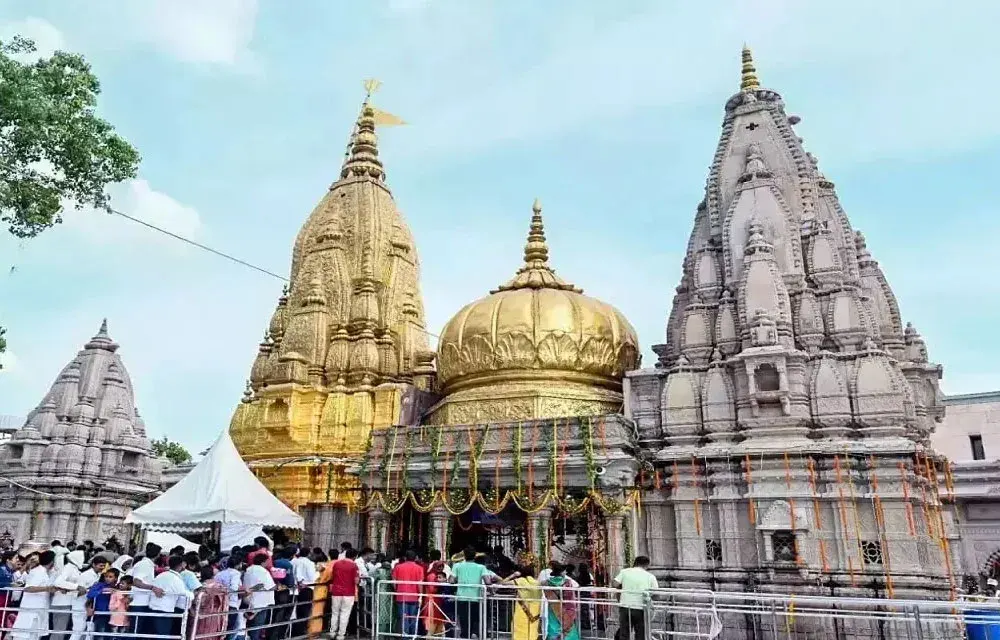
The present temple was built in 1780 by Maharani Ahilyabai Holkar of Indore. Its gold-covered domes have given it the popular name 'Golden Temple' of Varanasi. Since 2021 the redeveloped Shri Kashi Vishwanath Dham has linked the temple precinct directly to the Ganga ghats.
Faith & Tradition
Religious Significance of Kashi Vishwanath Temple
Varanasi, also called Kashi, is one of Hinduism's most sacred cities, and the Vishwanath temple is at its religious heart. Devotees believe Shiva is the city's presiding lord. According to tradition, the Kashi Khanda of the Skanda Purana praises Kashi as a place Shiva never leaves (Avimukta). Many Hindus believe that dying in Kashi brings liberation (moksha), and that Shiva himself grants it to those who die there.
Kashi Vishwanath is counted among the twelve Jyotirlingas, the shrines where Shiva is worshipped as a column of light. Unlike some other sacred labels, this one is not disputed: the traditional Dvadasha Jyotirlinga lists name Vishvesha of Varanasi. For many pilgrims, darshan here is a central part of any visit to Kashi, often alongside a bath in the Ganga.
Heritage
History of Kashi Vishwanath Temple
Tradition holds that worship of Vishweshwara in Kashi is extremely ancient. Claims of a precise age, however, are matters of faith and not documented history. The historical record shows that temples to Vishweshwara in the city were destroyed and rebuilt several times. Most of Varanasi's ancient temples were lost after the conquests of 1194, and historians link later demolitions to the Lodi period.
A major Vishwanath temple was rebuilt in the late sixteenth century, during Akbar's reign. In 1669 the Mughal emperor Aurangzeb ordered it demolished. The court chronicle Maasir-i-Alamgiri records that the order was carried out, and the Gyanvapi mosque was raised on the site. That mosque still stands beside the present temple, and the history of the site has been the subject of court proceedings in recent years.
According to the temple trust, the present temple was built in 1780 by Maharani Ahilyabai Holkar of Indore. Some accounts place the start of construction a few years earlier. The trust also records a Naubatkhana, a music gallery, built in front of the temple in 1785. Maharaja Ranjit Singh of Punjab later donated gold to cover two of the temple's domes. The trust gives the year as 1839, while other accounts commonly say 1835.
In 1983 the Uttar Pradesh government took over the temple's management and placed it under the Shri Kashi Vishwanath Temple Trust. On 13 December 2021 the Prime Minister inaugurated the Shri Kashi Vishwanath Dham project. According to the Press Information Bureau, it enlarged the temple premises from about 3,000 sq ft to around 5 lakh sq ft, connected the precinct to the Ganga and added pilgrim facilities. More than 40 older shrines found during the work were restored.
Architecture and sacred features
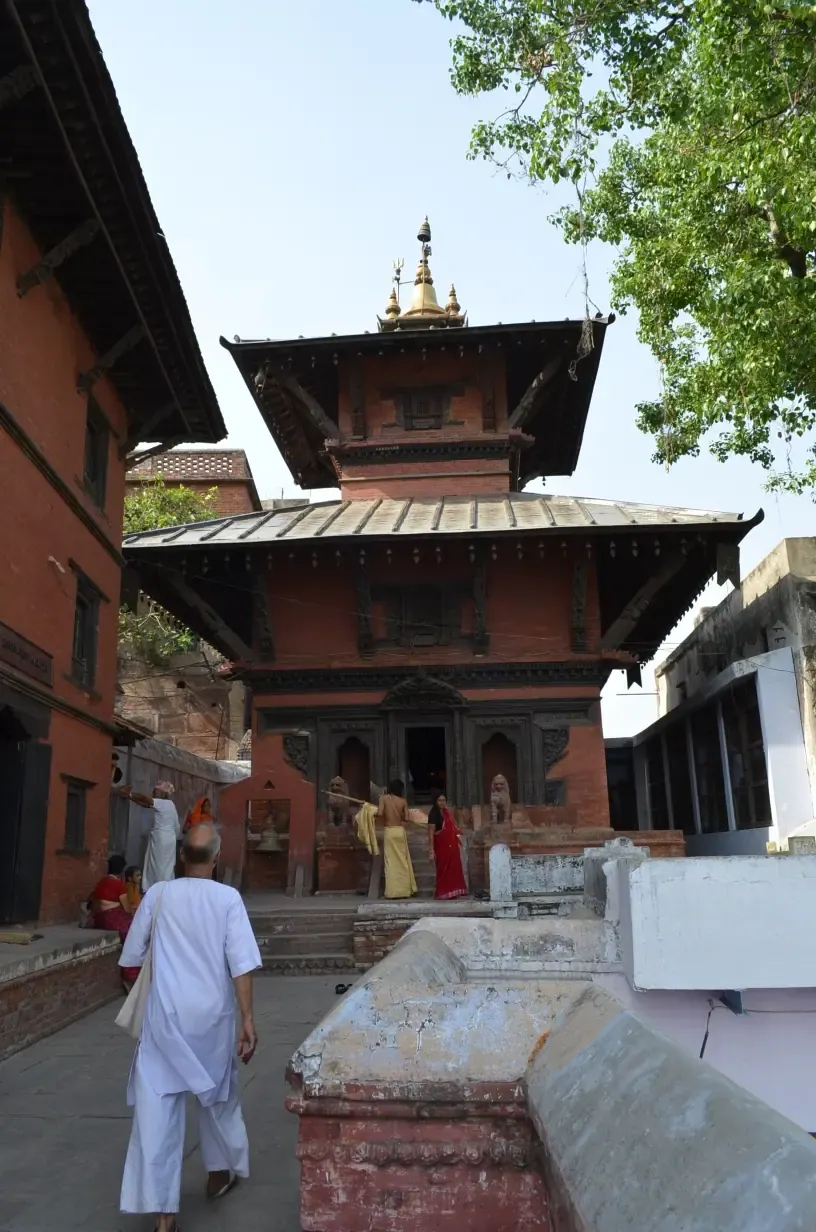
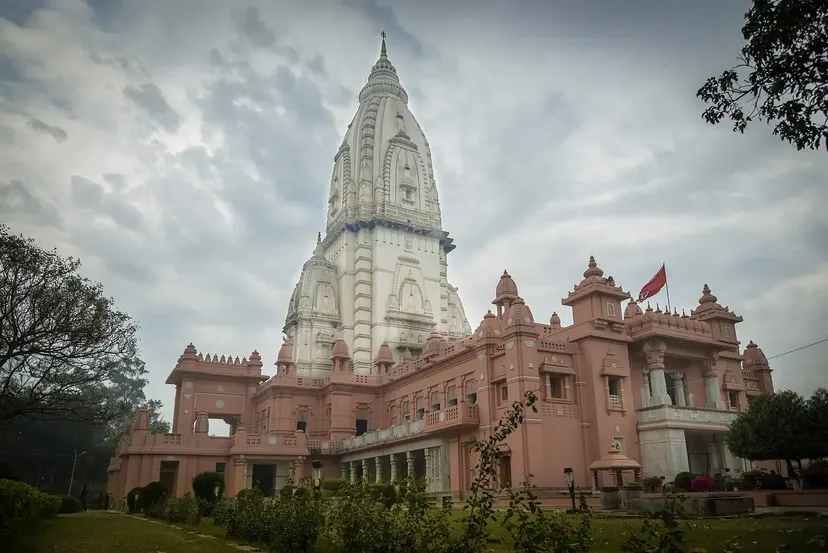
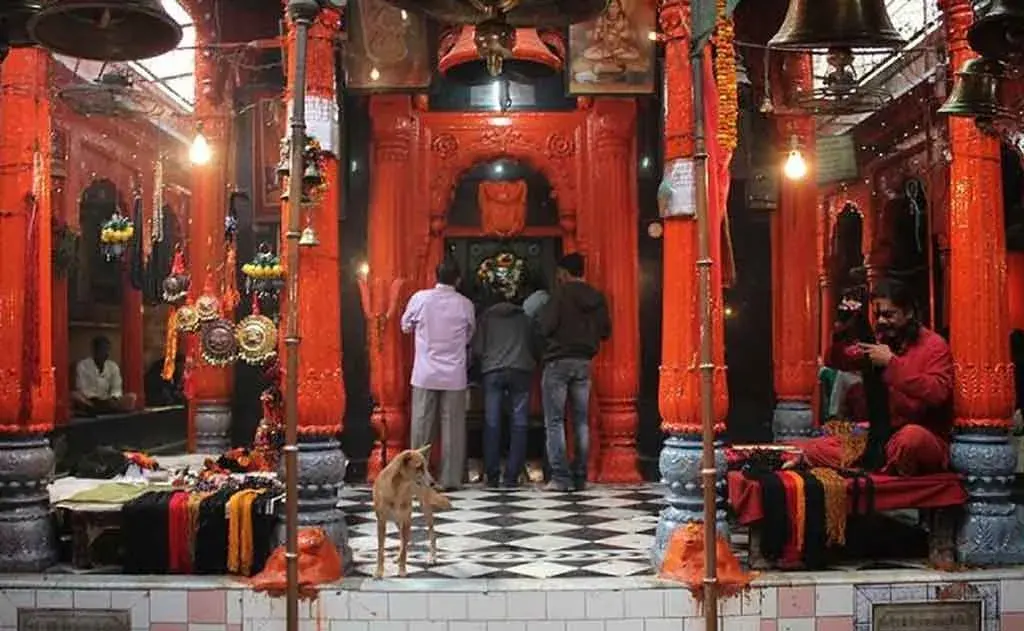
The temple is a compact stone shrine in the North Indian (Nagara) manner, with tall spires over the sanctum. According to the temple trust, gold donated by Maharaja Ranjit Singh covers two of its domes, and the third remains uncovered. The Shiva linga is enshrined in the sanctum. The Kashi Vishwanath Dham around the temple adds wide courtyards, gateways and a pathway down to the river, along with buildings such as a Mumukshu Bhavan, a Vedic Kendra, a Bhogshala and a city museum.
Plan Your Visit
Darshan and Visitor Information
Darshan, aartis and paid services such as Sugam Darshan are run by the Shri Kashi Vishwanath Temple Trust and can be booked through its official portal. Fees and timings change, and the trust suspends online bookings and VIP protocol darshan on peak days such as Maha Shivaratri. Rules on dress and on touching the linga (sparsh darshan) have been debated and changed over time, so confirm current arrangements with the Shri Kashi Vishwanath Temple Trust (shrikashivishwanath.org) before visiting.
Timings and arrangements change with seasons and festivals. Confirm current details with Shri Kashi Vishwanath Temple Trust (Government of Uttar Pradesh) (official website) before travelling. Last reviewed 5 October 2026.
Sacred Calendar
Festivals at Kashi Vishwanath Temple
Maha Shivaratri
Kashi tradition treats this night as Shiva's wedding to Parvati. It brings the temple's largest crowds, and the trust has suspended VIP darshan and online bookings on these days to manage the rush.
Rangbhari Ekadashi
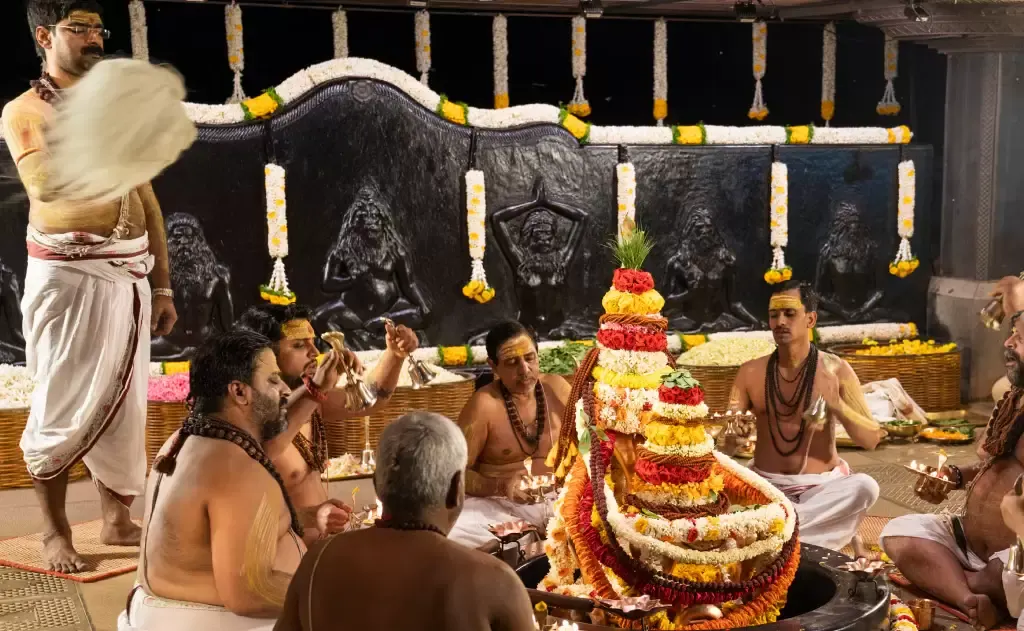
In local tradition this marks Shiva bringing Gauri home after the wedding (the gauna). The silver images of Shiva and Parvati are carried in a palanquin from the Mahant's residence to the temple amid gulal, and the day opens Holi celebrations in Kashi.
Shravan (Sawan)
Shiva's holy month brings especially heavy crowds, above all on Mondays, as devotees and kanwariyas come to offer Ganga water to Vishwanath.
Location
How to Reach Kashi Vishwanath Temple
The nearest airport is Lal Bahadur Shastri International Airport (VNS) at Babatpur, north-west of the city. The main railhead is Varanasi Junction (BSB), also known as Varanasi Cantt, and other city stations serve some trains. From the airport or stations, taxis and auto-rickshaws reach the old city. The last stretch to the temple runs through narrow lanes or along the Dham's riverside approach.
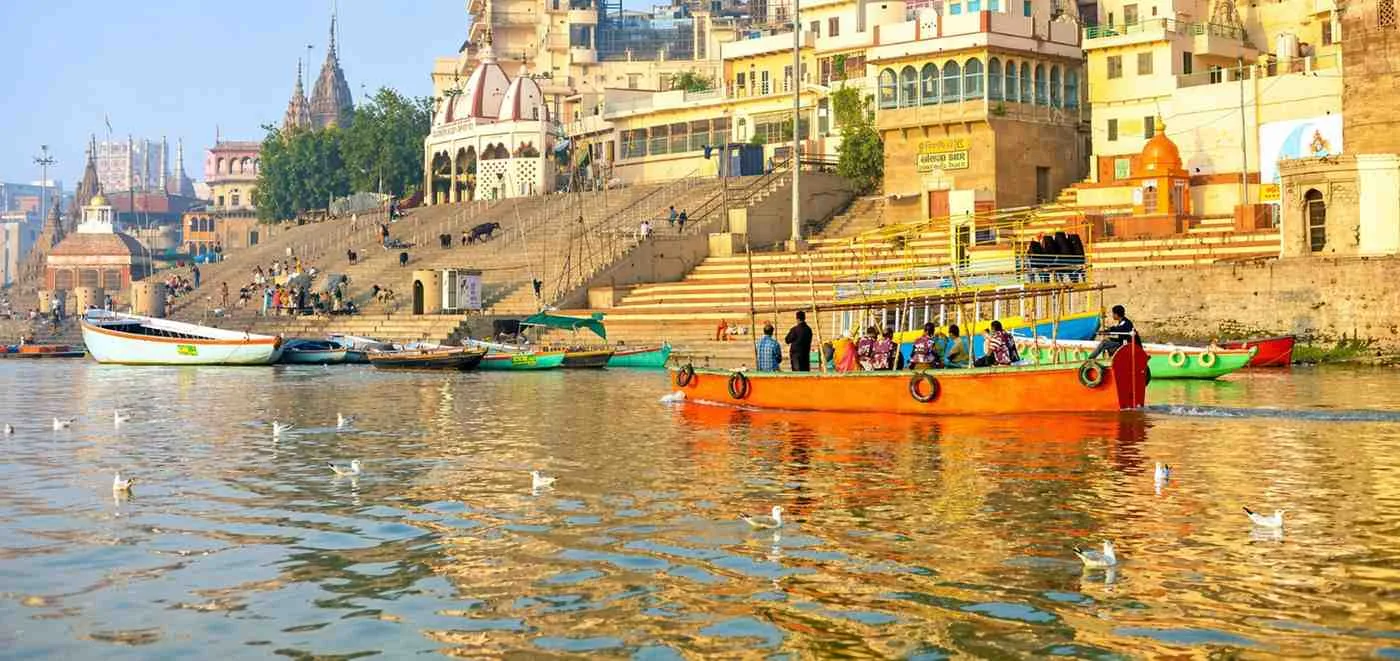
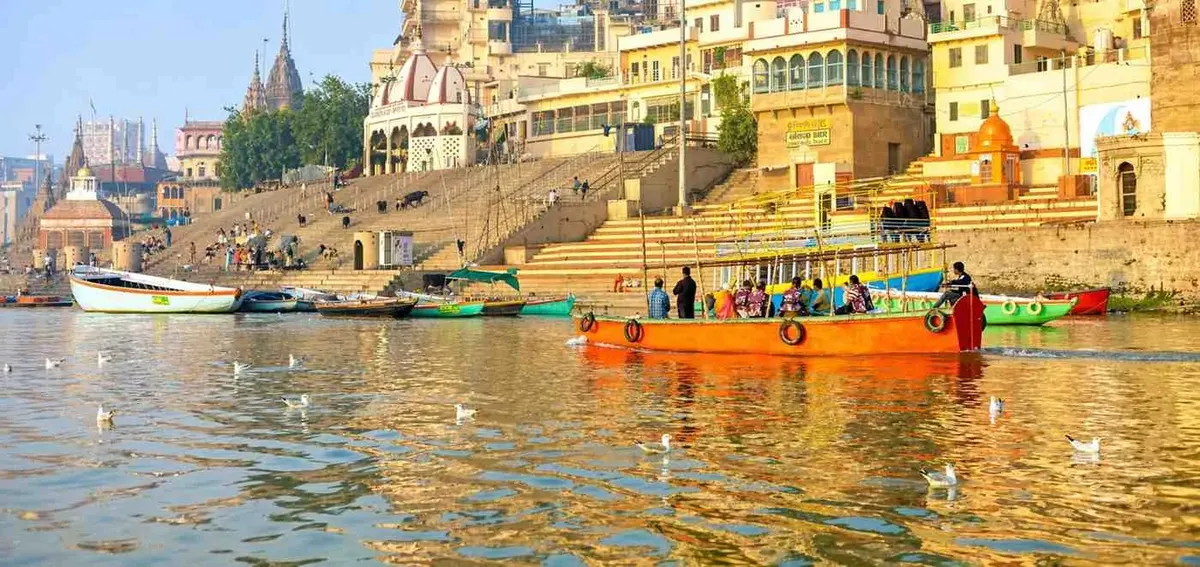
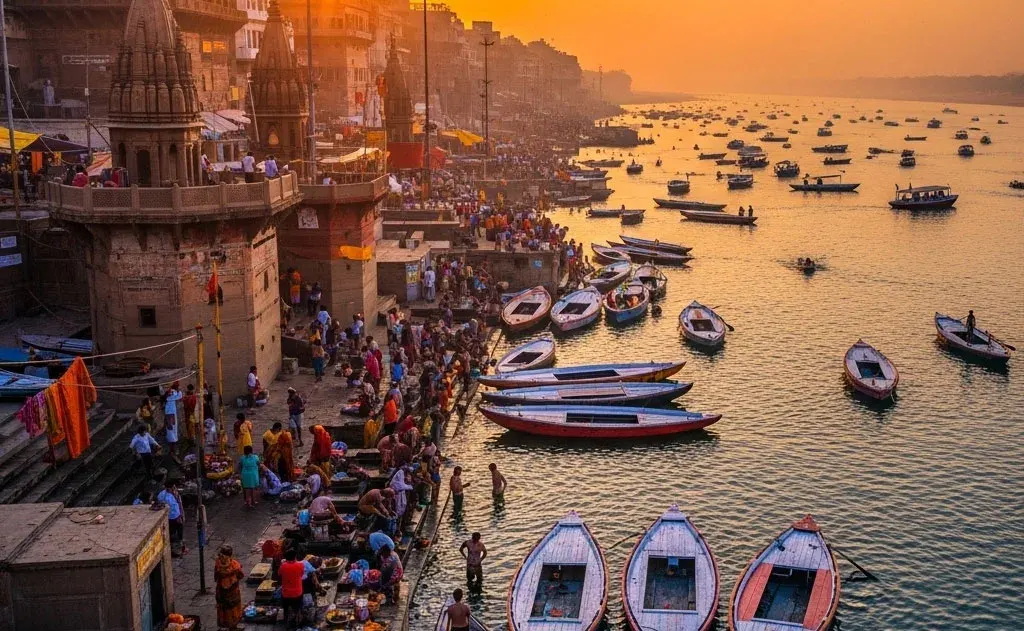
Many pilgrims come by the river. The Kashi Vishwanath Dham leads from the ghats straight up to the temple, so a boat to the Dham's riverfront entrance is a practical alternative to the congested lanes.
Location: Varanasi, Uttar Pradesh, India
Nearest airport: Lal Bahadur Shastri International Airport (VNS), Babatpur
Nearest railway station: Varanasi Junction (BSB)
More in Hindu temples in Uttar Pradesh · Shiva temples
Photographs
Kashi Vishwanath Temple Photos
Questions
Kashi Vishwanath Temple: Frequently Asked Questions
Who built the present Kashi Vishwanath Temple?
According to the temple trust, Maharani Ahilyabai Holkar of Indore built the present temple in 1780. Earlier temples on or near the site were destroyed, most recently on Aurangzeb's orders in 1669.
Why is it called the Golden Temple of Varanasi?
Maharaja Ranjit Singh of Punjab donated gold to cover two of the temple's domes in the 19th century. The trust gives the year as 1839, while other accounts say 1835.
Is Kashi Vishwanath a Jyotirlinga?
Yes. Shiva here, as Vishweshwara, is one of the twelve Jyotirlingas in the traditional lists.
What is the Kashi Vishwanath Dham?
It is a redevelopment of the temple precinct, inaugurated on 13 December 2021. It enlarged the premises to about 5 lakh sq ft, linked the temple to the Ganga ghats and restored more than 40 older shrines found during the work.
What is the mosque next to the temple?
It is the Gyanvapi mosque, built on the site of the earlier Vishwanath temple after Aurangzeb ordered its demolition in 1669. The site's history has been the subject of court proceedings in recent years.
Who manages the temple?
The Shri Kashi Vishwanath Temple Trust, under the Government of Uttar Pradesh, which took over management in 1983.
How do I book Sugam Darshan or aarti?
Through the trust's official portal, shrikashivishwanath.org. Prices and slots change, and bookings may be suspended on festival days, so check the portal before you go.
Sources and attribution
- Shri Kashi Vishwanath Temple Trust — Mythology / History of the temple
- Shri Kashi Vishwanath Temple Trust — Shri Kashi Vishwanath official portal
- Press Information Bureau, Government of India — PM inaugurates Shri Kashi Vishwanath Dham in Varanasi (13 Dec 2021)
- Incredible India, Ministry of Tourism — Kashi Vishwanath Temple
- Encyclopaedia Britannica — Hindu temple (Varanasi, Vishvanatha temple; destruction of temples after 1194)
- Wikipedia — Kashi Vishwanath Temple (pointer to primary sources incl. Maasir-i-Alamgiri)
- eSamskriti — How old is the Kashi Vishvanatha temple
- The Statesman — Centuries-old palanquin decked up for Rangbhari Ekadashi
- IANS — VIP darshan at Kashi Vishwanath temple stopped for 3 days due to Maha Shivratri rush
Spotted an error? Write to info@hindutone.com — see our editorial policy.