पशुपतिनाथ मन्दिर
Shiva (Pashupatinath) temple · Kathmandu, Bagmati, Nepal
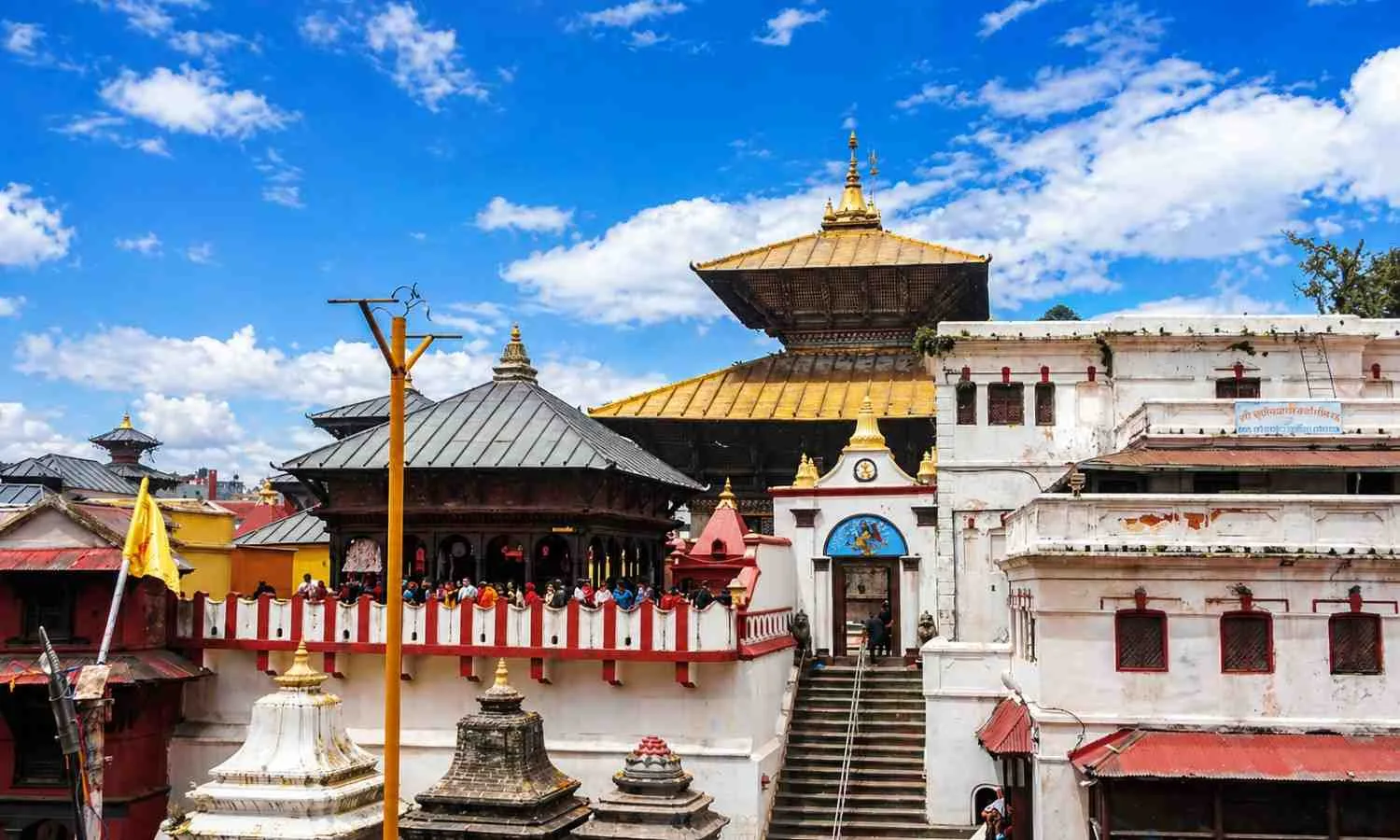
Pashupatinath Temple stands on the banks of the Bagmati River in Kathmandu, Nepal, and is the country's most revered Hindu shrine. It is dedicated to Shiva as Pashupati, 'Lord of all beings'. Here he is worshipped as a linga with five faces, which the Pashupati Area Development Trust (PADT) names as Tatpurusha, Aghora, Sadyojata, Vamadeva and Ishana. The main pagoda-style temple has gilded roofs and silver- and gold-covered doors.
The temple is the centre of the wider Pashupati Area, a sacred landscape of shrines, ghats, monasteries and forest. UNESCO describes it as an extensive Hindu temple precinct. It is one of the seven monument zones of the Kathmandu Valley World Heritage Site, inscribed in 1979.
Faith & Tradition
For Hindus in Nepal and India, a pilgrimage to Pashupatinath is one of the most important acts of devotion. According to the PADT, the Shiva Purana describes Pashupatinath as the head of Kedareshwar, the deity of Kedarnath in India. This links the two shrines in a single sacred story. The name Pashupati joins pashu (being or creature) and pati (lord), and devotees approach him as a giver of liberation.
The Pashupati Area is also a major place of last rites. Cremations take place at ghats along the Bagmati such as Arya Ghat and Bhasmeshwor Ghat, which the PADT manages. The nearby Guhyeshwari temple, which the PADT calls the second most important temple in the area, is venerated as a Shakti Peetha associated with Sati. The Nepal Tourism Board notes the evening Bagmati Aarati as a popular ritual for visiting devotees.
Heritage
The exact founding date of the temple is unknown. According to the PADT, the temple is said to have been built by Supushpa Deva, a Licchavi king of the Kathmandu Valley, and was rebuilt several times. Press coverage has described it as a shrine dating back to around the fifth century. The earlier stages rest on chronicles and tradition rather than surviving structures.
The PADT states that the present main temple was built in 1697 CE by King Bhupalendra Malla of Kantipur (Kathmandu). Over the following centuries hundreds of smaller temples and shrines grew up around it on both banks of the Bagmati. They include the Gorakhnath temple, which the PADT dates to the eighteenth century, and the Vishwarupa and Panchadewal complexes.
In modern times the Pashupati Area has been managed by the Pashupati Area Development Trust, an autonomous body under Nepal's Ministry of Culture, Tourism and Civil Aviation. According to the PADT, it was founded in 2043 BS (1986/87 CE). Priests from India serve at the shrine. In September 2009, two newly appointed Bhatta priests from Karnataka were attacked inside the temple, and Hindustan Times reported that Nepal's culture minister and India's ambassador then worshipped together at the shrine as a show of unity.
The main temple is a Nepalese pagoda-style structure. The PADT points to its gilded roofs, silver and gold-plated doors, and the carved wooden and metal struts and tympana. UNESCO notes that the Kathmandu Valley's tiered temples are mostly built of fired brick with mud mortar and timber, with overlapping terracotta tiles and gilded metal finials.
The wider precinct mixes several styles. The Nepal Tourism Board notes pagoda, shikhara and dome-style temples across the complex. Examples include the shikhara-style Gorakhnath temple, the domed Vishwarupa temple in the Mrigasthali forest and the row of fifteen small Shiva shrines known as Pandhra Shivalaya.
Plan Your Visit
The Nepal Tourism Board states that the main temple courtyard is open only to Hindus. Visitors of other faiths can view the temple from the terraces on the east bank of the Bagmati. Leather items, including shoes and belts, are not permitted in the temple, and photography of the main shrine is prohibited.
The PADT says the four gates open before daybreak and close in the early afternoon. They reopen in the evening for aarati, with the timing varying by season. Hours change on festivals such as Maha Shivaratri and Teej. These arrangements are as listed by the Pashupati Area Development Trust (checked October 2026); confirm current arrangements with the PADT before travelling.
Timings and arrangements change with seasons and festivals. Confirm current details with Pashupati Area Development Trust (PADT), Ministry of Culture, Tourism and Civil Aviation, Government of Nepal (official website) before travelling. Last reviewed 5 October 2026.
Sacred Calendar
This is the most important festival at Pashupatinath. Pilgrims and sadhus from across Nepal and India gather for night-long worship of Shiva, and the PADT says hundreds of thousands attend.
Hindu women fast and come to Pashupatinath in red saris to pray for the well-being of their husbands and families. The Nepal Tourism Board describes the temple and its surroundings turning 'a sea of red'.
Mondays of the month of Shrawan bring large crowds of devotees. The PADT issues special darshan routes and arrangements for these days.
The Nepal Tourism Board names these two as the most prominent of the fortnightly Ekadashi days. On both, the temple is especially crowded.
During Nepal's main national festival, the PADT notes special Mahabhishek pujas and offerings at Arya Ghat in the Pashupati Area.
Location
Pashupatinath is on the eastern side of Kathmandu, near the Gaushala area, where the PADT office is located. International and domestic flights arrive at Tribhuvan International Airport in Kathmandu. Kathmandu has no passenger railway, so travellers from India usually arrive by air or by road across the border.
The Nepal Tourism Board notes that taxis, microbuses and three-wheel tempos drop visitors at Gaushala, from where it is a short walk to the temple area.
Location: Kathmandu, Bagmati, Nepal
Nearest airport: Tribhuvan International Airport, Kathmandu
Nearest railway station: None in Kathmandu; access by air or road
More in Hindu temples in Bagmati · Shiva (Pashupatinath) temples
Questions
The main temple courtyard is open only to Hindus, according to the Nepal Tourism Board. Others can view the temple from the terraces across the Bagmati River.
Tradition credits the Licchavi king Supushpa Deva. The PADT states that the present main temple was built in 1697 CE by King Bhupalendra Malla of Kantipur.
Yes. Pashupati is one of the seven monument zones that make up the Kathmandu Valley World Heritage Site, inscribed by UNESCO in 1979.
According to the Shiva Purana, as cited by the PADT, Pashupatinath is the head of Kedareshwar, the deity of Kedarnath. Devotees therefore regard the two shrines as linked.
No. The Nepal Tourism Board states that photography of the main temple is strictly prohibited, and leather items must be left outside.
Maha Shivaratri, in the month of Falgun (February–March), draws the largest crowds, including many sadhus from India and Nepal.
The Pashupati Area Development Trust, an autonomous body under Nepal's Ministry of Culture, Tourism and Civil Aviation, manages the temple and the wider Pashupati Area.
Spotted an error? Write to info@hindutone.com — see our editorial policy.