
Dussehra 2026 in South Africa, City by City: Date, Vijay Muhurat and Hindu Temples
Vijayadashami falls on Tuesday 20 October 2026 across South Africa. Local Vijay Muhurat, Aparahna and Dashami times for six cities, historic Hindu temples from Durban to Gqeberha, and how to mark the day at home.
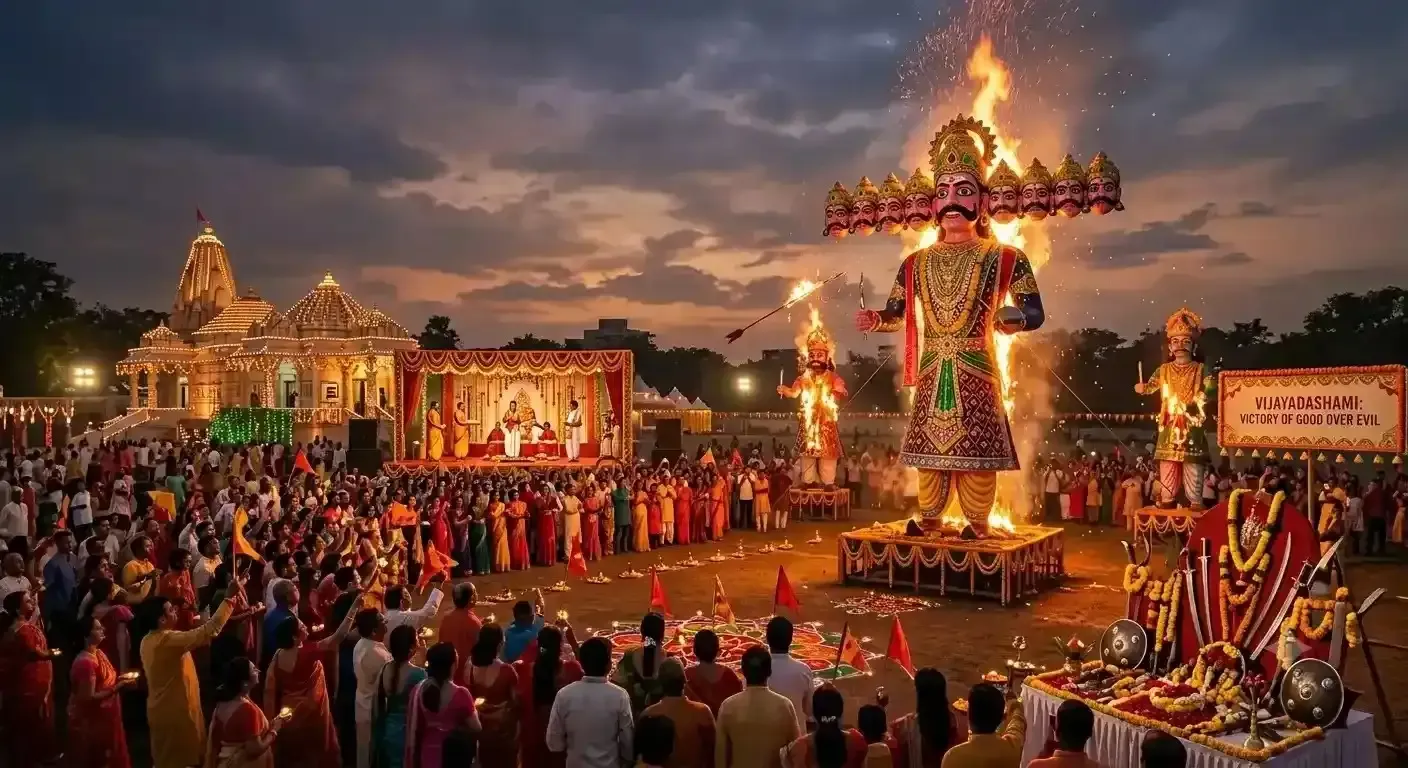
Vijayadashami falls on Tuesday 20 October 2026 across South Africa. Local Vijay Muhurat, Aparahna and Dashami times for six cities, historic Hindu temples from Durban to Gqeberha, and how to mark the day at home.
Quick answer: Dussehra (Vijayadashami) 2026 in South Africa is on Tuesday 20 October 2026 in every city. The Vijay Muhurat, calculated by the Drik Panchang method, is 1:50 PM – 2:41 PM in Durban, 2:00 PM – 2:52 PM in Johannesburg and 2:42 PM – 3:34 PM in Cape Town (South African Standard Time, SAST, UTC+2). Navratri runs from Sunday 11 to Monday 19 October 2026.
Editor's note (5 October 2026): The local times on this page were calculated for each city from the Drik Panchang tithi (Dashami from 12:50 PM IST on 20 October to 2:11 PM IST on 21 October 2026), shown in South African Standard Time. South Africa does not use daylight saving, so there is no clock change to allow for. The Vijay Muhurat is the 11th of the 15 daytime muhurtas, calculated by the Drik Panchang method. We do not list 2026 event schedules, because temples and associations announce their own programmes; please check with them directly.
South Africa has one of the oldest and largest Hindu communities outside Asia. Most South African Hindus descend from the indentured labourers who arrived in Natal from 1860 onwards to work on the sugar plantations, joined later by Gujarati and other "passenger" traders. Their temples, some now more than 150 years old, are among the earliest on the African continent. The community is concentrated in KwaZulu-Natal, especially greater Durban, with significant populations in Gauteng and smaller communities in the Cape. Tamil, Telugu, Hindi-speaking (Hindustani) and Gujarati traditions all shape how Navaratri and Dussehra are kept, and in recent decades newer arrivals from India have added garba nights, Durga Puja and other contemporary Indian customs.
Dussehra 2026 in South Africa: dates and Vijay Muhurat by city
The whole country is on South African Standard Time (UTC+0200) all year. The Dashami tithi begins and ends at the same moment everywhere, so only the sun-based windows differ: Durban, in the east, has the earliest Vijay Muhurat, and Cape Town, far to the west, has the latest.
| Region | City | Dussehra date | Vijay Muhurat (Drik Panchang method) | Dashami begins → ends |
|---|---|---|---|---|
| KwaZulu-Natal | Durban | Tue 20 Oct | 1:50 PM – 2:41 PM | Tue 20 Oct, 9:20 AM → Wed 21 Oct, 10:41 AM |
| KwaZulu-Natal | Pietermaritzburg | Tue 20 Oct | 1:52 PM – 2:44 PM | Tue 20 Oct, 9:20 AM → Wed 21 Oct, 10:41 AM |
| Gauteng | Johannesburg | Tue 20 Oct | 2:00 PM – 2:52 PM | Tue 20 Oct, 9:20 AM → Wed 21 Oct, 10:41 AM |
| Gauteng | Pretoria | Tue 20 Oct | 2:00 PM – 2:51 PM | Tue 20 Oct, 9:20 AM → Wed 21 Oct, 10:41 AM |
| Western Cape | Cape Town | Tue 20 Oct | 2:42 PM – 3:34 PM | Tue 20 Oct, 9:20 AM → Wed 21 Oct, 10:41 AM |
| Eastern Cape | Gqeberha (Port Elizabeth) | Tue 20 Oct | 2:13 PM – 3:05 PM | Tue 20 Oct, 9:20 AM → Wed 21 Oct, 10:41 AM |
The Aparahna (afternoon period) is the traditional window for Aparajita and Shami puja, and sunset marks the time for any evening Ravan Dahan or aarti:
| City | Aparahna, 20 Oct | Sunset, 20 Oct |
|---|---|---|
| Durban | 12:58 PM – 3:33 PM | 6:08 PM |
| Pietermaritzburg | 1:01 PM – 3:36 PM | 6:11 PM |
| Johannesburg | 1:09 PM – 3:43 PM | 6:17 PM |
| Pretoria | 1:08 PM – 3:42 PM | 6:15 PM |
| Cape Town | 1:49 PM – 4:26 PM | 7:03 PM |
| Gqeberha (Port Elizabeth) | 1:21 PM – 3:58 PM | 6:34 PM |
Key Navratri and Dussehra dates 2026
| Observance | Date (2026) |
|---|---|
| Navratri begins (Ghatasthapana) | Sunday 11 October |
| Durga Ashtami and Maha Navami | Monday 19 October |
| Dussehra / Vijayadashami in South Africa | Tuesday 20 October |
| Dashami tithi, South African time | Tue 20 Oct, 9:20 AM → Wed 21 Oct, 10:41 AM |
| Bijoya Dashami / Sindoor Khela (India, Bengal tradition) | Wednesday 21 October |
Ashtami and Navami share Monday 19 October in India's calendar this year, so families who do Kanya pujan on either day will hold it then. In every South African city the Dashami tithi covers the whole Aparahna on 20 October, so there is no doubt about the date. Local organisations such as the South African Hindu Maha Sabha publish their own calendars, which may differ slightly for some observances; follow your temple.
Hindu temples in South Africa for Navratri & Dussehra
These temples and organisations have been confirmed to exist in or near each city. We list name and area only; check their own websites or social pages for opening hours and festival plans. Temples and community groups usually announce Navratri garba, Durga Puja, Ramlila and Ravan Dahan programmes a few weeks ahead — check their websites/social pages.
KwaZulu-Natal: Durban and Pietermaritzburg
Durban (Vijay Muhurat 1:50 PM – 2:41 PM) and Pietermaritzburg (1:52 PM – 2:44 PM) are the heartland of Hinduism in South Africa. Suburbs such as Chatsworth, Phoenix, Merebank, Tongaat and Verulam have large Hindu populations, and the province's temples date back to the first decades of indenture.
- Shree Ambalavaanar Alayam — Cato Manor, Durban. Its original building of 1875 is recorded as the first public Hindu temple on the African continent; the complex is a declared national monument.
- Shree Emperumal Temple — Mount Edgecombe, north of Durban. A Vishnu temple founded by indentured workers in 1875, which marked its 150th anniversary in 2025.
- Clairwood Shree Siva Soobramoniar Temple — Clairwood, south Durban. One of the city's best-known historic Tamil temples.
- Sri Sri Radha Radhanath Temple of Understanding (ISKCON) — Chatsworth, Durban. The lotus-inspired Hare Krishna temple opened in 1985 and is one of the largest in the Southern Hemisphere.
- Shri Vishnu Temple — Langalibalele Street, Pietermaritzburg. A North Indian temple with more than a century of history.
- Sri Siva Soobramoniar Temple — Langalibalele Street, Pietermaritzburg, almost opposite the Shri Vishnu Temple; established in 1889.
The South African Hindu Maha Sabha, based in Durban, is the country's main Hindu umbrella body and issues guidance on observances such as Navaratri. In KwaZulu-Natal, Navaratri is widely kept as a time of fasting and Mother prayers: Tamil families hold nightly Amman pujas and many observe Saraswati Puja and Ayudha Puja, while Hindi-speaking families honour Durga and mark Rama's victory on Vijayadashami. Ramayan recitation and Ram Leela-style dramas are a long tradition in Durban's Hindi-speaking community.
Gauteng: Johannesburg and Pretoria
Johannesburg's Vijay Muhurat is 2:00 PM – 2:52 PM and Pretoria's is 2:00 PM – 2:51 PM. Gauteng's Hindu community grew from early Tamil, Telugu and Gujarati settlers and today includes many professionals who have moved from Durban and from India.
- BAPS Shri Swaminarayan Mandir and Cultural Complex — North Riding, Johannesburg. Opened in February 2025 and described as the largest Hindu temple in the Southern Hemisphere.
- Shree Siva Soobramaniar Thirukoil — Lenasia, Johannesburg. The first formal religious institution in Lenasia, linked to the historic Melrose temple built in 1899.
- Lakshmi Narayan Temple — Lenasia, Johannesburg.
- Mariamman Temple — Marabastad (the old Asiatic Bazaar), Pretoria. A historic Tamil temple dedicated to the Goddess.
- BAPS Shri Swaminarayan Mandir — Laudium, Pretoria. Consecrated in 2008.
Gauteng's Gujarati community is the backbone of garba and dandiya nights in the province, typically held in community halls and on temple grounds with live or recorded music, a central Mataji image and aarti. Tamil temples hold Navaratri abhishekam and alankaram for the Goddess, and Hindi-speaking groups often stage readings or plays from the Ramayana.
Western Cape: Cape Town
Cape Town's Vijay Muhurat is 2:42 PM – 3:34 PM, the latest in the country because the city lies so far west; sunset is at 7:03 PM. The Hindu community is smaller but long-established, with roots going back to the United Hindu Association of 1903.
- Radha Krishna Mandir (Cape Hindu Cultural Society) — Rylands, Cape Town. Part of a complex with the Gandhi Memorial School and a priest's residence; the society marked its 50th anniversary in 2023.
Many Cape Town families combine home puja with gatherings at the Rylands temple and community events organised by Indian associations, particularly on the weekends around Navratri.
Eastern Cape: Gqeberha (Port Elizabeth)
Gqeberha's Vijay Muhurat is 2:13 PM – 3:05 PM. The city has a small Tamil and Hindi-speaking community whose history runs back to the old South End.
- Shri Siva Subramanier & Marriamman Aulayam — South End, Gqeberha. The oldest place of Hindu worship in the Eastern Cape, affiliated to the East Cape Tamil Federation, and still used for religious festivals.
How South Africa celebrates Navratri and Dussehra
Because 11–20 October are ordinary working days, much of the communal celebration moves to weekends and evenings. In the Tamil tradition, Navaratri is dedicated in turn to Durga, Lakshmi and Saraswati; families pray to the Mother at home and in temples, some arrange Golu (Bommai Kolu) displays of dolls on steps, and the ninth day brings Saraswati Puja and Ayudha Puja, when books, tools and vehicles are blessed. Vijayadashami is a favoured day for Vidyarambham, a child's first lesson. Telugu families observe similar Devi worship, and some may celebrate Bathukamma with flower stacks and circle songs.
Hindi-speaking families, many of whose ancestors came from Bihar and Uttar Pradesh, fast through the nine days and remember Rama's victory over Ravana on Dussehra, sometimes through Ramayan recitation or a community Ram Leela. Gujarati families dance garba and dandiya, and Bengali groups, mainly newer arrivals from India, organise Durga Puja with dhak, pushpanjali and bhog. Large open-air Ravan Dahan of the kind seen in India is uncommon in South Africa; where it happens it is usually a small, permitted effigy or a symbolic burning, and many families simply tell children the story at home.
Dussehra puja at home
If you cannot reach a temple on a Tuesday, a short puja at home in the afternoon is entirely traditional. Ideally do it during your city's Vijay Muhurat, or at least within the Aparahna:
- Aparajita puja: draw an eight-petalled lotus with kumkum or rice flour, place a lamp, and worship Devi Aparajita, the goddess of victory, with flowers, akshat and a simple prayer for success over obstacles.
- Shami puja: if you have Shami leaves (or a substitute such as bauhinia leaves, which grow in many South African gardens), offer them to the Devi and exchange them with family as "gold".
- Ayudha Puja / Shastra puja: clean and decorate tools, books, laptops and the car, apply kumkum and turmeric, and offer flowers, thanking them for their service.
- Vidyarambham: Vijayadashami is the traditional day for small children to begin learning — writing "Om" or the first letters of the alphabet in rice.
- New beginnings: starting a course, signing a new venture or a short walk beyond your street (seemollanghan) are traditional symbols of victory on this day.
A simple order: bathe, light a lamp, pray to Ganesha, do the Aparajita and Shami puja, then Ayudha puja, offer naivedya (sweets, fruit), do aarti and share prasad. For full step-by-step vidhi and the stories behind the festival, see our Dussehra / Vijayadashami 2026 pillar guide.
Practical tips for Dussehra in South Africa
- Working day: Tuesday 20 October is a normal working and school day. The Vijay Muhurat falls in the early to mid-afternoon, so consider a short break or doing the puja later within the Aparahna.
- Fireworks and fire: fireworks are controlled under national explosives law and municipal by-laws, and permitted times and places differ by city. Check with your municipality before lighting anything, and never burn effigies without permission.
- Getting to temples: parking at popular temples fills up on festival evenings. Car-pooling or arranging lifts with family is usually easiest, and keep valuables out of sight in parked cars.
- Weather: October is spring in South Africa. Highveld evenings in Johannesburg and Pretoria can bring thunderstorms, and Cape Town can be windy, so plan outdoor events with a backup.
- Puja items: Indian grocers in Durban, Johannesburg and Cape Town stock flowers, kumkum and sweets, but buy a few days early as stock runs short before Navratri weekends.
- Muhurat: use your own city's times from the table above; never convert India's times into South African time.
Frequently asked questions
When is Dussehra 2026 in South Africa?
Tuesday 20 October 2026 in every South African city. The Dashami tithi begins at 9:20 AM South African Standard Time (SAST) on 20 October and ends at 10:41 AM on Wednesday 21 October, so it covers the whole afternoon of the 20th.
What is the Vijay Muhurat in Durban, Johannesburg and Cape Town?
Calculated by the Drik Panchang method for each city: Durban 1:50 PM – 2:41 PM, Johannesburg 2:00 PM – 2:52 PM and Cape Town 2:42 PM – 3:34 PM on Tuesday 20 October 2026, all in SAST (UTC+2).
Can I convert India's Dussehra muhurat into South African time?
No. The Vijay Muhurat depends on local sunrise and sunset, so it has to be calculated for your own city. Use the South African times on this page or your temple's calendar, not India's times shifted by the time difference.
When is Bijoya Dashami and Sindoor Khela for Bengali families in South Africa?
In India, Bengal-tradition Bijoya Dashami and Sindoor Khela fall on Wednesday 21 October 2026 (Drik Panchang, Kolkata). Durga Pujas in South Africa follow their own committee's schedule, so check their announcements.
Where will Ram Leela, Ravan Dahan and garba take place in South Africa?
Temples and community groups usually announce Navratri garba, Durga Puja, Ramlila and Ravan Dahan programmes a few weeks ahead, so check their websites and social pages. Fireworks and open fires are controlled by national law and municipal by-laws, so any effigy burning must be permitted by the local authority.
Is Dussehra a public holiday in South Africa?
No. Tuesday 20 and Wednesday 21 October 2026 are normal working and school days, so many families do the afternoon puja at home and join temple or community celebrations in the evening or on the following weekend.
Related guides
- Dussehra / Vijayadashami 2026: complete guide
- Navratri 2026: complete guide for NRI families
- Dussehra 2026 in Mauritius, city by city
- Dussehra 2026 in Kenya, city by city
- Dussehra 2026 in Tanzania, city by city
- Dussehra 2026 in Uganda, city by city
- Dussehra 2026 Australia, city by city
- Dussehra 2026 UK, region by region
- October 2026 Hindu festival calendar
You might also like
Dussehra 2026 in Victoria, BC: Date, Vijay Muhurat, Temples and Navratri Celebrations
Dussehra 2026 in Surrey: Date, Vijay Muhurat, Temples and Navratri Celebrations
Dussehra 2026 in Vancouver: Date, Vijay Muhurat, Temples and Navratri Celebrations