
Dussehra 2026 in New Zealand, City by City: Date, Vijay Muhurat and Hindu Temples
Vijayadashami falls on Wednesday 21 October 2026 across New Zealand, a day after India. Local Vijay Muhurat, Aparahna and Dashami times for Auckland, Wellington, Christchurch, Hamilton and Dunedin, Hindu temples and community groups, and how to mark the day at home.
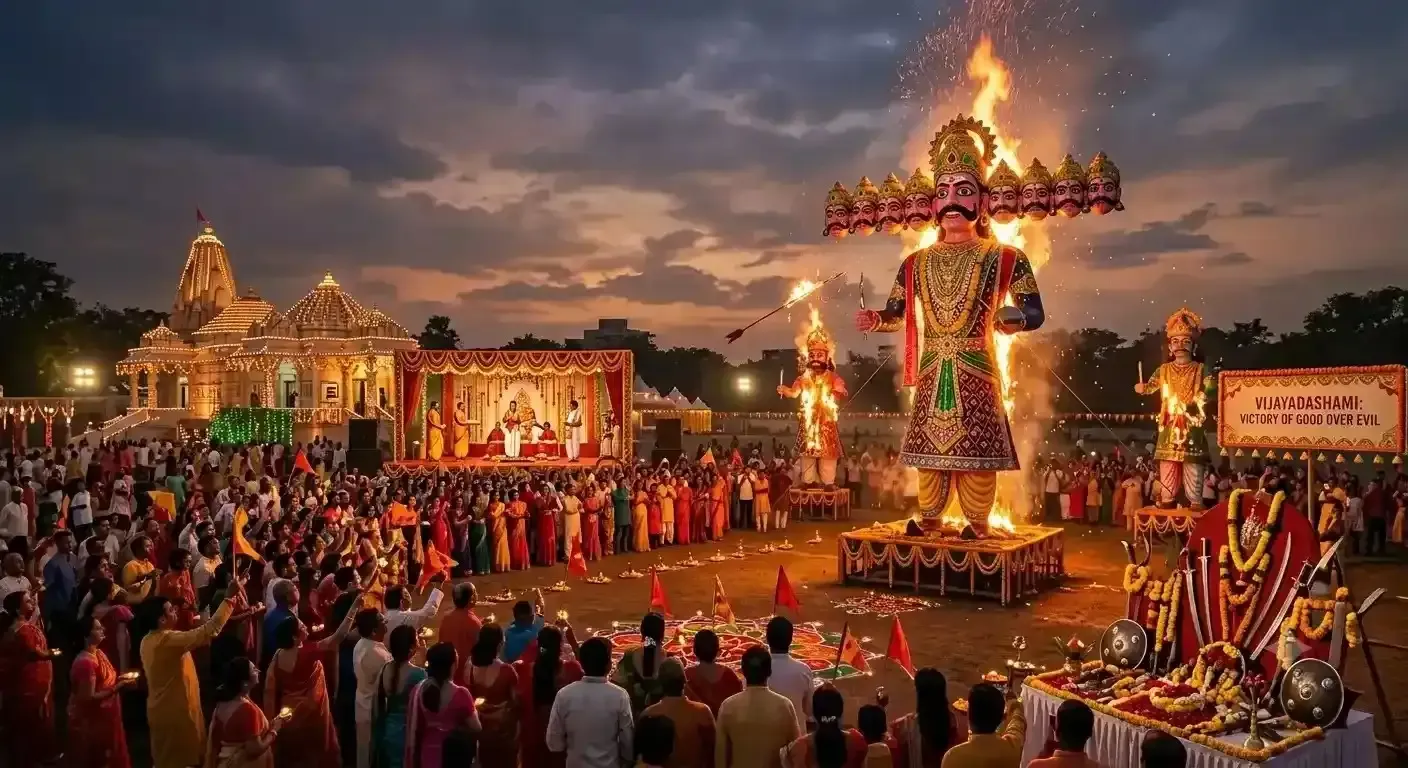
Vijayadashami falls on Wednesday 21 October 2026 across New Zealand, a day after India. Local Vijay Muhurat, Aparahna and Dashami times for Auckland, Wellington, Christchurch, Hamilton and Dunedin, Hindu temples and community groups, and how to mark the day at home.
Quick answer: Dussehra (Vijayadashami) 2026 in New Zealand is on Wednesday 21 October 2026 in every city, one day after India. The Vijay Muhurat, calculated by the Drik Panchang method, is 3:18 PM – 4:10 PM in Auckland, 3:20 PM – 4:13 PM in Wellington and 3:29 PM – 4:23 PM in Christchurch (New Zealand Daylight Time, UTC+13). In India's calendar Navratri runs from Sunday 11 to Monday 19 October 2026.
Editor's note (5 October 2026): The local times on this page were calculated for each city from the Drik Panchang tithi (Dashami from 12:50 PM IST on 20 October to 2:11 PM IST on 21 October 2026, India time), using the daylight saving time in force in New Zealand in October. The Vijay Muhurat is the 11th of the 15 daytime muhurtas, calculated by the Drik Panchang method. We do not list 2026 event schedules, because temples and associations announce their own programmes; please check with them directly.
New Zealand's Hindu community is one of the fastest-growing faith communities in the country. Its roots go back to Gujarati and Punjabi settlers who arrived from the late nineteenth century, and the Wellington Indian Association was founded as early as 1925. Since the 1980s and 1990s the community has been transformed by arrivals from Fiji, India, Sri Lanka, Malaysia, Singapore, South Africa and Nepal, and today Hindus live in every main centre, with the largest numbers in Auckland. Fiji Indian families, with their strong Ramayan Mandali and Sanatan Dharam traditions, sit alongside Gujarati, Punjabi, Tamil, Telugu, Malayali, Bengali, Marathi and Nepali communities, so Navratri in New Zealand brings together garba, Durga Puja, Golu, Bathukamma, Ramayan recitation and Dashain.
Dussehra 2026 in New Zealand: dates and Vijay Muhurat by city
All of New Zealand is on one time zone, New Zealand Daylight Time (UTC+13), on 20 and 21 October. The Dashami tithi therefore begins and ends at the same moment in every city: at 8:20 PM on Tuesday 20 October and 9:41 PM on Wednesday 21 October. Only the sun-based windows differ, by a little over twenty minutes between Hamilton in the north and Dunedin in the far south.
| Region | City | Dussehra date | Vijay Muhurat (Drik Panchang method) | Dashami begins → ends |
|---|---|---|---|---|
| Auckland | Auckland | Wed 21 Oct | 3:18 PM – 4:10 PM | Tue 20 Oct, 8:20 PM → Wed 21 Oct, 9:41 PM |
| Waikato | Hamilton | Wed 21 Oct | 3:16 PM – 4:09 PM | Tue 20 Oct, 8:20 PM → Wed 21 Oct, 9:41 PM |
| Wellington | Wellington | Wed 21 Oct | 3:20 PM – 4:13 PM | Tue 20 Oct, 8:20 PM → Wed 21 Oct, 9:41 PM |
| Canterbury | Christchurch | Wed 21 Oct | 3:29 PM – 4:23 PM | Tue 20 Oct, 8:20 PM → Wed 21 Oct, 9:41 PM |
| Otago | Dunedin | Wed 21 Oct | 3:39 PM – 4:34 PM | Tue 20 Oct, 8:20 PM → Wed 21 Oct, 9:41 PM |
The Aparahna (afternoon period) on Wednesday 21 October is the traditional window for Aparajita and Shami puja, and sunset marks the time for any evening aarti or Ravan Dahan:
| City | Aparahna, 21 Oct | Sunset, 21 Oct |
|---|---|---|
| Auckland | 2:25 PM – 5:03 PM | 7:42 PM |
| Hamilton | 2:23 PM – 5:02 PM | 7:41 PM |
| Wellington | 2:26 PM – 5:07 PM | 7:48 PM |
| Christchurch | 2:35 PM – 5:17 PM | 7:59 PM |
| Dunedin | 2:44 PM – 5:28 PM | 8:12 PM |
Key Navratri and Dussehra dates 2026
| Observance | Date (2026) |
|---|---|
| Navratri begins (Ghatasthapana), India | Sunday 11 October |
| Durga Ashtami and Maha Navami, India | Monday 19 October |
| Dussehra / Vijayadashami, India | Tuesday 20 October |
| Dussehra / Vijayadashami in New Zealand | Wednesday 21 October |
| Dashami tithi, New Zealand time | Tue 20 Oct, 8:20 PM → Wed 21 Oct, 9:41 PM |
| Bijoya Dashami / Sindoor Khela (India, Bengal tradition) | Wednesday 21 October |
Why the extra day? New Zealand is seven and a half hours ahead of India in October. Dashami begins at 12:50 PM IST, early enough for India's afternoon, but that moment is 8:20 PM in New Zealand, after sunset. Because Vijayadashami is kept on the day when Dashami covers the afternoon (Aparahna), New Zealand observes it on Wednesday 21 October, when Dashami covers the whole Aparahna in every city by more than two and a half hours. There is no borderline case here: all five cities share the same date. Many New Zealand temples also adjust the Navratri days to the local calendar, so follow your mandir for Ashtami, Navami and Kanya pujan.
Hindu temples in New Zealand for Navratri & Dussehra
These temples and associations have been confirmed to exist in or near each city. We list name and area only; check their own websites or social pages for opening hours and festival plans. Temples and community groups usually announce Navratri garba, Durga Puja, Ramlila and Ravan Dahan programmes a few weeks ahead — check their websites/social pages.
Auckland
Auckland's Vijay Muhurat is 3:18 PM – 4:10 PM on Wednesday 21 October, within an Aparahna of 2:25 PM – 5:03 PM, and sunset is at 7:42 PM. Auckland is home to the majority of New Zealand's Hindus and has the country's oldest and largest temples, spread across the central isthmus, West Auckland and South Auckland.
- Bharatiya Mandir — Sandringham. Opened in 1993, it is regarded as New Zealand's first purpose-built Hindu temple, with shrines to Vishnu, Lakshmi and Hanuman.
- Shri Ram Mandir — Henderson, West Auckland. A large temple and community centre dedicated to Lord Rama, naturally a focus for Dussehra and the story of Rama's victory.
- BAPS Shri Swaminarayan Mandir — Avondale. A large mandir and cultural complex serving Swaminarayan and Gujarati families.
- Shri Shirdi Saibaba Sansthan of New Zealand — Auckland. A Sai Baba community established in 2002, drawing devotees from many language groups; Vijayadashami is also observed as Sai Baba's Mahasamadhi day.
At Navratri, Auckland's Gujarati and wider Indian groups usually hold garba and dandiya nights in community halls and event centres, Bengali associations organise Durga Puja with dhak, pushpanjali and bhog, and South Indian families set up Golu displays at home and in temples. Fiji Indian families often mark the nine nights with Ramayan path and bhajans, and temples typically hold Devi abhishekam, havan and kirtan through the week.
Waikato: Hamilton
Hamilton's Vijay Muhurat is 3:16 PM – 4:09 PM, the earliest of the five cities, with an Aparahna of 2:23 PM – 5:02 PM and sunset at 7:41 PM. The Waikato has a fast-growing Indian community linked to the university, the hospital, farming and agritech.
- Sri Balaji Temple — Frankton, Hamilton. Run by the Sri Balaji Temple Trust and dedicated to Lord Venkateswara, with shrines to Shiva, Parvati, Ganapathi, Murugan and Hanuman. Several local groups, including a Ramayan Mandali and the Tamil Society Waikato, hold their prayer evenings here.
Hamilton's Telugu, Tamil, Malayali, Gujarati and North Indian associations each mark Navratri in their own way, from Bathukamma and Golu to garba evenings, and temple-based Saraswati and Ayudha Puja near the end of the nine nights.
Wellington
Wellington's Vijay Muhurat is 3:20 PM – 4:13 PM, within an Aparahna of 2:26 PM – 5:07 PM, and sunset is at 7:48 PM. The capital has one of New Zealand's oldest Indian communities, with deep Gujarati roots, as well as newer families across Lower Hutt, Porirua and the Kāpiti Coast.
- Wellington Indian Association — Bharat Bhavan and Gita Mandir — Kilbirnie. Founded in 1925, the association runs a temple and community hall that has long been the centre of Hindu festivals in the city.
- Sri Venkateswara Swamy Temple of Wellington — Wainuiomata, Lower Hutt. Run by the Sanatana Dharma Paripalana Seva Trust.
- ISKCON Wellington (Hare Krishna) — Wellington. The community has been moving to new premises, so check its pages for its current location.
Wellington's Gujarati community is known for its garba nights, and South Indian families mark Navratri with Golu, Lalitha Sahasranama chanting and Saraswati Puja. Bengali families in the region usually come together for a community Durga Puja.
Canterbury: Christchurch
Christchurch's Vijay Muhurat is 3:29 PM – 4:23 PM, with an Aparahna of 2:35 PM – 5:17 PM and sunset at 7:59 PM. The South Island's largest city has a diverse and growing Hindu population, many of whom arrived during the rebuild after the 2010–2011 earthquakes.
- BAPS Shri Swaminarayan Mandir Christchurch — Christchurch. Opened in 2012 as the first purpose-built Hindu temple in the South Island.
- ISKCON Christchurch (Hare Krishna temple) — Christchurch. The original temple was destroyed in the February 2011 earthquake and a new, earthquake-resistant temple opened on the same site in 2017.
- Sri Ganesha Trust Christchurch — Templeton, Christchurch. The trust is developing a traditional Vinayagar (Ganesha) temple on land it has bought in Templeton.
Christchurch's Navratri is largely community-led: garba evenings in hired halls, Durga Puja organised by Bengali families, and Golu and Bathukamma in homes. Families from Timaru, Ashburton and the wider Canterbury region often travel into the city for the larger events.
Otago: Dunedin
Dunedin's Vijay Muhurat is 3:39 PM – 4:34 PM, the latest in the country, with an Aparahna of 2:44 PM – 5:28 PM and sunset at 8:12 PM. Dunedin's Hindu community is small and centred on the University of Otago, the hospital and young families.
- Dunedin Hindu Social and Cultural Organisation — Dunedin. A long-running group whose members have met in each other's homes for prayer.
- Krishanbalram Mandir (Dunedin) Charitable Trust — Dunedin. Registered in 2024 with the aim of establishing a Hindu temple in the city.
Dunedin has not had a dedicated Hindu temple, so Navratri and Dussehra are usually kept with home altars, shared puja in members' homes, student association events and community gatherings at the weekend.
How New Zealand celebrates Navratri and Dussehra
Because 11–21 October are ordinary working and school days, most community celebration in New Zealand moves to the weekends around Navratri. Gujarati groups hold garba and dandiya nights with chaniya choli and kediyu, a central Mataji image and aarti at the start. Bengali associations organise Durga Puja with a clay or fibre idol, pushpanjali, bhog and cultural evenings, ending with Bijoya greetings and, for married women, Sindoor Khela; diaspora Durga Pujas follow their committee's schedule. Tamil and other South Indian families set up Golu (Bommai Kolu) displays of dolls on steps and visit each other's homes, temples hold Saraswati Puja and Ayudha Puja, and Telugu families may celebrate Bathukamma with flower stacks and circle songs. Nepali families mark Dashain with tika and jamara.
Fiji Indian Hindus, a large part of the community, bring a strong Ramayan tradition: Ramayan Mandalis recite the Ramcharitmanas, and some groups stage a children's Ramlila or a small Ravan Dahan. Large open-air effigy burning as seen in India is rare in New Zealand, because fireworks are only on sale around Guy Fawkes in early November and open fires need permission from local councils and Fire and Emergency New Zealand, so Ravan Dahan is usually a small, permitted event or a symbolic one.
Dussehra puja at home
If you cannot reach a temple on a Wednesday, a short puja at home in the afternoon is entirely traditional. Ideally do it during your city's Vijay Muhurat, or at least within the Aparahna on 21 October:
- Aparajita puja: draw an eight-petalled lotus with kumkum or rice flour, place a lamp, and worship Devi Aparajita, the goddess of victory, with flowers, akshat and a simple prayer for success over obstacles.
- Shami puja: if you have Shami leaves (or a substitute such as apta/bauhinia leaves), offer them to the Devi and exchange them with family as "gold" — a Maharashtrian and Karnataka custom.
- Ayudha Puja / Shastra puja: clean and decorate tools, books, laptops, bikes and the car, apply kumkum and offer flowers, thanking them for their service.
- Vidyarambham: Vijayadashami is the traditional day for small children to begin learning — writing "Om" or the first letters of the alphabet in rice.
- Seemollanghan and new beginnings: a short walk beyond your street, starting a course or signing a new venture are traditional symbols of victory on this day.
A simple order: bathe, light a lamp, pray to Ganesha, do the Aparajita and Shami puja, then Ayudha puja, offer naivedya (sweets, fruit), do aarti and share prasad. For full step-by-step vidhi and the stories behind the festival, see our Dussehra / Vijayadashami 2026 pillar guide.
Practical tips for Dussehra in New Zealand
- Use 21 October, not 20 October: Indian websites and family in India will celebrate on Tuesday 20 October. In New Zealand, the Dashami only starts on Tuesday night, so do the Vijayadashami puja on Wednesday 21 October.
- Working day: Wednesday 21 October is a normal working and school day. The Vijay Muhurat falls in mid-afternoon, so consider a short break or working from home; if that is not possible, any time within your city's Aparahna is also traditional.
- Fireworks and fire: fireworks are only sold for a few days around Guy Fawkes, and rules on open fires and effigy burning are set by local councils and Fire and Emergency New Zealand. Do not burn effigies in parks or gardens without permission.
- Getting to temples: parking at suburban temples and community halls is limited on festival evenings. Car-share with friends, or check Auckland Transport, Metlink and Metro timetables for evening services.
- Weather: October is spring in New Zealand, with long evenings but changeable weather and cool nights, especially in Christchurch and Dunedin. Bring a warm layer for any outdoor event.
- Puja items: Indian grocers in Auckland, Hamilton, Wellington and Christchurch stock flowers, kumkum and sweets; buy a few days early, as stock runs short before Navratri weekends. In Dunedin, order ahead or bring supplies from a larger centre.
- Muhurat: use your own city's times from the table above; never convert India's times into New Zealand time.
Frequently asked questions
When is Dussehra 2026 in New Zealand?
Wednesday 21 October 2026 in every New Zealand city. The Dashami tithi only begins at 8:20 PM New Zealand time on Tuesday 20 October, after that afternoon is over, and it runs until 9:41 PM on Wednesday 21 October, covering the whole afternoon of the 21st.
Why is Dussehra a day later in New Zealand than in India?
India observes Vijayadashami on Tuesday 20 October because Dashami begins at 12:50 PM IST, in time for India's afternoon. New Zealand is 7.5 hours ahead of India on daylight time, so the same moment is 8:20 PM in Auckland, after sunset. The festival therefore moves to Wednesday 21 October, when Dashami covers the local afternoon.
What is the Vijay Muhurat in Auckland, Wellington and Christchurch?
Calculated by the Drik Panchang method for Wednesday 21 October 2026 in New Zealand Daylight Time (UTC+13): Auckland 3:18 PM – 4:10 PM, Wellington 3:20 PM – 4:13 PM, Christchurch 3:29 PM – 4:23 PM, Hamilton 3:16 PM – 4:09 PM and Dunedin 3:39 PM – 4:34 PM.
Can I convert India's Dussehra muhurat into New Zealand time?
No. The Vijay Muhurat depends on local sunrise and sunset, so it has to be calculated for your own city. Use the New Zealand times on this page or your temple's calendar, not India's times shifted by the time difference.
Where will garba, Durga Puja and Ravan Dahan take place in New Zealand?
Temples and community groups usually announce Navratri garba, Durga Puja, Ramlila and Ravan Dahan programmes a few weeks ahead, so check their websites and social pages. Fireworks and open fires are controlled by local councils and Fire and Emergency New Zealand, so any effigy burning needs permission.
Is Dussehra a holiday in New Zealand?
No. Wednesday 21 October 2026 is a normal working and school day, so many families do the afternoon puja at home or after work within the Aparahna, and join temple or community celebrations in the evening or at the weekend.
Related guides
You might also like
Dussehra 2026 in Victoria, BC: Date, Vijay Muhurat, Temples and Navratri Celebrations
Dussehra 2026 in Surrey: Date, Vijay Muhurat, Temples and Navratri Celebrations
Dussehra 2026 in Vancouver: Date, Vijay Muhurat, Temples and Navratri Celebrations