
Diwali 2026 in Kenya: Lakshmi Puja Muhurat for Nairobi, Mombasa, Kisumu and Nakuru
Diwali falls on Sunday 8 November 2026 across Kenya. Lakshmi Puja and Dhanteras times for Nairobi, Mombasa, Kisumu and Nakuru, verified mandirs, and the State Department for Mining's fireworks permit rules.
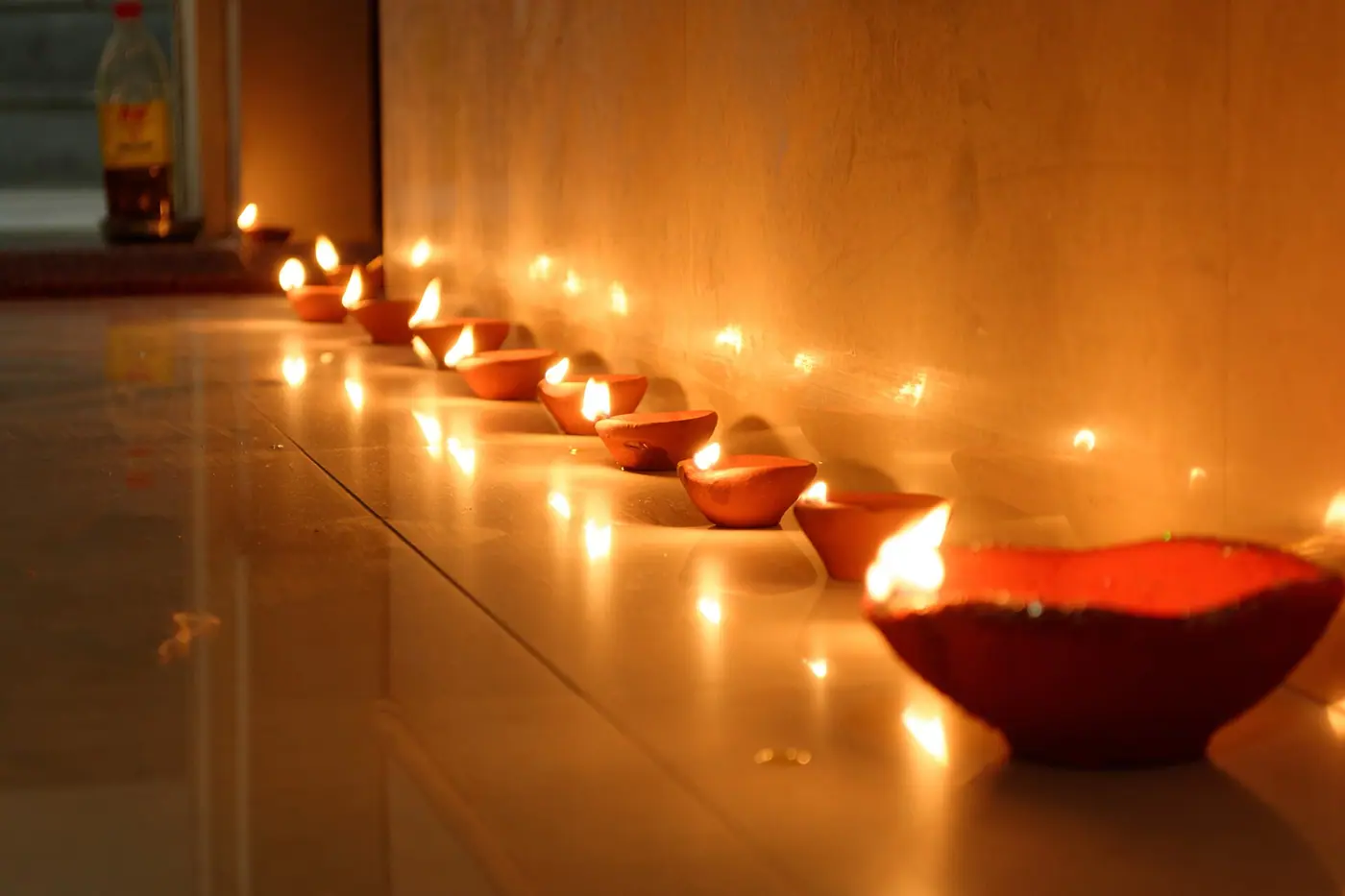
Diwali falls on Sunday 8 November 2026 across Kenya. Lakshmi Puja and Dhanteras times for Nairobi, Mombasa, Kisumu and Nakuru, verified mandirs, and the State Department for Mining's fireworks permit rules.
Quick answer: Diwali (Lakshmi Puja) 2026 in Kenya is on Sunday 8 November. In Nairobi the Lakshmi Puja muhurat is 6:50 PM – 8:43 PM East Africa Time, and Dhanteras is on Friday 6 November.
Editor's note: This page was updated on 10 October 2026. The local times were calculated by HinduTone using the Drik Panchang method (Pradosh Kaal with the Vrishabha lagna) for each Kenyan city's own sunset, and checked against Drik Panchang for major world cities to within one to two minutes. They are not India's times converted. Event details come only from organisers' own announcements, and we list no 2026 programme that has not been announced. Please confirm the exact puja time with your temple.
Kenya is one of the few places in the world where Diwali arrives with almost no change in daylight. Because Nairobi, Mombasa, Kisumu and Nakuru all sit within a few degrees of the equator, the sun sets at practically the same minute on Dhanteras and on Diwali night, and the whole country shares one time zone with no clock change. What does vary is longitude: Mombasa on the Indian Ocean gets dark first, and Kisumu on Lake Victoria about a quarter of an hour later. Kenya's Hindu story also runs along that same line, from the coast inland along the old railway, so the city-by-city table below follows the route that many families' grandparents and great-grandparents took.
Diwali 2026 in Kenya: the five days
| Day | Date | What is observed |
|---|---|---|
| Dhanteras (Yama Deepam) | Friday 6 November | Buying a new utensil or a little gold or silver, Dhanvantari and Lakshmi puja at dusk, and a lamp for Yama facing south |
| Kali Chaudas | Saturday 7 November | Observed in the Gujarati tradition, with prayers for protection from negativity |
| Diwali / Lakshmi Puja | Sunday 8 November | Lakshmi–Ganesh puja in the evening, Narak Chaturdashi and the Tamil Deepavali oil bath in the morning, Kali Puja for Bengali families, and Chopda (Sharda) Puja of account books |
| Govardhan Puja / Annakut / Bestu Varas | Tuesday 10 November (in India) | Annakut offering to Krishna, Bali Pratipada and the Gujarati New Year |
| Bhai Dooj | Wednesday 11 November (in India) | Sisters apply tilak and pray for their brothers |
In India's calendar the Amavasya tithi runs from 11:27 AM IST on Sunday 8 November to 12:31 PM IST on Monday 9 November, so Diwali night is Sunday everywhere in Kenya. There is a gap day on Monday 9 November before Govardhan Puja. The dates for Govardhan Puja, the Gujarati New Year and Bhai Dooj above are those in India, and Kenyan mandirs may announce their own day for annakut and New Year darshan.
Dhanteras honours Dhanvantari, Narak Chaturdashi recalls Krishna's victory over Narakasura, and Diwali night celebrates Rama's return to Ayodhya and welcomes Lakshmi into a bright home. Bali Pratipada remembers King Bali and Vamana, and Bengali families worship Kali on the new-moon night. Jains mark the nirvana of Bhagwan Mahavira, and Sikhs celebrate Bandi Chhor Divas.
Lakshmi Puja muhurat 2026, city by city
All times are East Africa Time (UTC+3). They were calculated by HinduTone using the Drik Panchang method (Pradosh Kaal with the Vrishabha lagna) and checked against Drik Panchang for major world cities to within one to two minutes. Confirm with your temple.
| City | Region | Lakshmi Puja (Sun 8 Nov) | Pradosh Kaal | Dhanteras puja (Fri 6 Nov) |
|---|---|---|---|---|
| Nairobi | Nairobi | 6:50 PM – 8:43 PM | 6:21 PM – 8:43 PM | 6:59 PM – 8:43 PM |
| Mombasa | Mombasa (Coast) | 6:43 PM – 8:34 PM | 6:13 PM – 8:34 PM | 6:51 PM – 8:33 PM |
| Kisumu | Kisumu (Lake Victoria) | 6:57 PM – 8:50 PM | 6:28 PM – 8:50 PM | 7:05 PM – 8:50 PM |
| Nakuru | Nakuru (Rift Valley) | 6:52 PM – 8:45 PM | 6:23 PM – 8:45 PM | 7:00 PM – 8:45 PM |
Sunset on 8 November is at 6:21 PM in Nairobi, 6:13 PM in Mombasa, 6:28 PM in Kisumu and 6:23 PM in Nakuru, and it is the same minute on Friday 6 November. That is why the Pradosh Kaal column for Dhanteras is identical to Diwali night in Nairobi, Kisumu and Nakuru, and only one minute shorter in Mombasa (6:13 PM – 8:33 PM).
What Pradosh Kaal and Vrishabha lagna mean
Pradosh Kaal is the period of about two and a half hours that begins at sunset. Lakshmi Puja is traditionally done in this evening window, when lamps are lit and the household gathers. The window is different in every city because it starts at that city's own sunset.
Vrishabha lagna is the time when the zodiac sign Taurus (Vrishabha) is rising on the eastern horizon. Vrishabha is a fixed (sthir) sign, and puja done while it rises is believed to make Lakshmi's blessings stay in the home. The recommended Lakshmi Puja muhurat is the part of Pradosh Kaal when Vrishabha is rising. In Kenya on 8 November it begins about half an hour after sunset and lasts until the end of Pradosh, so in Nairobi that is 6:50 PM – 8:43 PM.
For Dhanteras on Friday 6 November, the same rule gives a slightly later start, because Vrishabha rises about four minutes earlier each day, so two days before Diwali it rises a little later after sunset: 6:59 PM – 8:43 PM in Nairobi. If you live in Eldoret, Thika, Machakos or another town not listed, use the nearest city above; the differences across Kenya come mainly from longitude, so a town west of Nairobi will be a few minutes later and one to the east a few minutes earlier.
The Hindu community in Kenya
Kenya's Hindu community is small in number but deeply rooted. The 2019 Kenya Population and Housing Census counted 60,287 Hindus in a population of about 47.6 million, as reported by The Star when the results were released in February 2020. The Assistant High Commission of India in Mombasa puts the wider Indian community in Kenya at around 80,000, including an estimated 20,000 Indian citizens; the page does not give a year for that figure, and the community includes people of several faiths.
The modern community grew out of the railway. According to the Nation, workers who were mostly from Punjab began landing at Mombasa in 1888 to build the Kenya-Uganda Railway, and others followed into trade, teaching, construction, medicine and law, opening shops on streets such as Biashara Street in Nairobi. In July 2017 a presidential proclamation in a special gazette recognised Kenyans of Indian descent as the country's 44th tribe.
Today Kenyan Hindu families include people whose families have lived in the country for four or five generations and newer arrivals working for companies, schools, hospitals and the United Nations offices in Nairobi. The traditions visible at Diwali reflect that history: Swaminarayan mandirs keep the Gujarati customs of Chopda Pujan and the New Year annakut, Punjabi families bring their own Diwali sweets and gurdwara visits for Bandi Chhor Divas, and South Indian, Bengali and Nepali families observe Deepavali, Kali Puja and Tihar in their own ways. The Hare Krishna movement has temples in both Nairobi and Mombasa.
Where to celebrate: temples and community organisations
The places below have been confirmed through their own or their organisation's official listings. We give name and area only; check their websites and social pages for darshan times and Diwali plans. Temples and community associations usually announce Diwali programmes from mid-October — check their websites and social pages.
Nairobi
Nairobi has Kenya's largest Hindu population, and its Diwali puja window is 6:50 PM – 8:43 PM. Mandirs here typically hold Lakshmi Puja and Chopda Pujan on Diwali evening, followed by New Year darshan and annakut.
- BAPS Shri Swaminarayan Mandir — Nairobi (Forest Road / Parklands area), listed on the BAPS Africa network page. In 2003 the mandir held Chopda Pujan on Diwali and a New Year annakut; check the mandir's own announcements for 2026.
- ISKCON Nairobi (Sri Sri Radha Bankebihari Mandir) — Ngara, listed in ISKCON's centres directory. ISKCON temples usually mark Diwali and Govardhan Puja with kirtan, deepa daan and an annakut offering.
- Hindu Council of Kenya — Nairobi. The national Hindu body lists Diwali among the festivals it celebrates and has branches in Mombasa, Kisumu, Nakuru, Mt Kenya and Eldoret, which makes it a useful first contact if you are new to the country.
Mombasa
On the coast, where the railway story began, Lakshmi Puja runs from 6:43 PM – 8:34 PM, the earliest window in the country.
- BAPS Shri Swaminarayan Mandir — Mombasa (Haile Selassie Road area), listed on the BAPS Africa network page.
- ISKCON Mombasa — Nyali, where ISKCON built a temple complex on Beach Road.
- Hindu Council of Kenya, Mombasa branch — Mombasa.
Kisumu
At the western end of the old railway line on Lake Victoria, Kisumu has Kenya's latest puja window, 6:57 PM – 8:50 PM.
- BAPS Shri Swaminarayan Mandir — Kisumu (Okore Road area), listed on the BAPS Africa network page.
- Hindu Council of Kenya, Kisumu branch — Kisumu.
Nakuru
In the Rift Valley, Nakuru's Lakshmi Puja window is 6:52 PM – 8:45 PM.
- BAPS Shri Swaminarayan Mandir — Nakuru (Masaai Avenue area), listed on the BAPS Africa network page.
- Hindu Council of Kenya, Nakuru branch — Nakuru.
Kenya has many more mandirs, sabhas and community halls than we can list here, and we only name those we could confirm from an official source, so ask your neighbours and the Hindu Council branch near you.
Celebrating at home in Kenya
If you cannot reach a mandir on Sunday evening, a home Lakshmi Puja inside your city's window is fully traditional. A short order:
- Clean the house during the day and make a rangoli at the entrance, with small footprints of Lakshmi walking inward.
- Set a low table with a red or yellow cloth, a kalash of water topped with mango leaves and a coconut, and murtis or pictures of Ganesha and Lakshmi.
- When your muhurat begins, bathe or freshen up, light the main ghee lamp and pray first to Ganesha.
- Offer Lakshmi kumkum, haldi, flowers, akshat (rice), coins or new notes, sweets and fruit, and chant her name or the Shri Suktam.
- If you keep business books, worship them as in Chopda Pujan, writing "Shubh" and "Labh" and a swastika on the first page.
- Finish with aarti, then light diyas around the house and share prasad.
For a fuller step-by-step version, see our Lakshmi Puja 2026 vidhi.
Lamps in apartments and compounds: Many families in Nairobi and Mombasa live in apartment blocks or gated compounds. Keep clay diyas on a metal tray away from curtains, place them on balconies only where the wind cannot reach them, and never leave them burning when everyone goes to the mandir. LED diyas and fairy lights on the balcony railing are a safe way to keep the house lit all evening.
Smoke alarms and power: If your flat has smoke detectors, keep incense and camphor away from them and open a window during aarti. Power cuts happen, so keep a few real diyas or a rechargeable lamp ready rather than relying only on electric lights.
Tenancy and compound rules: Check your lease and your estate or building management's rules before putting up lights on shared walls or lighting lamps in common corridors and stairwells. A quick word with the caretaker and neighbours goes a long way.
Weather: Early November falls in the short rains across much of Kenya, so expect afternoon or evening showers in Nairobi, Nakuru and Kisumu, and warm, humid nights on the coast in Mombasa. Protect outdoor rangoli and diyas, and keep an umbrella handy for the walk to the mandir.
Food and decorations you can find locally
Nairobi, Mombasa, Kisumu and Nakuru all have Indian grocers and sweet shops, and in the larger cities you can find ghee, besan, cardamom, saffron, pooja samagri, clay diyas, rangoli colours and ready-made mithai. Busy weeks before Diwali mean stock of diyas and boxed sweets can run short, so shop by Dhanteras. Coconuts, fruit and flowers for the puja are easy to find in city markets, and many families still make chakri, chevdo, ghughra, ladoos and barfi at home, passing the recipes to the next generation.
Diwali with children and second-generation families
Because Lakshmi Puja falls on a Sunday this year, the whole family can join the evening puja, but Monday 9 to Friday 13 November is an ordinary school and working week. Plan New Year darshan on Tuesday and Bhai Dooj on Wednesday around school runs and office hours, for example by visiting the mandir after work.
- Let children make the rangoli, paint diyas or design a Diwali card for their teacher and classmates, explaining the festival in simple words.
- Tell the Ramayana or Narakasura story at bedtime in the week before Diwali.
- Use the festival to speak your heritage language at home: Gujarati, Kutchi, Punjabi, Hindi, Tamil or another; greet elders with "Saal Mubarak" or "Nutan Varsh Abhinandan" on New Year morning.
- Give older children a role in the puja, such as reading the Lakshmi aarti or leading the Ganesh vandana.
- If your child's teacher is interested, offer to help with a short class talk or display about Diwali.
Fireworks, safety and local rules
In Kenya, fireworks fall under the Explosives Act (Cap 115), and the national authority is the State Department for Mining in the Ministry of Mining, Blue Economy and Maritime Affairs. For Diwali 2024 the ministry issued a public notice on the use of fireworks during Diwali and Hindu New Year requiring that:
- permits to hold fireworks are obtained from State Department for Mining offices in Nairobi, Mombasa, Kisumu, Eldoret, Nakuru, Nyeri and Embu;
- fireworks are used only at authorised venues such as clubs, hotels, temples, sports grounds, school compounds, or a venue approved by an Inspector of Explosives;
- displays are held only between 7pm and 11pm on the authorised dates;
- display shells in urban and built-up areas are limited to four-inch calibre unless an Inspector of Explosives grants an exemption;
- only qualified, experienced and sober people fire aerial display fireworks;
- dealers do not sell fireworks to any child under 13, which is an offence, and sell aerial display fireworks only to holders of a signed display permit.
The ministry issued the same guidelines again for Diwali 2025. As of 10 October 2026 we have not seen the 2026 notice; it is likely to set its own authorised dates around 8 November, so check the ministry's announcement before buying or lighting anything. The safest choice for most families is to enjoy the display organised by their mandir or community club, which handles the permits, and to keep fireworks out of apartment compounds and residential streets.
At home, keep a bucket of water or sand near outdoor diyas, tie back dupattas and loose sleeves while lighting lamps, and keep pets indoors on display nights.
Celebrating far from family
For many Kenyan Hindus, Diwali means calls to relatives in India, the UK or elsewhere in East Africa:
- Join a live-streamed aarti or darshan from a temple your family is connected to, either in Kenya or in India.
- Do the Lakshmi Puja together on a video call, each household at its own local muhurat, and share prasad photos afterwards.
- Students and young professionals living alone can ask a local mandir about joining its community puja and meal.
- Mark the festival with seva or a donation, such as food for the needy, support for a water or school project, or volunteering at your mandir's annakut.
Diwali checklist for Kenya
- Note your city's Lakshmi Puja window for Sunday 8 November from the table above.
- Buy a small utensil, coin or gold item on Friday 6 November for Dhanteras.
- Shop for diyas, ghee, flowers and mithai by Dhanteras, before stock runs short.
- Clean the home and prepare the puja table and rangoli on Saturday or Sunday morning.
- Check your mandir's website or social page for Diwali, Chopda Pujan and annakut timings.
- Plan for evening rain: cover outdoor rangoli and keep an umbrella ready.
- Have LED lights and a rechargeable lamp in case of a power cut.
- Check building or compound rules on lamps and lights in shared areas.
- Leave fireworks to permitted displays at mandirs, clubs and grounds, and look out for the 2026 State Department for Mining notice.
- Plan the working week around New Year darshan on Tuesday 10 and Bhai Dooj on Wednesday 11 November (dates in India).
- Schedule video calls with family abroad, keeping their local times in mind.
Frequently asked questions
When is Diwali 2026 in Kenya?
Lakshmi Puja (Diwali night) is on Sunday 8 November 2026 in Nairobi, Mombasa, Kisumu, Nakuru and the rest of Kenya. Dhanteras is on Friday 6 November. In India, Govardhan Puja and the Gujarati New Year fall on Tuesday 10 November and Bhai Dooj on Wednesday 11 November; your mandir may announce its own day for these.
What is the Lakshmi Puja muhurat in Nairobi, Mombasa, Kisumu and Nakuru?
On Sunday 8 November 2026, in East Africa Time: Nairobi 6:50 PM – 8:43 PM, Mombasa 6:43 PM – 8:34 PM, Kisumu 6:57 PM – 8:50 PM and Nakuru 6:52 PM – 8:45 PM. These were calculated by HinduTone using the Drik Panchang method (Pradosh Kaal with the Vrishabha lagna) and checked against Drik Panchang for major world cities to within one to two minutes. Confirm with your temple.
Why are Kenya's Diwali times almost the same on Dhanteras and Diwali?
Kenya sits almost on the equator, so sunset hardly moves from day to day. In Nairobi the sun sets at 6:21 PM on both Friday 6 and Sunday 8 November, so Pradosh Kaal is identical. Only the start of the puja window changes, because the Vrishabha lagna rises a few minutes earlier each evening.
Is Diwali a public holiday in Kenya in 2026?
We have not found an official 2026 gazette notice declaring a general Diwali holiday. In 2024 President Ruto said at State House that he would sponsor a bill to make Diwali a national holiday, subject to Parliament. In 2026 Diwali falls on a Sunday anyway, and Monday 9 to Friday 13 November is a normal working and school week.
Do I need a permit for Diwali fireworks in Kenya?
Yes, for displays. In its 2024 and 2025 Diwali notices, the State Department for Mining required fireworks permits from its offices (including Nairobi, Mombasa, Kisumu and Nakuru), displays only at authorised venues such as temples, clubs and sports grounds, and only between 7pm and 11pm on the authorised dates. Watch for the 2026 notice and follow it.
Can I just convert India's Lakshmi Puja time into Kenyan time?
No. India's muhurat is based on sunset and the rising sign over Indian cities. Kenya is two and a half hours behind India, but simply shifting India's window would put your puja at the wrong time. Use the Kenyan city times on this page or your mandir's calendar.
Related guides
- Diwali / Deepavali 2026: complete 5-day guide
- The 5 days of Diwali 2026 explained
- Lakshmi Puja 2026: date, muhurat and step-by-step vidhi
- Diwali 2026 in Tanzania: Lakshmi Puja muhurat city by city
- Lakshmi Puja muhurat 2026 in South Africa, city-wise
- How Mauritius celebrates Diwali 2026
- Dussehra 2026 in Kenya, city by city
Sources
- The Star (Kenya): More than half a million Kenyans don't believe in God - census (21 Feb 2020)
- Assistant High Commission of India, Mombasa: India–Kenya relations
- Nation (Kenya): Kenyans of Indian descent become 44th tribe (22 Jul 2017)
- Nation (Kenya): Kenyan Indians: a story of struggle and triumph (19 Jun 2023)
- BAPS Swaminarayan Sanstha (swaminarayan.org): Global network: Africa
- BAPS Swaminarayan Sanstha (swaminarayan.org): Diwali and Hindu New Year, Nairobi (2003)
- ISKCON Centres directory: ISKCON Nairobi – Sri Sri Radha Bankebihari Mandir
- ISKCON News: New ISKCON complex to become Mombasa landmark (2009)
- Hindu Council of Kenya: Hindu Council of Kenya – official website
- Ministry of Mining, Blue Economy and Maritime Affairs (State Department for Mining): Public notice: Use of fireworks during Diwali and Hindu New Year celebrations (2024)
- Capital FM (Kenya): Planning fireworks for Diwali? You'll need a licence (14 Oct 2025)
- Kenyans.co.ke: Ruto promises to gazette Diwali holiday after parliamentary consideration (30 Oct 2024)
Muhurat: HinduTone calculation (Drik Panchang method)
You might also like
Diwali 2026 in Austria: Lakshmi Puja Muhurat City by City, Dhanteras and Temples
Diwali 2026 in Switzerland: Lakshmi Puja Muhurat City by City, Dhanteras and Temples
Diwali 2026 in the Netherlands: Lakshmi Puja Muhurat City by City and Mandirs