
Diwali 2026 in the Netherlands: Lakshmi Puja Muhurat City by City and Mandirs
Divali falls on Sunday 8 November 2026 across the Netherlands. Local Lakshmi Puja and Dhanteras times for five Dutch cities, verified mandirs, and what the new national consumer fireworks ban means for your celebration.
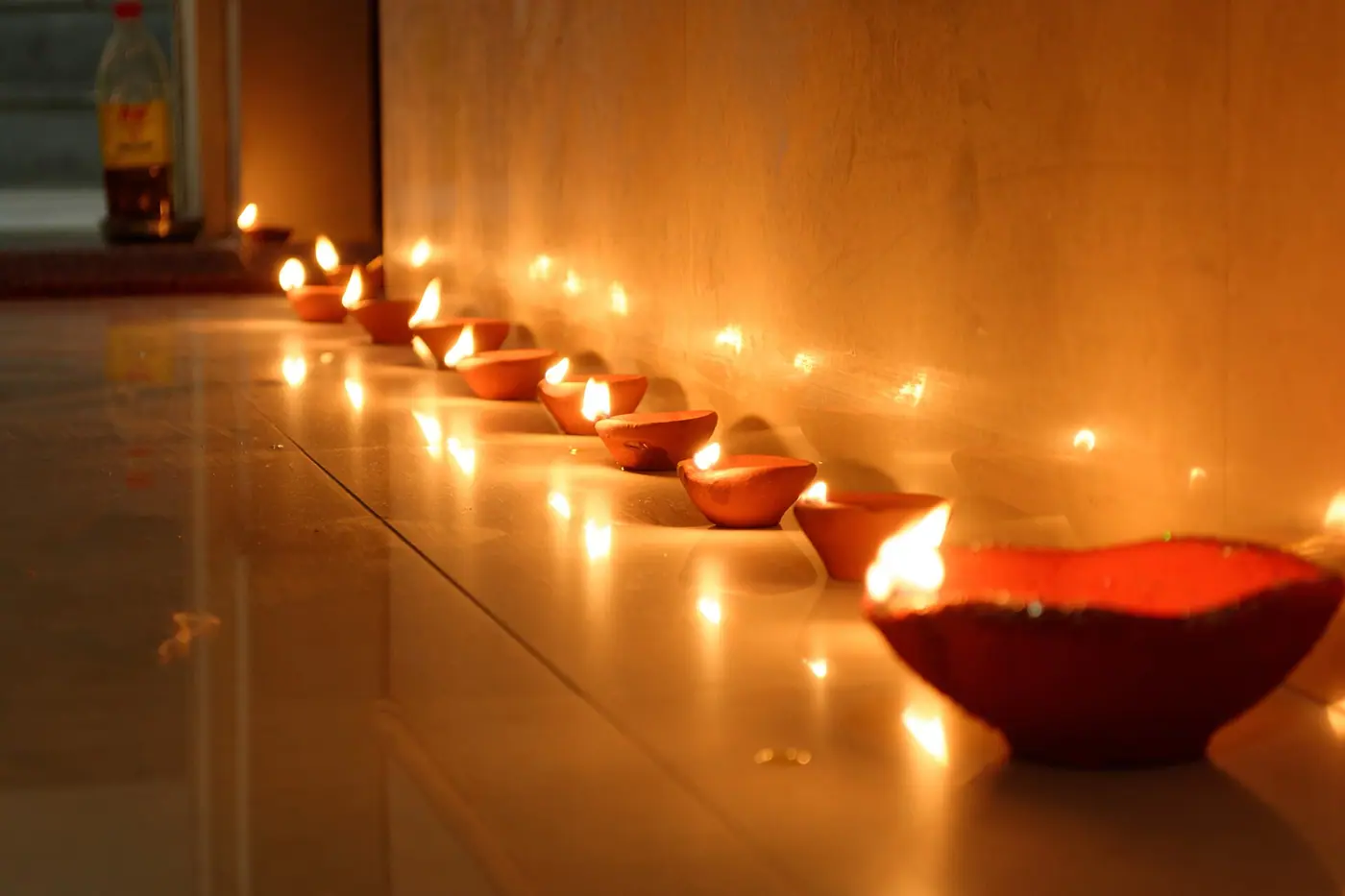
Divali falls on Sunday 8 November 2026 across the Netherlands. Local Lakshmi Puja and Dhanteras times for five Dutch cities, verified mandirs, and what the new national consumer fireworks ban means for your celebration.
Quick answer
Diwali (Lakshmi Puja) 2026 in the Netherlands is on Sunday 8 November. In Amsterdam the Lakshmi Puja muhurat is 5:12 PM – 6:48 PM, and in The Hague 5:15 PM – 6:52 PM. Dhanteras is Friday 6 November 2026.
Editor's note: This page was last checked on 10 October 2026. The local times were calculated by HinduTone using the Drik Panchang method (Pradosh Kaal with the Vrishabha lagna) for each city, and checked against Drik Panchang for major world cities to within one to two minutes. They are in Central European Time, because Dutch summer time ended on Sunday 25 October. Event details come only from organisers' own announcements. Mandirs follow their own pandits' calendars, so please confirm the time with your temple.
Diwali in the Netherlands has a story of its own. Most Hindus here are Surinamese Hindustanis, whose ancestors were taken from India to Suriname as contract labourers and who later made a second journey to the Netherlands. They call the festival Divali. It is a quiet, home-centred night of diyas, prayer to Lakshmi and shared vegetarian food, and in 2021 it was added to the Dutch Inventory of Intangible Cultural Heritage. Alongside them, a fast-growing community of Indian professionals and students in Amstelveen, Amsterdam and Eindhoven celebrates the way their families do in Bengaluru, Hyderabad or Pune. In 2026 both groups will celebrate their first Divali under the new national consumer fireworks ban.
Diwali 2026 in the Netherlands: the five days
| Day | Date | What is observed |
|---|---|---|
| Dhanteras (Yama Deepam) | Friday 6 November | Dhanvantari and Lakshmi puja at dusk, buying a new utensil or a little gold or silver, and a south-facing lamp for Yama |
| Kali Chaudas | Saturday 7 November | Gujarati tradition of protection prayers to Kali and Hanuman |
| Diwali / Lakshmi Puja | Sunday 8 November | Lakshmi and Ganesha puja in the evening, diyas everywhere. Also Narak Chaturdashi and Tamil Deepavali (morning oil bath), Kali Puja for Bengali families, and Chopda / Sharda Puja for Gujarati businesses |
| Govardhan Puja / Annakut | Tuesday 10 November (in India) | Annakut offering of many dishes to Krishna, Bali Pratipada and the Gujarati New Year |
| Bhai Dooj | Wednesday 11 November (in India) | Sisters apply tilak to brothers and pray for their long life |
The Amavasya (new moon) tithi runs from 11:27 AM IST on Sunday 8 November to 12:31 PM IST on Monday 9 November, so the whole Dutch evening of the 8th falls inside it. The Govardhan Puja and Bhai Dooj dates above are the dates in India. Dutch mandirs may announce their own day for Annakut and Bhai Dooj, so check with yours.
For the stories behind each day, see our 5 days of Diwali 2026 explained.
Lakshmi Puja muhurat 2026, city by city
All times are Central European Time (CET), calculated by HinduTone using the Drik Panchang method (Pradosh Kaal with the Vrishabha lagna); checked against Drik Panchang for major world cities to within one to two minutes; confirm with your temple.
| City | Region | Lakshmi Puja (Sun 8 Nov) | Pradosh Kaal | Dhanteras puja (Fri 6 Nov) |
|---|---|---|---|---|
| Amsterdam | North Holland | 5:12 PM – 6:48 PM | 4:59 PM – 7:57 PM | 5:19 PM – 6:55 PM |
| The Hague | South Holland | 5:15 PM – 6:52 PM | 5:02 PM – 8:00 PM | 5:22 PM – 6:59 PM |
| Rotterdam | South Holland | 5:15 PM – 6:52 PM | 5:02 PM – 7:59 PM | 5:23 PM – 6:59 PM |
| Utrecht | Utrecht | 5:12 PM – 6:49 PM | 4:59 PM – 7:57 PM | 5:19 PM – 6:56 PM |
| Eindhoven | North Brabant | 5:12 PM – 6:50 PM | 4:59 PM – 7:56 PM | 5:21 PM – 6:59 PM |
Sunset on Sunday 8 November is at 4:59 PM in Amsterdam, Utrecht and Eindhoven and at 5:02 PM in The Hague and Rotterdam. On Friday 6 November it is at 5:02 PM in Amsterdam and Utrecht, 5:03 PM in Eindhoven and 5:05 PM on the coast.
Pradosh Kaal is the period of about three hours after sunset, when Lakshmi is believed to visit homes. Vrishabha lagna is the time when Taurus, a 'fixed' (sthir) sign, is rising in the east; worshipping Lakshmi then is believed to make her stay. The Lakshmi Puja column is where the two overlap. If you miss it, any time within Pradosh Kaal is still traditional.
The coastal cities light their lamps about three minutes after Amsterdam. Never convert India's muhurat into Dutch time, because the window depends on your own sunset. For other European cities, see our Lakshmi Puja muhurat 2026 for Europe, city-wise.
The Hindu community in the Netherlands
The heart of Dutch Hinduism is the Surinamese Hindustani community. Their ancestors sailed from British India to the Dutch colony of Suriname from 1873 as contract labourers. Many later moved again, to the Netherlands, especially around Suriname's independence in 1975. On 5 June the community remembers this history at the National Hindostani Immigration Monument on the Hobbemaplein in The Hague, where Minister Dijkgraaf laid a wreath in 2024. Dutch mandirs reflect both main Hindustani currents, Sanatan Dharm and the Arya Samaj.
According to Statistics Netherlands (CBS), about 181,000 people born in Suriname lived in the Netherlands in September 2025, plus about 189,000 Dutch-born second-generation Surinamese. This group includes Hindustani, Creole, Javanese and other families. CBS does not count Hindustanis separately. At an Indian diaspora event in The Hague in May 2026, Prime Minister Modi described the Netherlands as home to the largest Indian-origin population in mainland Europe, including around 200,000 Surinami-Hindustanis, reported by The Tribune. He also announced that OCI eligibility for the community would be extended from the fourth to the sixth generation.
The second, newer community comes straight from India. CBS figures show about 89,000 people of Indian origin living in the Netherlands on 1 January 2024, up from about 27,000 in 2014. Many came as knowledge migrants, often in IT. Amsterdam has the largest number, around 11,000, and Amstelveen the highest share, at 68 per 1,000 residents. Eindhoven, with its Brainport tech region, also has a large Indian community. These families come from all over India and bring their own regional Diwali customs, from North Indian Lakshmi-Ganesha puja to the South Indian Deepavali oil bath.
Where to celebrate: temples and community organisations
The temples below are confirmed by their own websites or listed in the Hindoe Raad Nederland temple directory. We give name and area only, so check each temple's own channels for times. Many Dutch mandirs are in converted buildings and run by volunteers, and most hold a Divali service with puja, bhajans and aarti, often followed by a shared vegetarian meal. Temples and community associations usually announce Diwali programmes from mid-October — check their websites and social pages.
The Hague
The Hague has the longest list of mandirs in the Hindoe Raad directory, and about 7.6% of its residents have a Surinamese background (CBS, 2025).Omroep West reported in 2025 that Hague families begin Divali with a special mandir service and then keep the evening at home, lighting diyas at sunset and staying in once the lamps are lit.
- Dew Mandir (Stichting Shri Sanatan Dharm Dew Mandir) — The Hague. Holds festival-day services followed by a vegetarian meal, and runs Hindi, yoga and music lessons (website).
- Hindoecentrum Sewa Dhaam — The Hague. A Hindu centre founded in 1995 with daily aarti and a Sunday satsang (website).
- Arya Samaj Nederland (ASAN) — The Hague.
- Shri Krishna Dhaam — The Hague.
In past years, The Hague has hosted a national Divali celebration at the Amare cultural centre, organised by SHON, Sanatan Hindoe Parishad Nederland and Amare. No 2026 programme had been confirmed when we checked.
Rotterdam
About 7.7% of Rotterdam's residents have a Surinamese background (CBS, 2025), and the city has some of the oldest Hindu institutions in the country. In past years, Stichting APNA has staged a Divali show at Theater Zuidplein, according to the provincial heritage site Geschiedenis van Zuid-Holland.
- Sri Shiv Mandir — Rotterdam-West. A basement temple from around 1980, which Rijnmond describes as the oldest Hindu temple in the Netherlands. It is run by volunteers and is visited by both Hindustani families and Indian expats.
- Shri Ram Mandir — Rotterdam.
- Vaidik Mandir Arya Samaj — Rotterdam.
- Audarya Dhaam Temple — Rotterdam.
Amsterdam and Amstelveen
About 6.6% of Amsterdam's residents have a Surinamese background (CBS, 2025), and neighbouring Amstelveen has the highest share of residents of Indian origin in the country. The Hindoe Raad directory lists these temples in Amsterdam:
- Shri Vishnu Mandir — Amsterdam.
- Radha Krishna Mandir — Amsterdam.
- Lord Shiva Hindu Temple — Amsterdam.
- Hare Krishna Amsterdam (ISKCON) — Amsterdam.
Diwali Festival Amstelveen, Saturday 31 October 2026, Handelsplein, Amstelveen — announced by Diwali Festival Amstelveen and listed by Visit Amstelveen; check before you go.
Utrecht
Utrecht's Hindu community is smaller, and the verified mandir is in De Meern, on the city's western side.
- Shri Ganesh Mandir — De Meern, Utrecht. A Sanatan Dharm mandir founded in 2010, with a weekly evening programme of puja, bhajan and aarti (website).
Eindhoven
Eindhoven has one of the highest shares of residents of Indian origin in the Netherlands, 35 per 1,000 according to CBS (2024).
- ISKCON Eindhoven — Eindhoven. Running since 2007, with a monthly Saturday programme of kirtan, lecture and prasadam (ISKCON centre listing).
- Triloki Dhaam Mandir — Tongelre, Eindhoven.
Celebrating at home in the Netherlands
For most Dutch Hindu families, Divali is first of all a night at home. Here is a short Lakshmi Puja you can do in your city's window:
- Clean the house in the days before, and draw a rangoli or Lakshmi footprints at the front door.
- Bathe and dress in clean or new clothes. Set up a small altar with Lakshmi and Ganesha, a kalash of water, rice, flowers, sweets and coins.
- Light the main diya, pray to Ganesha first, then offer kumkum, flowers, akshat and naivedya to Lakshmi with her mantras.
- Sing the Lakshmi aarti, light diyas through the house, and share prasad. Business families may also worship their account books (Chopda Puja).
For the full step-by-step version, see our Lakshmi Puja 2026 vidhi.
Diyas in Dutch homes: put diyas on metal trays, away from curtains and draughty windows, and never leave a flame burning when you go out or go to bed. LED lights are safer for balconies and gallery flats. Since 1 July 2022 every Dutch home must have a smoke alarm on every floor; in a rented home, the landlord must make sure there are enough (Work in NL). Do not disable it for the puja. Ventilate the room instead, because ghee lamps and incense can set off a sensitive alarm. If you rent from a woningcorporatie or live in a VvE building, check the house rules about candles on balconies and in shared stairwells.
Weather: early November in the Netherlands is usually cool, damp and windy, and it is dark by about 5 PM, as the sunset times above show. Outdoor diyas on a doorstep will often blow out, so use lanterns with glass sides outside.
Food and decorations you can find locally
The Hague, Rotterdam and Amsterdam have Surinamese-Hindustani shops and Indian grocers, and Amstelveen and Eindhoven have Indian supermarkets for the newer community. Between them you can find atta, besan, ghee, jaggery, dals, spices, clay diyas, cotton wicks, kumkum and puja items, especially in the weeks before Divali. Hindustani households often cook roti, dal, bara and chutney for the festival, while Indian families make their own regional sweets. Order diyas and murtis early, and pick up LED lights and tea lights at any Dutch supermarket.
Diwali with children and second-generation families
Lakshmi Puja falls on a Sunday in 2026, which makes it easy for children to take part. Dhanteras (Friday 6 November) and Monday 9 November are normal school days, so plan the Friday evening puja around homework and sports. If you want your child to stay home for a festival day in the week, talk to the school well in advance. The Netherlands has its own Hindu primary schools, run by Stichting Hindoe Onderwijs Nederland (SHON), where Divali is part of school life.
Keeping the language alive matters here, as children grow up with Dutch and English. Ask grandparents to tell the story of Rama's return to Ayodhya in Sarnami Hindustani or Hindi while the diyas are lit. Several mandirs, including Dew Mandir, run Hindi lessons. Indian families can do the same in Telugu, Tamil, Marathi or Bengali, and can give children small jobs such as filling the wicks, drawing the rangoli or ringing the bell at aarti. For craft and quiz ideas, see our Diwali activities for kids.
Fireworks, safety and local rules
2026 is a turning point. The national consumer fireworks ban took effect on 1 August 2026, announced by the Ministry of Infrastructure and Water Management. According to Government.nl, consumers may now only use F1 novelty fireworks such as sparklers, which are allowed all year. Rockets, cakes and bangers (categories F2 to F4) may only be set off by licensed professionals with permission. Mayors' exemptions for local groups are aimed at New Year celebrations. So, as a private family you cannot set off fireworks for Divali, and you should not bring them back from Belgium, Germany or India.
Sky lanterns: the same Government.nl page says the fire service advises against sky lanterns and that they are not always permitted, so check with your municipality. As a Hague mandir volunteer told Omroep West, in India the night ends with fireworks, but in Suriname and the Netherlands it is spent at home with family. Sparklers for the children on a balcony or doorstep, with a bucket of water nearby, are within the rules.
Celebrating far from family
For Indian families who have recently moved, this may be the first Divali away from parents in India, where the Lakshmi Puja happens four and a half hours earlier. Schedule a video call before the Dutch puja so grandparents can join on their screen at aarti, or do the puja together over the call, each in your own window. Many large temples in India stream Diwali darshan online. Hindustani families with relatives in Suriname, where the evening comes four hours later, can do the same. Divali is also a time for seva: volunteer in your mandir's kitchen, donate to its community fund, or support a local food bank.
Diwali checklist for the Netherlands
- Note your city's Lakshmi Puja window for Sunday 8 November and the Dhanteras time for Friday 6 November.
- Confirm your mandir's Divali service time on its website or social pages.
- Buy diyas, wicks, ghee, kumkum and puja items in the second half of October.
- Order sweets or start home cooking a few days ahead.
- Test your smoke alarms and plan where diyas will stand safely.
- Use LED lights for balconies and window displays.
- Do not buy or bring back consumer fireworks; sparklers (F1) only.
- Check your municipality's rules before thinking about sky lanterns.
- Plan school and work for Friday 6 November and Monday 9 November.
- Book a video call with family in India or Suriname around the puja.
- Mark Saturday 31 October if you plan to visit the Diwali Festival in Amstelveen.
Frequently asked questions
When is Diwali 2026 in the Netherlands?
Lakshmi Puja is on the evening of Sunday 8 November 2026 in every Dutch city. Dhanteras is Friday 6 November. In Amsterdam the Lakshmi Puja window is 5:12 PM – 6:48 PM; in The Hague and Rotterdam it is 5:15 PM – 6:52 PM (Central European Time, calculated by HinduTone using the Drik Panchang method; confirm with your mandir).
Why do Surinamese Hindustani families say Divali, not Diwali?
Divali is the spelling and pronunciation used in Suriname and by the Hindustani community in the Netherlands, and it is the form you will see on Dutch mandir posters and in the Dutch press. It is the same festival, on the same day.
Is Divali a public holiday in the Netherlands?
No. Divali is not on the government's list of official Dutch public holidays for 2026, and even official holidays do not give a legal right to a day off. In 2026 Lakshmi Puja falls on a Sunday; Monday 9 November onwards is a normal working and school week.
Can I set off fireworks for Divali in the Netherlands?
No, not as a private person. A national consumer fireworks ban took effect on 1 August 2026, according to the Dutch government. Consumers may only use F1 novelty fireworks such as sparklers. Rockets, cakes and bangers are for licensed professionals only.
Can I light diyas and sky lanterns at home?
Diyas indoors are fine with ordinary care: keep them away from curtains, keep them on a tray and never leave them burning when you go out. The Dutch government says the fire service advises against sky lanterns, and that they are not always allowed, so check your gemeente's rules first; most families simply skip them.
Is the Lakshmi Puja time in Utrecht or Eindhoven different from Amsterdam?
Only by a minute or two. Utrecht's window is 5:12 PM – 6:49 PM and Eindhoven's is 5:12 PM – 6:50 PM, against Amsterdam's 5:12 PM – 6:48 PM. Always use the Dutch times, never India's times converted into CET.
Related guides
- Diwali / Deepavali 2026: complete 5-day guide
- The 5 days of Diwali 2026 explained
- Lakshmi Puja 2026: date, muhurat and step-by-step vidhi
- Diwali 2026 in Belgium: Lakshmi Puja muhurat city by city
- Diwali celebrations in Germany 2026
- Diwali 2026 in the Caribbean: Trinidad, Guyana and Suriname
- November 2026 Hindu festivals in Europe (Amsterdam sunrise)
- Dussehra 2026 in the Netherlands, city by city
Sources
- Government.nl: Which days are official public holidays in the Netherlands?
- Government.nl: Rules on setting off fireworks
- Rijksoverheid (Ministerie van Infrastructuur en Waterstaat): Landelijk vuurwerkverbod voor consumenten dit jaar van kracht (1 July 2026)
- CBS (Statistics Netherlands): Immigranten uit India blijven langer in Nederland wonen (5 March 2025)
- CBS (Statistics Netherlands): Sinds onafhankelijkheid ruim 250 duizend Surinamers naar Nederland gekomen (19 November 2025)
- The Tribune (India): PM Modi hails Indians' contribution to Netherlands at diaspora event (16 May 2026)
- Rijksoverheid: Toespraak van minister Dijkgraaf bij de herdenking van 151 jaar Hindostaanse immigratie (5 June 2024)
- Hindoe Raad Nederland: Mandirs (directory of Hindu temples in the Netherlands)
- Dew Mandir: Over Dew Mandir
- Hindoecentrum Sewa Dhaam: Sewa Dhaam
- Rijnmond: In deze kelder bevindt zich de oudste hindoetempel van Nederland (28 February 2025)
- Stichting Shri Ganesh Mandir: Financiën
- ISKCON Centres: ISKCON Eindhoven Netherlands
- Kenniscentrum Immaterieel Erfgoed Nederland: Diwali
- Diwali Festival Amstelveen: Diwali Festival Amstelveen
- Visit Amstelveen: Diwali Festival
- Omroep West: Hindoes vieren Divali: 'In Nederland doen we dat thuis met ons gezin' (20 October 2025)
- Geschiedenis van Zuid-Holland: Divali, een Hindoestaans lichtjesfeest in Zuid-Holland
- SHON (Stichting Hindoe Onderwijs Nederland): Grootse dia van Europa wordt weer ontstoken tijdens Nationale Divali Viering (2022)
- Work in NL: Smoke alarm
Muhurat: HinduTone calculation (Drik Panchang method)
You might also like
Diwali 2026 in Austria: Lakshmi Puja Muhurat City by City, Dhanteras and Temples
Diwali 2026 in Switzerland: Lakshmi Puja Muhurat City by City, Dhanteras and Temples
Diwali 2026 in Tanzania: Lakshmi Puja Muhurat City by City, Dhanteras Times and Temples