
Diwali 2026 in Spain: Lakshmi Puja Muhurat City by City, Dhanteras Times and Temples
Lakshmi Puja falls on the evening of Sunday 8 November 2026 everywhere in Spain. Local muhurat for Madrid, Barcelona, Valencia, Las Palmas, Santa Cruz de Tenerife and Ceuta, verified temples and practical tips for families.
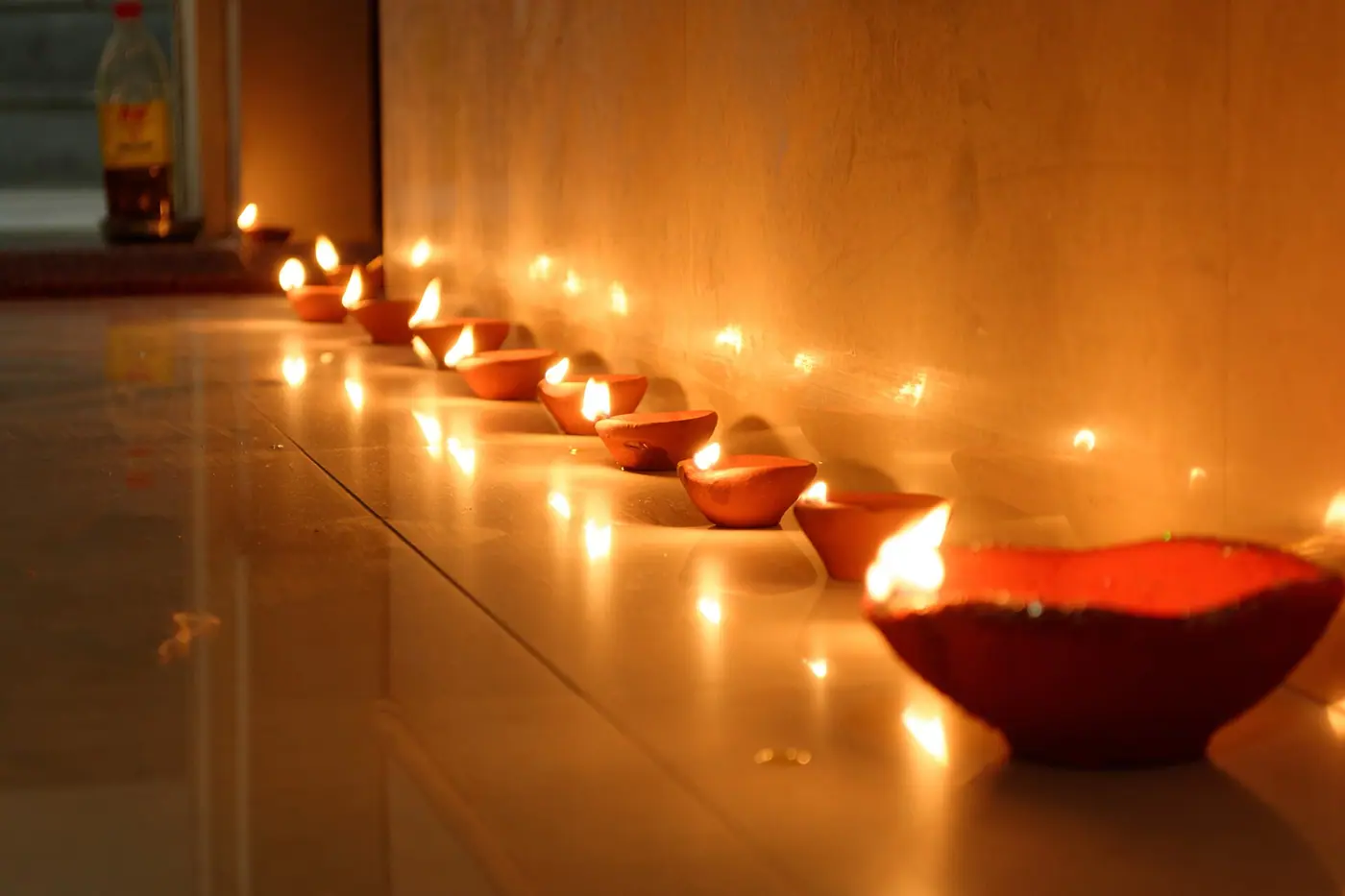
Lakshmi Puja falls on the evening of Sunday 8 November 2026 everywhere in Spain. Local muhurat for Madrid, Barcelona, Valencia, Las Palmas, Santa Cruz de Tenerife and Ceuta, verified temples and practical tips for families.
Quick answer: Diwali (Lakshmi Puja) 2026 in Spain is on Sunday 8 November, in every city from Barcelona to the Canary Islands. In Madrid the Lakshmi Puja muhurat is 6:23 PM – 8:12 PM (peninsular time, CET). Dhanteras is on Friday 6 November.
Editor's note: Updated 10 October 2026. The local times on this page were calculated by HinduTone using the Drik Panchang method (Pradosh Kaal with the Vrishabha lagna) for each city's own sunset, and checked against Drik Panchang for major world cities to within one to two minutes. Summer time ends on Sunday 25 October 2026, so all times are in winter time: CET (UTC+1) on the mainland and in Ceuta, and WET (UTC+0) in the Canary Islands. Event details come only from organisers' own announcements or news reports. Please confirm the muhurat and any event with your temple.
Spain's Diwali has a geography all of its own. Some of its oldest Hindu families did not arrive through Madrid or Barcelona but through the ports of Las Palmas, Ceuta and Melilla, where Indian trading families opened shops and bazaars in the twentieth century. This guide gives the muhurat for six cities in two time zones and the temples and associations we could verify.
Diwali 2026 in Spain: the five days
| Day | Date | What is observed |
|---|---|---|
| Dhanteras (Yama Deepam) | Friday 6 November | Buying a new metal utensil, silver or gold; Dhanvantari puja; a lamp for Yama facing south in the evening |
| Kali Chaudas | Saturday 7 November | Gujarati tradition: protection prayers and Hanuman or Kali worship |
| Diwali / Lakshmi Puja | Sunday 8 November | Lakshmi–Ganesha puja at dusk, diyas, Narak Chaturdashi and the Tamil Deepavali morning oil bath, Kali Puja for Bengali families, Chopda / Sharda Puja for business families |
| Govardhan Puja / Annakut | Tuesday 10 November (in India) | Annakut offering to Krishna, Bali Pratipada and the Gujarati New Year |
| Bhai Dooj | Wednesday 11 November (in India) | Sisters apply tilak and pray for their brothers' long life |
In 2026 Narak Chaturdashi and Lakshmi Puja share Sunday 8 November: Tamil families take the oil bath before sunrise, North Indian families do Lakshmi Puja at dusk, and Bengali families hold Kali Puja that night. The Amavasya tithi runs from 11:27 AM IST on Sunday 8 November to 12:31 PM IST on Monday 9 November. Govardhan Puja and Bhai Dooj fall on 10 and 11 November in India; temples in Spain may announce their own day.
Diwali recalls Rama's return to Ayodhya, Krishna's victory over Narakasura and Vishnu's Vamana avatar with King Bali; Jains mark Mahavira's nirvana and Sikhs Bandi Chhor Divas. See our 5 days of Diwali 2026 explained.
Lakshmi Puja muhurat 2026, city by city
All times below were calculated by HinduTone using the Drik Panchang method (Pradosh Kaal with the Vrishabha lagna); checked against Drik Panchang for major world cities to within one to two minutes; confirm with your temple. Madrid, Barcelona, Valencia and Ceuta are on CET (UTC+1). Las Palmas de Gran Canaria and Santa Cruz de Tenerife are on Canary Islands time (WET, UTC+0), and their times are already in island time.
| City | Region | Lakshmi Puja (Sun 8 Nov) | Pradosh Kaal | Dhanteras puja (Fri 6 Nov) |
|---|---|---|---|---|
| Madrid | Madrid | 6:23 PM – 8:12 PM | 6:04 PM – 8:50 PM | 6:31 PM – 8:19 PM |
| Barcelona | Catalonia | 5:57 PM – 7:45 PM | 5:38 PM – 8:25 PM | 6:06 PM – 7:53 PM |
| Valencia | Valencia | 6:12 PM – 8:01 PM | 5:52 PM – 8:38 PM | 6:20 PM – 8:10 PM |
| Las Palmas de Gran Canaria | Canary Islands | 6:35 PM – 8:31 PM | 6:12 PM – 8:49 PM | 6:44 PM – 8:40 PM |
| Santa Cruz de Tenerife | Canary Islands | 6:38 PM – 8:34 PM | 6:15 PM – 8:52 PM | 6:46 PM – 8:41 PM |
| Ceuta | Ceuta | 6:40 PM – 8:31 PM | 6:19 PM – 9:01 PM | 6:48 PM – 8:40 PM |
Spain shows why you cannot borrow another city's time. The mainland shares one clock, but the sun sets at 5:38 PM in Barcelona and 6:04 PM in Madrid on 8 November, and Ceuta, across the Strait, sets later still at 6:19 PM. The Canaries are an hour behind, yet lie so far west that their clock sunset is later than Madrid's.
Pradosh Kaal is the period of about two and a half hours that begins at sunset, the traditional time to worship Lakshmi on the Amavasya night. Vrishabha (Taurus) lagna is the time when Taurus is rising in the east. It is a fixed (sthira) sign, and tradition holds that Lakshmi worshipped in a fixed lagna stays in the home. The muhurat is where the two overlap; if you miss it, any time in Pradosh Kaal is still traditional.
For Dhanteras on Friday 6 November, the evening puja to Dhanvantari and Lakshmi and the Yama Deepam lamp are done in the Dhanteras window above. In Madrid that is 6:31 PM – 8:19 PM, so most families can light the lamp after work. For a city-by-city comparison across the continent, see our Lakshmi Puja muhurat 2026 for Europe.
The Hindu community in Spain
According to the Embassy of India's bilateral brief published by India's Ministry of External Affairs, the Indian diaspora in Spain numbered around 75,000 as of September 2022, concentrated in Madrid, Barcelona, Valencia and the Canary Islands. The figure includes Sikh, Muslim, Christian and other families; we found no official count of Hindus alone.
The Canary Islands have one of the longest Indian histories in Spain. Canarias Ahora reports that the first Indian settlers arrived at the end of the nineteenth century and most came in the 1950s and 1960s, opening shops and bazaars that became part of everyday island life. Each island's Comunidad Indostánica now organises its own Diwali. Ceuta and Melilla have similar trading roots: El Faro de Melilla notes that one family's grandfather opened the city's first bazaar in 1928. Today these families live alongside newer arrivals from across India and South Asia: Gujarati and Bengali associations hold Navaratri and Durga Puja in Barcelona, Punjabi families belong to the communities around the gurdwaras of Madrid, Barcelona and Valencia mentioned in the MEA brief, and professionals and students have settled in the big cities.
With so many trading families, Chopda Puja (the blessing of new account books) matters here; see our Chopda Puja 2026 guide.
Where to celebrate: temples and community organisations
We confirmed these through their own websites, a government listing or a news report, and give name and area only. Temples and community associations usually announce Diwali programmes from mid-October — check their websites and social pages.
Madrid
Madrid's Lakshmi Puja muhurat is 6:23 PM – 8:12 PM, within a Pradosh Kaal of 6:04 PM – 8:50 PM. The city's official tourism site, esMadrid, lists a Hindu temple in Retiro and notes that in past years Diwali in Madrid has been marked with events at Madrid Río and celebrations by local cultural groups.
- Jhulelal Hindu temple (Templo hindú de Jhulelal) — Retiro. Named after Jhulelal, the deity especially revered by Sindhi Hindus.
- Hare Krishna Association Madrid (ISKCON) — central Madrid. Listed in ISKCON's official centres directory.
- Federación Hindú de España — the national federation of Hindu temples and associations, named by esMadrid; a useful contact for finding temples elsewhere in Spain.
Barcelona and Catalonia
Barcelona has the earliest muhurat in Spain at 5:57 PM – 7:45 PM, with sunset at 5:38 PM. Barcelona City Council's Office of Religious Affairs includes Navaratri, Durga Puja and Dassera in its 2026 calendar of the city's festivals and lists Hindu associations that celebrate them.
- Associació Cultural Hindú — Barcelona. A community association that holds Durga Puja in the city.
- Associació Jay Garavi Gujarat — Barcelona. A Gujarati association that holds a public Navaratri celebration.
- ISKCON Barcelona (Templo Hare Krishna) — central Barcelona. Runs regular programmes, per its own website.
Barcelona's Diwali season reflects its mix of communities: Kali Puja for Bengali families, Gujarati New Year greetings on Govardhan day, and Tihar for Nepali families, with temples and associations usually holding their main gatherings on the nearest weekend.
Valencia
Valencia's Lakshmi Puja muhurat is 6:12 PM – 8:01 PM, with Pradosh Kaal from 5:52 PM to 8:38 PM.
- Radha Krishna temple of the Asociación Hindú de Valencia — Valencia. El Faro de Ceuta reported in 2016 that it had joined the Federación Hindú de España; contact the association directly about current activities.
Canary Islands: Las Palmas de Gran Canaria and Santa Cruz de Tenerife
In island time, Las Palmas de Gran Canaria's Lakshmi Puja muhurat is 6:35 PM – 8:31 PM and Santa Cruz de Tenerife's is 6:38 PM – 8:34 PM.
- Geeta Ashram — La Isleta, Las Palmas de Gran Canaria. A Sanatana Dharma temple near the port; the island's ethnographic record (FEDAC) traces it back to the Club Indostánico and describes it as linked to a parent ashram in New Delhi.
- Comunidad Indostánica de Las Palmas de Gran Canaria — Las Palmas. Held a Diwali gala in October 2025, according to Canarias Ahora.
We could not confirm a current Hindu temple in Santa Cruz de Tenerife itself from an official source, so we do not list one. Tenerife families usually follow the announcements of their island's Comunidad Indostánica and associations in the south of the island.
Ceuta (and Melilla)
Ceuta's Lakshmi Puja muhurat is 6:40 PM – 8:31 PM, with sunset at 6:19 PM, on the same CET clock as the mainland. Diwali is visible in Ceuta's streets: in October 2025 El Faro de Ceuta reported that Diwali lights were switched on in the Plaza de los Reyes as the Comunidad Hindú celebrated the festival.
- Templo Hindú de Ceuta (Comunidad Hindú de Ceuta) — central Ceuta. In past years the community has held Deepa Puja, aarti, a temple open day and Lakshmi Puja there, according to El Faro de Ceuta.
- Templo Hindú de Melilla — Melilla. The city's only Hindu temple, inaugurated in 1980, according to El Faro de Melilla.
The Comunidad Hindú de Ceuta announces each year's programme itself; follow its announcements for 2026 and check before you go.
Celebrating at home in Spain
A short Lakshmi Puja you can do in a flat on a Sunday evening:
- Before dusk: clean the home, make a rangoli or a few lamps at the door, and set a low table with a red cloth, an image of Lakshmi and Ganesha, a kalash of water with mango or betel leaves, rice, kumkum, flowers, sweets and a few coins.
- At the muhurat: light the main lamp, pray to Ganesha first, then invoke Lakshmi; offer flowers, akshat, kumkum and naivedya, and chant a simple mantra such as "Om Shreem Mahalakshmyai Namah".
- Account books: business families place their new books or laptop by the altar and write "Shubh Labh" and a swastik for the new year.
- Close: sing the Lakshmi aarti, share prasad and light diyas around the home.
For a full step-by-step vidhi, see our Lakshmi Puja 2026 vidhi.
Diyas in a flat: most Spanish homes are flats in buildings with shared stairwells and narrow balconies. Put diyas on metal trays away from curtains, never leave them burning when you go out, and keep them away from children and pets. Many families use a few real diyas at the altar and LED lights or electric diyas on balconies and windows. If your home has a smoke alarm, do not disable it; keep a window open and do not burn camphor directly under it.
Tenancy and community rules: read your rental contract and the rules of your comunidad de propietarios before fixing lights to façades or balconies or burning anything outdoors.
Weather: early November is autumn. Madrid's evenings are cool, Barcelona and Valencia are milder but can be rainy, the Canaries stay mild and Ceuta can be windy. Keep outdoor diyas sheltered and take a jacket to evening aarti.
Food and decorations you can find locally
Indian, Pakistani and Bangladeshi grocers in Madrid, Barcelona, Valencia and the Canary Islands stock basmati rice, flours, ghee, spices, paneer, puja items and often diyas and rangoli colours. Order mithai a week ahead. Spanish almonds, pistachios and milk make easy homemade barfi, and turrón and marzipan reach the shops in autumn. Marigolds are scarce, so many families use chrysanthemums, carnations or roses. For ideas, see our Diwali 2026 complete guide.
Diwali with children and second-generation families
In 2026 the main night falls on a Sunday, which makes the evening puja easy for school families. Dhanteras on Friday 6 November is a school night, so plan a short lamp and puja after homework. Diwali is not a public holiday in Spain, and the rest of the week is a normal working and school week unless your town hall has set its own local holiday. Offer your child's teacher a short Diwali talk or rangoli session in class.
Many children here speak Spanish or Catalan at school and Hindi, Gujarati, Sindhi, Bengali, Tamil or Punjabi with grandparents. Use Diwali for the heritage language: learn the Lakshmi aarti together, tell Rama's story in your family's language and write greetings in two scripts. Explaining the festival to friends in Spanish helps children own both sides of who they are.
Fireworks, safety and local rules
In Spain the use of fireworks is governed nationally by Real Decreto 989/2015 (Boletín Oficial del Estado). Article 141 prohibits the use of category F1 fireworks by children under 12 and category F2 by anyone under 16, and categories F3, T1 and P1 by anyone under 18. Regions may lower the F1 and F2 ages only under strict conditions, such as adult supervision and written permission.
Where and when fireworks may be used is set locally by each ayuntamiento, and many towns restrict them in streets, parks and near forests. Rules on sky lanterns and open flames on balconies also vary, so check your town hall's official guidance before buying anything. If you are not sure, celebrate with diyas and electric lights instead, and leave fireworks to permitted public displays.
Celebrating far from family
For many families in Spain, Diwali means a phone propped up next to the altar. Join a live-streamed aarti from a temple in India, or do the puja on a video call with grandparents, keeping to your Spanish muhurat rather than India's clock. Students and new arrivals on their own can ask a temple or association whether guests are welcome. Diwali is also a time for giving: food donations, seva in a temple kitchen or support for a local charity.
Diwali checklist for Spain
- Note your city's Lakshmi Puja window for Sunday 8 November from the table above (island time if you live in the Canaries).
- Light a Yama Deepam on Friday 6 November in the Dhanteras window.
- Buy a small metal item, utensil or coin for Dhanteras.
- Order sweets and buy puja items from an Indian grocer a week ahead.
- Check your temple's or association's Diwali announcements from mid-October.
- Set up diyas safely on trays and add LED lights for balconies.
- Read your rental contract and community rules before decorating the façade.
- Check your ayuntamiento's rules before buying any fireworks, and respect the national age limits.
- Plan a video call with family in India around your local muhurat.
- Prepare new account books or a laptop for Chopda Puja if you run a business.
- Ask your temple which day it will mark Govardhan Puja and Bhai Dooj.
Frequently asked questions
When is Diwali 2026 in Spain?
Lakshmi Puja, the main night of Diwali, is on the evening of Sunday 8 November 2026 in every Spanish city, including the Canary Islands, Ceuta and Melilla. Dhanteras is Friday 6 November. In India, Govardhan Puja falls on Tuesday 10 November and Bhai Dooj on Wednesday 11 November; temples in Spain may announce their own day for these.
What is the Lakshmi Puja time in Madrid and Barcelona?
On Sunday 8 November 2026, Madrid's Lakshmi Puja muhurat is 6:23 PM – 8:12 PM and Barcelona's is 5:57 PM – 7:45 PM, in peninsular Spanish time (CET). Valencia is 6:12 PM – 8:01 PM. These were calculated by HinduTone using the Drik Panchang method; confirm with your temple.
Why is the Canary Islands muhurat later on the clock if the islands are an hour behind?
The Canaries are one hour behind the mainland, but they also lie much further west and south, so the sun sets later there by the local clock. That is why Las Palmas de Gran Canaria (6:35 PM – 8:31 PM) and Santa Cruz de Tenerife (6:38 PM – 8:34 PM) have later windows than Madrid. These are already in island time, so do not add or subtract an hour.
Is Diwali a public holiday in Spain or in Ceuta?
No. Diwali is not a public holiday in Spain. Sunday 8 November is a weekend day, but Dhanteras and the days after Diwali are normal working and school days unless your town hall has set a local holiday. Ceuta's Diwali street lights do not mean a day off.
Can I use India's Diwali muhurat in Spain?
No. India's muhurat is based on sunset in India. In Spain the window depends on your own city's sunset and the rising of the Vrishabha lagna, so use the Spanish times on this page and never convert India's times into Spanish time.
Can we light diyas and sparklers at home in Spain?
Diyas are fine with care: never leave them unattended, keep them away from curtains and use a tray. Spanish law sets minimum ages for fireworks (for example, the lightest F1 category is not for under-12s and F2 is not for under-16s), and your ayuntamiento decides where and when they may be used, so check local rules before buying anything.
Related guides
- Diwali / Deepavali 2026: complete 5-day guide
- The 5 days of Diwali 2026 explained
- Lakshmi Puja 2026: date, muhurat and step-by-step vidhi
- Lakshmi Puja muhurat 2026 in Europe, city-wise
- Diwali 2026 in Portugal: Lakshmi Puja muhurat city by city
- Diwali 2026 in Italy: Lakshmi Puja muhurat city by city
- Dussehra 2026 in Spain, city by city
Sources
- Ministry of External Affairs: India–Spain Bilateral Relations brief
- esMadrid: El Madrid hindú
- ISKCON Centres directory: Hare Krishna Association Madrid
- Ajuntament de Barcelona: Calendar of festivities and agenda
- ISKCON Barcelona: Templo Hare Krishna Barcelona
- El Faro de Ceuta: Sabiduría védica en Valencia
- FEDAC: Templo hindú
- elDiario.es / Canarias Ahora: La comunidad hindú en Canarias celebra cómo la luz venció a la oscuridad
- El Faro de Ceuta: La comunidad hindú celebrará el Diwali con distintas actividades
- El Faro de Ceuta: La Encuesta | Felicitación por el Diwali
- El Faro de Melilla: El templo hindú de Melilla
- Boletín Oficial del Estado: Real Decreto 989/2015, Reglamento de artículos pirotécnicos y cartuchería
- Muhurat: HinduTone calculation (Drik Panchang method)
You might also like
Diwali 2026 in Tanzania: Lakshmi Puja Muhurat City by City, Dhanteras Times and Temples
Diwali 2026 in Bahrain: Lakshmi Puja Muhurat City by City, Dhanteras Times and Temples
Diwali 2026 in Finland: Lakshmi Puja Muhurat City by City, Dhanteras Times and Temples