
Dussehra 2026 in Spain, City by City: Date, Vijay Muhurat and Hindu Temples
Vijayadashami falls on Tuesday 20 October 2026 across Spain. Local Vijay Muhurat, Aparahna and Dashami times for Madrid, Barcelona, Valencia, Las Palmas, Santa Cruz de Tenerife and Ceuta, verified Hindu temples region by region, and how to mark the day at home.
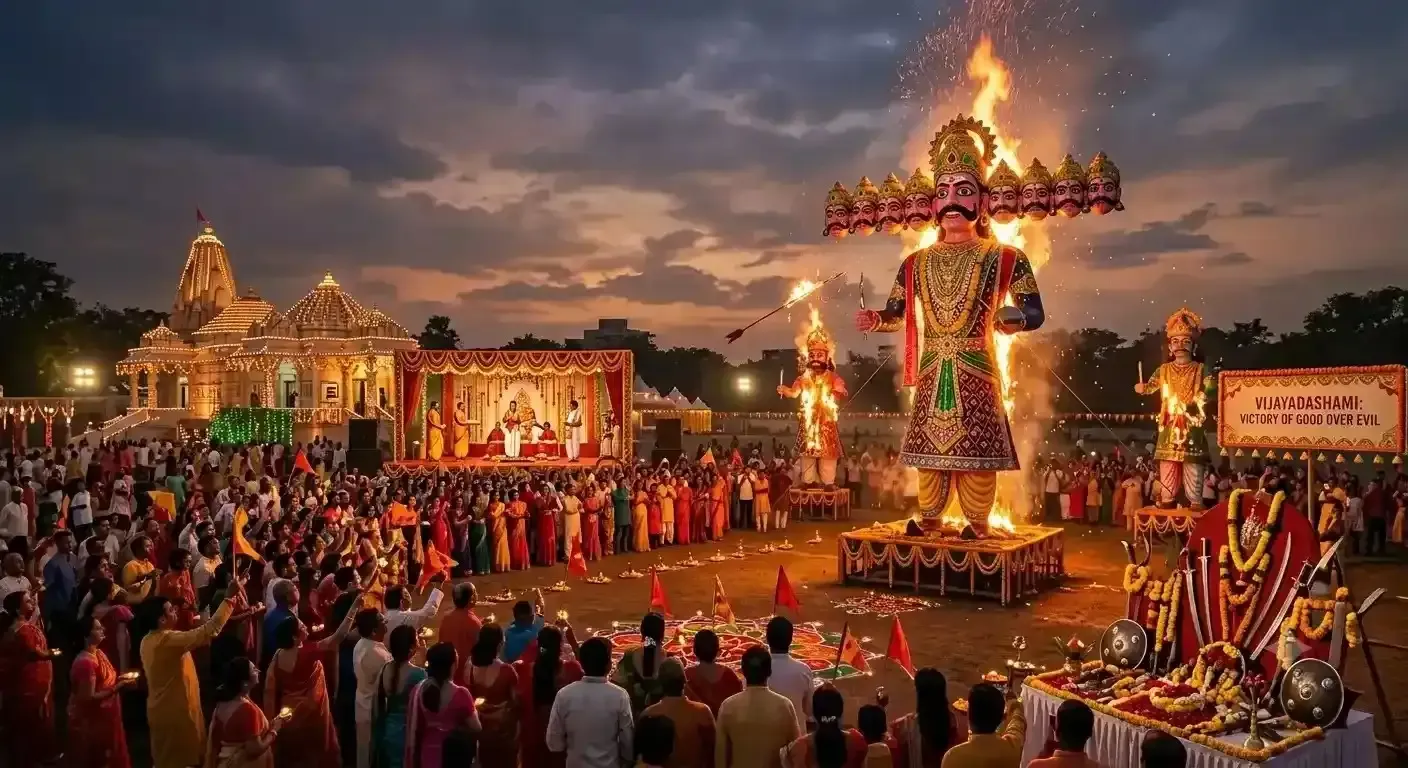
Vijayadashami falls on Tuesday 20 October 2026 across Spain. Local Vijay Muhurat, Aparahna and Dashami times for Madrid, Barcelona, Valencia, Las Palmas, Santa Cruz de Tenerife and Ceuta, verified Hindu temples region by region, and how to mark the day at home.
Quick answer: Dussehra (Vijayadashami) 2026 in Spain is on Tuesday 20 October 2026 in every city. The Vijay Muhurat, calculated by the Drik Panchang method, is 3:48 PM – 4:32 PM in Madrid and 3:25 PM – 4:08 PM in Barcelona (Spanish summer time, CEST, UTC+2), and 3:40 PM – 4:25 PM in Las Palmas de Gran Canaria (Canary Islands time, UTC+1). Navratri runs from Sunday 11 to Monday 19 October 2026.
Editor's note (5 October 2026): The local times on this page were calculated for each city from the Drik Panchang tithi (Dashami from 12:50 PM IST on 20 October to 2:11 PM IST on 21 October 2026), using Spanish summer time, which is still in force on 20 October on the mainland, in the Canary Islands and in Ceuta. The Vijay Muhurat is the 11th of the 15 daytime muhurtas, calculated by the Drik Panchang method. We do not list 2026 event schedules, because temples and associations announce their own programmes; please check with them directly.
Spain's Hindu community is one of the oldest in Europe. Sindhi merchant families settled in the Canary Islands from the late nineteenth century, trading through the free ports of Las Palmas and Santa Cruz de Tenerife, and many more arrived after Partition in 1947. Similar trading communities took root in Ceuta and Melilla, where Hindus have now lived for several generations, and later in Madrid, Barcelona, Valencia and the Costa del Sol. Since the 1990s they have been joined by Punjabi, Gujarati, Bengali, Nepali and South Indian families, students and IT professionals, plus a sizeable community of Spanish practitioners and converts. The Federación Hindú de España brings many of these groups together, and Sindhi traditions, with Jhulelal, Krishna and the Devi at the centre, still shape much of the country's temple life.
Dussehra 2026 in Spain: dates and Vijay Muhurat by city
Spain has two time zones on 20 October. Mainland Spain and Ceuta are on Central European Summer Time (UTC+0200), and the Canary Islands are one hour behind on Western European Summer Time (UTC+0100); all of them move their clocks back on Sunday 25 October. The Dashami tithi begins at the same moment everywhere, so the Canaries simply read it an hour earlier on the clock. Because Spain's clocks are set well ahead of the sun, every Spanish city has a late Vijay Muhurat by European standards: Barcelona's is the earliest, Ceuta's the latest.
| Region | City | Dussehra date | Vijay Muhurat (Drik Panchang method) | Dashami begins → ends |
|---|---|---|---|---|
| Madrid | Madrid | Tue 20 Oct | 3:48 PM – 4:32 PM | Tue 20 Oct, 9:20 AM → Wed 21 Oct, 10:41 AM |
| Catalonia | Barcelona | Tue 20 Oct | 3:25 PM – 4:08 PM | Tue 20 Oct, 9:20 AM → Wed 21 Oct, 10:41 AM |
| Valencia | Valencia | Tue 20 Oct | 3:36 PM – 4:20 PM | Tue 20 Oct, 9:20 AM → Wed 21 Oct, 10:41 AM |
| Canary Islands | Las Palmas de Gran Canaria | Tue 20 Oct | 3:40 PM – 4:25 PM | Tue 20 Oct, 8:20 AM → Wed 21 Oct, 9:41 AM |
| Canary Islands | Santa Cruz de Tenerife | Tue 20 Oct | 3:43 PM – 4:28 PM | Tue 20 Oct, 8:20 AM → Wed 21 Oct, 9:41 AM |
| Ceuta | Ceuta | Tue 20 Oct | 3:57 PM – 4:41 PM | Tue 20 Oct, 9:20 AM → Wed 21 Oct, 10:41 AM |
The Aparahna (afternoon period) is the traditional window for Aparajita and Shami puja, and sunset marks the time for any evening Ravan Dahan or aarti:
| City | UTC offset | Aparahna, 20 Oct | Sunset, 20 Oct |
|---|---|---|---|
| Madrid | UTC+0200 | 3:05 PM – 5:16 PM | 7:28 PM |
| Barcelona | UTC+0200 | 2:41 PM – 4:52 PM | 7:03 PM |
| Valencia | UTC+0200 | 2:52 PM – 5:04 PM | 7:15 PM |
| Las Palmas de Gran Canaria | UTC+0100 | 2:54 PM – 5:11 PM | 7:27 PM |
| Santa Cruz de Tenerife | UTC+0100 | 2:57 PM – 5:14 PM | 7:30 PM |
| Ceuta | UTC+0200 | 3:12 PM – 5:26 PM | 7:39 PM |
Key Navratri and Dussehra dates 2026
| Observance | Date (2026) |
|---|---|
| Navratri begins (Ghatasthapana) | Sunday 11 October |
| Durga Ashtami and Maha Navami | Monday 19 October |
| Dussehra / Vijayadashami in Spain | Tuesday 20 October |
| Dashami tithi, mainland Spain and Ceuta | Tue 20 Oct, 9:20 AM → Wed 21 Oct, 10:41 AM |
| Dashami tithi, Canary Islands | Tue 20 Oct, 8:20 AM → Wed 21 Oct, 9:41 AM |
| Bijoya Dashami / Sindoor Khela (India, Bengal tradition) | Wednesday 21 October |
Ashtami and Navami share Monday 19 October in India's calendar this year, so families who do Kanya pujan on either day will hold it then. In every Spanish city the Dashami tithi covers the whole Aparahna on 20 October, by more than two hours, so there is no doubt about the date.
Hindu temples in Spain for Navratri & Dussehra
These temples and associations have been confirmed to exist in or near each city. We list name and area only; check their own websites or social pages for opening hours and festival plans. Temples and community groups usually announce Navratri garba, Durga Puja, Ramlila and Ravan Dahan programmes a few weeks ahead — check their websites/social pages.
Madrid
Madrid's Vijay Muhurat is 3:48 PM – 4:32 PM, within an Aparahna of 3:05 PM – 5:16 PM, with sunset at 7:28 PM. The capital has a long-standing Sindhi business community alongside Indian professionals, embassy staff and students, and Madrid has hosted national gatherings of Spain's Hindus.
- Jhulelal Mandir — Retiro. A Sindhi Hindu temple that has hosted national meetings of Spain's Hindu communities and is open to the public.
- Templo Hare Krishna (ISKCON Madrid) — Centro. The Hare Krishna Association of Madrid, founded in 1992, with regular Sunday programmes and a vegetarian dining room.
Indian associations in Madrid typically hold garba and dandiya nights on Navratri weekends in rented halls, while Sindhi and Punjabi families mark the nine days with bhajans, jagrata and fasting at home and in the mandir.
Catalonia: Barcelona
Barcelona's Vijay Muhurat is 3:25 PM – 4:08 PM, the earliest in this guide, within an Aparahna of 2:41 PM – 4:52 PM. Catalonia has Spain's most varied Hindu landscape, with dozens of temples and centres in the province of Barcelona serving Indian, Bangladeshi and Nepali families as well as Catalan practitioners.
- ISKCON Barcelona (Hare Krishna temple) — Ciutat Vella. The city's oldest Hindu temple, opened in 2000, and the organiser of Barcelona's Ratha Yatra.
- Associació Cultural Hindú — Barcelona. A community association that has organised Durga Puja in the city.
- Om Shiva Shakti — Barcelona. A Barcelona-based Hindu group associated with the Federación Hindú de España.
Barcelona's Bengali, Bangladeshi and Nepali Hindus give the city a strong Durga Puja and Dashain flavour: a decorated image of the Goddess, dhak drumming, pushpanjali, bhog, cultural performances and, for Nepali families, Dashain tika and blessings from elders. Barcelona City Council's Office of Religious Affairs has documented Durga Puja as one of the festivals of the city's Hindu communities.
Valencia and the Mediterranean coast
Valencia's Vijay Muhurat is 3:36 PM – 4:20 PM, within an Aparahna of 2:52 PM – 5:04 PM, with sunset at 7:15 PM. Valencia's Hindu community is a mix of Sindhi traders, newer Indian arrivals, Spanish Hindus and people drawn to yoga and Vedanta.
- Radha Krishna Mandir of the Asociación Hindú de Valencia — central Valencia. The Hindu Association's temple, affiliated with the Federación Hindú de España, which has held havans such as a Vishva Shanti Homa.
- Templo Hindú de Benalmádena — Arroyo de la Miel, Costa del Sol (Málaga). A temple inspired by Indian religious architecture, serving the Sindhi and wider Indian community of Andalusia.
Families further down the coast, in Alicante, Murcia and the Costa del Sol, often travel to the nearest temple for Navratri or join a community gathering at a private venue on the weekend.
Canary Islands: Las Palmas de Gran Canaria and Santa Cruz de Tenerife
In Canary Islands time, Las Palmas de Gran Canaria's Vijay Muhurat is 3:40 PM – 4:25 PM, within an Aparahna of 2:54 PM – 5:11 PM, with sunset at 7:27 PM. Santa Cruz de Tenerife's is 3:43 PM – 4:28 PM, within an Aparahna of 2:57 PM – 5:14 PM, with sunset at 7:30 PM. The islands are home to roughly half of Spain's ethnic Hindu population, overwhelmingly Sindhi, with smaller Punjabi and Gujarati groups.
- Geeta Ashram — La Isleta, Las Palmas de Gran Canaria. A Sanatana Dharma temple near the port, linked to a parent ashram in New Delhi.
- Satnam Sakhi Mandir — Las Palmas de Gran Canaria. A temple of the city's Sindhi community.
- Indian Cultural Centre temple — Costa Adeje, south Tenerife. One of the island's main Hindu temples.
- Radha Krishna Mandir — La Camella, Arona, south Tenerife.
- ISKCON Tenerife (Nueva Jagannatha Puri) — Playa de las Américas, Arona, south Tenerife.
We could not confirm an active Hindu temple inside the city of Santa Cruz de Tenerife itself; the island's main temples are in the south, around Adeje and Arona, so families in the capital usually travel there or join a home or community puja. In both islands Navratri is above all a Devi festival in the Sindhi style, with bhajans, aarti and fasting, and community celebrations generally move to the weekend.
Ceuta (and Melilla)
Ceuta's Vijay Muhurat is 3:57 PM – 4:41 PM, the latest in this guide, within an Aparahna of 3:12 PM – 5:26 PM, with sunset at 7:39 PM. Hindus first arrived in Ceuta in the 1890s, and today's community is in its sixth generation, closely woven into the life of this multicultural city.
- Templo Hindú de Ceuta (Comunidad Hindú de Ceuta) — city centre. The community's temple, where Krishna Janmashtami has been celebrated publicly since 1985 and Ganesh Chaturthi and Diwali are major festivals.
- Templo Hindú de Melilla — Melilla. The temple of the Hindu community in Spain's other North African city.
Ceuta's community is known for opening its celebrations to the wider city, so Navratri and Vijayadashami are typically marked with temple puja, bhajans and shared prasad. Follow the Comunidad Hindú's own announcements for any 2026 plans.
How Spain celebrates Navratri and Dussehra
Because 11–20 October are ordinary working days, most community celebration in Spain moves to the weekends around Navratri. Sindhi families, the backbone of Spanish Hinduism, worship the Devi through the nine nights with bhajans and aarti, and many keep a fast and end it with Kanya pujan on Ashtami or Navami. Gujarati and wider Indian groups hold garba and dandiya nights in community halls, with a central Mataji image and aarti at the start. Bengali and Bangladeshi Hindu associations, especially in Barcelona, organise Durga Puja, and Nepali families celebrate Dashain with tika and jamara. Tamil and other South Indian families may set up Golu (Bommai Kolu) displays at home and perform Saraswati Puja and Ayudha Puja, while Telugu families may celebrate Bathukamma with flower stacks and circle songs.
Large open-air Ravan Dahan as seen in India is rare in Spain. Open fires, effigy burning and fireworks need permission from the ayuntamiento and are subject to local fire-safety rules, so where groups mark Ravan Dahan it is usually with a small, permitted effigy, a Ramayana play by children or a symbolic burning. Many North Indian families watch the Ramlila online or tell children the story of Rama's victory at home.
Dussehra puja at home
If you cannot reach a temple on a Tuesday, a short puja at home in the afternoon is entirely traditional. Ideally do it during your city's Vijay Muhurat, or at least within the Aparahna:
- Aparajita puja: draw an eight-petalled lotus with kumkum or rice flour, place a lamp, and worship Devi Aparajita, the goddess of victory, with flowers, akshat and a simple prayer for success over obstacles.
- Shami puja: if you have Shami leaves (or a substitute such as apta/bauhinia leaves from an Indian grocer), offer them to the Devi and exchange them with family as "gold" — a Maharashtrian and Karnataka custom.
- Ayudha Puja / Shastra puja: clean and decorate tools, books, laptops, bikes and the car, apply kumkum and offer flowers, thanking them for their service. Business families often worship their account books and shop.
- Vidyarambham: Vijayadashami is the traditional day for small children to begin learning — writing "Om" or the first letters of the alphabet in rice.
- Seemollanghan and new beginnings: a short walk beyond your street, starting a course or signing a new venture are traditional symbols of victory on this day.
A simple order: bathe, light a lamp, pray to Ganesha, do the Aparajita and Shami puja, then Ayudha puja, offer naivedya (sweets, fruit), do aarti and share prasad. For full step-by-step vidhi and the stories behind the festival, see our Dussehra / Vijayadashami 2026 pillar guide.
Practical tips for Dussehra in Spain
- Working day: Tuesday 20 October is a normal working and school day. The Vijay Muhurat falls in mid to late afternoon, so consider a short break, working from home, or doing the puja later within the Aparahna if you can.
- Two time zones: the Canary Islands are one hour behind the mainland and Ceuta. If you follow a mainland temple's calendar from the islands, use the island times on this page instead.
- Fire and fireworks: rules on open fires, effigy burning and fireworks are set by the ayuntamiento and regional authorities and differ from place to place. Do not burn effigies on beaches, in parks or in gardens without permission.
- Getting to temples: several temples are in busy city centres or tourist resorts with little parking. Metro, Rodalies, Cercanías and island buses are often easier; check late return services before you go.
- Puja items: Indian and Pakistani grocers in larger cities and in the Canaries stock flowers, kumkum and sweets, but buy a few days early as stock runs short before Navratri weekends.
- Muhurat: use your own city's times from the table above; never convert India's times into Spanish time.
Frequently asked questions
When is Dussehra 2026 in Spain?
Tuesday 20 October 2026 in every Spanish city, including the Canary Islands and Ceuta. On the mainland and in Ceuta the Dashami tithi runs from 9:20 AM on 20 October to 10:41 AM on Wednesday 21 October; in the Canaries, one hour behind, it runs from 8:20 AM to 9:41 AM. Either way it covers the whole afternoon of the 20th.
What is the Vijay Muhurat in Madrid and Barcelona?
Calculated by the Drik Panchang method for each city: Madrid 3:48 PM – 4:32 PM and Barcelona 3:25 PM – 4:08 PM on Tuesday 20 October 2026, in Spanish summer time (CEST, UTC+2). Valencia is 3:36 PM – 4:20 PM and Ceuta 3:57 PM – 4:41 PM.
What is the Vijay Muhurat in the Canary Islands?
In Canary Islands time (UTC+1): Las Palmas de Gran Canaria 3:40 PM – 4:25 PM and Santa Cruz de Tenerife 3:43 PM – 4:28 PM on Tuesday 20 October 2026. These are already in local island time, so do not add or subtract an hour.
Can I convert India's Dussehra muhurat into Spanish time?
No. The Vijay Muhurat depends on local sunrise and sunset, so it has to be calculated for your own city. Use the Spanish times on this page or your temple's calendar, not India's times shifted by the time difference.
When is Bijoya Dashami and Sindoor Khela for Bengali families in Spain?
In India, Bengal-tradition Bijoya Dashami and Sindoor Khela fall on Wednesday 21 October 2026 (Drik Panchang, Kolkata). Durga Pujas in Spain, such as those in Barcelona, follow their own committee's schedule, so check their announcements.
Is Dussehra a holiday in Spain?
No. Tuesday 20 and Wednesday 21 October 2026 are normal working and school days in Spain, so many families do the afternoon puja at home and join temple or community celebrations in the evening or on the following weekend.
Related guides
- Dussehra / Vijayadashami 2026: complete guide
- Dussehra 2026 in Europe, country by country
- Navratri 2026: complete guide for NRI families
- Dussehra 2026 in Portugal, city by city
- Dussehra 2026 in France, city by city
- Dussehra 2026 in Italy, city by city
- Dussehra 2026 in Germany, city by city
- Dussehra 2026 UK, region by region
- October 2026 Hindu festival calendar
You might also like
Dussehra 2026 in Victoria, BC: Date, Vijay Muhurat, Temples and Navratri Celebrations
Dussehra 2026 in Surrey: Date, Vijay Muhurat, Temples and Navratri Celebrations
Dussehra 2026 in Vancouver: Date, Vijay Muhurat, Temples and Navratri Celebrations