
Diwali 2026 in Portugal: Lakshmi Puja Muhurat for Lisbon, Porto and Faro, Plus Temples
Lakshmi Puja falls on the evening of Sunday 8 November 2026 everywhere in Portugal. Here are local muhurat windows for Lisbon, Porto and Faro, verified temples and practical tips for families.
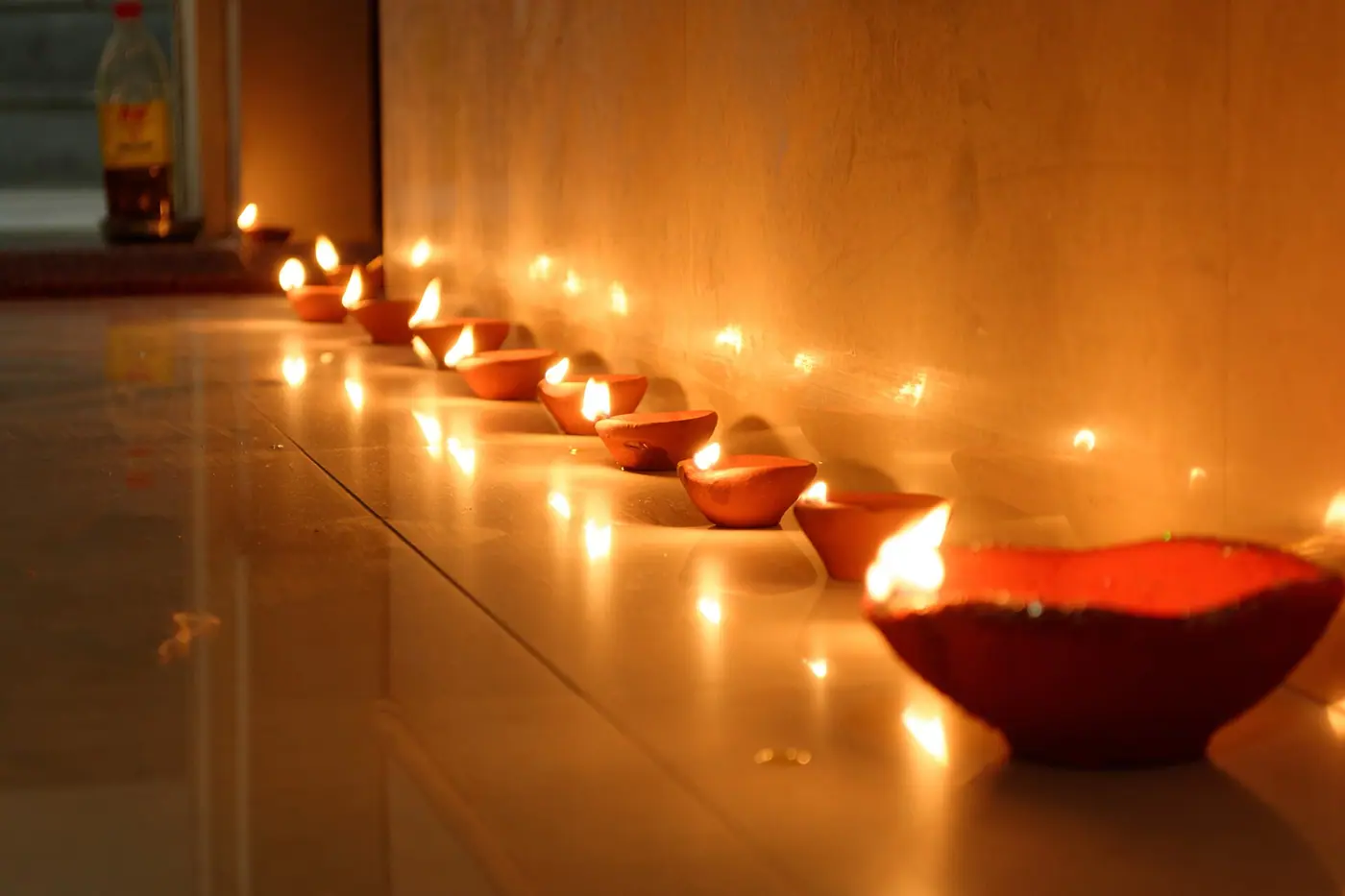
Lakshmi Puja falls on the evening of Sunday 8 November 2026 everywhere in Portugal. Here are local muhurat windows for Lisbon, Porto and Faro, verified temples and practical tips for families.
Quick answer
Diwali (Lakshmi Puja) 2026 in Portugal is on Sunday 8 November 2026. In Lisbon the Lakshmi Puja muhurat is 5:49 PM – 7:39 PM, local time. Dhanteras is on Friday 6 November.
Editor's note: this guide was written on 10 October 2026. The local times were calculated by HinduTone using the Drik Panchang method (Pradosh Kaal with the Vrishabha lagna); checked against Drik Panchang for major world cities to within one to two minutes; confirm with your temple. Portugal's clocks went back on 25 October, so all times are winter time (WET). Details of events come only from the organisers' own announcements. We list no 2026 programme that an organiser has not published, so please confirm times and plans with your temple.
Portugal's Hindu story is different from most of Europe's. Many of the families who built Lisbon's temples did not come straight from India. They were Gujarati Hindus from Mozambique who moved to Portugal in the 1970s, when Portuguese rule in Africa ended. Families from Goa, Daman and Diu came too, and in the past decade newer arrivals from Punjab, Haryana and Nepal have joined them. So a Diwali evening in Lisbon can bring together Gujarati-speaking grandparents raised in Maputo, Nepali families who arrived only a few years ago, and young Portuguese-speaking children who move easily between all of these worlds.
Diwali 2026 in Portugal: the five days
| Day | Date | What is observed |
|---|---|---|
| Dhanteras (Yama Deepam) | Friday 6 November | Dhanvantari and Lakshmi puja at dusk, buying a new utensil or metal, and a lamp for Yama facing south |
| Kali Chaudas | Saturday 7 November | Gujarati tradition: protective puja to Hanuman or Kali, and cleaning away negativity |
| Diwali / Lakshmi Puja | Sunday 8 November | Lakshmi and Ganesha puja in the evening, rows of diyas and family gatherings. In India, Narak Chaturdashi, the Tamil Deepavali oil bath, Bengali Kali Puja and Chopda Puja also fall on this day. |
| Govardhan Puja / Annakut / Gujarati New Year | Tuesday 10 November (in India) | Annakut offerings of many dishes, Bali Pratipada, and Bestu Varas (New Year) greetings for Gujarati families |
| Bhai Dooj / Yama Dwitiya | Wednesday 11 November (in India) | Sisters apply tilak to brothers and pray for their wellbeing |
The Amavasya tithi runs from 11:27 AM IST on Sunday 8 November to 12:31 PM IST on Monday 9 November. These are Indian times. The new moon covers the whole of Sunday evening in Portugal, which is why Lakshmi Puja is on 8 November in every Portuguese city. The dates for Govardhan Puja and Bhai Dooj above are India's. Temples in Portugal may announce their own day for Annakut and Bhai Dooj, so follow your mandir's calendar.
Each day has its own story. Dhanteras honours Dhanvantari, who emerged from the churning of the ocean carrying amrit. Narak Chaturdashi remembers Krishna's victory over Narakasura. Diwali itself celebrates Rama's return to Ayodhya, when the city was lit with lamps, and welcomes Lakshmi into clean, bright homes. Govardhan Puja recalls Krishna lifting the hill to shelter Vrindavan, and Bali Pratipada remembers King Bali and Vamana. In Bengal the new-moon night is Kali Puja. Jains mark Mahavira's nirvana at this time, and Sikhs celebrate Bandi Chhor Divas. For the full story of each day, see our five days of Diwali explainer.
Lakshmi Puja muhurat 2026, city by city
All times are Portuguese local time (WET), calculated by HinduTone using the Drik Panchang method (Pradosh Kaal with the Vrishabha lagna); checked against Drik Panchang for major world cities to within one to two minutes; confirm with your temple. If you live between two cities, use the nearer one, or ask your temple.
| City | Region | Lakshmi Puja (Sun 8 Nov) | Pradosh Kaal | Dhanteras puja (Fri 6 Nov) |
|---|---|---|---|---|
| Lisbon | Lisbon | 5:49 PM – 7:39 PM | 5:29 PM – 8:13 PM | 5:57 PM – 7:46 PM |
| Porto | Porto | 5:41 PM – 7:29 PM | 5:22 PM – 8:08 PM | 5:49 PM – 7:37 PM |
| Faro | Algarve | 5:47 PM – 7:38 PM | 5:27 PM – 8:11 PM | 5:55 PM – 7:46 PM |
Sunset on Sunday 8 November is at 5:29 PM in Lisbon, 5:22 PM in Porto and 5:27 PM in Faro. On Friday 6 November it is at 5:31 PM in Lisbon, 5:24 PM in Porto and 5:29 PM in Faro, and the Pradosh Kaal that evening runs from 5:31 PM to 8:15 PM in Lisbon, from 5:24 PM to 8:10 PM in Porto and from 5:29 PM to 8:12 PM in Faro.
What is Pradosh Kaal? Pradosh is the period of about two and a half hours that begins at sunset. Scripture places Lakshmi Puja at dusk, when lamps are lit, so Pradosh Kaal is the main window. Porto is further north and west, so its sunset is a few minutes earlier than Lisbon's, and its window opens and closes earlier.
What is the Vrishabha lagna? The lagna is the zodiac sign rising on the eastern horizon. Vrishabha (Taurus) is a sthira, or fixed, sign. Doing Lakshmi Puja while a fixed sign is rising is believed to help prosperity stay in the home rather than pass through it. The best window is where Pradosh Kaal and the Vrishabha lagna overlap, and that is the Lakshmi Puja time in the table. If you cannot start within it, doing the puja anywhere in Pradosh Kaal is still traditional.
For the timings in India and other countries, see the Diwali 2026 Lakshmi Puja muhurat guide and our Europe city-wise muhurat page.
The Hindu community in Portugal
Portugal's 2021 census was the first to give Hinduism its own category, and it recorded 19,471 Hindus, according to INE figures reported by Diário de Notícias. The Embassy of India in Lisbon says that, as of June 2026, official figures show 98,616 Indian nationals living in Portugal, and that an estimated 180,000 people of Indian origin live there, including 14,125 OCI card holders. Not all of them are Hindu. The Goan-origin community, for example, includes many Catholic families.
The embassy describes three main strands. The first is the descendants of people from Goa, Daman and Diu. The second is mostly Gujarati families who arrived from Mozambique and Angola in the 1970s. The third is more recent arrivals from Punjab and Haryana working in agriculture, construction and hospitality. Most live in the Lisbon metropolitan region, with communities in the Algarve and in Porto. So in one Portuguese mandir you may hear Gujarati, Punjabi, Hindi, Nepali and Portuguese on the same evening.
The newest strand is Nepali. In 2022 the Comunidade Hindu de Portugal estimated that about 50,000 people had arrived from Nepal in the previous few years, most of them Hindu, according to a Lusa report published by Observador. Nepali families celebrate the same five days as Tihar, with Laxmi Puja on the Amavasya, crow and dog puja on the days before it, and Bhai Tika at the end. The same report notes Hindu arrivals from Bangladesh and Bhutan too. Families from other Indian regions bring their own customs as well, from Bengali Kali Puja to the Tamil Deepavali oil bath.
Where to celebrate: temples and community organisations
We list only temples and organisations whose existence we could confirm on their own websites or an established listing, with their area only. We do not give opening hours or addresses. Check each one's own channels before visiting. Temples and community associations usually announce Diwali programmes from mid-October — check their websites and social pages.
Lisbon
- Radha Krishna Temple — Comunidade Hindu de Portugal, Lumiar, Lisbon. This is the main temple and community centre of Portugal's Hindus. According to its website, it holds daily programmes and celebrations on special dates, and runs classes, social support and a vegetarian canteen.
- BAPS Shri Swaminarayan Mandir, Lisbon. BAPS broke ground for the mandir in 2011, after decades of worship in a makeshift temple and in devotees' homes.
- ISKCON Lisbon (Hare Krishna community), Lisbon. ISKCON News reports that it has worked in the city since the 1970s from rented premises, holding kirtan and spiritual programmes. Its venue has changed over the years, so check its current location.
At Diwali, Lisbon's temples typically hold Lakshmi Puja and aarti on the evening itself. Many also hold an Annakut, where dozens of vegetarian dishes are offered to the deities around the New Year, followed by shared prasad and cultural programmes. Gujarati families often also do Chopda Pujan for business account books. Because 8 November is a Sunday, expect temples to be busy throughout the evening. Arrive early, and take public transport where you can.
Porto
- ISKCON Porto, city centre. Listed in ISKCON's official centre directory as a temple, preaching centre, restaurant and gift shop.
Porto's Hindu community is smaller than Lisbon's, and much of it is students, young professionals and newer arrivals. Many families celebrate Lakshmi Puja at home with friends and keep in touch through community groups. Some travel to Lisbon for a weekend Annakut. ISKCON centres typically celebrate Govardhan Puja with a hill made of food and kirtan, so watch the Porto centre's announcements.
Faro and the Algarve
We could not confirm a dedicated Hindu temple in Faro or the wider Algarve, so we do not list one. The embassy notes an Indian community in the Algarve. In practice, Diwali here is mostly celebrated at home and among friends. Some families plan a temple visit to Lisbon on another weekend in November.
Celebrating at home in Portugal
A short Lakshmi Puja vidhi that fits a Portuguese flat:
- Clean the home during the day, and draw a small rangoli at the door with chalk or coloured powder on a removable mat.
- Set up a clean platform with a red or yellow cloth, and place Lakshmi and Ganesha on it, with a kalash of water, rice, coins and fresh flowers.
- Within your city's muhurat, light the main ghee lamp, invoke Ganesha first, and then offer Lakshmi kumkum, haldi, flowers, sweets, fruit and a coin or some jewellery.
- Chant a Lakshmi mantra or the Shri Suktam, do aarti together, and share the prasad.
- Leave one lamp burning safely through the evening, and keep the main door lit to welcome Lakshmi.
For the full step-by-step puja with mantras, see our Lakshmi Puja 2026 vidhi.
Diyas, apartments and smoke alarms. Most families in Lisbon and Porto live in apartment buildings, many of them older buildings with wooden floors and shared stairwells. Put oil diyas on metal trays away from curtains and never leave them unattended. Use LED diyas and fairy lights on balconies, windowsills and in shared spaces. If your flat has a smoke alarm, keep flames away from it rather than disabling it. If you rent, read your contract and your building's condomínio rules about decorations in shared areas and open flames.
The weather. Early November in Portugal is usually mild by European standards, but it is the start of the rainy season. Evenings are cool and often wet, especially in Porto and the north. The Algarve is generally the mildest. Plan for indoor puja, keep outdoor lights weatherproof, and bring an umbrella to the temple.
Food and decorations you can find locally
Lisbon has the widest choice of Indian and South Asian grocers. They usually stock ghee, besan, sugar, cardamom, dried fruit, puja items, clay diyas and rangoli powder in the weeks before Diwali. Porto and the Algarve towns also have South Asian shops, though the range is smaller. Shop a week ahead, because popular items sell out.
Portuguese markets help too. Excellent almonds, dried figs, honey, quince and fresh dairy make easy substitutes in barfi, laddoo and kheer. Indian restaurants in Lisbon often take orders for mithai boxes, and the Comunidade Hindu de Portugal's vegetarian canteen serves Gujarati-style food. Marigolds are rarely sold, so florists' chrysanthemums or any yellow and orange flowers work well for toran and puja.
Diwali with children and second-generation families
Diwali is not a Portuguese public holiday. In 2026, 8 November is a Sunday, and the rest of the week is a normal working and school week. Dhanteras falls on a Friday evening, which makes a family dinner and lamp-lighting easy. If your family observes Annakut or Bhai Dooj on a weekday, you may want to plan a short evening ritual and keep the bigger celebration for the following weekend.
Many Portuguese schools welcome short talks about festivals, so offer to bring diyas, rangoli or sweets to your child's class around 8 November. The Lumiar temple already receives around 1,500 children a year on visits from Portuguese schools, according to the same Lusa report, so many teachers have some idea of Hindu festivals.
Keeping heritage languages alive is a real challenge when children grow up speaking Portuguese at school and English online. Use Diwali to practise: say the aarti in Gujarati, Hindi, Nepali or Tamil, let grandparents tell the Ramayana and Narakasura stories in their own language, and teach children to write "Shubh Deepavali" or "Saal Mubarak" on cards for their friends. Telling the story of how the family reached Portugal, whether through Mozambique, Goa, Punjab or Kathmandu, is part of the heritage too.
Fireworks, safety and local rules
Rules on selling and using fireworks in Portugal are set nationally and locally. We have not listed specific rules here because we have not confirmed them on an official page. Before buying or using anything, check the official guidance from the PSP (Polícia de Segurança Pública) and your câmara municipal. Buy only from licensed sellers, follow the label, and never let off fireworks on balconies, in shared courtyards, or near dry vegetation. Sky lanterns are a fire risk, so avoid them.
Most families find that diyas, candles in safe holders, electric lights and a rangoli give a full Diwali atmosphere without any of these risks. For ideas, see our eco-friendly, cracker-free Diwali guide.
Celebrating far from family
For many in Portugal, especially new arrivals from Nepal, Punjab and South India, Diwali 2026 may be the first one away from parents. A few ideas help:
- Schedule a video-call puja: India is five and a half hours ahead, so a family in India will be finishing their evening puja around the time you begin preparing yours. Share the aarti on screen, then do your own at your own muhurat.
- Watch online darshan and aarti streams from major temples in India and Nepal, and from temples in Europe.
- Invite colleagues and flatmates who are also far from home, and make the meal a shared one.
- Offer seva: help at a temple Annakut, give to the temple's food programme, or support a local food bank in the spirit of Lakshmi's generosity.
Diwali checklist for Portugal
- Note your city's Lakshmi Puja window: Lisbon 5:49 PM – 7:39 PM, Porto 5:41 PM – 7:29 PM, Faro 5:47 PM – 7:38 PM.
- Note the Dhanteras puja window on Friday 6 November for your city.
- Check your temple's website or social pages from mid-October for Diwali and Annakut plans.
- Buy ghee, diyas, puja items and sweets ingredients at an Indian grocer a week early.
- Clean the home and put up a rangoli mat or toran by Saturday 7 November.
- Set up LED lights on balconies and windows, and keep oil diyas on metal trays indoors.
- Read your rental contract and condomínio rules about shared spaces.
- Bring an umbrella to the temple, as early November is often wet.
- Plan a short weekday ritual for Annakut or Bhai Dooj if your family keeps them.
- Schedule a video call with family in India or Nepal.
- Talk to your child's school about sharing Diwali with the class.
Frequently asked questions
When is Diwali 2026 in Portugal?
Lakshmi Puja, the main Diwali evening, is on Sunday 8 November 2026 in Lisbon, Porto, Faro and every other city in mainland Portugal. Dhanteras is on Friday 6 November.
What is the Lakshmi Puja muhurat in Lisbon, Porto and Faro?
On Sunday 8 November 2026 the windows are Lisbon 5:49 PM – 7:39 PM, Porto 5:41 PM – 7:29 PM and Faro 5:47 PM – 7:38 PM, Portuguese time. They were calculated by HinduTone using the Drik Panchang method (Pradosh Kaal with the Vrishabha lagna). Please confirm with your temple.
Can I take the Indian muhurat and subtract five and a half hours?
No. The muhurat depends on sunset and on when the Vrishabha lagna rises at your own location, so India's times shifted by the clock difference will be wrong for Portugal. Use the Portuguese times in this guide or your temple's calendar.
Is Diwali a public holiday in Portugal?
No. Diwali is not a Portuguese public holiday. In 2026, 8 November is a Sunday, so the main puja falls on a free evening for most families. Dhanteras on Friday 6 November and the days after Diwali are normal working and school days.
Where can I celebrate Diwali in Lisbon?
The Radha Krishna Temple of the Comunidade Hindu de Portugal in Lumiar and the BAPS Shri Swaminarayan Mandir are the main Hindu places of worship in the capital, and the ISKCON Lisbon community also holds programmes. Temples and community associations usually announce Diwali programmes from mid-October, so check their websites and social pages.
Is there a Hindu temple in Porto or the Algarve?
In Porto, ISKCON Porto runs a temple and centre in the city centre. We could not confirm a dedicated Hindu temple in Faro or the wider Algarve, so many families there hold Lakshmi Puja at home, or travel to Lisbon for a temple visit on the weekend.
Can I light fireworks for Diwali in Portugal?
Rules on buying and using fireworks are set nationally and locally. Check the official guidance from the PSP (Polícia de Segurança Pública) and your câmara municipal before you buy anything, and never use fireworks on balconies or near dry vegetation. Diyas and electric lights are a safe way to mark the night.
Related guides
- Diwali / Deepavali 2026: complete 5-day guide
- The 5 days of Diwali 2026 explained
- Lakshmi Puja 2026: date, muhurat and step-by-step vidhi
- Diwali 2026 in Spain: Lakshmi Puja muhurat city by city
- Diwali 2026 in Ireland: Lakshmi Puja muhurat city by city
- Diwali 2026 in the UK and London
- Dussehra 2026 in Portugal, city by city
Sources
- Comunidade Hindu de Portugal: Comunidade Hindu de Portugal — official website (Radha Krishna Temple, Lumiar, Lisbon)
- Embassy of India, Lisbon: Indian Community in Portugal
- Diário de Notícias: Diversidade de religiões aumenta em Portugal (10 March 2024)
- Observador / Lusa: Cerca de 50.000 nepaleses entraram em Portugal nos últimos anos (16 March 2022)
- BAPS Swaminarayan Sanstha (swaminarayan.org): Groundbreaking ceremony for BAPS Shri Swaminarayan Mandir, Lisbon (19 September 2011)
- ISKCON Centres directory: ISKCON Porto
- ISKCON News: ISKCON Lisbon Faces New Challenge as It Continues to Expand Outreach (9 September 2024)
- Muhurat: HinduTone calculation (Drik Panchang method)
You might also like
Diwali 2026 in Austria: Lakshmi Puja Muhurat City by City, Dhanteras and Temples
Diwali 2026 in Switzerland: Lakshmi Puja Muhurat City by City, Dhanteras and Temples
Diwali 2026 in the Netherlands: Lakshmi Puja Muhurat City by City and Mandirs