
Diwali 2026 in Switzerland: Lakshmi Puja Muhurat City by City, Dhanteras and Temples
Diwali and Tamil Deepavali fall on Sunday 8 November 2026 across Switzerland. Here are local Lakshmi Puja and Dhanteras times for Zürich, Geneva, Basel, Bern and Lausanne, plus verified temples and associations, and practical advice for celebrating in a Swiss flat.
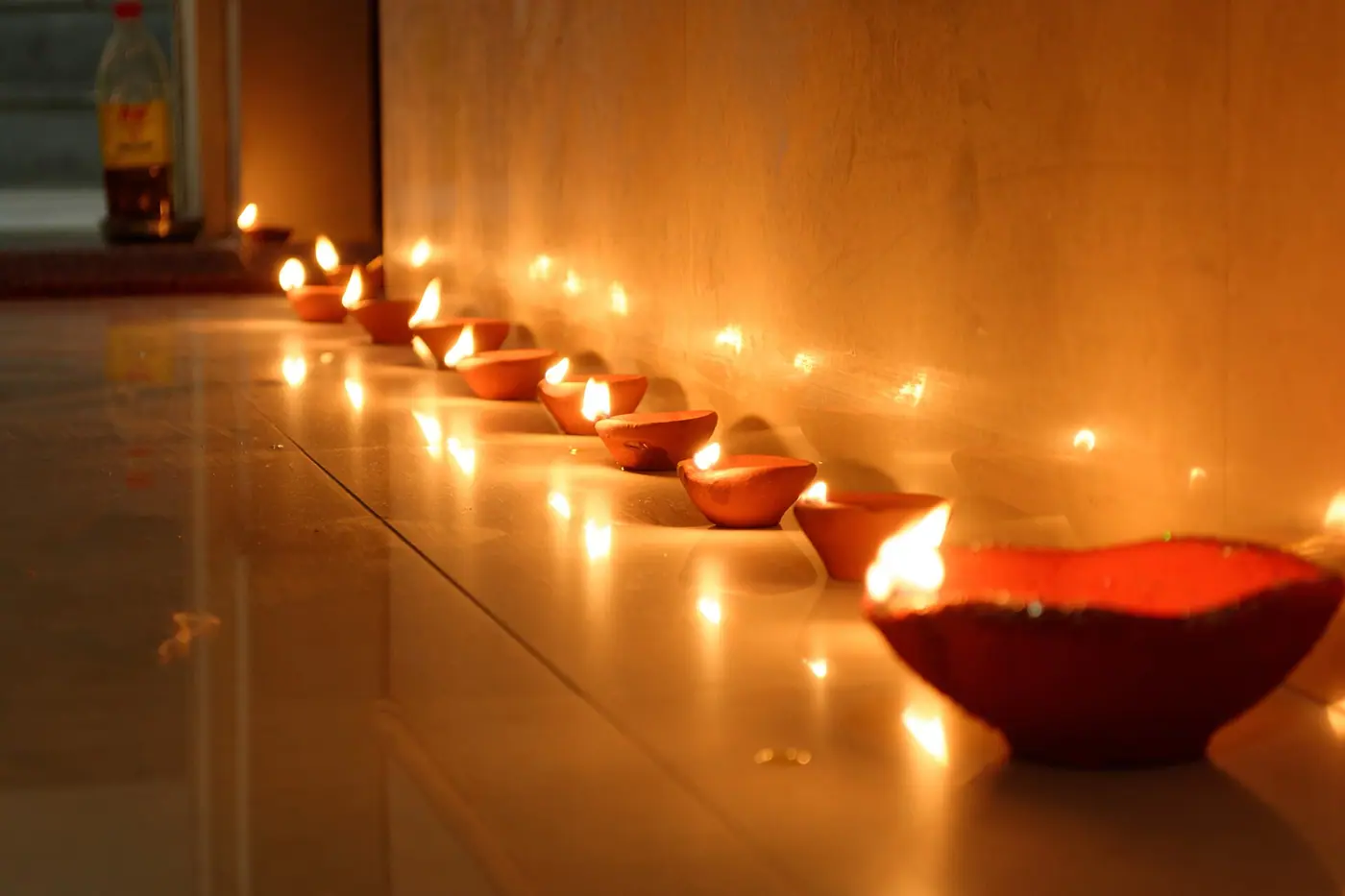
Diwali and Tamil Deepavali fall on Sunday 8 November 2026 across Switzerland. Here are local Lakshmi Puja and Dhanteras times for Zürich, Geneva, Basel, Bern and Lausanne, plus verified temples and associations, and practical advice for celebrating in a Swiss flat.
Quick answer
Diwali (Lakshmi Puja) 2026 in Switzerland is on Sunday 8 November, in every city. In Zürich, the Lakshmi Puja window is 5:15 PM – 6:57 PM; in Bern, the federal city, it is 5:20 PM – 7:03 PM. Dhanteras is on Friday 6 November. Tamil families take the Deepavali oil bath on the morning of the same Sunday.
Editor's note: This page was last reviewed on 10 October 2026. The local times were calculated by HinduTone using the Drik Panchang method (Pradosh Kaal with the Vrishabha lagna); checked against Drik Panchang for major world cities to within one to two minutes; confirm with your temple. They are in Swiss winter time (CET), because summer time ends on Sunday 25 October 2026. Event details come only from organisers' own announcements, and we name temples and associations only where we could open an official page or an established listing. Always confirm the puja time and programme with your own temple.
Diwali in Switzerland looks different from Diwali in London or Toronto. Most of the country's Hindus are Sri Lankan Tamils, so for many families the day is Deepavali: an early-morning oil bath, new clothes, a visit to the kovil and sweets shared with neighbours. Alongside them, a growing community of Indian professionals, researchers and students in Zürich, Basel, Geneva and Lausanne keeps the North Indian Lakshmi Puja, Gujarati Chopda Puja and Bengali Kali Puja. In 2026 everyone celebrates on the same day. Sunday 8 November is a rest day, and the sun sets around five o'clock, so the evening puja comes well before dinner.
Diwali 2026 in Switzerland: the five days
| Day | Date | What is observed |
|---|---|---|
| Dhanteras (Yama Deepam) | Friday 6 November | Puja to Dhanvantari and Lakshmi at dusk, and a lamp for Yama facing south; buying a small metal item or utensil |
| Kali Chaudas | Saturday 7 November | Gujarati tradition of protective worship, especially of Hanuman and Mahakali |
| Diwali / Lakshmi Puja, Naraka Chaturdashi, Tamil Deepavali | Sunday 8 November | Morning oil bath and new clothes (Tamil and South Indian tradition); evening Lakshmi–Ganesha puja, diyas and sweets; Kali Puja (Bengal); Chopda / Sharda Puja (Gujarati businesses) |
| Govardhan Puja, Annakut, Bali Pratipada, Gujarati New Year | Tuesday 10 November (in India) | Annakut offering of many dishes, Govardhan worship, New Year greetings |
| Bhai Dooj / Yama Dwitiya | Wednesday 11 November (in India) | Sisters apply tilak and pray for their brothers; brothers give gifts |
Amavasya, the new-moon tithi on which Lakshmi Puja is done, runs from 11:27 AM IST on Sunday 8 November to 12:31 PM IST on Monday 9 November. In Switzerland the whole evening of Sunday 8 November falls inside that Amavasya, so Lakshmi Puja is on Sunday evening in every Swiss city. The Govardhan Puja and Bhai Dooj dates above are for India. Local temples may announce their own day, so check with yours, particularly if your family follows a Swiss temple's panchangam.
North Indian families remember Rama's return to Ayodhya. Tamil families celebrate Krishna's victory over Narakasura, which is why the day starts with a pre-dawn oil bath. Lakshmi is welcomed into lamp-lit homes on the new-moon night, Bengalis worship Kali, and Bali Pratipada recalls King Bali and Vamana. Jains mark Mahavira's Nirvana, and Sikhs celebrate Bandi Chhor Divas.
Lakshmi Puja muhurat 2026, city by city
All times are for Switzerland, in CET (UTC+1). They are calculated by HinduTone using the Drik Panchang method (Pradosh Kaal with the Vrishabha lagna); checked against Drik Panchang for major world cities to within one to two minutes; confirm with your temple.
| City | Region | Lakshmi Puja (Sun 8 Nov) | Pradosh Kaal | Dhanteras puja (Fri 6 Nov) |
|---|---|---|---|---|
| Zürich | Zürich | 5:15 PM – 6:57 PM | 4:59 PM – 7:51 PM | 5:23 PM – 7:06 PM |
| Geneva | Geneva | 5:28 PM – 7:11 PM | 5:11 PM – 8:02 PM | 5:36 PM – 7:19 PM |
| Basel | Basel | 5:18 PM – 7:00 PM | 5:02 PM – 7:55 PM | 5:26 PM – 7:08 PM |
| Bern | Bern | 5:20 PM – 7:03 PM | 5:04 PM – 7:56 PM | 5:28 PM – 7:11 PM |
| Lausanne | Vaud | 5:25 PM – 7:09 PM | 5:09 PM – 8:00 PM | 5:33 PM – 7:16 PM |
What is Pradosh Kaal? Pradosh is the dusk period that begins at sunset and lasts about two and a half hours. Lakshmi Puja and the Dhanteras lamp are traditionally done in it.
Why the Vrishabha lagna? A different zodiac sign rises on the eastern horizon roughly every two hours. Vrishabha (Taurus) is a "fixed" sign, and tradition holds that worshipping Lakshmi while it rises helps her blessings stay in the home. The muhurat is where Pradosh Kaal and the rising Vrishabha overlap, which is why it starts a little after sunset.
Geneva and Lausanne sit further west than Zürich and Basel, so the sun sets there about a quarter of an hour later and their windows start later too. If your town is not listed, use the nearest city above, and never convert India's muhurat into Swiss time.
The Hindu community in Switzerland
Hindus in Switzerland are a small but well-established community. The 2000 federal census counted 27,839 Hindus, 0.38% of the population, most of them Sri Lankan Tamils who had arrived since the mid-1980s, when civil war broke out in Sri Lanka (swissinfo.ch, citing the 2000 census). By 2019, Hindus made up 0.6% of the adult population, according to federal survey figures reported by swissinfo.ch (2019).
The Tamil community gives Swiss Hinduism much of its character: Shaiva temples dedicated to Murugan, Shiva and the Goddess, many of them in converted commercial buildings rather than purpose-built shrines. Many young Swiss Tamils grew up speaking Tamil at home and Swiss German or French at school.
The Indian community is a second, overlapping strand. The Embassy of India in Berne puts it at about 16,500 Indians and persons of Indian origin. Most work in IT, pharmaceuticals, research and healthcare, at the UN in Geneva, or at ETH Zurich and EPFL Lausanne. The embassy also says about ten Indian associations celebrate Diwali, Holi, Onam, Baisakhi and Navratri. These families come from all over India, so a Swiss Diwali can mean a Gujarati Chopda Puja, a Bengali Kali Puja or a Telugu family's Deepavali in the same week. The Swiss Federation for Hinduism (SDH), founded in 2017 in Winterthur, acts as an umbrella body for temples and communities.
Where to celebrate: temples and community organisations
We list only temples and organisations we could confirm through their own website or an official listing. We give the name and area only; check their pages for opening times and Diwali plans. Temples and community associations usually announce Diwali programmes from mid-October — check their websites and social pages.
Announced for 2026: the Diwali Concert 2026 on Saturday 31 October at the Omkarananda Ashram in Winterthur, with Sanskrit theatre based on Kalidasa's Abhijnana Shakuntalam. Announced by the Swiss Federation for Hinduism (SDH); check before you go.
Zürich
- Sri Sivasubramaniar Temple — Adliswil, south of the city in the Sihl valley. A Tamil temple dedicated mainly to Murugan (temple website).
- Krishna Tempel Zürich (ISKCON) — on the Zürichberg (8032 Zürich). The Hare Krishna community's temple, with Sunday feasts and festivals (krishna.ch).
- BAPS Switzerland Satsang Mandal — Zürich. In past years it has held a Diwali and Hindu New Year (Annakut) celebration, in 2025 at GZ Affoltern (BAPS listing, 2025).
- Indian Association of Greater Zurich (IAGZ) and Telugu Association Switzerland — both have held Diwali celebrations in Zürich in past years, according to the Indian Embassy's events page.
At Tamil temples, Deepavali usually means special abhishekam and pujas on the day itself. ISKCON marks Diwali and Govardhan Puja with kirtan and a large food offering, and the Indian associations generally hold a weekend gala with dance, music and dinner.
Bern
- Saivanerikoodam Hindu temple (Haus der Religionen) — Europaplatz, Bern. A Shiva temple run by volunteers for Bernese with Tamil roots, inside the multi-faith House of Religions. swissinfo.ch has reported that it is one of the few temples in the world where women priests officiate.
- Bharatiya Association Berne and Indian Association Berne — both listed by the Embassy as Indian associations. The Bharatiya Association has held Diwali celebrations in past years.
- Embassy of India, Berne — in past years has hosted a Diwali celebration at India House (events page).
The House of Religions is open to visitors, which makes it a good place to bring Swiss friends, classmates or colleagues who want to understand the festival.
Basel
Basel's Indian community is closely tied to the life-sciences industry, and the region is also home to Tamil Hindu families. We could not confirm a current official website for a temple in Basel, so we do not name one here; local Tamil families can point you to the nearest kovil. In past years, the Indian Embassy has listed a Diwali celebration in Basel held with a local association (events page). Temples and community associations usually announce Diwali programmes from mid-October — check their websites and social pages.
Geneva
- Indian Association Geneva — listed by the Embassy of India as one of the cantonal Indian associations that celebrate festivals including Diwali.
Geneva's Hindu families include Tamil households and a large international Indian population working for UN agencies, NGOs and multinational companies, so Diwali here often means a private puja at home and one community gathering on a weekend. We could not confirm an official website for a Hindu temple in the canton, so we do not name one here; local Tamil families and associations can point you to the nearest kovil. Temples and community associations usually announce Diwali programmes from mid-October — check their websites and social pages.
Lausanne and Vaud
- Indian Association Lausanne — has held Diwali celebrations in past years (Embassy events page).
- YUVA – Indians at EPFL — the EPFL student association. Its Diwali celebration, Yuvaali, drew over 250 people in 2024 (EPFL). A joint EPFL–UNIL student group has also held Diwali events in past years.
- PragaN@Swiss — a Lausanne association promoting Indian culture. With support from the city's integration fund, it has organised a two-day Durga Puja festival (Ville de Lausanne).
Temples and community associations usually announce Diwali programmes from mid-October — check their websites and social pages.
Celebrating at home in Switzerland
Because Diwali falls on a Sunday this year, most families can do the full Lakshmi Puja at home within their city's window. A short vidhi:
- Prepare: clean the home, make a rangoli or kolam at the door (rice flour or coloured powder on a board works well if you can't draw on a shared landing), and set up a small altar with Lakshmi and Ganesha, a kalash and fresh flowers.
- Begin with Ganesha: light a lamp, offer akshat, kumkum and flowers to Ganesha and pray for an obstacle-free puja.
- Lakshmi Puja: within your city's muhurat, offer flowers, sweets, fruit, coins or notes and lotus seeds or rice to Lakshmi, and chant the Lakshmi mantra or recite the Shri Suktam.
- Kubera and the account books: Gujarati families and business owners worship their account books or laptops (Chopda Puja), writing "Shubh" and "Labh".
- Aarti and lamps: do aarti, then light diyas around the home and share prasad.
For a fuller step-by-step version, see our Lakshmi Puja 2026 vidhi.
Diyas in a Swiss flat: most people rent, and rental flats come with house rules (Hausordnung in German, règlement de maison in French). Read yours before putting diyas on a landing or shared balcony. Indoors, keep oil lamps on a metal tray away from curtains, and never leave them burning unattended. LED lights are the safe choice for windowsills and balconies.
Smoke detectors: if your flat has a smoke detector, don't cover or disconnect it during the puja. Burn camphor and dhoop briefly, then air the room.
Neighbours and quiet hours: evening celebrations are welcome, but many communes have night-time quiet hours. In the city of Zürich, for example, Nachtruhe starts at ten at night.
Weather: early November in Switzerland is usually cold and damp, often with fog over the lowlands, and higher ground can already see snow. Wear warm layers over festive clothes and carry an umbrella.
Food and decorations you can find locally
Zürich, Basel, Bern, Geneva and Lausanne all have Indian and Sri Lankan grocers. They stock ghee, flours, lentils, spices, kumkum, agarbatti, camphor and clay diyas, and in the weeks before Deepavali many carry sweets, marigold garlands and banana leaves. Buy a few days early, as popular items run out before the Sunday.
Ordinary supermarkets cover the rest: candles, LED lights, dried fruit, nuts and butter for homemade sweets. Swiss chocolate makes a popular Diwali gift.
Diwali with children and second-generation families
In 2026, Lakshmi Puja is on a Sunday, but Dhanteras, Govardhan Puja and Bhai Dooj all fall on school days. Keep weekday rituals short, such as a Dhanteras lamp on Friday evening. If your child wants to share Diwali with their class, ask the teacher early about a short talk or a box of sweets.
Swiss children often juggle Swiss German or French at school, English, and a heritage language at home, and Diwali is a natural moment for the last of these. Learn the aarti in Tamil, Hindi, Gujarati, Bengali or Telugu, tell the Diwali stories in that language, and let children make the kolam or rangoli. Weekend language schools and association dance classes often give children their first Diwali stage. Teenagers enjoy having a role, such as lighting the diyas or leading one bhajan.
Fireworks, safety and local rules
In Switzerland, fireworks are a 1 August and New Year's Eve tradition, not a Diwali one. Sales and use are regulated, and the rules on setting them off are made by cantons and communes, so they differ from place to place.
- Basel-Stadt: according to the Kantonspolizei Basel-Stadt, private fireworks need a permit except for the 1 August and New Year's Eve celebrations. When we checked, the canton also had a total fire and fireworks ban in force until further notice, because of drought.
- National debate: on 19 June 2026 the National Council rejected the counter-proposal to the fireworks initiative, which would have banned firecrackers nationwide (Swiss Parliament). The initiative itself, which seeks to restrict noisy fireworks, may now go to a popular vote. The national rules may therefore change, but for now the cantons and communes decide.
- Elsewhere: for Zürich, Geneva, Bern, Vaud and other cantons, check the official guidance of your canton and commune before using any fireworks, sparklers or sky lanterns. If in doubt, don't. Diyas and electric lights are the heart of Diwali.
At temples, follow the organisers' arrangements, and keep loose dupattas and festive clothes away from open flames.
Celebrating far from family
For many Swiss Hindus, Diwali is also the day the family video call stretches across Jaffna, Chennai, Toronto, London and Ahmedabad. A few ideas:
- Do the Lakshmi Puja on a video call with parents or grandparents in India or Sri Lanka. India is four and a half hours ahead of Switzerland in November, so a Swiss evening puja is late at night there; a morning call on Sunday may suit them better.
- Watch live-streamed aarti or darshan from a temple you love, if it offers one, and light your own lamp at the same moment.
- Invite colleagues or students who are alone in Switzerland to your puja or meal.
- Give seva: volunteer at your temple's Deepavali kitchen, or donate to a temple, a food bank or a charity your family supports in Switzerland or back home.
Diwali checklist for Switzerland
- Note your city's Lakshmi Puja window for Sunday 8 November and the Dhanteras time for Friday 6 November.
- Remember that the clocks went back on 25 October, so all times are in CET.
- Buy diyas, ghee, kumkum, flowers and sweets from an Indian or Sri Lankan grocer a few days early.
- Read your building's Hausordnung or règlement de maison before using lamps on balconies or landings.
- Keep oil lamps on metal trays and away from curtains; use LED lights outdoors.
- Don't cover or disconnect any smoke detector.
- Check your temple's or association's website for its Deepavali pujas and weekend programme.
- Tamil families: plan the early-morning oil bath and kovil visit on Sunday 8 November.
- Book leave early if you want to join Govardhan Puja or Bhai Dooj on a weekday.
- Check your canton's and commune's rules before any fireworks; in Basel-Stadt a drought ban issued in July 2026 was still listed when we checked on 10 October.
- Plan a video call with family abroad, keeping the time difference in mind.
Frequently asked questions
When is Diwali 2026 in Switzerland?
Lakshmi Puja is on the evening of Sunday 8 November 2026 in every Swiss city. Dhanteras is on Friday 6 November. Tamil families also take the Deepavali oil bath on the morning of Sunday 8 November, so in 2026 both traditions fall on the same day.
What is the Lakshmi Puja muhurat in Zürich, Geneva, Basel, Bern and Lausanne?
On Sunday 8 November 2026 the windows are: Zürich 5:15 PM – 6:57 PM, Geneva 5:28 PM – 7:11 PM, Basel 5:18 PM – 7:00 PM, Bern 5:20 PM – 7:03 PM and Lausanne 5:25 PM – 7:09 PM. All are in Swiss winter time (CET), calculated by HinduTone using the Drik Panchang method (Pradosh Kaal with the Vrishabha lagna); checked against Drik Panchang for major world cities to within one to two minutes; confirm with your temple.
Is Diwali a public holiday in Switzerland?
No. Diwali is not a federal or cantonal public holiday. In 2026, 8 November is a Sunday, and the rest of the week is a normal working and school week. Plan a day off in advance if you want to visit a temple on a weekday.
Can I just convert India's Lakshmi Puja time into Swiss time?
No. The muhurat depends on your local sunset and on when the Vrishabha (Taurus) lagna rises over your city. Converting an Indian city's time would give you the wrong window. Use the Swiss times on this page or your temple's own calendar.
Can I light diyas or set off fireworks for Diwali in my Swiss flat?
Diyas and candles indoors are a matter of care and your building's house rules (Hausordnung or règlement de maison). Fireworks are a different matter. Rules on setting them off are made by cantons and communes, and outside 1 August and New Year's Eve you usually need a permit. In Basel-Stadt, for example, a permit is required, and when we checked, the canton had a total fire and fireworks ban in force until further notice (issued on 24 July 2026 because of drought). Check your canton's and commune's official guidance.
Are there Diwali events in Switzerland in 2026?
One event confirmed so far is the Diwali Concert 2026 on Saturday 31 October at the Omkarananda Ashram in Winterthur. It was announced by the Swiss Federation for Hinduism (SDH); check before you go. Temples and community associations usually announce Diwali programmes from mid-October, so check their websites and social pages.
Related guides
- Diwali / Deepavali 2026: complete 5-day guide
- The 5 days of Diwali 2026 explained
- Lakshmi Puja 2026: date, muhurat and step-by-step vidhi
- Lakshmi Puja muhurat 2026 in Europe, city-wise
- Diwali 2026 in Austria: Lakshmi Puja muhurat city by city
- Diwali 2026 in Italy: Lakshmi Puja muhurat city by city
- Diwali celebrations in Germany 2026
- Dussehra 2026 in Switzerland, city by city
Sources
- Embassy of India, Berne: Indian community in Switzerland
- Embassy of India, Berne: Events & Meetings
- Swiss Federation for Hinduism (SDH): Diwali Concert 2026
- Swiss Federation for Hinduism (SDH): Schweizerischer Dachverband für Hinduismus
- swissinfo.ch: Non-believers make up nearly 30% of Swiss population
- swissinfo.ch: 1980s (Swiss history timeline)
- swissinfo.ch: Worship at Bern's Hindu temple
- Haus der Religionen – Dialog der Kulturen: Hindus
- Krishna Tempel Zürich: Verein (association)
- Sri Sivasubramaniar Temple: Sivasubramaniar Tempel – Zürich, Adliswil
- BAPS Switzerland Satsang Mandal (Tickettailor): BAPS Switzerland Diwali and Hindu New Year Celebration 2025
- Ville de Lausanne: Durga Puja (projet soutenu par le FLI)
- EPFL: Yuvaali 2024
- Kanton Basel-Stadt, Kantonspolizei: Privates Feuerwerk
- Swiss Parliament (SDA report): Nationalrat lehnt neue nationale Regeln im Umgang mit Feuerwerk ab
- Stadt Zürich: Was ist erlaubt?
- Muhurat: HinduTone calculation (Drik Panchang method)
You might also like
Diwali 2026 in Austria: Lakshmi Puja Muhurat City by City, Dhanteras and Temples
Diwali 2026 in Tanzania: Lakshmi Puja Muhurat City by City, Dhanteras Times and Temples
Diwali 2026 in Bahrain: Lakshmi Puja Muhurat City by City, Dhanteras Times and Temples