
Diwali 2026 in Austria: Lakshmi Puja Muhurat City by City, Dhanteras and Temples
Diwali falls on Sunday 8 November 2026 across Austria. Here are local Lakshmi Puja and Dhanteras times for Vienna, Graz, Linz, Salzburg and Innsbruck, the Hindu congregations we could verify, and practical advice for celebrating in an Austrian flat.
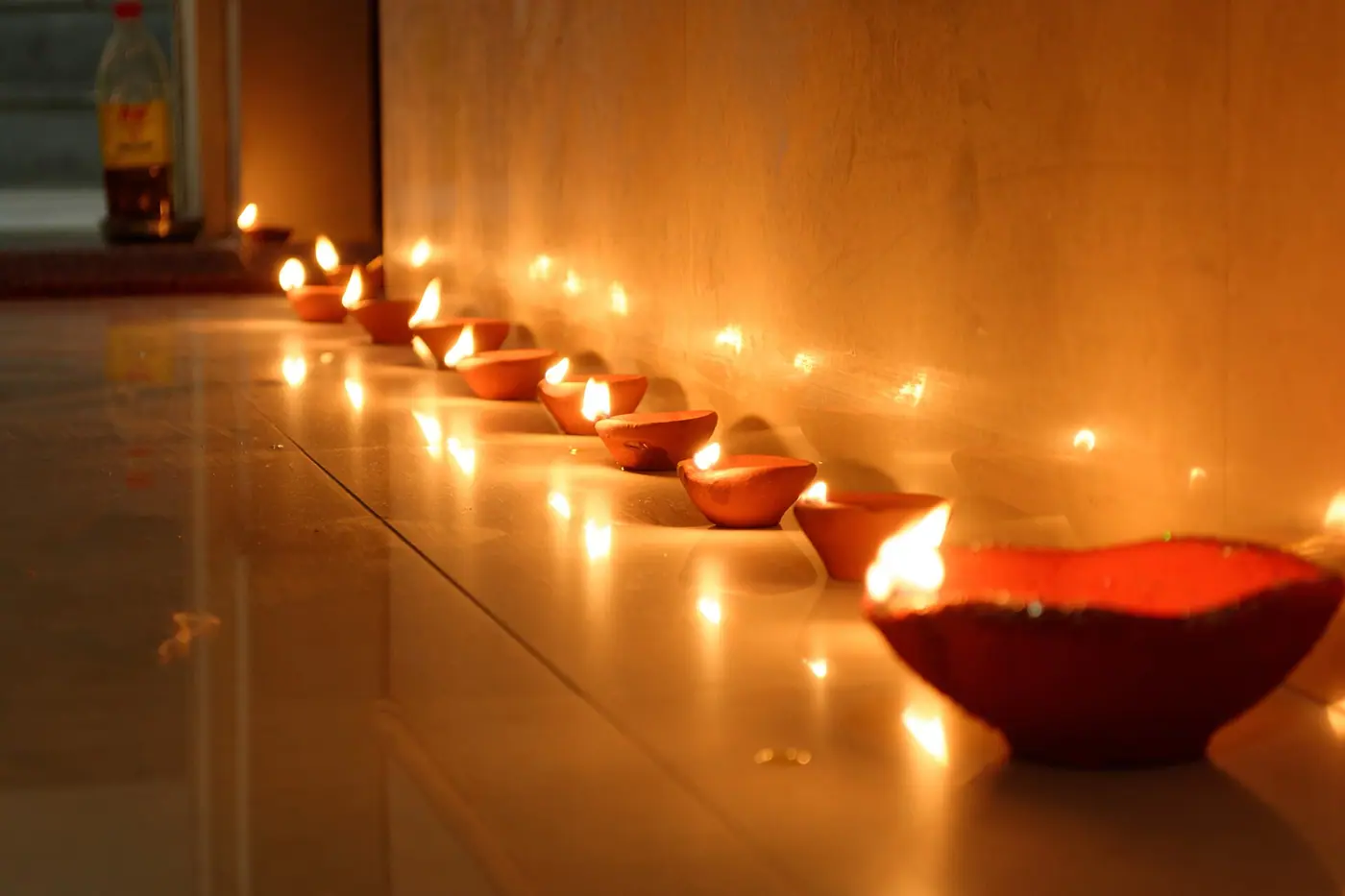
Diwali falls on Sunday 8 November 2026 across Austria. Here are local Lakshmi Puja and Dhanteras times for Vienna, Graz, Linz, Salzburg and Innsbruck, the Hindu congregations we could verify, and practical advice for celebrating in an Austrian flat.
Quick answer
Diwali (Lakshmi Puja) 2026 in Austria is on Sunday 8 November, in every city. In Vienna, the Lakshmi Puja window is 4:41 PM – 6:22 PM. Dhanteras is on Friday 6 November. Austria is in winter time by then, so the sun sets early and the puja falls well before dinner.
Editor's note: This page was last reviewed on 10 October 2026. The local times were calculated by HinduTone using the Drik Panchang method (Pradosh Kaal with the Vrishabha lagna); checked against Drik Panchang for major world cities to within one to two minutes; confirm with your temple. They are in Central European Time (CET), because summer time ended on Sunday 25 October 2026. Event details come only from organisers' own announcements, and we name temples and associations only where we could open an official page or an established listing. Always confirm the puja time and programme with your own temple.
Diwali in Austria has a particular shape. The Hindu community is small and concentrated in Vienna, and it is unusually diverse for its size: Bengali, Malayali, Tamil, Telugu, Marathi, Punjabi and Hindi-speaking families, Nepali households, and Austrian devotees of Krishna and yoga traditions all share a handful of temples and halls. Most of these congregations sit under one umbrella, the Hindu Religious Society in Austria (HRÖ), which is registered with the state as a religious community. Outside Vienna, Diwali often means a puja at home and a weekend get-together organised by an association. The City of Vienna marks the day in its intercultural calendar, which describes Diwali as the most widely celebrated Hindu festival.
Diwali 2026 in Austria: the five days
| Day | Date | What is observed |
|---|---|---|
| Dhanteras (Yama Deepam) | Friday 6 November | Puja to Dhanvantari and Lakshmi at dusk, and a lamp for Yama facing south; buying a small metal item or utensil |
| Kali Chaudas | Saturday 7 November | Gujarati tradition of protective worship, especially of Hanuman and Mahakali |
| Diwali / Lakshmi Puja, Naraka Chaturdashi, Tamil Deepavali | Sunday 8 November | Morning oil bath and new clothes (Tamil and South Indian tradition); evening Lakshmi–Ganesha puja, diyas and sweets; Kali Puja (Bengal); Chopda / Sharda Puja (Gujarati businesses) |
| Govardhan Puja, Annakut, Bali Pratipada, Gujarati New Year | Tuesday 10 November (in India) | Annakut offering of many dishes, Govardhan worship, New Year greetings |
| Bhai Dooj / Yama Dwitiya | Wednesday 11 November (in India) | Sisters apply tilak and pray for their brothers; brothers give gifts |
Amavasya, the new-moon tithi on which Lakshmi Puja is done, runs from 11:27 AM IST on Sunday 8 November to 12:31 PM IST on Monday 9 November. In Austria the whole evening of Sunday 8 November falls inside that Amavasya, so Lakshmi Puja is on Sunday evening in every Austrian city. The Govardhan Puja and Bhai Dooj dates above are for India. Local temples may announce their own day, so check with yours.
North Indian families remember Rama's return to Ayodhya, when the city lit lamps to welcome him. In the South, Naraka Chaturdashi celebrates Krishna's victory over Narakasura, hence the pre-dawn oil bath. Lakshmi is welcomed into clean, lamp-lit homes on the new-moon night, Bengali families worship Kali, and Bali Pratipada recalls King Bali, whom Vamana allowed to return once a year. Jains mark Mahavira's Nirvana, and Sikhs, who have gurdwaras in Vienna, celebrate Bandi Chhor Divas.
Lakshmi Puja muhurat 2026, city by city
All times are for Austria, in CET (UTC+1). They are calculated by HinduTone using the Drik Panchang method (Pradosh Kaal with the Vrishabha lagna); checked against Drik Panchang for major world cities to within one to two minutes; confirm with your temple.
| City | Region | Lakshmi Puja (Sun 8 Nov) | Pradosh Kaal | Dhanteras puja (Fri 6 Nov) |
|---|---|---|---|---|
| Vienna | Vienna | 4:41 PM – 6:22 PM | 4:25 PM – 7:18 PM | 4:49 PM – 6:30 PM |
| Graz | Styria | 4:48 PM – 6:31 PM | 4:32 PM – 7:24 PM | 4:56 PM – 6:39 PM |
| Linz | Upper Austria | 4:49 PM – 6:30 PM | 4:33 PM – 7:27 PM | 4:56 PM – 6:38 PM |
| Salzburg | Salzburg | 4:56 PM – 6:38 PM | 4:40 PM – 7:32 PM | 5:03 PM – 6:45 PM |
| Innsbruck | Tyrol | 5:04 PM – 6:47 PM | 4:48 PM – 7:40 PM | 5:11 PM – 6:54 PM |
What is Pradosh Kaal? Pradosh is the dusk period that begins at sunset and lasts almost three hours on these dates. Lakshmi Puja and the Dhanteras lamp are traditionally done in it.
Why the Vrishabha lagna? A different zodiac sign rises on the eastern horizon roughly every two hours. Vrishabha (Taurus) is a "fixed" sign, and tradition holds that worshipping Lakshmi while it rises helps her blessings stay in the home. The muhurat is where Pradosh Kaal and the rising Vrishabha overlap, which is why it starts a little after sunset and is shorter than Pradosh.
Austria stretches a long way from east to west on a single time zone, and you can see it in the table. Vienna's window opens at 4:41 PM, while Innsbruck's opens at 5:04 PM, more than twenty minutes later. If your town is not listed, use the nearest city above or ask your temple. Never convert India's muhurat into Austrian time. The Indian times are calculated for Indian sunsets and do not apply here.
The Hindu community in Austria
India's Ministry of External Affairs puts the number of overseas Indians in Austria at 31,939 as of January 2026: 13,439 Indian citizens (NRIs) and 18,500 persons of Indian origin (MEA, January 2026). Not all of them are Hindu, and many Hindus in Austria are not of Indian origin, including Nepali families and Austrian devotees. Austria's census has not asked about religion since 2001, so there is no current official count of Hindus (oesterreich.gv.at).
The list of Indian associations kept by the Embassy of India in Vienna shows how varied the community is. Alongside the Hindu Mandir Association, the Vienna Durga Puja Samiti and a Ganesha Association, it lists the Tamil Sangam, Maharashtra Mandal Austria, the Kerala Samajam Vienna and other Malayali groups, two gurdwaras and a Shri Guru Ravidass Sabha, as well as classical dance and music societies. Almost all of them are based in Vienna. The main exception is the Tiroler Indian Association in Innsbruck. The HRÖ's list of congregations adds a Bengali Austrian Hindu cultural association, Gaudiya Vaishnava and ISKCON communities, yoga and meditation groups, and a mandir in Salzburg.
So Diwali in Vienna can include a Bengali Kali Puja, a Marathi faral platter and a Krishna temple's Govardhan Puja in the same week. Many families came for work in IT, engineering, research, healthcare or with Vienna's international organisations, and more students now study at Austrian universities.
Where to celebrate: temples and community organisations
We list only temples and organisations we could confirm through their own website or an official listing, mainly the Hindu Religious Society in Austria (HRÖ) and the Indian Embassy. We give the name and area only, so check their pages for opening times and Diwali plans. Temples and community associations usually announce Diwali programmes from mid-October — check their websites and social pages.
Vienna
- Hindu Mandir (Hindu Mandir Association) — Josefstadt, 8th district. Listed by both the HRÖ and the Indian Embassy, it hosts many community festivals. In 2022 ORF Wien reported the association's plan to build a purpose-built temple for all Hindu deities in Floridsdorf. Check with the association for the current status before you travel.
- Vedisches Zentrum ISKCON Wien — Mariahilf, 6th district. ISKCON's Vienna centre, with Sunday feasts, kirtan and Bhagavad Gita classes (ISKCON Centres). Krishna communities usually mark Diwali and Govardhan Puja with kirtan and a large food offering.
- Sanatan Dharm Mandir and Shiva Mandir Hindu Gesellschaft Austria — Vienna. Both are listed among Austria's Hindu congregations by the HRÖ.
- Bengalisch Österreichischer Hinduistischer Kulturverein (BÖHK) and the Vienna Durga Puja Samiti — Vienna's Bengali Hindu associations. The Samiti's Shree Shree Durga Puja 2026 is on 17–19 October at the Hindu Mandir; announced by the Vienna Durgapuja Samiti on the HRÖ events page; check before you go.
Regional associations listed by the Indian Embassy, including the Tamil Sangam, Maharashtra Mandal Austria and the Malayali associations, often organise their own weekend gatherings.
Lower Austria (around Vienna)
- Sri Sri Radha Govinda Gaudiya Math — Traiskirchen, south of Vienna. ORF describes Traiskirchen's temple, dedicated to Krishna, as Austria's first Hindu temple (ORF Wien).
- Bhagavata Dharma Ashram (Sri Krishna Chaitanya Mission Austria) — Böheimkirchen, near St. Pölten (HRÖ list).
Salzburg
- Sri Hari Om Sanatan Dharam Mandir — Salzburg. Listed among Austria's Hindu congregations by the HRÖ.
Innsbruck and Tyrol
- Tiroler Indians Association (TIA) — Innsbruck and Tyrol. A non-profit association that brings people together through dance, music, sport and yoga. It has held Diwali celebrations in past years (TIA website).
We could not confirm a Hindu temple in Tyrol, so most families do Lakshmi Puja at home and join the association's gathering.
Graz and Linz
Graz and Linz attract Indian engineers, researchers and students. We could not find an official website or listing for a Hindu temple or Indian association in either city, so we do not name one here. Many families celebrate at home or with friends, or travel to Vienna or Salzburg for temple events.
Celebrating at home in Austria
Because Diwali falls on a Sunday this year, most families can do the full Lakshmi Puja at home within their city's window. A short vidhi:
- Prepare: clean the home, make a rangoli or kolam at your door (on a board if you can't draw on a shared landing), and set up a small altar with Lakshmi and Ganesha, a kalash and fresh flowers.
- Begin with Ganesha: light a lamp, offer akshat, kumkum and flowers to Ganesha and pray for an obstacle-free puja.
- Lakshmi Puja: within your city's muhurat, offer flowers, sweets, fruit, coins or notes and lotus seeds or rice to Lakshmi, and chant the Lakshmi mantra or recite the Shri Suktam.
- Account books: Gujarati families and business owners worship their account books or laptops (Chopda Puja), writing "Shubh" and "Labh".
- Aarti and lamps: do aarti, then light diyas around the home and share prasad.
For a fuller step-by-step version, see our Lakshmi Puja 2026 vidhi.
Diyas in a Viennese Altbau or a Gemeindebau flat: rental buildings usually have house rules (Hausordnung) covering stairwells, balconies and open flames, so read yours before putting diyas on a shared corridor (Gang). Indoors, keep oil lamps on a metal tray, away from curtains, and never leave them burning unattended. Battery tea-lights and LED lights are a safe display for windowsills and balconies.
Smoke alarms: if your flat has a smoke alarm (Rauchmelder), don't cover or disconnect it during the puja. Burn camphor and dhoop briefly and air the room afterwards; a few minutes of Stoßlüften, opening the windows wide, is the Austrian habit anyway.
Weather: early November in Austria is usually cold and often grey, with fog in the Danube valley and the Vienna basin, and the first snow is possible in the Alps around Innsbruck and Salzburg. Wear warm layers over festive clothes.
Food and decorations you can find locally
Vienna has Indian and South Asian grocers, and you will find a few in the other large cities too. They stock ghee, flours, lentils, spices, kumkum, agarbatti, camphor and clay diyas, and in the weeks before Diwali many carry sweets and festival supplies. Buy early; in smaller towns, many families order online or stock up in Vienna.
Austrian supermarkets cover candles, LED lights, dried fruit, nuts, butter and semolina for homemade sweets. Mozartkugeln make a local touch in a Diwali gift box, and florists have plenty of chrysanthemums in early November if marigolds aren't available.
Diwali with children and second-generation families
In 2026, Lakshmi Puja is on a Sunday, but Dhanteras, Govardhan Puja and Bhai Dooj all fall on school days, and Austrian schools have no Diwali break. Keep weekday rituals short: light a lamp for Dhanteras on Friday evening, and save the big family meal for the weekend. Many teachers welcome a short class talk or a box of sweets if you ask early. Children in Austrian schools have often just learned about All Saints' Day and St Martin's lantern walk (Laternenfest) in early November, which makes a lovely bridge to explaining a festival of lights.
Children here grow up between German at school and a heritage language at home. Diwali is a natural moment to use it: learn the aarti in Bengali, Hindi, Malayalam, Marathi, Tamil or Telugu, tell the story of Rama in that language, and let children help make rangoli. Vienna's regional associations and dance societies give children a stage at festival programmes.
For teenagers, a role helps: lighting the diyas, leading a bhajan, running the family video call or joining temple seva.
Fireworks, safety and local rules
In Austria, fireworks belong to New Year's Eve, and even then they are tightly regulated. The rules come from the federal Pyrotechnics Act (Pyrotechnikgesetz), summarised on the government portal oesterreich.gv.at:
- F1 (sparklers, party poppers): allowed from age 12. Some may be used indoors if the instructions say so.
- F2 (firecrackers, rockets, battery fireworks): only from age 16, and generally banned all year in built-up areas (Ortsgebiet). The mayor may allow exceptions for parts of a municipality only if there is no danger and no unreasonable noise. F2 fireworks are also banned in or near crowds.
- Protected places: fireworks are banned in or immediately next to places of worship, hospitals, children's and care homes, animal shelters and zoos, even outside built-up areas.
- Penalties: fines of up to €3,600, or imprisonment of up to three weeks.
So firecrackers on a Viennese street or outside a temple are not an option. The official page does not mention sky lanterns. Rules on open fires and lanterns are set nationally or locally, so check your municipality's official guidance and, if in doubt, don't. Diyas and electric lights are the heart of Diwali. Keep dupattas and children's clothes away from open flames.
Celebrating far from family
For many families, Diwali is also the day the video call stretches to Kolkata, Kochi, Pune or Kathmandu.
- Do the Lakshmi Puja on a video call with parents or grandparents. India is four and a half hours ahead of Austria in November, so an Austrian evening puja is late at night there; a Sunday morning call may suit them better.
- Watch a live-streamed aarti or darshan from a temple you love and light your own lamp at the same moment.
- Invite colleagues or students who are alone in Austria for the festival to your puja or meal.
- Give seva: volunteer at your temple's Diwali kitchen, or donate to a temple, a food bank or a charity your family supports in Austria or back home.
Diwali checklist for Austria
- Note your city's Lakshmi Puja window for Sunday 8 November and the Dhanteras time for Friday 6 November.
- West of Vienna, use your own city's times: Innsbruck's window opens more than twenty minutes after Vienna's.
- Buy diyas, ghee, kumkum, flowers and sweets from an Indian grocer a few days early, or order ahead if you live outside Vienna.
- Read your building's Hausordnung before using lamps on balconies or in stairwells.
- Keep oil lamps on metal trays and away from curtains; use LED lights outdoors.
- Don't cover or disconnect any smoke alarm.
- Check your temple's or association's website for its Diwali programme.
- Book leave early if you want to join Govardhan Puja or Bhai Dooj on a weekday.
- Leave firecrackers out: F2 fireworks are banned in built-up areas.
- Plan a video call with family abroad, keeping the time difference in mind.
Frequently asked questions
When is Diwali 2026 in Austria?
Lakshmi Puja is on the evening of Sunday 8 November 2026 everywhere in Austria, from Vienna to Innsbruck. Dhanteras is on Friday 6 November. The City of Vienna's own intercultural calendar also lists Diwali on 8 November.
What is the Lakshmi Puja muhurat in Vienna, Graz, Linz, Salzburg and Innsbruck?
On Sunday 8 November 2026 the windows are: Vienna 4:41 PM – 6:22 PM, Graz 4:48 PM – 6:31 PM, Linz 4:49 PM – 6:30 PM, Salzburg 4:56 PM – 6:38 PM and Innsbruck 5:04 PM – 6:47 PM. All are in Austrian winter time (CET), calculated by HinduTone using the Drik Panchang method (Pradosh Kaal with the Vrishabha lagna); checked against Drik Panchang for major world cities to within one to two minutes; confirm with your temple.
Is Diwali a public holiday in Austria?
No. Diwali is not a public holiday in Austria. In 2026, 8 November is a Sunday, and the rest of the week is a normal working and school week. Ask for leave early if you want to join a weekday puja.
Why are Innsbruck's times later than Vienna's?
Austria is long from east to west but uses one clock. The sun sets about twenty minutes later in Innsbruck than in Vienna, so Pradosh Kaal and the Vrishabha lagna also come later. Use your own city's row, and never convert India's time into Austrian time.
Can I set off fireworks for Diwali in Austria?
In practice, almost certainly not in town. According to the federal portal oesterreich.gv.at, F2 fireworks such as firecrackers and rockets are banned all year in built-up areas (Ortsgebiet) unless the mayor grants an exception, and all fireworks are banned near places of worship, hospitals and care homes. Sparklers (F1) are allowed from age 12. Diyas and electric lights are the safe and legal way to celebrate.
Where can I celebrate Diwali in Vienna?
The Hindu Mandir in Josefstadt, the Vedisches Zentrum ISKCON Wien, the Sanatan Dharm Mandir and the Shiva Mandir Hindu Gesellschaft Austria are among the congregations listed by the Hindu Religious Society in Austria (HRÖ). Check their websites for 2026 Diwali programmes.
Related guides
- Diwali / Deepavali 2026: complete 5-day guide
- The 5 days of Diwali 2026 explained
- Lakshmi Puja 2026: date, muhurat and step-by-step vidhi
- Lakshmi Puja muhurat 2026 in Europe, city-wise
- Diwali 2026 in Switzerland: Lakshmi Puja muhurat city by city
- Diwali celebrations in Germany 2026
- Dussehra 2026 in Austria, city by city
Sources
- Embassy of India, Vienna: Indian associations in Austria
- Ministry of External Affairs, India: Population of Overseas Indians (as of January 2026)
- oesterreich.gv.at: Staatlich eingetragene religiöse Bekenntnisgemeinschaften – Kontaktdaten
- oesterreich.gv.at: Religionsgemeinschaften in Österreich – Statistik
- Hinduistische Religionsgesellschaft in Österreich (HRÖ): Hindu Congregations in Austria
- Hinduistische Religionsgesellschaft in Österreich (HRÖ): Events
- ISKCON Centres: Vedisches Zentrum Vienna
- wien.ORF.at: Hindu Mandir Gesellschaft plans temple in Floridsdorf (2 December 2022)
- Stadt Wien: Religious and public holidays in November 2026 – Intercultural calendar
- oesterreich.gv.at: Silvesterknaller und Feuerwerkskörper
- Tiroler Indians Association (TIA): Tiroler Indians Association
- Muhurat: HinduTone calculation (Drik Panchang method)
You might also like
Diwali 2026 in Switzerland: Lakshmi Puja Muhurat City by City, Dhanteras and Temples
Diwali 2026 in Tanzania: Lakshmi Puja Muhurat City by City, Dhanteras Times and Temples
Diwali 2026 in Bahrain: Lakshmi Puja Muhurat City by City, Dhanteras Times and Temples