
Diwali 2026 in Denmark: Lakshmi Puja Muhurat City by City, Dhanteras Times and Temples
Lakshmi Puja falls on Sunday 8 November 2026 across Denmark, in an early Nordic dusk. Local Lakshmi Puja and Dhanteras windows for Copenhagen, Aarhus, Odense and Aalborg, verified temples from Skovlunde to Brande, and the Danish rules on fireworks and candles.
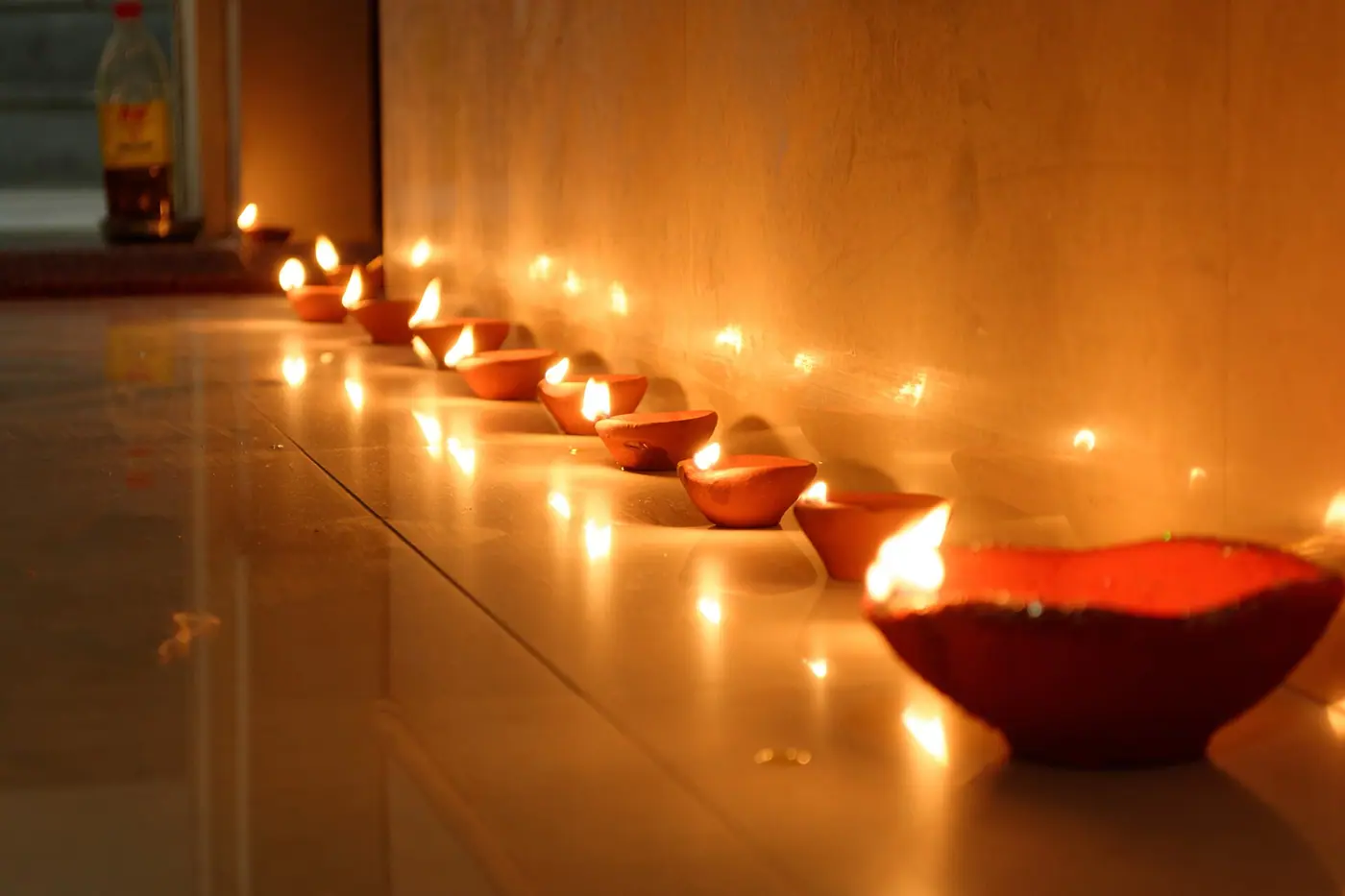
Lakshmi Puja falls on Sunday 8 November 2026 across Denmark, in an early Nordic dusk. Local Lakshmi Puja and Dhanteras windows for Copenhagen, Aarhus, Odense and Aalborg, verified temples from Skovlunde to Brande, and the Danish rules on fireworks and candles.
Quick answer
Diwali (Lakshmi Puja) 2026 in Denmark is on Sunday 8 November. In Copenhagen the Lakshmi Puja muhurat is 4:26 PM – 5:56 PM, and in Aarhus 4:33 PM – 6:03 PM. Dhanteras is Friday 6 November 2026.
Editor's note: This page was last checked on 10 October 2026. The local times were calculated by HinduTone using the Drik Panchang method (Pradosh Kaal with the Vrishabha lagna) for each city, and checked against Drik Panchang for major world cities to within one to two minutes. They are in Central European Time, because Danish summer time ended on Sunday 25 October. Event details come only from organisers' own announcements. Temples follow their own priests' calendars, so please confirm the time with your temple.
Diwali in Denmark is a festival of the early Nordic dark. On Sunday 8 November the sun sets in Copenhagen at 4:16 PM, so the Lakshmi Puja begins at an hour when families in Delhi or Frankfurt would still be shopping for sweets. Copenhagen's puja is over before six. That means planning: the diyas, the prasad and the video call to India all need to be ready by mid-afternoon. Denmark's Hindus also come from two different worlds: Sri Lankan Tamil families, who built temples in the towns of Jutland, and a newer community of Indian professionals and students, mostly around Copenhagen.
Diwali 2026 in Denmark: the five days
| Day | Date | What is observed |
|---|---|---|
| Dhanteras (Yama Deepam) | Friday 6 November | Dhanvantari and Lakshmi puja at dusk, buying a new utensil or a little gold or silver, and a south-facing lamp for Yama |
| Kali Chaudas | Saturday 7 November | Gujarati tradition of protection prayers to Kali and Hanuman |
| Diwali / Lakshmi Puja | Sunday 8 November | Lakshmi and Ganesha puja in the evening, diyas through the home. Also Narak Chaturdashi and Tamil Deepavali (morning oil bath), Kali Puja for Bengali families, and Chopda / Sharda Puja for Gujarati businesses |
| Govardhan Puja / Annakut | Tuesday 10 November (in India) | Annakut offering of many dishes to Krishna, Bali Pratipada and the Gujarati New Year |
| Bhai Dooj | Wednesday 11 November (in India) | Sisters apply tilak to brothers and pray for their long life |
The Amavasya (new moon) tithi runs from 11:27 AM IST on Sunday 8 November to 12:31 PM IST on Monday 9 November, so the whole Danish evening of the 8th falls inside it. For Tamil families, Deepavali is the same Sunday, beginning with the early-morning oil bath. The Govardhan Puja and Bhai Dooj dates above are the dates in India; Danish temples may announce their own day for Annakut and Bhai Dooj, so check with yours.
Each day has its story: Rama's return to Ayodhya, Krishna's victory over Narakasura, Lakshmi's emergence from the churning of the ocean, and Vamana's gift of Bali Pratipada to King Bali. Jains mark Mahavira's Nirvana at the same time, and Sikhs celebrate Bandi Chhor Divas. For the full stories, see our 5 days of Diwali 2026 explained.
Lakshmi Puja muhurat 2026, city by city
All times are Central European Time (CET), calculated by HinduTone using the Drik Panchang method (Pradosh Kaal with the Vrishabha lagna); checked against Drik Panchang for major world cities to within one to two minutes; confirm with your temple.
| City | Region | Lakshmi Puja (Sun 8 Nov) | Pradosh Kaal | Dhanteras puja (Fri 6 Nov) |
|---|---|---|---|---|
| Copenhagen | Capital Region | 4:26 PM – 5:56 PM | 4:16 PM – 7:19 PM | 4:34 PM – 6:04 PM |
| Aarhus | Central Jutland | 4:33 PM – 6:03 PM | 4:24 PM – 7:27 PM | 4:41 PM – 6:11 PM |
| Odense | Southern Denmark | 4:36 PM – 6:07 PM | 4:26 PM – 7:28 PM | 4:44 PM – 6:15 PM |
| Aalborg | North Jutland | 4:29 PM – 5:57 PM | 4:21 PM – 7:26 PM | 4:37 PM – 6:05 PM |
Sunset on Sunday 8 November is at 4:16 PM in Copenhagen, 4:21 PM in Aalborg, 4:24 PM in Aarhus and 4:26 PM in Odense. On Friday 6 November it is at 4:20 PM in Copenhagen, 4:25 PM in Aalborg, 4:28 PM in Aarhus and 4:30 PM in Odense.
Pradosh Kaal is the period of about three hours after sunset, when Lakshmi is believed to visit homes. Vrishabha lagna is the time when Taurus, a 'fixed' (sthir) sign, is rising in the east; worshipping Lakshmi then is believed to make her stay in the home. The Lakshmi Puja column is where the two overlap. If you miss it, any time within Pradosh Kaal is still traditional, and in Copenhagen that runs until 7:19 PM.
Why the Danish times look unusual: Denmark lies far north, so in November the sun sets very early and the Pradosh Kaal starts in what feels like the afternoon. Copenhagen, in the east, has the earliest sunset of the four cities; Odense, further west, is ten minutes later. Aalborg is a special case: it sets earlier than Aarhus because it is further north, so its window opens at 4:29 PM but also closes earliest, at 5:57 PM. Never convert India's muhurat into Danish time. India is four and a half hours ahead of Denmark in November, but the window depends on your own sunset. For other European cities, see our Lakshmi Puja muhurat 2026 for Europe, city-wise.
The Hindu community in Denmark
The newer and larger Hindu-heritage group in Denmark comes straight from India. According to the Ministry of Immigration and Integration's 2025 migration report, based on Statistics Denmark data, 22,457 people of Indian origin lived in Denmark on 1 January 2025: 18,958 immigrants and 3,499 Danish-born descendants. The same report shows that 78% of immigrants from India hold a residence permit for work or study, which matches what you see at any Copenhagen Diwali gathering: engineers, researchers, IT and life-science professionals, university students and their young families. Not all of them are Hindu, and the statistics do not record religion. They come from every part of India, so a Danish Diwali mixes North Indian Lakshmi-Ganesha puja, Gujarati Chopda Puja, Bengali Kali Puja and South Indian customs.
The older community is Sri Lankan Tamil. A survey of Hinduism in Denmark by Aarhus University's Center for Contemporary Religion (2014) describes Sri Lankan Tamil Hindu temples on Zealand and in Jutland, including two newer temples serving about 500 Sri Lankan Tamil families in the Næstved and Slagelse area, and temples in Aabenraa and in Svenstrup near Aalborg. For these families the festival is Deepavali, celebrated with the dawn oil bath, new clothes, temple worship and sweets. The same survey notes that some Nepali Hindus use the Copenhagen-area temple, and that Hindus from southern Sweden also visit Danish temples.
Where to celebrate: temples and community organisations
The temples below are recorded in the Aarhus University survey or in an official organisation listing. We give name and area only, so check each temple's own channels for times. Danish temples are mostly small and run by volunteers. At Diwali they usually hold an evening Lakshmi puja with bhajans and aarti, followed by shared vegetarian food. Temples and community associations usually announce Diwali programmes from mid-October — check their websites and social pages.
Copenhagen and the Capital Region
Most of Denmark's Indian families live in and around Copenhagen, and the capital's window, 4:26 PM – 5:56 PM, is the earliest in the country.
- Bharatiya Mandir — Skovlunde (Ballerup), western Copenhagen. Consecrated in 1997, it welcomes everyone with a connection to India, North and South Indian alike, and is used by Nepali Hindus too. The Aarhus University survey recorded 400 to 500 people at the big festivals of Deepavali, Holi and Navratri.
- ISKCON Copenhagen — Vanløse, Copenhagen. Founded in 1979 and in its present temple since 2002 (ISKCON centre listing). Some Indian families also come here for festivals.
Aarhus, Herning and Brande (Central Jutland)
Aarhus has a large Indian student and professional community. We could not confirm a Hindu temple in Aarhus itself, but Central Jutland is the heartland of Tamil Hindu worship in Denmark, within about an hour's drive.
- Sree Abirami Amman Temple — Brande. A goddess temple led by its priestess, with a temple tower completed in 2012; the survey describes its summer chariot festival as drawing thousands of devotees from across Europe.
- Sree Sithy Vinayakar Temple — Herning. A Tamil Ganesha temple that, according to the survey, holds puja every day.
At Deepavali, Tamil temples typically hold special abhishekam and puja for the deity, and families come in new clothes after the morning oil bath.
Odense and the south: Vejle
We could not confirm a Hindu temple in Odense. Families there usually celebrate at home or with friends, or drive to Brande, Herning or Copenhagen. In Jutland, the main Diwali gathering announced so far is a community festival rather than a temple puja:
- Festival of Lights – Diwali 'i' Danmark Fest 2026, Saturday 7 November 2026, Mølholm School, Vejle — announced by the Indian Association of Denmark (IAD); check before you go. When we checked, the event page said it was fully booked, with a waiting list and a registration deadline of 1 November. In past years, IAD has held the fest at DGI Huset in Vejle.
Aalborg (North Jutland)
Aalborg's Indian community is centred on the university and the region's engineering firms. The Aarhus University survey records a Sri Lankan Tamil temple in Svenstrup, just south of Aalborg, but gives no further details, so ask in your community before visiting. Aalborg's window is 4:29 PM – 5:57 PM.
Celebrating at home in Denmark
For most Danish Hindu families, Lakshmi Puja is a night at home. Here is a short puja you can do in your city's window:
- Clean the home in the days before, and draw a rangoli or Lakshmi footprints at the front door.
- Bathe and dress in clean or new clothes. Set up a small altar with Lakshmi and Ganesha, a kalash of water, rice, flowers, sweets and coins.
- Light the main diya, pray to Ganesha first, then offer kumkum, flowers, akshat and naivedya to Lakshmi with her mantras.
- Sing the Lakshmi aarti, light diyas through the home, and share prasad. Business families may also worship their account books (Chopda Puja).
For the full step-by-step version, see our Lakshmi Puja 2026 vidhi.
Diyas in a Danish flat: many Indian families in Copenhagen and Aarhus live in apartments with shared stairwells. Put diyas on metal trays, away from curtains and window decorations, and never leave a flame burning in an empty room. Beredskabsstyrelsen, the Danish Emergency Management Agency, advises always putting out candles when you leave a room, keeping them well away from curtains and decorations, keeping water nearby and testing your smoke alarms. Do not disable a smoke alarm for the puja; open a window briefly instead, as ghee lamps and incense can set off a sensitive alarm. Electric diyas and fairy lights are the safer choice for window sills, balconies and children's rooms. If you rent, from a private landlord or an andelsbolig or almene bolig association, read the house rules (husorden) on balconies, stairwells and open flames.
Weather and light: early November in Denmark is usually cool, damp and windy, and it is dark before half past four. Doorstep diyas will often blow out in the wind, so use glass lanterns outside, or keep the lamps on the inside of the window where neighbours can still see them.
Food and decorations you can find locally
Copenhagen has several Indian and South Asian grocers, and Aarhus, Odense and Aalborg have smaller ones, which between them stock atta, besan, ghee, jaggery, dals, spices, and around Diwali, sweets, clay diyas, cotton wicks, kumkum and puja items. Stock can run short in the week before Diwali, so buy in late October, and order murtis or special items online early. Tea lights and LED candles are easy to find in every Danish supermarket. Many families make their own mithai and Deepavali savouries at home.
Diwali with children and second-generation families
Lakshmi Puja falls on a Sunday in 2026, which makes it easy for children to take part, and the early dusk means even small children can stay up for the whole puja. Dhanteras on Friday 6 November and Monday 9 November are normal school days. If you would like your child to miss school for a festival day, talk to the school well in advance.
Children here grow up speaking Danish and English, so the festival is a good time to use your home language. Ask grandparents to tell the Diwali stories in Hindi, Tamil, Telugu, Bengali, Gujarati or Nepali over a video call while the diyas are lit, and teach children the Lakshmi aarti in your family's tradition. Give them real jobs: filling wicks, drawing the rangoli, ringing the bell at aarti or handing out prasad to neighbours with a short note explaining the festival. For craft and quiz ideas, see our Diwali activities for kids.
Fireworks, safety and local rules
Denmark's fireworks rules leave no room for Diwali crackers. According to Sikkerhedsstyrelsen, the Danish Safety Technology Authority, private persons may fire fireworks only from 31 December to 1 January, and New Year fireworks may only be sold from 15 to 31 December. Outside that season, Sikkerhedsstyrelsen explains, only certified display pyrotechnicians may set off fireworks, with permission from the municipal fire service. So as a private family you cannot fire rockets or crackers for Diwali, and you should not bring them back from India or elsewhere.
Sikkerhedsstyrelsen lists small F1 items, such as sparklers, as usable all year. Sparklers for the children on a balcony or in the garden, with a bucket of water nearby, are therefore within the rules. We could not find an official Danish page on sky lanterns, so do not release them unless your municipality (kommune) or local fire service has confirmed it is allowed. Bonfires and other open fires outdoors are also set locally, so check with your kommune first.
Celebrating far from family
For many Indian families in Denmark, this may be one of the first Diwalis away from parents. India's Lakshmi Puja happens four and a half hours before yours, so you can join your family's aarti on video at lunchtime, then do your own puja at dusk and call them back, late at night in India, to show the lit diyas. Many large temples in India stream Diwali darshan online. Diwali is also a time for seva: help in your temple's kitchen, donate to its fund, or invite a student who is alone this year to share your prasad.
Diwali checklist for Denmark
- Note your city's Lakshmi Puja window for Sunday 8 November; in Copenhagen it starts at 4:26 PM.
- Note the Dhanteras time for Friday 6 November and plan to leave work in time.
- Confirm your temple's Diwali or Deepavali programme on its own channels.
- Buy diyas, wicks, ghee, kumkum and sweets in late October.
- Test your smoke alarms and decide where diyas can stand safely.
- Use LED lights for balconies, window sills and children's rooms.
- Read your building's house rules on open flames and balconies.
- Do not buy or bring back fireworks; sparklers (F1) only.
- Do not release sky lanterns unless your kommune has confirmed it is allowed.
- Book a video call with family in India or Sri Lanka around the puja.
- If you registered for the IAD fest in Vejle on 7 November, check its page before you go.
Frequently asked questions
When is Diwali 2026 in Denmark?
Lakshmi Puja is on the evening of Sunday 8 November 2026 in every Danish city. Dhanteras is Friday 6 November. In Copenhagen the Lakshmi Puja window is 4:26 PM – 5:56 PM and in Aarhus 4:33 PM – 6:03 PM (Central European Time, calculated by HinduTone using the Drik Panchang method; confirm with your temple).
Why is the Lakshmi Puja so early in Denmark?
Because the sun sets so early in a Danish November. Lakshmi Puja is done in Pradosh Kaal, which starts at sunset, and on 8 November the sun sets at 4:16 PM in Copenhagen and 4:26 PM in Odense. The best window, when the fixed sign Vrishabha is rising, therefore begins at around half past four in the afternoon, which is earlier than in most of Europe.
Is the Dhanteras puja on Friday possible after work in Denmark?
Yes, if you plan for it. The Dhanteras window on Friday 6 November is 4:34 PM – 6:04 PM in Copenhagen, 4:41 PM – 6:11 PM in Aarhus, 4:44 PM – 6:15 PM in Odense and 4:37 PM – 6:05 PM in Aalborg. Leave work a little early, or do the puja later within Pradosh Kaal, which in Copenhagen runs 4:20 PM – 7:21 PM.
Is Diwali a public holiday in Denmark?
No. Diwali is not a Danish public holiday. In 2026 Lakshmi Puja falls on a Sunday, so families can celebrate at home; Dhanteras on Friday 6 November and Monday 9 November onwards are normal working and school days.
Can I set off fireworks or crackers for Diwali in Denmark?
No. According to Sikkerhedsstyrelsen, private persons may fire fireworks only from 31 December to 1 January. Outside that period only certified display pyrotechnicians may fire them, with permission from the municipal fire service. Small F1 items such as sparklers may be used all year.
Where can I celebrate Diwali at a temple in Denmark?
In the Copenhagen area, Bharatiya Mandir in Skovlunde serves Indian Hindus from all regions, and ISKCON Copenhagen is in Vanløse. In Jutland, the Tamil temples in Brande and Herning are the best-known Hindu temples in the country. Odense and Aarhus families often travel to these or celebrate at home and in community groups. Check each temple's own channels for Diwali timings.
Related guides
- Diwali / Deepavali 2026: complete 5-day guide
- The 5 days of Diwali 2026 explained
- Lakshmi Puja 2026: date, muhurat and step-by-step vidhi
- Lakshmi Puja muhurat 2026 for Europe, city-wise
- Diwali 2026 in Sweden: Lakshmi Puja muhurat city by city
- Diwali 2026 in Norway: Lakshmi Puja muhurat city by city
- Diwali celebrations in Germany 2026
- Dussehra 2026 in Denmark, city by city
Sources
- Ministry of Immigration and Integration (Udlændinge- og Integrationsministeriet): International Migration – Denmark: Report to OECD, September 2025
- Center for SamtidsReligion, Aarhus University (Religion i Danmark): Hinduisme i Danmark i dag – Hinduisme og hinduismerelaterede grupper i Danmark 2012–2014 (M. Q. Fibiger)
- ISKCON Centres: ISKCON Copenhagen
- Indian Association of Denmark (IAD): Festival of Lights – Diwali 'i' Danmark Fest 2026
- Indian Association of Denmark (IAD): Festival of Lights – Diwali 'i' Danmark Fest 2025
- Sikkerhedsstyrelsen (Danish Safety Technology Authority): Ændret periode for affyring af fyrværkeri (20 December 2024)
- Sikkerhedsstyrelsen (Danish Safety Technology Authority): Anvendelse af fyrværkeri uden for sæsonen
- Beredskabsstyrelsen (Danish Emergency Management Agency) and Danske Beredskaber: Boligbrande topper i december (21 November 2025)
Muhurat: HinduTone calculation (Drik Panchang method)
You might also like
Diwali 2026 in Tanzania: Lakshmi Puja Muhurat City by City, Dhanteras Times and Temples
Diwali 2026 in Bahrain: Lakshmi Puja Muhurat City by City, Dhanteras Times and Temples
Diwali 2026 in Finland: Lakshmi Puja Muhurat City by City, Dhanteras Times and Temples