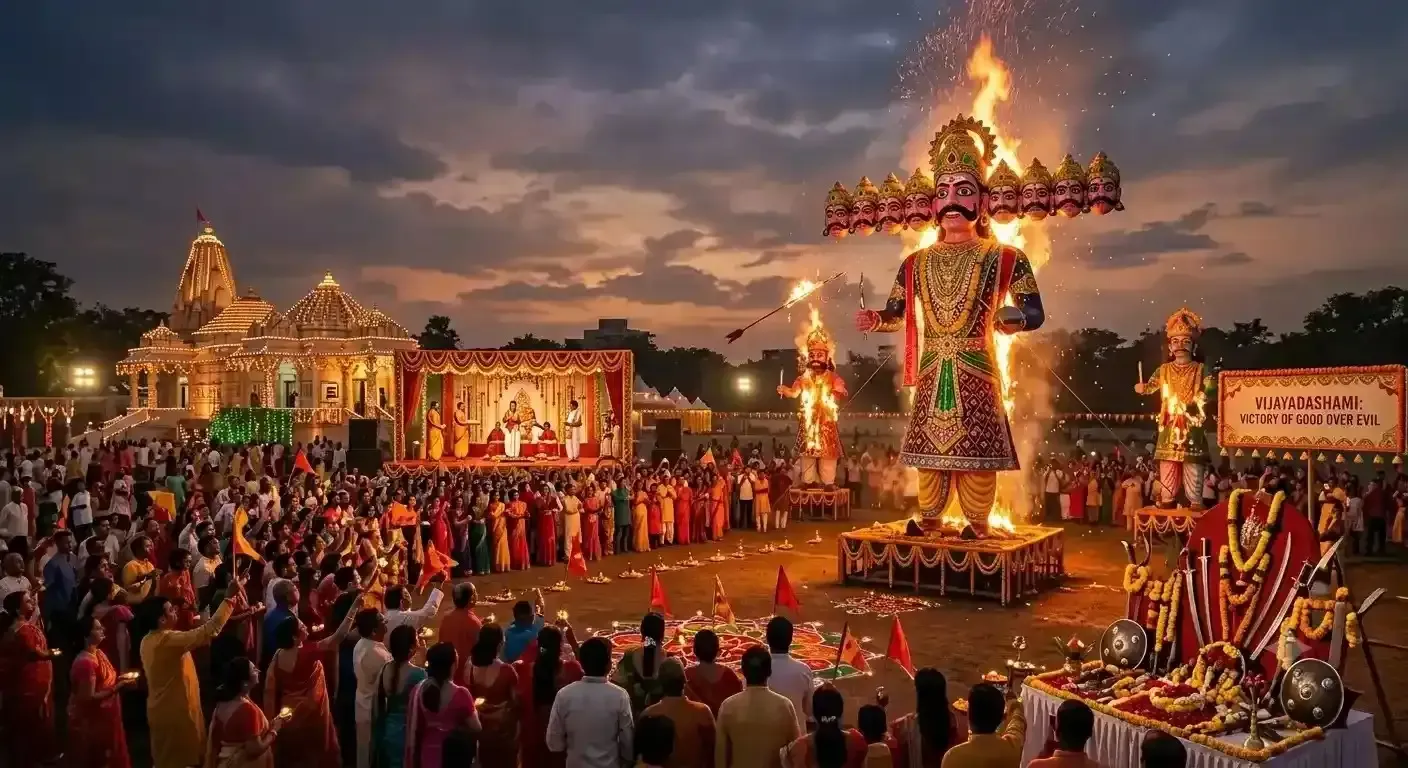
Devi Suktam (Rigveda 10.125): Aham Rudrebhih in Sanskrit with IAST and Meaning
The Devi Suktam, also called the Vak Sukta or Vagambhrini Sukta, is Rigveda 10.125, the hymn in which the Goddess speaks in her own voice: 'aham rudrebhir vasubhish charami'. Here are all 8 verses in Devanagari and IAST from sanskritdocuments.org, with our own plain-English meaning and notes on reciting it in Navratri.
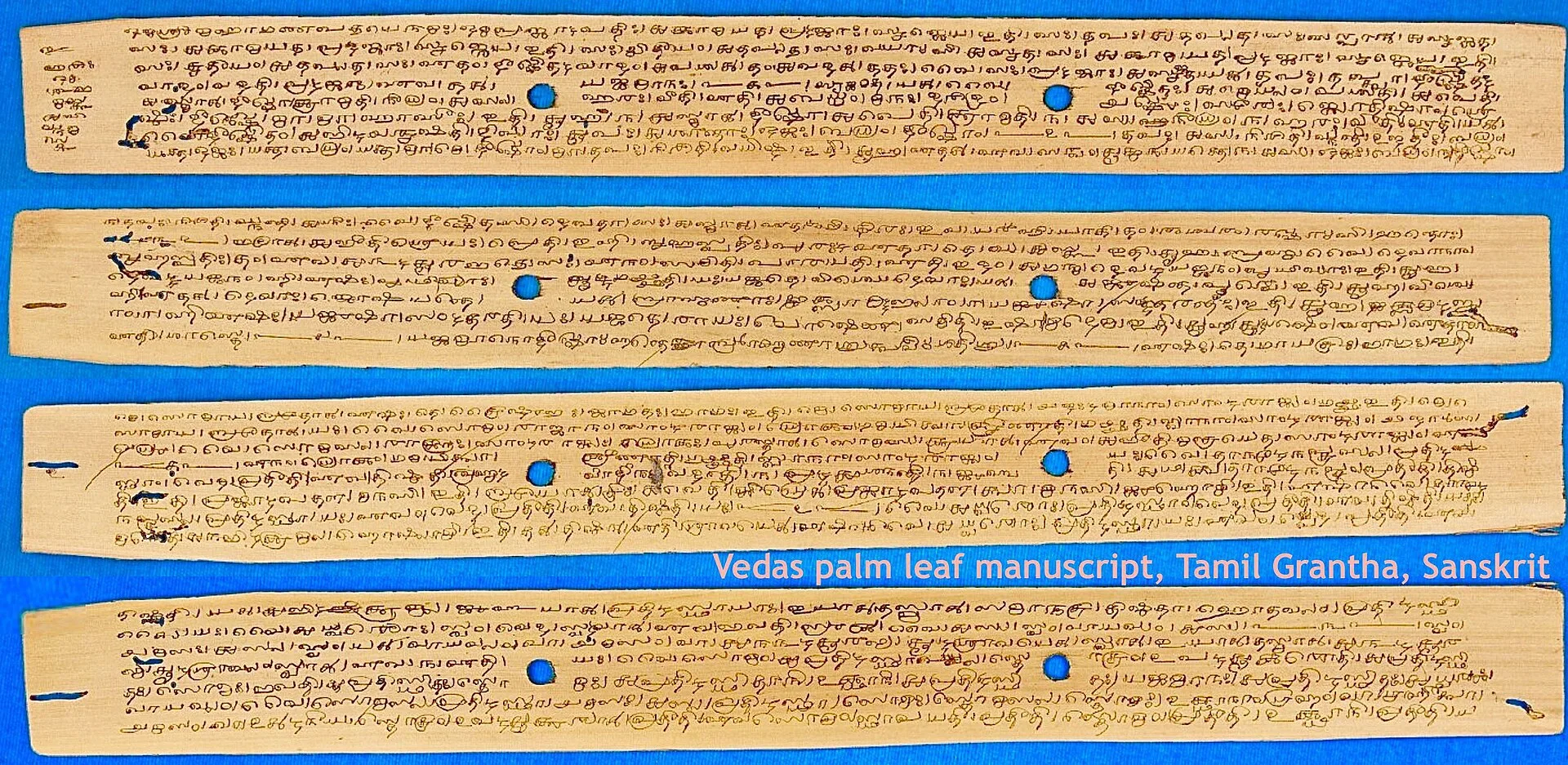
The Devi Suktam, also called the Vak Sukta or Vagambhrini Sukta, is Rigveda 10.
Quick answer: The Devi Suktam, also called the Vak Sukta or Vagambhrini Sukta, is Rigveda 10.125, an 8-verse hymn in which the Goddess speaks in her own voice, beginning 'aham rudrebhir vasubhish charami', 'I move with the Rudras and the Vasus'. She declares that she upholds all the gods and lives in every being. It is traditionally recited during Navratri, often after the Devi Mahatmya.
Last updated: 19 October 2026. The Sanskrit on this page comes from the text published by sanskritdocuments.org, converted to Devanagari and IAST by software rather than retyped by hand. It is plain text without Vedic accent marks; the source also gives an accented version. The English meanings are our own.
Today, Monday 19 October 2026, is Durga Ashtami and Maha Navami in India, with Dussehra on Tuesday 20 October. Families completing the Devi Mahatmya reading today often close with this hymn.
What the Devi Suktam is
Most Rigveda hymns are addressed to a god. In this one the divine power speaks for herself. Vak, the sacred word, says that she moves with all the groups of gods, upholds Mitra and Varuna, Indra and Agni, gives wealth to the worshipper, and is present in everyone who eats, sees, breathes and hears, even when they do not know it. She bends Rudra's bow, has entered heaven and earth, and is greater than both.
In the later Shakta tradition this voice is understood as the Great Goddess, the Shakti behind all the gods, which is why the hymn is called the Devi Suktam and is read alongside the Devi Mahatmya. It should not be confused with the 'Tantrokta' Devi Suktam ('ya devi sarvabhuteshu'), which is a hymn from the fifth chapter of the Devi Mahatmya itself.
| Detail | As given in our source |
|---|---|
| Text | Rigveda 10.125 |
| Seer (rishi) | Vak Ambhrini |
| Deity (devata) | Vak Ambhrini |
| Metre | Trishtubh (verse 2 Jagati), with variations |
| Verses | 8 |
Devi Suktam with meaning
Each verse appears in Devanagari, then IAST transliteration, then a plain-English meaning. In IAST, ā, ī and ū are long vowels, ṛ is a vowel close to 'ri', ṇ and ṣ are retroflex sounds, and ś is close to 'sh'.
Verses 1 to 3: the Goddess who upholds the gods
Verse 1
ॐ अहं रुद्रेभिर्वसुभिश्चराम्यहमादित्यैरुत विश्वदेवैः ।
अहं मित्रावरुणोभा बिभर्म्यहमिन्द्राग्नी अहमश्विनोभा ॥ १॥
oṃ ahaṃ rudrebhirvasubhiścarāmyahamādityairuta viśvadevaiḥ |
ahaṃ mitrāvaruṇobhā bibharmyahamindrāgnī ahamaśvinobhā || 1||
Meaning: I move with the Rudras and the Vasus, with the Adityas and with all the gods. I uphold both Mitra and Varuna, Indra and Agni, and both the Ashvins.
Verse 2
अहं सोममाहनसं बिभर्म्यहं त्वष्टारमुत पूषणं भगम् ।
अहं दधामि द्रविणं हविष्मते सुप्राव्ये ए ३ यजमानाय सुन्वते ॥ २॥
ahaṃ somamāhanasaṃ bibharmyahaṃ tvaṣṭāramuta pūṣaṇaṃ bhagam |
ahaṃ dadhāmi draviṇaṃ haviṣmate suprāvye e 3 yajamānāya sunvate || 2||
Meaning: I uphold the swelling Soma, and Tvashtr, Pushan and Bhaga. I give wealth to the one who offers oblations, to the devoted worshipper who presses the Soma.
Verse 3
अहं राष्ट्री संगमनी वसूनां चिकितुषी प्रथमा यज्ञियानाम् ।
तां मा देवा व्यदधुः पुरुत्रा भूरिस्थात्रां भूर्या वेशयन्तीम् ॥ ३॥
ahaṃ rāṣṭrī saṃgamanī vasūnāṃ cikituṣī prathamā yajñiyānām |
tāṃ mā devā vyadadhuḥ purutrā bhūristhātrāṃ bhūryā veśayantīm || 3||
Meaning: I am the queen, the gatherer of riches, the knowing one, the first of those worthy of worship. The gods have set me in many places; I dwell in many homes and enter into many beings.
Verses 4 to 6: the power in every living being
Verse 4
मया सोऽअन्नमत्ति यो विपश्यति यः प्राणिति य ईं शृणोत्युक्तम् ।
अमन्तवो मान्त उपक्षियन्ति श्रुधिश्रुत श्रद्धिवं ते वदामि ॥ ४॥
mayā so'annamatti yo vipaśyati yaḥ prāṇiti ya īṃ śṛṇotyuktam |
amantavo mānta upakṣiyanti śrudhiśruta śraddhivaṃ te vadāmi || 4||
Meaning: Through me one eats food, sees, breathes and hears what is spoken. Without knowing it, they dwell in me. Listen, you who are renowned: I tell you what deserves to be believed.
Verse 5
अहमेव स्वयमिदं वदामि जुष्टं देवेभिरुत मानुषेभिः ।
यं कामये तं तमुग्रं कृणोमि तं ब्रह्माणं तमृषिं तं सुमेधाम् ॥ ५॥
ahameva svayamidaṃ vadāmi juṣṭaṃ devebhiruta mānuṣebhiḥ |
yaṃ kāmaye taṃ tamugraṃ kṛṇomi taṃ brahmāṇaṃ tamṛṣiṃ taṃ sumedhām || 5||
Meaning: I myself proclaim this, which gods and humans welcome: whomever I love, I make mighty; I make him a sage, a seer, a person of great wisdom.
Verse 6
अहं रुद्राय धनुरातनोमि ब्रह्मद्विषे शरवे हन्तवा उ ।
अहं जनाय समदं कृणोम्यहं द्यावापृथिवी आविवेश ॥ ६॥
ahaṃ rudrāya dhanurātanomi brahmadviṣe śarave hantavā u |
ahaṃ janāya samadaṃ kṛṇomyahaṃ dyāvāpṛthivī āviveśa || 6||
Meaning: I bend the bow for Rudra, so that his arrow may strike the hater of the sacred word. I stir up the struggle for the people; I have entered heaven and earth.
Verses 7 and 8: beyond heaven and earth
Verse 7
अहं सुवे पितरमस्य मूर्धन् मम योनिरप्स्व अन्तः समुद्रे ।
ततो वितिष्ठे भुवनानु विश्वो तामूं द्यां वर्ष्मणोपस्पृशामि ॥ ७॥
ahaṃ suve pitaramasya mūrdhan mama yonirapsva antaḥ samudre |
tato vitiṣṭhe bhuvanānu viśvo tāmūṃ dyāṃ varṣmaṇopaspṛśāmi || 7||
Meaning: I give birth to the Father on the summit of this world; my origin is in the waters, in the ocean. From there I spread through all the worlds and touch yonder heaven with my height.
Verse 8
अहमेव वातऽइव प्रवाम्यारभमाणा भुवनानि विश्वा ।
परो दिवा परएना पृथिव्यै तावती महिना सम्बभूव ॥ ८॥
ahameva vāta'iva pravāmyārabhamāṇā bhuvanāni viśvā |
paro divā paraenā pṛthivyai tāvatī mahinā sambabhūva || 8||
Meaning: I breathe forth like the wind, holding all the worlds together. Beyond the heaven, beyond this earth: so vast have I become in my greatness.
Shanti
ॐ शान्तिः शान्तिः शान्तिः ॥
oṃ śāntiḥ śāntiḥ śāntiḥ ||
Meaning: Om, peace, peace, peace.
When the Devi Suktam is traditionally recited
- Navratri: after the Devi Mahatmya (Durga Saptashati) reading, or on its own each day. See our Navaratri 2026 guide.
- Durga Ashtami and Maha Navami: on 19 October 2026. See Maha Ashtami 2026 and Maha Navami 2026.
- Fridays: the weekly day of the Goddess. See the Friday (Shukravar) guide and the Lalita Sahasranama guide.
- Saraswati Puja: because the hymn is the voice of Vak, the goddess of speech, some families recite it with the Medha Suktam at Saraswati Puja.
Many Saptashati books print the Vedic Ratri Suktam before the 700 verses and the Devi Suktam after them, so the two Rigveda hymns frame the reading.
How to recite the Devi Suktam
- Light a lamp before an image of the Goddess and offer a flower and a little kumkum.
- Begin with a prayer to Ganesha.
- Recite the 8 verses slowly, then 'om shantih shantih shantih'.
- If you have just finished the Devi Mahatmya, offer your reading to the Goddess with a short prayer and an aarti.
The hymn takes about three minutes. Almost every verse begins with 'aham', 'I', which makes it easy to keep your place: verses 1, 2, 3, 6 and 7 begin 'aham', verses 5 and 8 begin 'aham eva', 'I myself', and only verse 4 begins differently, with 'maya', 'through me'.
Significance
The Devi Suktam is one of the earliest statements in Indian scripture of the idea that a single divine power lies behind all the gods and lives in every being. For devotees it is the Goddess's own voice, and they traditionally believe that reciting it with devotion draws her grace. These are prayers and expressions of faith, not guarantees.
Other Vedic hymns to the Goddess on HinduTone: the Durga Suktam, the Ratri Suktam and the Sri Suktam.
Frequently asked questions
Why is it called the Devi Suktam and the Vak Sukta?
In the Rigveda it is the hymn of Vak, speech, and our source names its seer and its deity as Vak Ambhrini (Vagambhrini), the daughter of the sage Ambhrina. Because the speaker describes herself as the power behind all the gods, the later Devi tradition reads it as the Goddess's own declaration, and it is known as the Devi Suktam.
Where is the Devi Suktam found?
It is hymn 125 of the tenth book (mandala) of the Rigveda, a hymn of 8 verses. It is different from the 'Tantrokta' Devi Suktam ('namo devyai mahadevyai' and 'ya devi sarvabhuteshu'), which comes from the fifth chapter of the Devi Mahatmya.
When is the Devi Suktam recited?
It is traditionally recited during Navratri, and many books of the Durga Saptashati (Chandi Path) print it after the 700 verses. It is also chanted on Durga Ashtami, Maha Navami and Fridays, and in Devi pujas through the year.
Who is speaking in the Devi Suktam?
The Goddess speaks in the first person throughout: 'aham', 'I'. This makes it unusual in the Rigveda, where most hymns are addressed to a deity rather than spoken by one.
Do I need the Vedic accents to chant it?
In Vedic recitation it is chanted with svaras learned from a teacher. Our page gives the plain text; the source file also contains an accented version.
What does verse 5 mean by 'whomever I love I make mighty'?
The Goddess says she chooses whom to make strong, wise or a seer. Devotees traditionally read this as a statement of the Goddess's grace. It is a statement of faith, not a promise of any particular result to the one who recites it.
Editor's note (19 October 2026)
The text on this page is taken from the Devi Suktam (Rigveda) on sanskritdocuments.org (file deviisuukta.itx, encoded and proofread by Rekha Venkatesh, Paulo Santos and Dhruba Chakroborty), using the plain-text (svara-rahita) section of the file, converted from ITRANS to Devanagari and IAST with the indic_transliteration software, and checked line by line against the site's Devanagari page. The reference (Rigveda 10.125) and the seer and deity are as stated in the source. Two corrections to word division: in verse 4 the source joins 'amantavomānta', divided here as अमन्तवो मान्त (amantavo mānta); and in verse 6 the source divides 'śaravehanta vā u', divided here as शरवे हन्तवा उ (śarave hantavā u). We keep the source's printing of 'suprāvye e 3' in verse 2 (the 3 marks a prolonged vowel), of 'apsva antaḥ' in verse 7 (many editions read अप्स्वन्तः), and of 'so'annam' and 'vāta'iva' with an avagraha in verses 4 and 8. The English meanings are our own plain renderings.
Related guides
You might also like
Ratri Suktam (Rigveda 10.127): All 8 Verses in Sanskrit with IAST and Meaning

Bhagya Suktam (Pratah Suktam): Sanskrit with IAST, Meaning and How to Chant
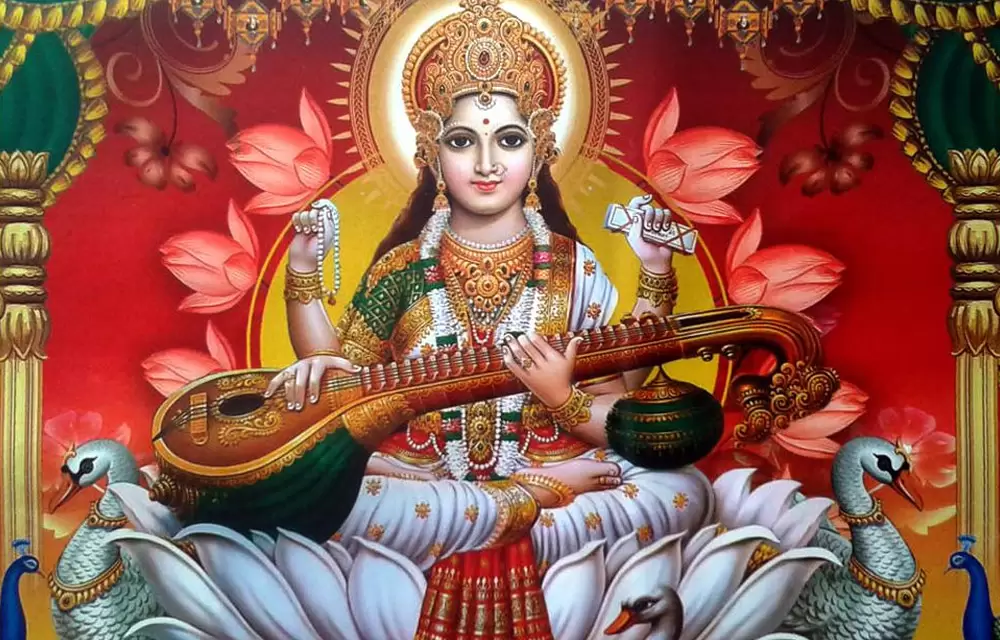
Medha Suktam: Vedic Prayer for Wisdom in Sanskrit with IAST and Meaning