Medha Suktam: Vedic Prayer for Wisdom in Sanskrit with IAST and Meaning
The Medha Suktam is the Vedic prayer to Medha, the goddess of wisdom and retentive intelligence, linked with Sarasvati: 'medham ma indro dadatu medham devi sarasvati'. Here is the full text from sanskritdocuments.org in Devanagari and IAST, with our own plain-English meaning and notes for students and for Vidyarambham on Vijayadashami.
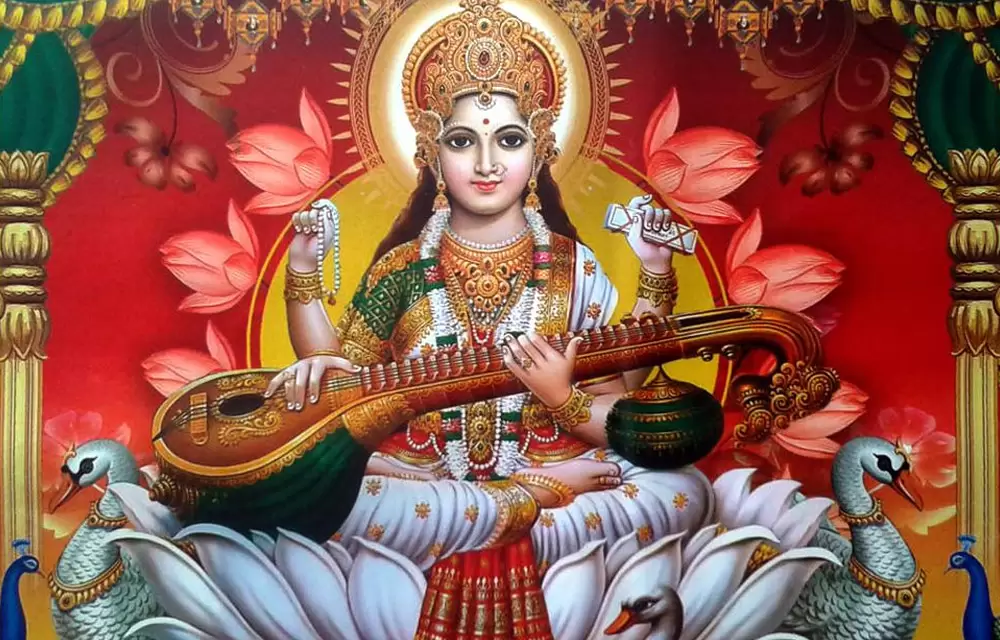
The Medha Suktam is the Vedic prayer to Medha, the goddess of wisdom and retentive intelligence, linked with Sarasvati: 'medham ma indro dadatu medham devi sarasvati'. Here is the full text from sanskritdocuments.
Quick answer: The Medha Suktam is the Vedic prayer to Medha, the goddess of wisdom, identified with Sarasvati, from the Taittiriya Aranyaka of the Krishna Yajurveda. It asks Indra, Sarasvati, the Ashvins, Agni and Surya to grant wisdom, clear speech and a good memory, and ends with a Sarasvati Gayatri. It is traditionally chanted by students and at Saraswati Puja and Vidyarambham on Vijayadashami.
Last updated: 19 October 2026. The Sanskrit on this page comes from the text published by sanskritdocuments.org, converted to Devanagari and IAST by software rather than retyped by hand. It is plain text without Vedic accent marks; the source also gives an accented version. The English meanings are our own.
Vijayadashami is tomorrow, Tuesday 20 October 2026. If your child is starting Vidyarambham or Aksharabhyasam, the Medha Suktam is one of the Vedic prayers families chant before the first letters are written.
What the Medha Suktam is
Medha is wisdom in the practical sense: the power to understand, hold on to what one has learned and use it well. The Medha Suktam treats this power as a goddess who 'has come to us gladly', and it names her as the divine Sarasvati. The hymn opens with a student's prayer (also found in the Taittiriya Upanishad) for a strong body, a sweet tongue and ears that hear much, and asks that 'what I have learned' be protected. The later verses ask the gods for wisdom, and the last section asks Agni, Indra and Surya to place in the worshipper wisdom, offspring, brilliance, strength and radiance.
| Detail | As given in our source |
|---|---|
| Text | Taittiriya Aranyaka 4, prapathaka 10, anuvaka 41 to 44 (Krishna Yajurveda) |
| Sections | 4 sections of prayer, then a Sarasvati Gayatri, the Hamsa Gayatri and shanti |
| Addressed to | Medha (wisdom) as a goddess, with Indra, Sarasvati, the Ashvins, Agni and Surya |
| Accents | The source has a plain and an accented version; we give the plain text |
Medha Suktam with meaning
The source does not number the verses; we follow its four paragraphs. Each section appears in Devanagari, then IAST transliteration, then a plain-English meaning. In IAST, ā, ī and ū are long vowels, ṛ is a vowel close to 'ri', ṇ and ṣ are retroflex sounds, and ś is close to 'sh'.
Opening prayer and the coming of Medha
Section 1
ॐ यश्छन्दसामृषभो विश्वरूपः । छन्दोभ्योऽध्यमृताथ्संबभूव ।
स मेन्द्रो मेधया स्पृणोतु । अमृतस्य देवधारणो भूयासम् ।
शरीरं मे विचर्षणम् । जिह्वा मे मधुमत्तमा ।
कर्णाभ्यां भूरिविश्रुवम् । ब्रह्मणः कोशोऽसि मेधया पिहितः ।
श्रुतं मे गोपाय । ॐ शान्तिः शान्तिः शान्तिः ॥
oṃ yaśchandasāmṛṣabho viśvarūpaḥ | chandobhyo'dhyamṛtāthsaṃbabhūva |
sa mendro medhayā spṛṇotu | amṛtasya devadhāraṇo bhūyāsam |
śarīraṃ me vicarṣaṇam | jihvā me madhumattamā |
karṇābhyāṃ bhūriviśruvam | brahmaṇaḥ kośo'si medhayā pihitaḥ |
śrutaṃ me gopāya | oṃ śāntiḥ śāntiḥ śāntiḥ ||
Meaning: May Indra, the foremost of the Vedic hymns, who takes every form and who arose from the immortal hymns, strengthen me with wisdom. O God, may I hold within me what is immortal. May my body be vigorous and my tongue speak sweetly; may my ears hear much. You are the treasury of sacred knowledge, covered by intelligence: guard what I have learned. Om, peace, peace, peace.
Section 2
ॐ मेधादेवी जुषमाणा न आगाद्विश्वाची भद्रा सुमनस्यमाना ।
त्वया जुष्टा नुदमाना दुरुक्तान् बृहद्वदेम विदथे सुवीराः ।
त्वया जुष्ट ऋषिर्भवति देवि त्वया ब्रह्माऽऽगतश्रीरुत त्वया ।
त्वया जुष्टश्चित्रं विन्दते वसु सानो जुषस्व द्रविणो न मेधे ॥
oṃ medhādevī juṣamāṇā na āgādviśvācī bhadrā sumanasyamānā |
tvayā juṣṭā nudamānā duruktān bṛhadvadema vidathe suvīrāḥ |
tvayā juṣṭa ṛṣirbhavati devi tvayā brahmā''gataśrīruta tvayā |
tvayā juṣṭaścitraṃ vindate vasu sāno juṣasva draviṇo na medhe ||
Meaning: The goddess Medha has come to us gladly, reaching everywhere, kind and gracious. Favoured by you, and driving away ill-spoken words, may we speak well and fully in the assembly, with good children around us. Favoured by you, O goddess, one becomes a seer; favoured by you, one becomes a learned priest who has gained glory; favoured by you, one finds many kinds of wealth. O Medha, be pleased with us and give us wealth.
Prayers to Indra, Sarasvati, Agni and Surya
Section 3
मेधां म इन्द्रो ददातु मेधां देवी सरस्वती ।
मेधां मे अश्विनावुभावाधत्तां पुष्करस्रजा ।
अप्सरासु च या मेधा गन्धर्वेषु च यन्मनः ।
दैवीं मेधा सरस्वती सा मां मेधा सुरभिर्जुषतां स्वाहा ॥
medhāṃ ma indro dadātu medhāṃ devī sarasvatī |
medhāṃ me aśvināvubhāvādhattāṃ puṣkarasrajā |
apsarāsu ca yā medhā gandharveṣu ca yanmanaḥ |
daivīṃ medhā sarasvatī sā māṃ medhā surabhirjuṣatāṃ svāhā ||
Meaning: May Indra give me wisdom; may the goddess Sarasvati give me wisdom; may both Ashvins, wearing lotus garlands, grant me wisdom. The wisdom that is in the apsaras and the mind that is in the gandharvas, the divine wisdom that is Sarasvati: may that fragrant wisdom be pleased with me. Svaha.
Section 4
आमां मेधा सुरभिर्विश्वरूपा हिरण्यवर्णा जगती जगम्या ।
ऊर्जस्वती पयसा पिन्वमाना सा मां मेधा सुप्रतीका जुषन्ताम् ।
मयि मेधां मयि प्रजां मय्यग्निस्तेजो दधातु
मयि मेधां मयि प्रजां मयीन्द्र इन्द्रियं दधातु
मयि मेधां मयि प्रजां मयि सूर्यो भ्राजो दधातु ।
āmāṃ medhā surabhirviśvarūpā hiraṇyavarṇā jagatī jagamyā |
ūrjasvatī payasā pinvamānā sā māṃ medhā supratīkā juṣantām |
mayi medhāṃ mayi prajāṃ mayyagnistejo dadhātu
mayi medhāṃ mayi prajāṃ mayīndra indriyaṃ dadhātu
mayi medhāṃ mayi prajāṃ mayi sūryo bhrājo dadhātu |
Meaning: May wisdom come to me, fragrant, taking every form, golden in colour, ever moving and worth seeking, full of strength and overflowing with nourishment; may that beautiful wisdom be pleased with me. May Agni place in me wisdom, offspring and brilliance. May Indra place in me wisdom, offspring and strength of the senses. May Surya place in me wisdom, offspring and radiance.
Sarasvati Gayatri, Hamsa Gayatri and shanti
ॐ महादेव्यै च विद्महे ब्रह्मपत्नी च धीमहि । तन्नो वाणी प्रचोदयात् ।
ॐ हंस हंसाय विद्महे परमहंसाय धीमहि । तन्नो हंसः प्रचोदयात् ।
ॐ शान्तिः शान्तिः शान्तिः ॥
oṃ mahādevyai ca vidmahe brahmapatnī ca dhīmahi | tanno vāṇī pracodayāt |
oṃ haṃsa haṃsāya vidmahe paramahaṃsāya dhīmahi | tanno haṃsaḥ pracodayāt |
oṃ śāntiḥ śāntiḥ śāntiḥ ||
Meaning: We know the great goddess; we meditate on the consort of Brahma; may Vani, the goddess of speech, inspire us. We know the Hamsa, the swan; we meditate on the supreme Hamsa; may that Hamsa inspire us. Om, peace, peace, peace.
When the Medha Suktam is traditionally chanted
- Saraswati Puja and Vidyarambham: during Navratri and on Vijayadashami, Tuesday 20 October 2026. See Saraswati Puja and Vidyarambham on Vijayadashami, Vidyarambham 2026 in Kerala and the Aksharabhyasam and Vidyarambham guide for NRIs.
- Before study and exams: a short daily prayer for students. See also mantras for students and mantras for JEE, NEET and UPSC preparation.
- Start of a school year: many families chant it on the first day of school or college.
- Thursdays: the day of the guru. See the Thursday (Guruvara) guide.
How to recite the Medha Suktam
- Sit facing a lamp, with a picture of Sarasvati and your books or a slate before you if you like.
- Begin with a prayer to Ganesha and the Gayatri mantra if you chant it.
- Recite the four sections, then the two Gayatris and 'om shantih shantih shantih'.
- Bow to Sarasvati and to your teachers, then begin your study.
A recitation takes about four minutes. Younger children can begin with section 3, 'medham ma indro dadatu', which is the best-known part, and the Saraswati Stuti 'ya kundendu'.
Significance
The Medha Suktam treats learning as something sacred: a gift of the gods that has to be asked for, received and protected. Devotees traditionally believe that chanting it with devotion invites Sarasvati's grace for study, memory and clear speech. These are prayers and expressions of faith, not guarantees of marks or results; regular study is still the student's part.
Frequently asked questions
Who is Medha in the Medha Suktam?
Medha means wisdom, especially the power to grasp and retain what one learns. In the hymn she is addressed as a goddess, Medha Devi, and is identified with Sarasvati ('daivim medha sarasvati'), the goddess of learning and speech.
Where does the Medha Suktam come from?
Our source gives it as Taittiriya Aranyaka 4, prapathaka 10, anuvaka 41 to 44, in the Krishna Yajurveda. The tenth prapathaka of the Taittiriya Aranyaka is also known as the Mahanarayana Upanishad. The opening prayer, 'yash chandasam rishabho vishvarupah', is also found in the Taittiriya Upanishad (Shiksha Valli).
Is the Medha Suktam good for students?
It is a traditional prayer for wisdom, memory and clear speech, and many families teach it to children and chant it before study or exams. Devotees believe it invites Sarasvati's grace, but it is a prayer, not a substitute for study.
When is the Medha Suktam chanted?
It is traditionally chanted at Saraswati Puja during Navratri, at Vidyarambham on Vijayadashami, at the start of a school year, and by students before daily study. Some families also chant it on Thursdays, the day of the guru.
What are the two Gayatris at the end?
The first, 'mahadevyai cha vidmahe brahmapatni cha dhimahi, tanno vani prachodayat', is a Sarasvati Gayatri. The second, 'hamsa hamsaya vidmahe paramahamsaya dhimahi, tanno hamsah prachodayat', is the Hamsa Gayatri, a prayer to the Self pictured as the swan.
Do I need the Vedic accents?
In Vedic recitation it is chanted with svaras learned from a teacher. Our page gives the plain text; the source also publishes an accented version encoded by Rajagopal Iyer.
Editor's note (19 October 2026)
The text on this page is taken from the Medha Suktam on sanskritdocuments.org (file medhasukta.itx, encoded with accents and proofread by Rajagopal Iyer), using the plain-text (niḥsvara) section of the file, converted from ITRANS to Devanagari and IAST with the indic_transliteration software, and checked line by line against the site's Devanagari page. The reference (Taittiriya Aranyaka 4, prapathaka 10, anuvaka 41 to 44) is as stated in the source. One correction: in section 3 the source writes जुषतां with the special Vedic anusvara sign (ꣳ), shown here as a plain anusvara. The source gives no verse numbers; the four sections follow its paragraphs. The English meanings are our own plain renderings.
Related guides
You might also like

Bhagya Suktam (Pratah Suktam): Sanskrit with IAST, Meaning and How to Chant
Devi Suktam (Rigveda 10.125): Aham Rudrebhih in Sanskrit with IAST and Meaning
Ratri Suktam (Rigveda 10.127): All 8 Verses in Sanskrit with IAST and Meaning