Saraswati Stuti (Ya Kundendu Tushara Hara Dhavala): Lyrics and Meaning
The Saraswati Stuti that begins 'Ya kundendu tushara hara dhavala' is the prayer to the Goddess of learning sung in schools across India. Here are all 16 verses with a simple English meaning, how to chant before study and exams, and its place in Vasant Panchami and Navratri Saraswati Puja.
The Saraswati Stuti that begins 'Ya kundendu tushara hara dhavala' is the prayer to the Goddess of learning sung in schools across India. Here are all 16 verses with a simple English meaning, how to chant before study and exams, and its place in Vasant Panchami and Navratri Saraswati Puja.
Quick answer: The Saraswati Stuti, also called Saraswati Vandana, is a prayer to the Goddess of learning that begins "Ya kundendu tushara hara dhavala", "She who is white as jasmine, the moon and frost". Its first verse is sung in school assemblies across India; the full stuti has 16 verses. No author is named in the text. Students chant it before study and exams, and families chant it on Vasant Panchami and during Saraswati Puja in Navratri.
Below are all 16 verses in Devanagari and IAST with a simple English meaning after each, followed by guidance on chanting and a short Saraswati prayer routine for exam time.
Saraswati Stuti: full text with meaning
The text follows the edition on sanskritdocuments.org. The meanings are faithful but not word for word.
Verse 1
या कुन्देन्दु-तुषारहार-धवला या शुभ्र-वस्त्रावृता
या वीणावरदण्डमण्डितकरा या श्वेतपद्मासना ।
या ब्रह्माच्युत-शंकर-प्रभृतिभिर्देवैः सदा पूजिता
सा मां पातु सरस्वती भगवती निःशेषजाड्यापहा ॥ १॥
yā kundendu-tuṣārahāra-dhavalā yā śubhra-vastrāvṛtā
yā vīṇāvaradaṇḍamaṇḍitakarā yā śvetapadmāsanā |
yā brahmācyuta-śaṃkara-prabhṛtibhirdevaiḥ sadā pūjitā
sā māṃ pātu sarasvatī bhagavatī niḥśeṣajāḍyāpahā || 1||
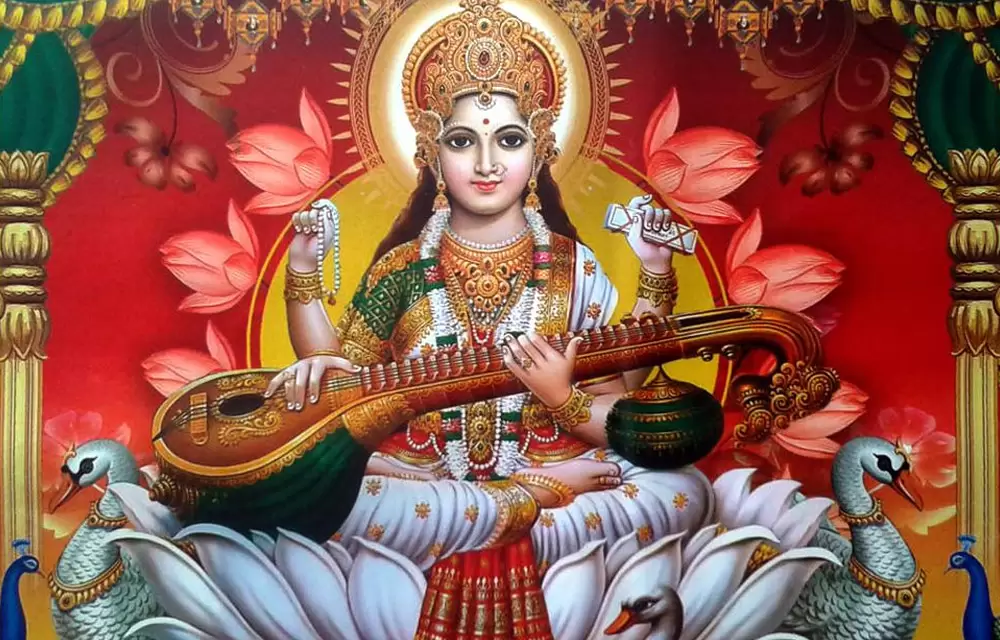
Meaning: She who is white as the jasmine flower, the moon, frost and a garland of pearls; who is clothed in white; whose hands are adorned with the excellent staff of the veena; who is seated on a white lotus; who is always worshipped by Brahma, Vishnu, Shiva and the other gods: may that blessed Goddess Saraswati, who removes all dullness without remainder, protect me.
Verse 2
दोर्भिर्युक्ता चतुर्भिः स्फटिकमणिमयीमक्षमालां दधाना
हस्तेनैकेन पद्मं सितमपि च शुकं पुस्तकं चापरेण ।
भासा कुन्देन्दु-शंखस्फटिकमणिनिभा भासमानाऽसमाना
सा मे वाग्देवतेयं निवसतु वदने सर्वदा सुप्रसन्ना ॥ २॥
dorbhiryuktā caturbhiḥ sphaṭikamaṇimayīmakṣamālāṃ dadhānā
hastenaikena padmaṃ sitamapi ca śukaṃ pustakaṃ cāpareṇa |
bhāsā kundendu-śaṃkhasphaṭikamaṇinibhā bhāsamānā'samānā
sā me vāgdevateyaṃ nivasatu vadane sarvadā suprasannā || 2||
Meaning: She has four arms. In one hand she holds a rosary of crystal beads, in another a white lotus, and she carries a parrot and a book. Shining with a radiance like jasmine, the moon, the conch and crystal, she is without equal. May this Goddess of speech, ever gracious, dwell always on my tongue.
Verse 3
आशासु राशी भवदंगवल्लि
भासैव दासीकृत-दुग्धसिन्धुम् ।
मन्दस्मितैर्निन्दित-शारदेन्दुं
वन्देऽरविन्दासन-सुन्दरि त्वाम् ॥ ३॥
āśāsu rāśī bhavadaṃgavalli
bhāsaiva dāsīkṛta-dugdhasindhum |
mandasmitairnindita-śāradenduṃ
vande'ravindāsana-sundari tvām || 3||
Meaning: The radiance of your graceful form fills every direction and makes even the ocean of milk seem like your servant; your gentle smile puts the autumn moon to shame. O beautiful one seated on the lotus, I bow to you.
Verse 4
शारदा शारदाम्बोजवदना वदनाम्बुजे ।
सर्वदा सर्वदास्माकं सन्निधिं सन्निधिं क्रियात् ॥ ४॥
śāradā śāradāmbojavadanā vadanāmbuje |
sarvadā sarvadāsmākaṃ sannidhiṃ sannidhiṃ kriyāt || 4||
Meaning: May Sharada, whose face is like an autumn lotus, the giver of all, always make her presence felt in the lotus of our mouths. (The Sanskrit plays on repeated sounds, which is why this verse is a favourite to recite.)
Verse 5
सरस्वतीं च तां नौमि वागधिष्ठातृ-देवताम् ।
देवत्वं प्रतिपद्यन्ते यदनुग्रहतो जनाः ॥ ५॥
sarasvatīṃ ca tāṃ naumi vāgadhiṣṭhātṛ-devatām |
devatvaṃ pratipadyante yadanugrahato janāḥ || 5||
Meaning: I praise that Saraswati, the Goddess who presides over speech, by whose grace human beings rise to a divine state.
Verse 6
पातु नो निकषग्रावा मतिहेम्नः सरस्वती ।
प्राज्ञेतरपरिच्छेदं वचसैव करोति या ॥ ६॥
pātu no nikaṣagrāvā matihemnaḥ sarasvatī |
prājñetaraparicchedaṃ vacasaiva karoti yā || 6||
Meaning: May Saraswati protect us, she who is the touchstone for the gold of our understanding, who by speech alone shows who is wise and who is not.
Verse 7
शुद्धां ब्रह्मविचारसारपरमा-माद्यां जगद्व्यापिनीं
वीणापुस्तकधारिणीमभयदां जाड्यान्धकारापहाम् ।
हस्ते स्पाटिकमालिकां विदधतीं पद्मासने संस्थितां
वन्दे तां परमेश्वरीं भगवतीं बुद्धिप्रदां शारदाम् ॥ ७॥
śuddhāṃ brahmavicārasāraparamā-mādyāṃ jagadvyāpinīṃ
vīṇāpustakadhāriṇīmabhayadāṃ jāḍyāndhakārāpahām |
haste spāṭikamālikāṃ vidadhatīṃ padmāsane saṃsthitāṃ
vande tāṃ parameśvarīṃ bhagavatīṃ buddhipradāṃ śāradām || 7||
Meaning: I bow to Sharada, the supreme Goddess: pure, the very essence of reflection on Brahman, the primal one who pervades the world, holding the veena and the book, granting fearlessness, removing the darkness of dullness, holding a crystal rosary, seated on a lotus, the giver of understanding.
Verse 8
वीणाधरे विपुलमंगलदानशीले
भक्तार्तिनाशिनि विरिंचिहरीशवन्द्ये ।
कीर्तिप्रदेऽखिलमनोरथदे महार्हे
विद्याप्रदायिनि सरस्वति नौमि नित्यम् ॥ ८॥
vīṇādhare vipulamaṃgaladānaśīle
bhaktārtināśini viriṃciharīśavandye |
kīrtiprade'khilamanorathade mahārhe
vidyāpradāyini sarasvati naumi nityam || 8||
Meaning: O holder of the veena, whose nature is to give abundant blessings, remover of devotees' sorrow, worshipped by Brahma, Hari and Shiva, giver of renown, fulfiller of every good wish, most worthy one, giver of knowledge: O Saraswati, I bow to you always.
Verse 9
श्वेताब्जपूर्ण-विमलासन-संस्थिते हे
श्वेताम्बरावृतमनोहरमंजुगात्रे ।
उद्यन्मनोज्ञ-सितपंकजमंजुलास्ये
विद्याप्रदायिनि सरस्वति नौमि नित्यम् ॥ ९॥
śvetābjapūrṇa-vimalāsana-saṃsthite he
śvetāmbarāvṛtamanoharamaṃjugātre |
udyanmanojña-sitapaṃkajamaṃjulāsye
vidyāpradāyini sarasvati naumi nityam || 9||
Meaning: O you who sit on a spotless seat of full-blown white lotus, whose lovely, delicate form is draped in white, whose charming face is like a white lotus just opening, giver of knowledge: O Saraswati, I bow to you always.
Verse 10
मातस्त्वदीय-पदपंकज-भक्तियुक्ता
ये त्वां भजन्ति निखिलानपरान्विहाय ।
ते निर्जरत्वमिह यान्ति कलेवरेण
भूवह्नि-वायु-गगनाम्बु-विनिर्मितेन ॥ १०॥
mātastvadīya-padapaṃkaja-bhaktiyuktā
ye tvāṃ bhajanti nikhilānaparānvihāya |
te nirjaratvamiha yānti kalevareṇa
bhūvahni-vāyu-gaganāmbu-vinirmitena || 10||
Meaning: O Mother, those who are devoted to your lotus feet and worship you, setting all else aside, attain the state of the immortals even here, in this body made of earth, fire, air, space and water.
Verse 11
मोहान्धकार-भरिते हृदये मदीये
मातः सदैव कुरु वासमुदारभावे ।
स्वीयाखिलावयव-निर्मलसुप्रभाभिः
शीघ्रं विनाशय मनोगतमन्धकारम् ॥ ११॥
mohāndhakāra-bharite hṛdaye madīye
mātaḥ sadaiva kuru vāsamudārabhāve |
svīyākhilāvayava-nirmalasuprabhābhiḥ
śīghraṃ vināśaya manogatamandhakāram || 11||
Meaning: O Mother of generous heart, make your home always in my heart, which is full of the darkness of delusion. With the pure, bright radiance of your whole form, quickly destroy the darkness in my mind.
Verse 12
ब्रह्मा जगत् सृजति पालयतीन्दिरेशः
शम्भुर्विनाशयति देवि तव प्रभावैः ।
न स्यात्कृपा यदि तव प्रकटप्रभावे
न स्युः कथंचिदपि ते निजकार्यदक्षाः ॥ १२॥
brahmā jagat sṛjati pālayatīndireśaḥ
śambhurvināśayati devi tava prabhāvaiḥ |
na syātkṛpā yadi tava prakaṭaprabhāve
na syuḥ kathaṃcidapi te nijakāryadakṣāḥ || 12||
Meaning: Brahma creates the world, Vishnu, the Lord of Lakshmi, sustains it, and Shiva dissolves it, all by your power, O Devi. Without your grace, shining forth, they could never carry out their tasks.
Verse 13
लक्ष्मिर्मेधा धरा पुष्टिर्गौरी तृष्टिः प्रभा धृतिः ।
एताभिः पाहि तनुभिरष्टभिर्मां सरस्वती ॥ १३॥
lakṣmirmedhā dharā puṣṭirgaurī tṛṣṭiḥ prabhā dhṛtiḥ |
etābhiḥ pāhi tanubhiraṣṭabhirmāṃ sarasvatī || 13||
Meaning: As Lakshmi, Medha (intelligence), Dhara (steadiness), Pushti (nourishment), Gauri, Tushti (contentment), Prabha (radiance) and Dhriti (fortitude): in these eight forms, O Saraswati, protect me.
Verse 14
सरसवत्यै नमो नित्यं भद्रकाल्यै नमो नमः
वेद-वेदान्त-वेदांग- विद्यास्थानेभ्य एव च ॥ १४॥
sarasavatyai namo nityaṃ bhadrakālyai namo namaḥ
veda-vedānta-vedāṃga- vidyāsthānebhya eva ca || 14||
Meaning: Salutations always to Saraswati; salutations again and again to Bhadrakali; and salutations to the Vedas, Vedanta, the Vedangas and all the seats of learning.
Verse 15
सरस्वति महाभागे विद्ये कमललोचने ।
विद्यारूपे विशालाक्षि विद्यां देहि नमोऽस्तु ते ॥ १५॥
sarasvati mahābhāge vidye kamalalocane |
vidyārūpe viśālākṣi vidyāṃ dehi namo'stu te || 15||
Meaning: O Saraswati, most fortunate one, O Goddess who is knowledge itself, lotus-eyed, wide-eyed, whose form is learning: grant me knowledge. Salutations to you.
Verse 16
यदक्षर-पदभ्रष्टं मात्राहीनं च यद्भवेत् ।
तत्सर्वं क्षम्यतां देवि प्रसीद परमेश्वरि ॥ १६॥
yadakṣara-padabhraṣṭaṃ mātrāhīnaṃ ca yadbhavet |
tatsarvaṃ kṣamyatāṃ devi prasīda parameśvari || 16||
Meaning: Whatever syllable or word has been missed, whatever has been said without its proper length, forgive it all, O Devi. Be gracious, O supreme Goddess.
Closing line
॥ इति श्रीसरस्वती स्तोत्रं सम्पूर्णं॥
|| iti śrīsarasvatī stotraṃ sampūrṇaṃ||
Meaning: Thus ends the Sri Saraswati Stotram.
How and when to chant Saraswati Stuti
- Every morning before study: the first verse alone takes under a minute.
- Vasant Panchami: the spring festival of Saraswati, when books, pens and instruments are placed before her.
- Navratri Saraswati Puja: the last days of Navratri, ending in Vidyarambham. See Saraswati Puja and Vidyarambham and Navratri day-wise mantras.
- How many times: once a day; the full stuti on special days, the first verse daily.
A simple way to chant at home
- Sit before a picture of Saraswati with your books nearby; light a lamp and offer a white or yellow flower.
- Make a short sankalpa, for example: "Mother Saraswati, I chant your praise with devotion. Please give me a clear mind and the patience to learn well."
- Recite verse 1, or all 16 verses, slowly, ending with verse 16, the prayer for forgiveness of mistakes.
Pronunciation tips in plain English
- A line over a vowel in IAST means a longer sound: 'Ya kun-den-du tu-shaa-ra-haa-ra dha-va-laa'.
- An 's' with an accent or dot is said 'sh', as in 'shubhra' (white) and 'Sharada'.
- In verse 4, the same sounds repeat with different meanings; go slowly.
- Learn verse 1 first, then verse 15, then the rest a few at a time.
Saraswati prayer for exam success
Many students follow a simple, traditional routine in exam season:
- Before each study session: chant verse 1, asking her to remove dullness, and verse 15, asking for knowledge.
- On the exam morning: chant verse 2, praying that the Goddess of speech dwell on your tongue, and touch your pen or books to her picture.
- When anxious: read verse 11 slowly, the prayer that she drive away the darkness in the mind.
This is devotion, not a promise of marks. Devotees believe Saraswati's grace brings calm and focus, which work through regular study, rest and honest effort. See also top 7 Hindu mantras for exam success, mantras for students and mantras for JEE, NEET and UPSC.
Significance and traditional benefits
Saraswati is the Goddess of knowledge, speech, music and the arts. Her whiteness in verse 1 stands for purity and clarity, the veena for harmony, the book for learning and the crystal rosary for steady practice. Devotees believe chanting the stuti removes jadya, the dullness and inertia of the mind (verses 1 and 7), and brings grace in speech (verses 2 and 6). Verse 12 reminds us that even creation depends on knowledge. These are traditional beliefs, not guarantees. For other needs, see which god to pray to for job, marriage, health, money and studies.
Context: a prayer that became a school song
As commonly told, Saraswati arose from Brahma's creative thought and gave him the knowledge he needed to create. Over the last century, the first verse of this stuti became a morning prayer in schools across India, so many people know it by heart without knowing the rest. The full stuti gathers verses praising her form and asking for knowledge, and closes, like many stotras, by asking pardon for any mistakes in recitation.
Frequently asked questions
What is the meaning of Ya Kundendu Tushara Hara Dhavala?
It means 'She who is white as the jasmine flower, the moon, frost and a garland of pearls'. The verse goes on to describe Saraswati in white garments, holding the veena, seated on a white lotus and worshipped by Brahma, Vishnu and Shiva, and ends: 'May that Goddess Saraswati, who removes all dullness, protect me.'
Who wrote the Saraswati Stuti Ya Kundendu?
No author is named in the text. It is a traditional collection of verses to Saraswati; some traditions associate a Saraswati stotram beginning with this verse with the sage Agastya, as traditionally attributed. The first verse is much older than its use in schools and is found widely in prayer books.
Is Saraswati Stuti good for exams?
Students in India and abroad have chanted it before study and exams for generations, praying for a clear and steady mind. Devotees believe it supports concentration and calm. It is a devotional practice, not a guarantee of marks; it works best alongside regular, honest study.
When should Saraswati Vandana be chanted?
Every morning before study, at school assemblies, on Vasant Panchami, and during Saraswati Puja in Navratri. Thursday and Wednesday are also favoured by many students. Any calm time before learning is suitable.
How many times should I chant Saraswati Stuti?
Once a day is enough. Many students chant only the first verse, or verses 1 and 15, before each study session, and the full stuti on special days.
Can children chant Saraswati Stuti?
Yes. It is one of the first prayers many Hindu children learn, and children of every age and background sing the first verse in schools.
Editor's note
Editor's note (7 October 2026): This guide has been restored at its original address. The Sanskrit text follows sanskritdocuments.org; minor variants in wording, verse order and recitation exist between editions and traditions, so follow your family's or teacher's book if you have one. The English meanings are our own. Authorship is given as traditionally attributed and the story as commonly told. No particular results are promised.
Related guides
You might also like

Ram Chalisa: Lyrics in Hindi with Meaning, Ram Stuti Aarti and How to Recite
Annapurna Stotram (Nityanandakari): Lyrics, Meaning and Benefits

Bhairav Chalisa: Lyrics in Hindi with Meaning, Bhairav Aarti and How to Recite