Ram Chalisa: Lyrics in Hindi with Meaning, Ram Stuti Aarti and How to Recite
Ram Chalisa is a forty-verse Hindi hymn to Shri Rama that devotees sing daily and on Ram Navami. Here is the full text with a plain-English meaning of every chaupai and doha, the Shri Ramachandra Kripalu stuti sung at aarti time, and simple guidance on how and when to recite it.
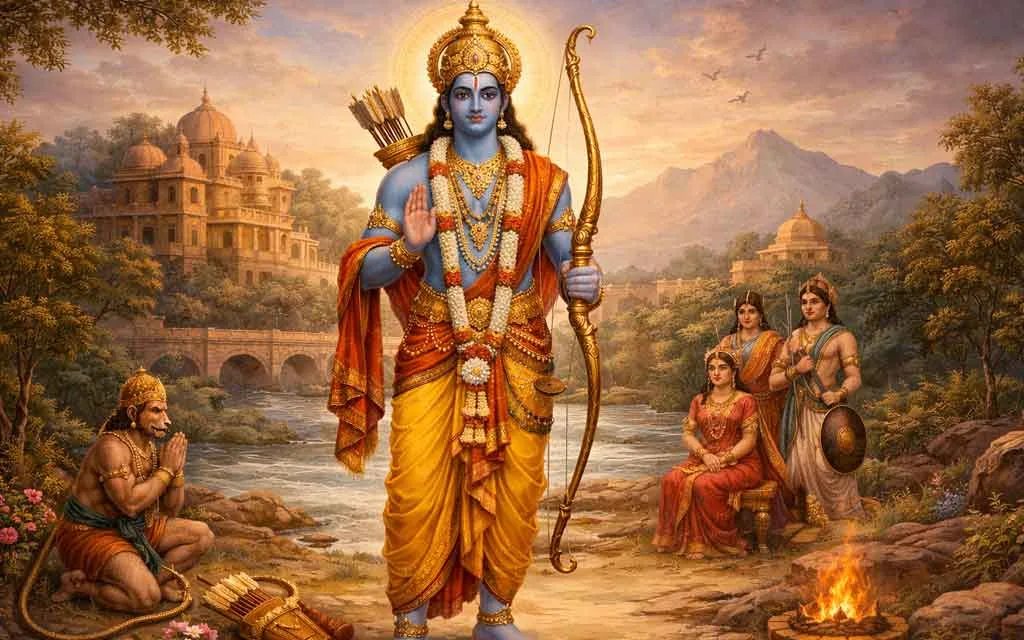
Ram Chalisa is a forty-verse Hindi hymn to Shri Rama that devotees sing daily and on Ram Navami. Here is the full text with a plain-English meaning of every chaupai and doha, the Shri Ramachandra Kripalu stuti sung at aarti time, and simple guidance on how and when to recite it.
Quick answer: Ram Chalisa is a devotional Hindi hymn of a little over forty chaupais in praise of Shri Rama, framed by an opening and a closing doha. As traditionally attributed, it is the work of a devotee-poet named Haridas, whose name appears in its last lines. Families recite it daily, and especially on Ram Navami, during Chaitra Navratri, on Dussehra and at Diwali. After the Chalisa, many sing the Shri Ram Stuti, "Shri Ramachandra Kripalu bhaju mana", as the aarti. The whole recitation takes about ten minutes.
Below you will find the complete text with transliteration, a plain-English meaning after every unit, the stuti sung at aarti time and simple guidance on reciting it.
Ram Chalisa: full text with meaning
The text follows the Hindi edition on sanskritdocuments.org. Each unit is given in Devanagari, then in transliteration, then in simple English. The meanings stay close to the Awadhi and Hindi words, but are written so that the devotional sense comes through clearly.
Opening doha
श्री रघुबीर भक्त हितकारी । सुनि लीजै प्रभु अरज हमारी ॥
śrī raghubīra bhakta hitakārī | suni lījai prabhu araja hamārī ||
Meaning: O Shri Raghubir, ever kind to your devotees, O Lord, please listen to our humble plea.
Chaupais
The chaupais are the heart of any chalisa. Each unit below is a rhyming line in two halves, and each meaning is a single faithful sentence so that you can follow along while reciting.
निशि दिन ध्यान धरै जो कोई । ता सम भक्त और नहिं होई ॥
niśi dina dhyāna dharai jo koī | tā sama bhakta aura nahiṃ hoī ||
Meaning: Whoever meditates on you night and day, there is no other devotee equal to them.
ध्यान धरे शिवजी मन माहीं । ब्रह्मा इन्द्र पार नहिं पाहीं ॥
dhyāna dhare śivajī mana māhīṃ | brahmā indra pāra nahiṃ pāhīṃ ||
Meaning: Lord Shiva holds you in meditation within his heart, yet even Brahma and Indra cannot reach the end of your greatness.
जय जय जय रघुनाथ कृपाला । सदा करो सन्तन प्रतिपाला ॥
jaya jaya jaya raghunātha kṛpālā | sadā karo santana pratipālā ||
Meaning: Victory, victory, victory to you, compassionate Raghunatha; always protect and sustain the saints.
दूत तुम्हार वीर हनुमाना । जासु प्रभाव तिहूँ पुर जाना ॥
dūta tumhāra vīra hanumānā | jāsu prabhāva tihū~ pura jānā ||
Meaning: Your messenger is the heroic Hanuman, whose power is known in all three worlds.
तुव भुजदण्ड प्रचण्ड कृपाला । रावण मारि सुरन प्रतिपाला ॥
tuva bhujadaṇḍa pracaṇḍa kṛpālā | rāvaṇa māri surana pratipālā ||
Meaning: O compassionate one, with your mighty, fierce arms you slew Ravana and protected the gods.
तुम अनाथ के नाथ गोसाईं । दीनन के हो सदा सहाई ॥
tuma anātha ke nātha gosāīṃ | dīnana ke ho sadā sahāī ||
Meaning: O Master, you are the protector of those who have no protector, and you are always the helper of the humble.
ब्रह्मादिक तव पार न पावैं । सदा ईश तुम्हरो यश गावैं ॥
brahmādika tava pāra na pāvaiṃ | sadā īśa tumharo yaśa gāvaiṃ ||
Meaning: Brahma and the other gods cannot fathom your extent, and the Lord forever sings your glory.
चारिउ वेद भरत हैं साखी । तुम भक्तन की लज्जा राखी ॥
cāriu veda bharata haiṃ sākhī | tuma bhaktana kī lajjā rākhī ||
Meaning: The four Vedas bear witness that you have always protected the honour of your devotees.
गुण गावत शारद मन माहीं । सुरपति ताको पार न पाहीं ॥
guṇa gāvata śārada mana māhīṃ | surapati tāko pāra na pāhīṃ ||
Meaning: Sharada, the goddess of speech, sings your virtues in her heart, and even Indra, lord of the gods, cannot find their end.
नाम तुम्हार लेत जो कोई । ता सम धन्य और नहिं होई ॥
nāma tumhāra leta jo koī | tā sama dhanya aura nahiṃ hoī ||
Meaning: Whoever takes your name, no one is as blessed as they are.
राम नाम है अपरम्पारा । चारिहु वेदन जाहि पुकारा ॥
rāma nāma hai aparampārā | cārihu vedana jāhi pukārā ||
Meaning: The name of Rama is boundless; it is the name that all four Vedas proclaim.
गणपति नाम तुम्हारो लीन्हों । तिनको प्रथम पूज्य तुम कीन्हों ॥
gaṇapati nāma tumhāro līnhoṃ | tinako prathama pūjya tuma kīnhoṃ ||
Meaning: Ganapati took your name, and you made him the first to be worshipped.
शेष रटत नित नाम तुम्हारा । महि को भार शीश पर धारा ॥
śeṣa raṭata nita nāma tumhārā | mahi ko bhāra śīśa para dhārā ||
Meaning: Shesha, the cosmic serpent, constantly repeats your name, and so bears the weight of the earth upon his head.
फूल समान रहत सो भारा । पावत कोउ न तुम्हरो पारा ॥
phūla samāna rahata so bhārā | pāvata kou na tumharo pārā ||
Meaning: That great weight stays as light as a flower for him; no one can find the limit of your glory.
भरत नाम तुम्हरो उर धारो । तासों कबहुँ न रण में हारो ॥
bharata nāma tumharo ura dhāro | tāsoṃ kabahu~ na raṇa meṃ hāro ||
Meaning: Bharata held your name in his heart, and because of it he was never defeated in battle.
नाम शत्रुहन हृदय प्रकाशा । सुमिरत होत शत्रु कर नाशा ॥
nāma śatruhana hṛdaya prakāśā | sumirata hota śatru kara nāśā ||
Meaning: Your name shone in Shatrughna's heart, and remembering it brings the destruction of enemies.
लषन तुम्हारे आज्ञाकारी । सदा करत सन्तन रखवारी ॥
laṣana tumhāre ājñākārī | sadā karata santana rakhavārī ||
Meaning: Lakshmana, ever obedient to you, always stands guard over the saints.
ताते रण जीते नहिं कोई । युद्ध जुरे यमहूँ किन होई ॥
tāte raṇa jīte nahiṃ koī | yuddha jure yamahū~ kina hoī ||
Meaning: Therefore no one could win against him in battle, even if Yama himself were to join the fight.
महा लक्श्मी धर अवतारा । सब विधि करत पाप को छारा ॥
mahā lakśmī dhara avatārā | saba vidhi karata pāpa ko chārā ||
Meaning: Mahalakshmi took birth as Sita, and in every way she burns sin to ashes.
सीता राम पुनीता गायो । भुवनेश्वरी प्रभाव दिखायो ॥
sītā rāma punītā gāyo | bhuvaneśvarī prabhāva dikhāyo ||
Meaning: Holy Sita, sung together with Rama, showed her power as Bhuvaneshwari, the queen of the worlds.
घट सों प्रकट भई सो आई । जाको देखत चन्द्र लजाई ॥
ghaṭa soṃ prakaṭa bhaī so āī | jāko dekhata candra lajāī ||
Meaning: She appeared from an earthen pot, and seeing her beauty even the moon is put to shame.
सो तुमरे नित पांव पलोटत । नवो निद्धि चरणन में लोटत ॥
so tumare nita pāṃva paloṭata | navo niddhi caraṇana meṃ loṭata ||
Meaning: She lovingly presses your feet every day, while the nine treasures roll at your feet.
सिद्धि अठारह मंगल कारी । सो तुम पर जावै बलिहारी ॥
siddhi aṭhāraha maṃgala kārī | so tuma para jāvai balihārī ||
Meaning: The eighteen auspicious siddhis offer themselves to you in devotion.
औरहु जो अनेक प्रभुताई । सो सीतापति तुमहिं बनाई ॥
aurahu jo aneka prabhutāī | so sītāpati tumahiṃ banāī ||
Meaning: And all the many other powers that exist, O husband of Sita, were made by you.
इच्छा ते कोटिन संसारा । रचत न लागत पल की बारा ॥
icchā te koṭina saṃsārā | racata na lāgata pala kī bārā ||
Meaning: By your mere wish you create millions of worlds, and it does not take even a moment.
जो तुम्हरे चरनन चित लावै । ताको मुक्ति अवसि हो जावै ॥
jo tumhare caranana cita lāvai | tāko mukti avasi ho jāvai ||
Meaning: Whoever fixes their mind on your feet surely attains liberation.
सुनहु राम तुम तात हमारे । तुमहिं भरत कुल-पूज्य प्रचारे ॥
sunahu rāma tuma tāta hamāre | tumahiṃ bharata kula-pūjya pracāre ||
Meaning: Listen, Rama, you are our father; you are proclaimed the one worshipped by the family of Bharata.
तुमहिं देव कुल देव हमारे । तुम गुरु देव प्राण के प्यारे ॥
tumahiṃ deva kula deva hamāre | tuma guru deva prāṇa ke pyāre ||
Meaning: You are our god and our family deity; you are our guru and dearer to us than life itself.
जो कुछ हो सो तुमहीं राजा । जय जय जय प्रभु राखो लाजा ॥
jo kucha ho so tumahīṃ rājā | jaya jaya jaya prabhu rākho lājā ||
Meaning: Whatever there is, you alone are its king; victory, victory, victory, O Lord, protect our honour.
रामा आत्मा पोषण हारे । जय जय जय दशरथ के प्यारे ॥
rāmā ātmā poṣaṇa hāre | jaya jaya jaya daśaratha ke pyāre ||
Meaning: O Rama, nourisher of the soul, victory, victory, victory to you, beloved of Dasharatha.
जय जय जय प्रभु ज्योति स्वरूपा । निगुण ब्रह्म अखण्ड अनूपा ॥
jaya jaya jaya prabhu jyoti svarūpā | niguṇa brahma akhaṇḍa anūpā ||
Meaning: Victory to you, O Lord whose very form is light, the Brahman beyond qualities, undivided and beyond compare.
सत्य सत्य जय सत्य-ब्रत स्वामी । सत्य सनातन अन्तर्यामी ॥
satya satya jaya satya-brata svāmī | satya sanātana antaryāmī ||
Meaning: Truth, truth, victory to the Lord whose vow is truth, the eternal truth, the one who dwells within every heart.
सत्य भजन तुम्हरो जो गावै । सो निश्चय चारों फल पावै ॥
satya bhajana tumharo jo gāvai | so niścaya cāroṃ phala pāvai ||
Meaning: Whoever sings your praise with sincerity will surely attain the four goals of life.
सत्य शपथ गौरीपति कीन्हीं । तुमने भक्तहिं सब सिद्धि दीन्हीं ॥
satya śapatha gaurīpati kīnhīṃ | tumane bhaktahiṃ saba siddhi dīnhīṃ ||
Meaning: Gauri's lord, Shiva, has sworn a true oath that you have given every accomplishment to your devotees.
ज्ञान हृदय दो ज्ञान स्वरूपा । नमो नमो जय जापति भूपा ॥
jñāna hṛdaya do jñāna svarūpā | namo namo jaya jāpati bhūpā ||
Meaning: O embodiment of knowledge, give knowledge to my heart; salutations, salutations, victory to you, O sovereign king.
धन्य धन्य तुम धन्य प्रतापा । नाम तुम्हार हरत संतापा ॥
dhanya dhanya tuma dhanya pratāpā | nāma tumhāra harata saṃtāpā ||
Meaning: Blessed, blessed, blessed is your glory; your name takes away all suffering.
सत्य शुद्ध देवन मुख गाया । बजी दुन्दुभी शंख बजाया ॥
satya śuddha devana mukha gāyā | bajī dundubhī śaṃkha bajāyā ||
Meaning: The gods sang of your pure truth, and the kettle-drums and conches resounded.
सत्य सत्य तुम सत्य सनातन । तुमहीं हो हमरे तन मन धन ॥
satya satya tuma satya sanātana | tumahīṃ ho hamare tana mana dhana ||
Meaning: Truth, truth, you are the eternal truth; you alone are our body, mind and wealth.
याको पाठ करे जो कोई । ज्ञान प्रकट ताके उर होई ॥
yāko pāṭha kare jo koī | jñāna prakaṭa tāke ura hoī ||
Meaning: Whoever recites this hymn, knowledge dawns in their heart.
आवागमन मिटै तिहि केरा । सत्य वचन माने शिव मेरा ॥
āvāgamana miṭai tihi kerā | satya vacana māne śiva merā ||
Meaning: Their coming and going through birth and death comes to an end; my Lord Shiva affirms that this word is true.
और आस मन में जो ल्यावै । तुलसी दल अरु फूल चढ़ावै ॥
aura āsa mana meṃ jo lyāvai | tulasī dala aru phūla car̤hāvai ||
Meaning: Whoever carries any other wish in their heart, let them offer tulsi leaves and flowers.
साग पत्र सो भोग लगावै । सो नर सकल सिद्धता पावै ॥
sāga patra so bhoga lagāvai | so nara sakala siddhatā pāvai ||
Meaning: Let them offer even simple greens and leaves as food to the Lord; such a person attains complete fulfilment.
अन्त समय रघुबर पुर जाई । जहाँ जन्म हरि भक्त कहाई ॥
anta samaya raghubara pura jāī | jahā~ janma hari bhakta kahāī ||
Meaning: At life's end they go to the abode of Raghubar, and wherever they are born they are known as a devotee of Hari.
श्री हरि दास कहै अरु गावै । सो वैकुण्ठ धाम को पावै ॥
śrī hari dāsa kahai aru gāvai | so vaikuṇṭha dhāma ko pāvai ||
Meaning: Whoever, as a servant of Hari, recites and sings this hymn reaches the abode of Vaikuntha. The words 'Hari das' also carry the poet's own name, Haridas.
Closing doha
सात दिवस जो नेम कर पाठ करे चित लाय ।
हरिदास हरिकृपा से अवसि भक्ति को पाय ॥
sāta divasa jo nema kara pāṭha kare cita lāya |
haridāsa harikṛpā se avasi bhakti ko pāya ||
Meaning: Whoever reads this hymn as a regular observance for seven days, with the heart fully in it, says Haridas, will surely receive devotion by Hari's grace.
Ram Aarti: the Shri Ram Stuti with meaning
In the source text, the Chalisa is followed by one more couplet and then the famous Shri Ram Stuti that begins "Shri Ramachandra Kripalu bhaju mana". The stuti is traditionally attributed to Goswami Tulsidas and is one of the best-loved hymns sung while the aarti lamp is waved before Rama. The source gives its first four stanzas, given here; fuller versions sung in some homes and temples continue with further stanzas.
Concluding couplet
राम चालीसा जो पढ़े रामचरण चित लाय ।
जो इच्छा मन में करै सकल सिद्ध हो जाय ॥
rāma cālīsā jo par̤he rāmacaraṇa cita lāya |
jo icchā mana meṃ karai sakala siddha ho jāya ||
Meaning: Whoever reads the Ram Chalisa with the mind fixed on Rama's feet, whatever wish they hold in their heart is fulfilled. In form this is the concluding couplet of the Chalisa, which the source prints just before the stuti. It is an expression of faith rather than a promise.
Shri Ram Stuti: Shri Ramachandra Kripalu
॥ श्री राम स्तुति ॥
|| śrī rāma stuti ||
Meaning: The heading 'Shri Ram Stuti' introduces the hymn of praise that many families sing as the Ram aarti.
श्री रामचन्द्र कृपालु भजु मन हरण भव भय दारुणं ।
नवकंज-लोचन कंज मुख कर कंज पद कंजारुणं ॥
śrī rāmacandra kṛpālu bhaju mana haraṇa bhava bhaya dāruṇaṃ |
navakaṃja-locana kaṃja mukha kara kaṃja pada kaṃjāruṇaṃ ||
Meaning: O mind, worship the compassionate Shri Ramachandra, who takes away the terrible fear of worldly existence. His eyes are like fresh lotuses; his face, hands and feet are lotuses too, and his feet glow lotus-red.
कन्दर्प अगणित अमित छवि नवनील-नीरद सुन्दर ।
पटपीत मानहु तड़ित रुचि शुचि नौमि जनक सुतावरं ॥
kandarpa agaṇita amita chavi navanīla-nīrada sundara |
paṭapīta mānahu tar̤ita ruci śuci naumi janaka sutāvaraṃ ||
Meaning: His beauty surpasses countless Kamadevas, and he is lovely as a fresh dark-blue rain cloud. His yellow garment shines like lightning, pure and radiant. I bow to him, the husband of Janaka's daughter Sita.
भजु दीन बन्धु दिनेश दानव दैत्यवंश-निकन्दनं ।
रघुनन्द आनन्द कंद कौशलचन्द दशरथ्-नन्दनं ॥
bhaju dīna bandhu dineśa dānava daityavaṃśa-nikandanaṃ |
raghunanda ānanda kaṃda kauśalacanda daśarath-nandanaṃ ||
Meaning: O mind, worship the friend of the humble, the sun of his line, who uproots the race of danavas and daityas; the joy of Raghu's line, the source of bliss, the moon of Kosala, the son of Dasharatha.
सिर मुकुट कुण्डल तिलक चारु उदारु अंग विभूषणं ।
आजानु-भुज-शर-चाप-धर- संग्राम जित-खरदूषणं ॥
sira mukuṭa kuṇḍala tilaka cāru udāru aṃga vibhūṣaṇaṃ |
ājānu-bhuja-śara-cāpa-dhara- saṃgrāma jita-kharadūṣaṇaṃ ||
Meaning: He wears a crown on his head, earrings and a beautiful tilak, and graceful ornaments adorn every limb. His arms reach down to his knees, he holds bow and arrows, and he conquered the demons Khara and Dushana in battle.
Many families also sing the well-known aarti "Aarti kije Shri Raghubar ji ki" at this point. Follow whichever your family knows.
What the Ram Chalisa teaches
| Section | Main theme |
|---|---|
| Opening doha and chaupais 2 to 11 | Rama's greatness, which even Shiva, Brahma, Indra and Sharada cannot measure, and the blessedness of those who remember him |
| Chaupais 12 to 19 | The power of the name of Rama: Ganapati, Shesha, Bharata, Shatrughna and Lakshmana all draw strength from it |
| Chaupais 20 to 26 | Sita as Mahalakshmi, the treasures and siddhis at Rama's feet, and Rama as creator of countless worlds |
| Chaupais 27 to 39 | Personal surrender: Rama as father, family deity, guru and the eternal truth |
| Chaupais 40 to 45 and closing doha | The fruit of recitation, simple offerings of tulsi and greens, and the gift of devotion |
The most striking theme is the Rama-nama, the name itself. The hymn says that Ganapati became the first to be worshipped by taking the name, that Shesha bears the earth as lightly as a flower by repeating it, and that the four Vedas proclaim it. Chaupais 42 and 43 add that devotion needs no elaborate means: tulsi, flowers and simple greens offered with love are enough.
How and when to recite Ram Chalisa
Best days and times
- Daily: morning after a bath, or in the evening when the lamp is lit. The Ram Chalisa is short enough for an everyday practice.
- Ram Navami and Chaitra Navratri: Rama's birthday is the most natural day for the Chalisa, and many families recite it on each of the nine days leading up to it.
- Dussehra and Diwali: Vijayadashami celebrates Rama's victory and Diwali his return to Ayodhya. See our Dussehra / Vijayadashami 2026 guide and the story of Rama and Ravana.
- Vivah Panchami: the day that celebrates the wedding of Rama and Sita, described in our Vivah Panchami guide.
How many times
Once a day is enough. The closing doha speaks of reading it as a regular observance for seven days, so a seven-day sankalpa is a lovely way to begin. On Ram Navami some devotees read it 3, 11 or 108 times. If you count with a mala, our article on the sacred number 108 explains why that number is special.
A simple setup at home
- Wash your hands and face and sit before a picture or murti of the Ram Darbar: Rama with Sita, Lakshmana and Hanuman. Facing east or north is traditional, but any clean, quiet corner will do.
- Light a ghee or oil lamp and some incense, and offer a flower, a few tulsi leaves and a little fruit or sweet, as the Chalisa itself suggests.
- Make a simple sankalpa in your own words, for example: "Shri Rama, I recite this Chalisa with love. Please keep our family on the path of dharma."
- Recite the opening doha, the chaupais and the closing doha slowly and clearly.
- Wave the lamp and sing the Shri Ram Stuti or your family's Ram aarti, then chant "Jai Siya Ram" a few times.
- Share the offered fruit or sweet as prasad.
Significance and traditional benefits
Rama is honoured as the ideal of dharma: devoted son, loving brother and just king. Reciting his Chalisa keeps those ideals before the family.
Traditionally, devotees believe that reciting Ram Chalisa with devotion:
- brings a sense of peace, courage and protection into the home;
- strengthens the habit of remembering the divine name, which the hymn praises again and again;
- helps the mind turn toward truth, since many chaupais celebrate Rama as the eternal truth;
- deepens bhakti, the very gift the closing doha asks for.
The Chalisa uses the traditional language of devotion: wishes fulfilled, knowledge dawning, freedom from birth and death. These are expressions of faith in Rama's grace, not guarantees of particular results. The hymn is best recited as an offering of love, alongside honest effort and kindness to others.
Many devotees follow the Chalisa with the Sanskrit Ram Raksha Stotram, a hymn of protection, or with prayers to Hanuman such as the Sankat Mochan Hanuman Ashtak.
Tips for NRI families
- Read one section a day. The Chalisa divides naturally into five sections, as in the table above. Read one each weekday with your children, and the whole hymn on the weekend.
- Use the stories. Chaupais about Hanuman, Bharata, Lakshmana and Sita are perfect openings for Ramayana stories at bedtime. Our article on Ramlila in India and beyond has more ideas.
- Visit a Rama temple when you can. On a trip to India, the Bhadrachalam temple in Telangana is one of the great Sita-Rama shrines of the South.
Frequently asked questions
Where can I read Ram Chalisa lyrics in Hindi with meaning?
The full Ram Chalisa is given on this page in Hindi (Devanagari), followed by English transliteration and a simple English meaning after every verse. It opens with a prayer to Shri Raghubir, moves through the chaupais that praise Rama, his name, his family and Sita, and closes with a doha asking for devotion. The Shri Ram Stuti that many families sing at aarti time follows it.
Who wrote Ram Chalisa?
The text carries the name of its poet in its closing lines: Haridas. As traditionally attributed, Ram Chalisa is the work of a devotee-poet of that name. Little else is reliably known about him, and he should not be confused with the Ram Stuti that follows, which is traditionally attributed to Goswami Tulsidas.
What are the benefits of reading Ram Chalisa?
Devotees believe that reciting Ram Chalisa with devotion steadies the mind, brings peace into the home and deepens love for Rama. The hymn itself speaks of knowledge dawning in the heart, freedom from the cycle of birth and death and the gift of bhakti. These are traditional statements of faith, not guarantees of particular results.
How many times should Ram Chalisa be read?
Once a day is a good and complete practice. The closing doha speaks of reading it with a fixed observance for seven days, so some devotees keep a seven-day sankalpa. On special days such as Ram Navami some families read it 3, 11 or even 108 times. Regular, sincere reading matters more than the number.
What is the best time to read Ram Chalisa?
Morning after a bath and evening at lamp-lighting time are both traditional. Many households read it daily, and especially on Ram Navami, during Chaitra Navratri, on Dussehra and at Diwali. Any quiet time when you can read with attention is suitable.
Is Ram Chalisa the same as Hanuman Chalisa?
No. Hanuman Chalisa praises Hanuman and is traditionally attributed to Tulsidas. Ram Chalisa praises Shri Rama directly, and its closing lines name the poet Haridas. Many devotees recite both, since Hanuman is Rama's beloved messenger, as the Ram Chalisa itself says in its fourth chaupai.
Editor's note
Editor's note (7 October 2026): This guide has been restored at its original address after the earlier version was lost. The Hindi text in Devanagari and transliteration follows the edition on sanskritdocuments.org. Minor variants in wording and recitation exist between printed editions and family traditions; if your family or temple follows a particular book, follow that book. The English meanings are our own plain translations. The authorship of the Chalisa (Haridas) and of the Ram Stuti (Tulsidas) is given as traditionally attributed. The hymn is presented as an act of devotion, with no promise of particular results.
Related guides
- Ram Raksha Stotram: lyrics, meaning and benefits
- Sankat Mochan Hanuman Ashtak with meaning
- Hanuman Jayanti in Karnataka: Hanumad Vratha
- Shiv Chalisa lyrics in Hindi with meaning
- Krishna Chalisa lyrics in Hindi with meaning
- Vivah Panchami: the wedding of Rama and Sita
- Valmiki Jayanti: the author of the Ramayana
- Bhadrachalam temple guide
You might also like
Bhairav Chalisa: Lyrics in Hindi with Meaning, Bhairav Aarti and How to Recite
Shani Chalisa Lyrics in Hindi with Meaning and Shani Dev Aarti
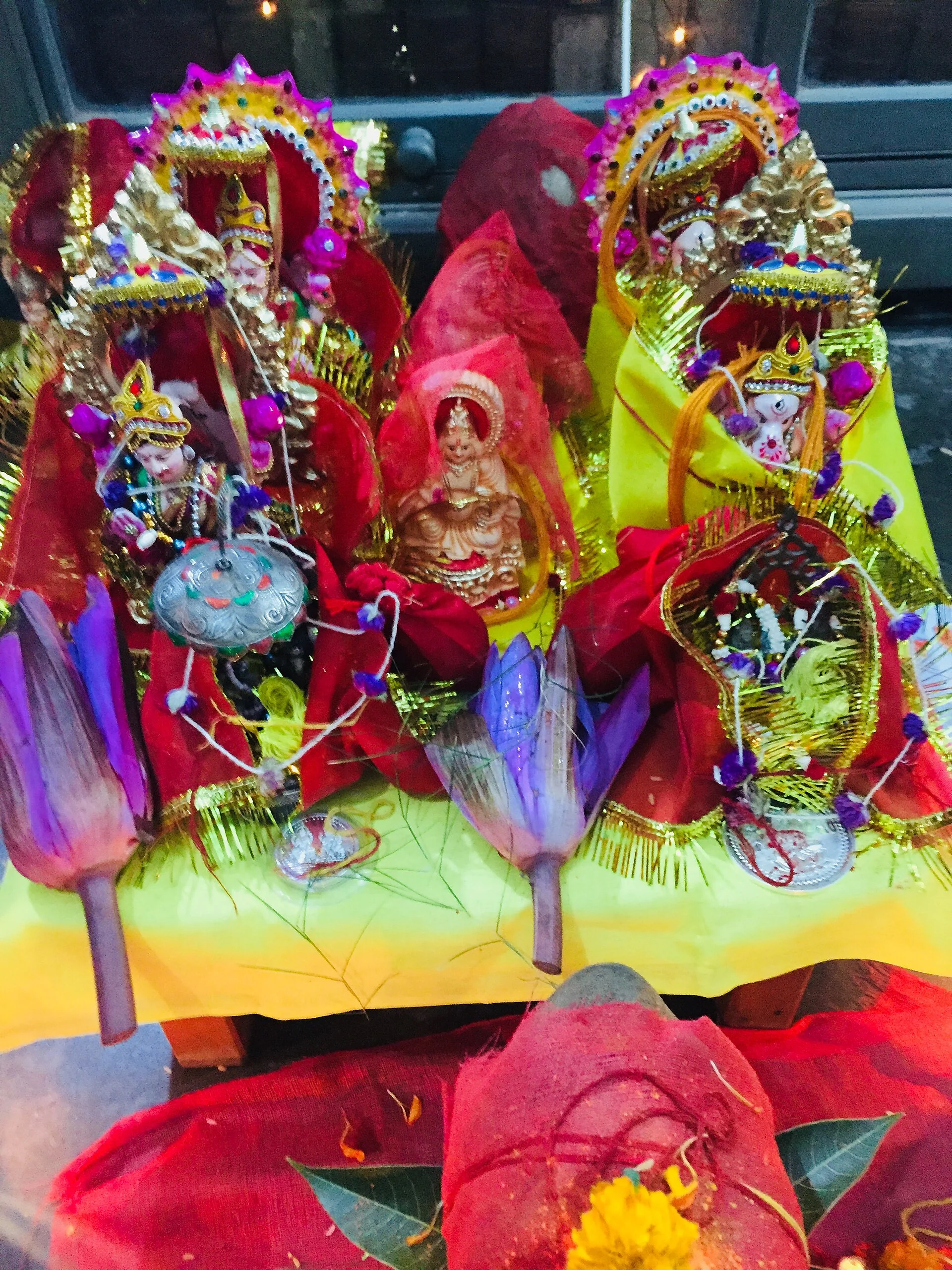
Lakshmi Chalisa Lyrics in Hindi with Meaning, and Om Jai Lakshmi Mata Aarti