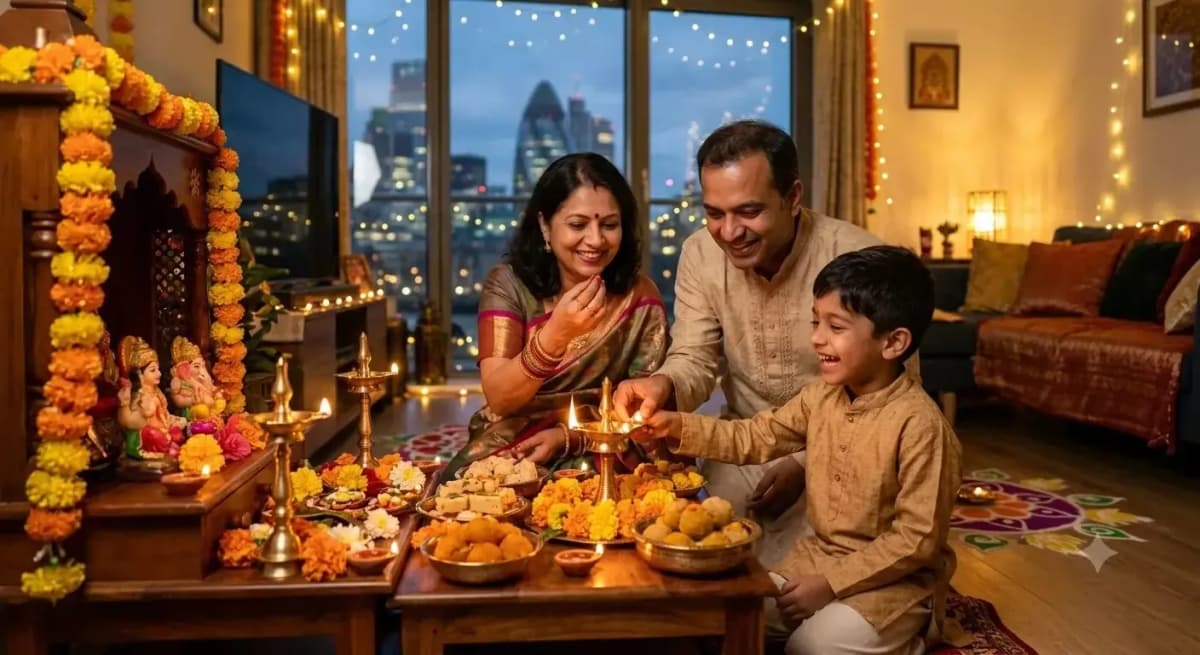
Valmiki Jayanti 2026 — Date (October 5), Adi Kavi Story, Puja Vidhi, Ramayana Recitation & NRI Guide
Valmiki Jayanti 2026 falls on Monday October 5 — honoring Maharishi Valmiki, the Adi Kavi who composed the Ramayana. Complete guide to his transformation story, puja vidhi, Ramayana recitation, mantras, and NRI observance.
Valmiki Jayanti 2026 falls on Monday October 5 — honoring Maharishi Valmiki, the Adi Kavi who composed the Ramayana. Complete guide to his transformation story, puja vidhi, Ramayana recitation, mantras, and NRI observance.
Valmiki Jayanti celebrates the birth anniversary of Maharishi Valmiki — revered as the Adi Kavi (first poet) and the author of the Valmiki Ramayana, the world's first epic poem and the foundational text of Lord Rama's divine story.
In 2026, Valmiki Jayanti falls on Monday, October 5 (Ashwin Shukla Purnima — same day as Sharad Purnima). His transformation from a robber to a great sage is one of the most inspiring stories in Hindu tradition — a powerful reminder that anyone can rise to greatness through sincere repentance and dharma.
Valmiki Jayanti 2026 — Key Details
| Aspect | Detail |
|---|---|
| Date | Monday, October 5, 2026 (also Sharad Purnima) |
| Tithi | Ashwin Shukla Purnima |
| Birthplace (per tradition) | Forest of present-day Uttar Pradesh / Madhya Pradesh region |
| Original Name | Ratnakara (the Robber) |
| Magnum Opus | Valmiki Ramayana — 24,000 verses, 7 Kandas |
| Disciple Status | Disciple of Sage Narada |
| Special Observance | Reciting Bal Kanda + Yuddha Kanda verses |
The Transformation Story — Ratnakara to Valmiki
Ratnakara was a feared robber who waylaid travelers in the dense forests, killing them and stealing their goods to feed his family. One day he encountered Sage Narada, who asked him, "Do you know if your family — for whom you commit these sins — will share the punishment for your karma?"
Stunned, Ratnakara went home and asked his wife, parents, and children. Each one replied: "We benefit from your work, but the sin is yours alone — we will not share it."
Shaken to his core, Ratnakara returned to Sage Narada and begged for redemption. Narada gave him a simple mantra: "Mara" (meaning "dead" — Narada chose this purposefully to ease the robber's pronunciation, knowing it would reverse into "Rama").
Ratnakara sat in meditation for thousands of years, chanting "Mara, Mara, Mara..." until it became "Rama, Rama, Rama...". Over countless ages, white anthills (valmika in Sanskrit) covered his entire body — but his chanting continued.
When Sage Narada returned to find him, he extracted Ratnakara from the anthills and renamed him Valmiki — "the one from the anthill." Valmiki had become a great rishi through pure devotion to Rama's name.
How Valmiki Composed the Ramayana
After years of austerity, Sage Narada visited Valmiki and described the perfect dharmic king — Lord Rama. Valmiki was moved to tears.
Soon after, Valmiki saw a hunter shoot one of a pair of mating cranes (krauncha birds). The female crane wept piteously over her dead mate. Valmiki, overwhelmed with grief and anger, spontaneously uttered the world's first poetic verse (shloka):
"मा निषाद प्रतिष्ठां त्वमगमः शाश्वतीः समाः"
"Ma Nishada Pratishtham tvamagamah shashvatih samah..." — "May you never find rest, O hunter, for slaying this innocent lover..."
Lord Brahma appeared to Valmiki and said: "This shloka you uttered will be the foundation of all poetry. Use this divine meter to compose the story of Rama I will reveal to you." Brahma gave Valmiki the divine vision of Rama's entire life — and Valmiki composed the 24,000-verse Ramayana in this Anushtup chhanda meter. It became the world's Adi Kavya (first poem).
Why Valmiki Jayanti Is Important
- Transformation message: Anyone can rise from any past through sincere devotion to Rama
- Adi Kavi: First poet — created the meter that all Sanskrit poetry follows
- Ramayana: The first epic — basis of all subsequent Rama literature (Ramcharitmanas, Krittivasi Ramayan, Adhyatma Ramayan, etc.)
- Patron of marginalised: In modern times, especially honoured by Valmiki community + those overcoming difficult pasts
- Universal appeal: His story transcends caste, gender, and circumstance
Valmiki Jayanti Puja Vidhi at Home
- Morning ritual: Wake before sunrise. Bathe. Wear clean (preferably yellow) clothes.
- Altar setup: Place a picture/idol of Maharishi Valmiki. Add a flower garland, lotus flowers, sandalwood paste, kumkum.
- Offering: Offer fruits, sweets, kheer, akshat (rice), tulsi leaves.
- Ramayana reading: Read at least one chapter of Valmiki Ramayana. Recommended sections: Bal Kanda (Rama's birth + childhood) or Yuddha Kanda (victory over Ravana). For NRIs, an English translation is perfectly acceptable.
- Mantra chanting: Chant "Om Sri Ramaya Namah" + "Om Valmikaye Namah" 108 times each.
- Story-telling: Share Valmiki's transformation story with children — important for ethical foundation.
- Donation: Donate books, food, or money to a school, library, or person in need — Valmiki's spirit lives in education and compassion.
Powerful Valmiki Mantras
Valmiki Pranam Mantra
ॐ वाल्मीकये नमः
Om Valmikaye Namah
Valmiki Gayatri Mantra
ॐ वाल्मीकाय विद्महे आदिकवये धीमहि ।
तन्नो वाल्मीकः प्रचोदयात् ॥
Om Valmikaya Vidmahe Adikavaye Dhimahi / Tanno Valmikih Prachodayat
Sri Ram Mantra (Valmiki's Source)
श्री रामो विजयते जगत्
Sri Ramo Vijayate Jagat
Valmiki Jayanti Celebrations Across India
- Punjab, Haryana, Delhi: Especially celebrated by the Valmiki community with processions, bhajans, free meals (langar).
- Maharashtra, Karnataka, Andhra: Temple visits, Ramayana recitation contests, school programs.
- Tamil Nadu: "Kalyanam" (symbolic marriage) of Lord Rama and Sita is performed by some communities.
- Diaspora: Major Hindu temples worldwide host Valmiki Jayanti programs with Ramayana excerpts and discourses.
Valmiki Jayanti for NRIs (USA, UK, Canada, Gulf)
NRI families can deeply benefit from Valmiki Jayanti observance:
- Read aloud from a Ramayana translation (e.g., R.K. Narayan, Ramesh Menon, or Devdutt Pattanaik's versions).
- Show children animated Ramayana movies (B.R. Chopra's 1987 series is freely available on YouTube; Ramanand Sagar's also available).
- Visit local ISKCON, BAPS, or Vishnu temple — most host Valmiki Jayanti programs.
- Light a ghee lamp in front of Rama-Valmiki pictures.
- Make kheer or panchamrit and share as prasadam with family + neighbors.
- Donate books to a local library or school in Valmiki's name.
NRI Tip: Valmiki Jayanti aligns with Sharad Purnima this year — combine both observances. Place kheer under moonlight after the Valmiki puja for double blessings.
FAQs — Valmiki Jayanti 2026
Q: Why is Valmiki called "Adi Kavi"?
A: Adi = first; Kavi = poet. Valmiki composed the first epic in Anushtup meter, becoming the source of all subsequent Sanskrit poetry. His shloka about the crane is the original verse.
Q: Was Valmiki really a robber?
A: Per tradition, yes. The story emphasises that no past sin is unforgivable when one sincerely turns to dharma and devotion to Rama. His transformation is a powerful lesson in karma + grace.
Q: Is there a difference between Valmiki Ramayana and Tulsidas Ramcharitmanas?
A: Yes. Valmiki Ramayana (Sanskrit, 24,000 verses, written ~500 BCE) is the original; Tulsidas Ramcharitmanas (Awadhi, ~16th century) is a devotional retelling for the common people. Both are deeply revered.
Q: How is Valmiki Jayanti different from Rama Navami?
A: Rama Navami honors Lord Rama's birth (Chaitra Shukla Navami, ~March-April). Valmiki Jayanti honors the author of the Ramayana, the sage who gave us Rama's story (Ashwin Shukla Purnima, ~October).
Related Reading
- Sharad Purnima 2026 — Same Day
- Dussehra / Vijayadashami 2026
- October 2026 Hindu Festival Calendar
- Karthika Masam 2026 (begins Oct 17)
Om Sri Ramaya Namah | Om Valmikaye Namah
You might also like
Rama Ekadashi 2026: Date, Vrat Katha, Puja Vidhi & Significance
Navratri 2026 USA: Dates, Garba, Dandiya, Durga Puja & NRI Celebration Guide
Champa Shashthi 2026: Date, Khandoba Worship & Jejuri's Golden Festival