

Raksha Bandhan 2026 Puja Vidhi: Step-by-Step Rakhi Ceremony
A calm, step-by-step guide to the Raksha Bandhan 2026 rakhi ceremony on Friday 28 August — thali, tilak, tying the thread, aarti and blessings — with a full version and a quick 10-minute version.
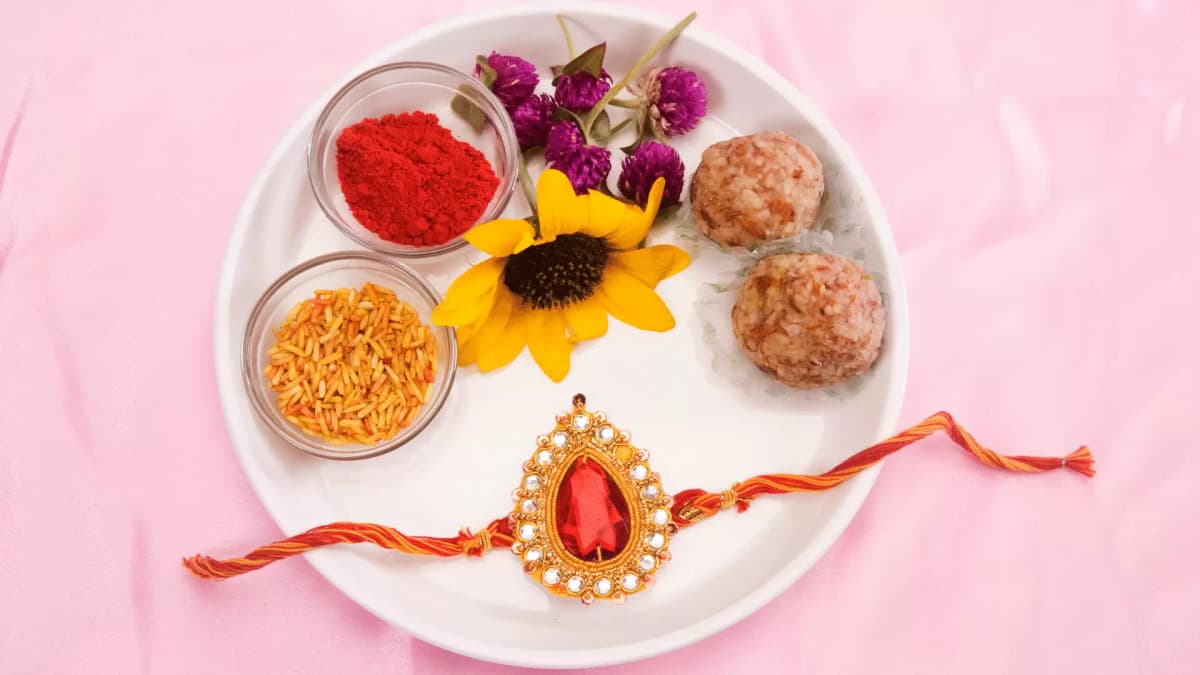
A calm, step-by-step guide to the Raksha Bandhan 2026 rakhi ceremony on Friday 28 August — thali, tilak, tying the thread, aarti and blessings — with a full version and a quick 10-minute version.
Quick answer: Raksha Bandhan 2026 falls on Friday, 28 August 2026. The puja vidhi is simple: prepare a thali with roli, rice, a diya, sweets and the rakhi; apply tilak; tie the rakhi on the right wrist while praying for protection; perform aarti; then exchange sweets and blessings. Confirm your local muhurat from a panchang.
Raksha Bandhan is one of the gentlest festivals in the Hindu calendar — a single thread standing in for a lifetime of care. The puja vidhi (ritual method) is short, and you do not need Sanskrit, a priest, or expensive items to perform it beautifully. What matters most is the intention behind the tying: a wish for the other person's wellbeing, and a quiet promise to be there. In 2026 the festival is observed on Friday, 28 August.
This guide gives you the full traditional ceremony and a compact 10-minute version for when your window is narrow. For the calendar background — including why the date and the Bhadra tradition fall the way they do — and for confirmed timings, always cross-check your own local muhurat, since clock times shift by city.
- Festival: Raksha Bandhan (Rakhi Purnima)
- Date 2026: Friday, 28 August 2026
- Tithi: Shravana Purnima
- Bhadra note: Falls on the 27th; framed as tradition, not a threat
- Core ritual: Tilak, tie rakhi on right wrist, aarti, sweets
- Timings: Confirm from your local panchang
What you need on the puja thali
Gather everything on one plate before you begin, so the ceremony flows without interruption. Substitutions are perfectly acceptable — use what your household keeps. If you observe a regional custom that differs from the list below, that custom is equally valid; treat this as a template, not a rule.
| Item | Purpose | If unavailable |
|---|---|---|
| Rakhi / sacred thread | The protective thread to tie | A plain kalava (mauli) or any thread |
| Roli or kumkum | For the tilak on the forehead | Sandalwood (chandan) paste |
| Akshata (unbroken rice) | Pressed onto the tilak for auspiciousness | A few grains of raw rice |
| Diya and ghee/oil | For the aarti flame | A small candle |
| Sweets (mithai) | To sweeten the moment | Any home sweet, dates, or fruit |
| Water in a small pot | For sipping and sankalp | Plain drinking water |
Full Raksha Bandhan puja vidhi, step by step
Face east or north if you can, and keep the mood unhurried. The person receiving the rakhi traditionally sits; the person tying stands or sits beside them. Read the steps once through first, then begin.
- Clean the space and yourself. Wash your hands, wipe the thali area, and light the diya. Many families take a quick bath and wear fresh clothes before starting.
- Make a sankalp (intention). Hold a little water and rice in your right hand and silently state the purpose — protection, health and happiness for the person before you — then release the water into a bowl or the earth.
- Apply the tilak. Dip your ring finger in roli or chandan and place a tilak on the receiver's forehead, then press a few grains of akshata onto it. This marks them as honoured and blessed.
- Tie the rakhi on the right wrist. Wind the thread around the right wrist three times if it is long enough, and tie it securely while holding a wish for their wellbeing in your heart. The right hand is traditionally the hand of action and vows.
- Offer a short prayer. Speak from the heart in any language, or simply hold silent good wishes. Kathas describe threads tied for protection since ancient times, but the words are yours to choose.
- Perform aarti. Rotate the lit diya gently clockwise before the receiver a few times, then set it down. This offering of light completes the blessing.
- Exchange sweets. The one who tied feeds a sweet first, or they feed each other — regional customs differ, and both are lovely.
- Give and receive blessings. Elders bless the younger; siblings of the same age simply embrace. Gifts, if any, are exchanged now, but they are never the point of the day.
The 10-minute version for a narrow window
If your auspicious window is short, if you are joining family by video call, or if a work day leaves you only minutes, this compressed version keeps the heart of the ritual intact. Nothing essential is lost.
- Light the diya and take a breath to settle (about 1 minute).
- Apply tilak and press on a few rice grains (2 minutes).
- Tie the rakhi on the right wrist with a silent wish (2 minutes).
- Do a brief aarti — a few gentle clockwise rotations of the flame (2 minutes).
- Share a sweet and a hug or a blessing (3 minutes).
For every kind of bond
Raksha Bandhan is often pictured as a sister tying a rakhi on a brother, but the thread has always meant more than that. Sisters tie rakhis for sisters, friends for friends, cousins for cousins, and chosen family for one another. The vow of care does not require a shared bloodline or a particular gender.
If you have no sibling, or a sibling you are estranged from, or one who has died, this day can carry a tenderness. Many people tie a rakhi to a photograph, to a deity such as Krishna or Hanuman, to a soldier, a teacher, a friend who became family, or simply keep the thread aside in quiet remembrance. There is no wrong way to honour a bond — the festival makes room for grief and distance as much as for celebration.
About the timings and Bhadra
You may read that the day should avoid Bhadra, a period the tradition treats as unsuitable for tying the rakhi. In 2026 that Bhadra window falls on the 27th, which is one reason the ceremony is widely observed on Friday, 28 August. Please read this as an old custom that shapes the schedule, not as a warning of harm. For a fuller explanation see our Bhadra and Raksha Bandhan 2026 note, and confirm your city's exact windows on the muhurat page. We do not print fixed clock times here because they genuinely vary by location.
Related reading
- Raksha Bandhan 2026 — complete guide
- Raksha Bandhan 2026 muhurat timings
- Is Raksha Bandhan on 27 or 28 August 2026?
- Bhadra Kaal and Raksha Bandhan 2026
- Raksha Bandhan 2026 NRI guide
However you keep it — a full thali or a single thread over a video call — the ceremony is complete the moment the wish is made. May your Raksha Bandhan 2026 be warm and unhurried.
Frequently Asked Questions
What is the date of Raksha Bandhan 2026?
Raksha Bandhan 2026 is observed on Friday, 28 August 2026, on Shravana Purnima. Confirm the exact tying window for your city from a local panchang, as clock times vary by location.
On which wrist should the rakhi be tied?
The rakhi is traditionally tied on the right wrist, which is regarded as the hand of action and vows. If the receiver prefers the left for any practical reason, that is fine too — the intention matters most.
What items do I need for the rakhi puja?
A basic thali holds the rakhi, roli or kumkum, akshata (rice grains), a diya, sweets and a little water. Substitutes such as chandan, a candle or any home sweet are perfectly acceptable.
Do I need a priest or Sanskrit mantras?
No. Raksha Bandhan can be performed entirely at home without a priest. You may pray in any language or simply hold silent good wishes; the ceremony is valid with heartfelt intention alone.
Can I do a shorter ceremony if I am short on time?
Yes. A 10-minute version — light the diya, apply tilak, tie the rakhi, do a brief aarti and share a sweet — keeps the heart of the ritual intact when your window is narrow.
Can sisters tie rakhi to sisters, or friends to friends?
Absolutely. Sisters, cousins, friends and chosen family all tie rakhis to one another. The thread expresses care and protection and is not limited by gender or bloodline.
What can I do if I have no sibling or my sibling has died?
Many people tie a rakhi to a photograph, a deity, a soldier, a teacher or a friend who became family, or keep a thread aside in remembrance. The day makes room for grief and distance as much as celebration.
Why is the 27th linked to Bhadra?
Tradition treats Bhadra as an unsuitable period for tying the rakhi, and in 2026 that window falls on the 27th — which is why the ceremony is widely observed on the 28th. This is an old scheduling custom, not a warning of harm.
Related guides you may find helpful
You might also like

Rama Ekadashi 2026: Date, Vrat Katha, Puja Vidhi & Significance
Navratri 2026: 9 Days, Colors, Goddess Names, Puja & Significance
Jagaddhatri Puja 2026: Dates, Chandannagar's Dazzling Lights & Significance