Raksha Bandhan 2026 Rakhi Muhurat: Timings Worldwide Explained
The rakhi in 2026 is tied on the morning of Friday 28 August, while Purnima still runs before it ends around mid-morning IST. Here is the muhurat logic and a region-by-region guide for families abroad.
The rakhi in 2026 is tied on the morning of Friday 28 August, while Purnima still runs before it ends around mid-morning IST. Here is the muhurat logic and a region-by-region guide for families abroad.
Quick answer: In 2026, Raksha Bandhan falls on Friday, 28 August, and the rakhi is traditionally tied that morning while the Purnima tithi is still running, before it ends around mid-morning IST. Because the tithi ends before the classical aparahna window this year, the morning is the practical muhurat. Always confirm exact timings from your own city panchang.
Raksha Bandhan in 2026 is celebrated on Friday, 28 August, and the rakhi is traditionally tied that morning. This is the flagship timing question every family asks, and the honest answer has two parts: the day is settled, but the exact clock window is local. In 2026 the Purnima (full-moon) tithi is present at sunrise on the 28th and runs into the forenoon before ending around mid-morning IST, so the tying happens in that morning stretch rather than in the afternoon.
This page explains the reasoning simply, gives you a region-by-region guide so families abroad know which calendar day and roughly which time of day the window falls on locally, and points you to your own panchang for the precise minutes. We deliberately avoid printing fabricated precise clock times, because muhurat windows shift by city and sunrise, and a wrong minute-by-minute table helps no one.
- Festival: Raksha Bandhan (Rakhi Purnima)
- Date 2026: Friday, 28 August 2026
- Tithi: Shravana Purnima
- Best time to tie rakhi: Morning of 28 August (India), before the tithi ends around mid-morning IST
- Bhadra: Falls on 27 August, which is one reason the festival is on the 28th
- Confirm with: Your local city panchang / family temple
Why 28 August and not the 27th
The single most-searched doubt every year is the date. For 2026 the consensus is firm: Raksha Bandhan is on Friday, 28 August. Two classical rules drive this. First, the festival follows Shravana Purnima, and the tithi that is present at sunrise generally governs the day of observance; in 2026 Purnima is present at sunrise on the 28th. Second, tradition asks that the rakhi not be tied during Bhadra, an inauspicious span linked to the first half of Purnima. In 2026 that Bhadra window falls on the 27th.
So even though the full-moon tithi begins on the 27th, its early hours coincide with Bhadra, and by the time Bhadra ends the day has largely passed. The clean, Bhadra-free window that also has Purnima present at sunrise is the morning of the 28th. That is why almost every panchang converges on Friday, 28 August. We cover this in depth on the dedicated date page linked below.
Why the morning window this year (and not aparahna)
Classical texts often prefer the aparahna period — roughly the later afternoon — for tying the rakhi when the tithi permits. But muhurat is always subordinate to the tithi itself: you can only tie during Purnima. In 2026 the Purnima tithi ends before the aparahna period begins, so there is no valid afternoon window on the 28th. That leaves the forenoon, while the tithi is still running, as the practical and widely-followed muhurat this year. This is a normal, tradition-consistent outcome, not an anomaly to worry about.
Please read the Bhadra and aparahna material as reasoning and tradition, never as a threat. Nothing bad follows from tying at a slightly different moment; these windows are about aligning a loving act with an auspicious sky, not about warding off harm. If your only free time is later in the day, tie the rakhi with love — the sentiment is the heart of the ritual.
The key idea for families abroad: it is just arithmetic
Here is the insight that removes most confusion for the diaspora. India runs on IST, which is UTC+5:30. The India morning window on the 28th corresponds to a fixed moment in universal time, and converting it to your zone is simple subtraction or addition. Because much of the world is many hours behind India, the same universal moment can land on the evening of the 27th (in the Americas) or in the small hours of the 28th (in the UK and Europe), even though in India it is clearly the morning of the 28th.
The table below gives the local calendar day and the rough time-of-day the India-converted window lands on in each region. These are directional, not minute-precise; use them to know which evening or morning to plan around, then confirm the exact window from your city panchang.
| Region | Local day of the India window | Rough time of day (local) |
|---|---|---|
| India (IST) | Friday 28 August | Morning |
| US mainland (ET/CT/MT/PT) | Thursday 27 August | Evening |
| UK & Ireland | Friday 28 August | Middle of the night into early hours |
| Western Europe (CET) | Friday 28 August | Early hours (pre-dawn) |
| Gulf / UAE | Friday 28 August | Early morning |
| Singapore / Malaysia | Friday 28 August | Mid-morning |
| Australia (AEST) | Friday 28 August | Late morning / midday |
| New Zealand | Friday 28 August | Early afternoon |
Two defensible approaches for the diaspora
Families abroad reasonably ask: do we follow the exact India-converted moment, or do we calculate our own local window on the 28th? Both are traditionally defensible, and neither is wrong. We do not rule between them — this is a decision for your family and your local temple or priest, who may already have a settled practice.
- Follow the India-converted window: take the India morning window on 28 August and convert it to your zone using IST = UTC+5:30. In the Americas this usually means observing on the evening of 27 August local; in the UK, Europe and the Gulf it means the early hours or early morning of the 28th. This keeps you tied to the same universal moment as family back home.
- Calculate a local morning window on 28 August: compute Purnima's presence relative to your own local sunrise on the morning of 28 August, and tie the rakhi in your local forenoon. Many families prefer this because it lets everyone gather at a comfortable morning hour on the festival day itself.
A practical middle path many households use: tie the rakhi at a warm, convenient family gathering on the morning of 28 August local time, treating the act and the intention as primary, while acknowledging the India window for those who want the closest astronomical alignment. If you would like a fuller decision framework for which calendar to trust abroad, see the which-panchang guide linked below.
A gentle word on who this festival is for
Raksha Bandhan is often framed around a sister tying a rakhi for a brother, but the bond it celebrates is wider than that. If you have no sibling, an estranged one, or a sibling who has passed away, this day can be tender rather than simple. The thread has always been tied between cousins, friends, chosen family, and to deities and gurus too. Honour the relationships that protect and sustain you, in whatever form they take — the muhurat welcomes every kind of bond.
Regional variations, all equally valid
The same Shravana Purnima carries many names and customs across India and its diaspora, and each is a full, valid tradition in its own right:
- North India: the classic rakhi-tying between siblings, with sweets and gifts.
- Gujarat: alongside rakhi, communities observe Purnima customs of the season.
- Maharashtra & the Konkan: Narali Purnima, when the fishing community offers coconuts to the sea and prays for calm waters.
- Bengal: Jhulan Purnima, the swing festival of Radha and Krishna, culminates around this Purnima.
- Odisha: Gamha Purnima, honouring cattle and Balabhadra.
- South India: Avani Avittam / Veda Upakarma, when many Brahmin communities renew the sacred thread — often overlapping this same full moon.
None of these outranks another; they are parallel expressions of the same auspicious full moon. If your family keeps two of them at once, that is entirely normal.
Simple steps for tying the rakhi
- Confirm your local window from a trusted city panchang or your family temple for the morning of 28 August (or the converted evening of 27 August in the Americas).
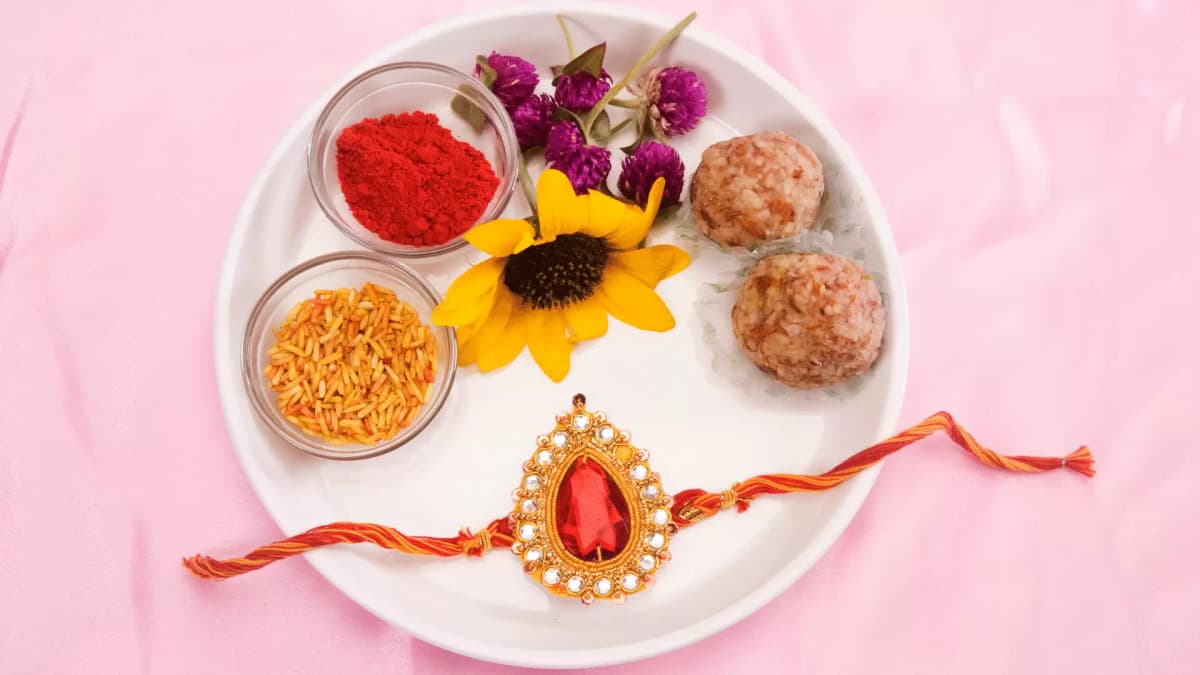
- Prepare a small thali: rakhi, roli or kumkum, rice grains (akshata), a diya, and sweets.
- Apply a tilak, perform a brief aarti, and tie the rakhi with a wish for wellbeing and protection.
- Exchange sweets and gifts, and if a sibling is far away or has passed, offer a quiet prayer or a rakhi kept in their memory.
- For distant family, tie it together over a video call at a time that suits both zones — the shared moment matters more than the exact minute.
Related reading
- Raksha Bandhan 2026: complete guide
- Is Raksha Bandhan on 27 or 28 August 2026?
- Bhadra Kaal and Raksha Bandhan 2026
- Which panchang should NRIs follow?
- Raksha Bandhan 2026 NRI guide
Frequently Asked Questions
Is Raksha Bandhan on 27 or 28 August 2026?
It is on Friday, 28 August 2026. Purnima is present at sunrise on the 28th and there is no Bhadra that morning, whereas the 27th carries the Bhadra span. Nearly every panchang converges on the 28th, so plan your rakhi for that day.
Why does the 27th not work despite Purnima starting then?
Purnima does begin on the 27th, but its early hours coincide with Bhadra, an interval tradition asks us to avoid for tying the rakhi. By the time Bhadra ends, much of the day is gone. The clean, Bhadra-free window with Purnima present at sunrise is the morning of the 28th.
What is Bhadra and should I be anxious about it?
Bhadra is a span linked to the first half of Purnima that tradition prefers to avoid for the rakhi. It is guidance about auspicious timing, not a threat — nothing harmful follows from a different moment. In 2026 it falls on the 27th, which simply helps confirm the festival on the 28th.
What is the exact rakhi muhurat time in 2026?
The window is the morning of 28 August in India, while Purnima runs before ending around mid-morning IST. We do not print minute-precise times because they vary by city and sunrise. Confirm the exact window from your local panchang or family temple.
Why is it the morning window and not the afternoon aparahna?
Classical texts often prefer aparahna, but muhurat can never override the tithi. In 2026 the Purnima tithi ends before aparahna begins, so there is no valid afternoon window. The forenoon, while the tithi is still running, is the practical muhurat this year.
I live in the US — when do I tie the rakhi?
The India morning window on 28 August converts to the evening of Thursday, 27 August across mainland US zones. You can either observe at that converted evening moment, or calculate a local morning window on 28 August from your own sunrise. Both are traditionally defensible; follow your family and local temple.
How do families in the UK, Gulf, Singapore, Australia and NZ time it?
Converting the India window: UK and Western Europe land in the small hours of 28 August, the Gulf in early morning, Singapore in mid-morning, Australia (AEST) around late morning to midday, and New Zealand in early afternoon — all on 28 August. Alternatively, use your local sunrise on the 28th. Confirm exact minutes from your city panchang.
I have no sibling or my sibling has passed away — is this day still for me?
Yes. Raksha Bandhan celebrates every protective bond — cousins, friends, chosen family, gurus and deities. If a sibling is estranged, far away or has passed, you might offer a quiet prayer or keep a rakhi in their memory. The thread honours love in whatever form it lives in your life.
You might also like
Diwali 2026 in Nepal: Date, Lakshmi Puja Muhurat & City-by-City Celebration Guide
Diwali 2026 in Fiji: Date, Lakshmi Puja Muhurat & City-by-City Celebration Guide
Diwali 2026 in Guyana: Date, Lakshmi Puja Muhurat & City-by-City Celebration Guide