History of Ganeshotsav in Mumbai: From Home Ritual to the World’s Grandest Public Festival
How Mumbai’s Ganeshotsav grew from a private household ritual into the world’s grandest public festival — Lokmanya Tilak’s 1893 sarvajanik call, the first public celebration at Keshavji Naik Chawl, the working-class mandals, and the rise of Lalbaugcha Raja.
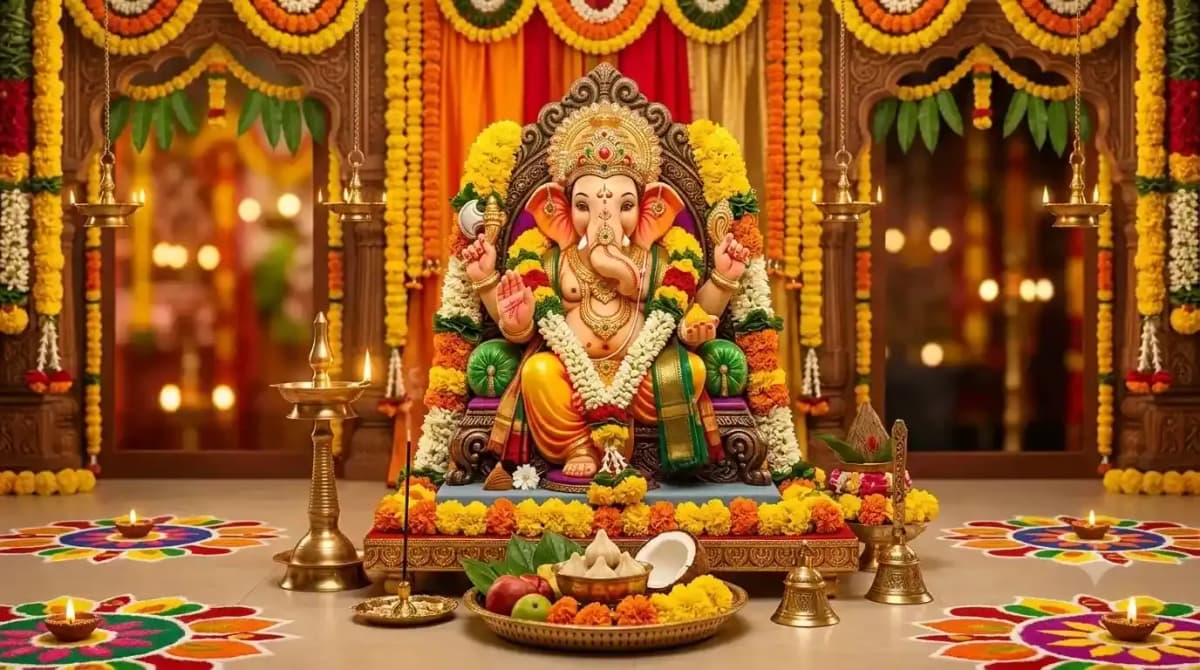
How Mumbai’s Ganeshotsav grew from a private household ritual into the world’s grandest public festival — Lokmanya Tilak’s 1893 sarvajanik call, the first public celebration at Keshavji Naik Chawl, the working-class mandals, and the rise of Lalbaugcha Raja.
Quick answer: Ganeshotsav in Mumbai grew from a private home ritual into a mass public festival in the 1890s, when Lokmanya Bal Gangadhar Tilak championed the sarvajanik (community) form to unite people and spread nationalist ideas under British rule. Mumbai’s first public Ganeshotsav was held in 1893 at Keshavji Naik Chawl, Girgaon; the iconic Lalbaugcha Raja mandal was established in 1934.
Ganeshotsav (Ganesh Chaturthi) in Mumbai has evolved from a private household ritual into one of the largest and most vibrant public festivals in the world. Its modern form is deeply tied to India’s freedom struggle, community identity and the city’s working-class culture.
Early roots (pre-1890s)
Before the late 19th century, Ganesh Chaturthi was mainly a private family celebration. Public elements existed earlier under Maratha rulers — including during the time of Chhatrapati Shivaji Maharaj and the Peshwas in Pune — but in Bombay it remained largely domestic. At the time, Muharram processions were far more popular public events in the city, with Hindus also participating in them.
The turning point: 1893 and Lokmanya Tilak
The transformation into a mass public festival began in the 1890s, closely linked to nationalist politics and communal tensions. In August 1893, major Hindu–Muslim riots broke out in Bombay (starting from an incident near a Hanuman temple at Pydhonie) — one of the first large-scale communal clashes in the city.
Lokmanya Bal Gangadhar Tilak, the nationalist leader and editor of Kesari, advocated turning Ganesh Chaturthi into a sarvajanik (public/community) festival. This allowed people to gather openly under the guise of religion, bypassing British restrictions on political meetings, and helped unite Hindus across caste lines while spreading nationalist ideas. Tilak is widely credited with popularising and expanding the public form of the festival across Maharashtra, though some credit also goes to earlier public installations in Pune (such as by Bhausaheb Rangari in 1892–93).
Mumbai’s first public Ganeshotsav (1893)
Mumbai’s first recorded sarvajanik Ganeshotsav was held in 1893 at Keshavji Naik Chawl in Girgaon (near Charni Road). Residents associated with Tilak responded to his call and installed a public idol, and the celebration continued every year despite British restrictions — Tilak himself visited the pandal in 1901. Neighbouring chawls briefly joined, but Keshavji Naik Chawl’s tradition has continued unbroken for over 130 years and is regarded as Mumbai’s pioneering public Ganeshotsav. The festival quickly grew as a platform for patriotic songs, speeches and anti-British messaging while remaining rooted in devotion.
Growth in the working-class neighbourhoods
As Mumbai industrialised, especially with the rise of textile mills in areas like Girangaon (Lalbaug–Parel), the festival became a powerful expression of working-class identity. Mill workers and fisherfolk pooled resources to create larger idols and pandals far grander than their modest homes.
Lalbaugcha Raja — the most famous icon (1934)
One of the most iconic symbols of Mumbai Ganeshotsav is Lalbaugcha Raja (also called Navsacha Raja — the wish-fulfilling king). In 1932, the Peru Chawl fish market shut down, affecting local fishermen and traders. The community vowed to install a public Ganesh idol if they received land for a new market. When the landlord provided the plot (present-day Lalbaug Market), they fulfilled the vow.
- The Lalbaugcha Raja Sarvajanik Ganeshotsav Mandal was formed, and the first idol was installed on 12 September 1934.
- The original idol was dressed in the attire of a fisherman, reflecting its community roots.
- The Kambli family has been sculpting the idol for generations since 1935.
- Today it attracts millions of devotees every year, with queues sometimes lasting more than a day.
Post-Independence evolution
After 1947, Ganeshotsav expanded dramatically in scale and splendour, with thousands of mandals across the city. The festival became known for massive idols and elaborate themed pandals, cultural programmes, melas and community service, and grand visarjan processions ending at beaches like Girgaon Chowpatty, Juhu and Versova. It remains a powerful expression of Marathi pride, community bonding and devotion while drawing people from all backgrounds.
Key takeaways
| Milestone | Detail |
|---|---|
| Private to public | Shifted from home rituals to mass community celebrations in the 1890s |
| Tilak’s role | Used the festival for national awakening and unity against British rule |
| First Mumbai public celebration | Keshavji Naik Chawl, Girgaon (1893) |
| Working-class roots | Strongly linked to mill workers and fisherfolk |
| Iconic mandal | Lalbaugcha Raja (established 1934) |
Today, Mumbai’s Ganeshotsav is one of the grandest religious and cultural spectacles in the world, blending deep faith, history, politics and community spirit. Planning a pandal this year? See our Mumbai Ganesh Mandapam permission guide. Ganpati Bappa Morya!
Frequently Asked Questions
When did Mumbai’s first public Ganeshotsav take place?
Mumbai’s first recorded sarvajanik (public) Ganeshotsav was held in 1893 at Keshavji Naik Chawl in Girgaon, near Charni Road, in response to Lokmanya Tilak’s call. The tradition has continued unbroken for over 130 years.
What was Lokmanya Tilak’s role in Ganeshotsav?
Bal Gangadhar Tilak championed turning Ganesh Chaturthi into a public sarvajanik festival in the 1890s, using it to gather people openly, bypass British restrictions on political meetings, unite Hindus across castes and spread nationalist ideas.
Why did Ganesh Chaturthi become a public festival?
Amid nationalist politics and the 1893 Bombay riots, Tilak saw the festival as a way to unite the community and hold public gatherings under a religious banner, circumventing colonial restrictions while remaining rooted in devotion.
When was Lalbaugcha Raja established?
The Lalbaugcha Raja mandal installed its first idol on 12 September 1934, after Lalbaug’s fishermen and traders fulfilled a vow to install a public Ganesh idol when they received land for a new market.
Why is Lalbaugcha Raja called Navsacha Raja?
Lalbaugcha Raja is called Navsacha Raja — the “wish-fulfilling king” — because devotees believe their vows (navas) are fulfilled; it draws millions each year, with queues sometimes lasting more than a day.
Who sculpts the Lalbaugcha Raja idol?
The Kambli family has been sculpting the Lalbaugcha Raja idol for generations since 1935, maintaining the distinctive form that grew from its original fisherman’s attire.
How did mill workers shape Mumbai’s Ganeshotsav?
As textile mills rose in Girangaon (Lalbaug–Parel), mill workers and fisherfolk pooled resources to build large idols and pandals, making the festival a powerful expression of working-class identity and community pride.
How did Ganeshotsav change after Independence?
After 1947 the festival expanded dramatically — thousands of mandals, massive themed pandals, cultural programmes and community service, and grand visarjan processions at Girgaon Chowpatty, Juhu and Versova.
You might also like
Champa Shashthi 2026: Date, Khandoba Worship & Jejuri's Golden Festival
Kati Bihu 2026: Date, Rituals & Assam's Festival of Earthen Lamps
Pushkar Fair 2026: Dates, Kartik Snan & the World's Greatest Camel Mela