

Shraddha Vidhi: The Complete Ritual, Step by Step
A warm, non-prescriptive walk-through of the shraddha ritual — sankalpa, invocation, tarpan, pind daan or a simple food offering, feeding others, and a closing prayer — with regional variation acknowledged and gentle options for anyone unable to travel.
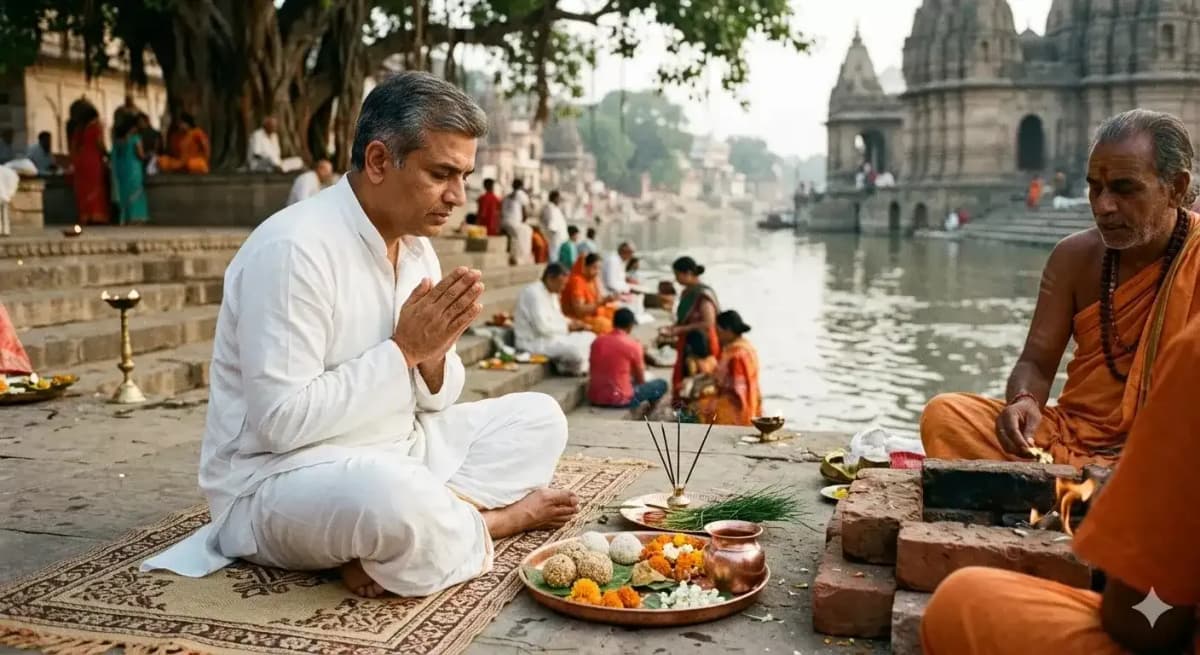
A warm, non-prescriptive walk-through of the shraddha ritual — sankalpa, invocation, tarpan, pind daan or a simple food offering, feeding others, and a closing prayer — with regional variation acknowledged and gentle options for anyone unable to travel.
Quick answer: Shraddha vidhi is the day of remembrance offered to ancestors during Pitru Paksha. In outline it moves through sankalpa (intention), inviting the ancestors, tarpan (water offerings), pind daan or a simple cooked-food offering, feeding a crow, cow, dog and others, and a closing prayer of gratitude. Details vary by family and region; a priest guides the specifics.
Shraddha is, at heart, a quiet act of love. During Pitru Paksha families set aside a day to remember those who came before them — parents, grandparents and the wider line of ancestors — and to offer them water, food and a few sincere words of gratitude. The mood is not fearful but tender: a chance to say thank you, to feel connected, and to keep a bond that death has changed but not ended.
The outline below describes the shape most shraddha rituals follow. Please treat it as a gentle map rather than a rulebook. The exact order, the mantras, the number of pindas and even the ingredients differ from one family, region and sampradaya to another, and a priest who knows your family tradition will guide the details on the day. If you cannot arrange all of it, a simple, heartfelt version done with a clean mind is honoured too.
Quick facts
- Ritual: Shraddha vidhi (annual/Pitru Paksha remembrance for ancestors)
- Pitru Paksha 2026: 26/27 September to 10 October 2026
- Sarva Pitru Amavasya: Saturday, 10 October 2026 (Mahalaya Amavasya)
- Core steps: Sankalpa, invocation, tarpan, pind daan or food offering, feeding others, closing prayer
- Who guides it: A family priest or purohit; details vary by region and tradition
- Muhurat: The aparahna (early-afternoon) period is often preferred; confirm timings locally
Because tithi and muhurat shift with your city, always confirm the date and timing with a local panchang or your priest. Our Pitru Paksha 2026 tithi calendar lists each day so you can match your ancestor's tithi, and the Pitru Paksha 2026 pillar gives the wider context.
The shraddha ritual, step by step
What follows is one common sequence. Your priest may add, merge or reorder steps to match your tradition.
- Preparation and cleanliness: the person performing shraddha bathes, wears clean (often washed, undyed or simple) clothes, and prepares a clean space. A pavitra (ring of kusha grass) is often worn on the ring finger. Cooking for the shraddha is usually kept simple and sattvic.
- Sankalpa (intention): sitting facing the appropriate direction, the performer takes water in the hand and states the intention — naming the ancestors, the tithi and the purpose of the rite. This quietly turns an ordinary day into a day of remembrance.
- Invocation (avahana) of the pitrs and the devas: the ancestors and the deities who preside over the rite are respectfully invited to be present and to accept the offerings.
- Tarpan (water offering): water, sometimes mixed with black sesame (til), barley or rice, is offered through the fingers to the ancestors while remembering them. This is the gentlest and most portable part of shraddha.
- Pind daan or a simple food offering: balls of cooked rice (or rice and barley flour) called pindas are offered to the ancestors; where full pind daan is not done, a plate of freshly cooked food is offered with the same feeling.
- Offering to Agni / the sacred portion: a small portion of food may be offered to the fire or set aside as the ancestors' share, depending on tradition.
- Feeding a crow, cow and dog: a share of the food is placed out for a crow (traditionally associated with the ancestors), and portions for a cow and a dog; some also keep a share for other creatures.
- Feeding brahmins, the poor and guests: offering a meal to a priest, to those in need, or to anyone who comes, is considered a central and beautiful part of the day.
- Closing prayer and visarjana: the performer thanks the ancestors, asks their blessings and peace for the family, and respectfully takes leave of the invoked pitrs, concluding the rite with gratitude.
Simple food offering (when full pind daan is not possible)
Not everyone can arrange pind daan, and that is completely acceptable. Many families offer a plate of the departed's favourite simple, sattvic food with the same devotion, then share the meal with others. What is remembered most is the feeling behind the act, not its scale.
| Element | What it represents | A gentle alternative |
|---|---|---|
| Sankalpa | Setting the intention to remember | A few quiet words naming your ancestors |
| Tarpan | Offering water to the pitrs | Water with sesame/rice, wherever you are |
| Pind daan | Rice-ball offering | A plate of freshly cooked, favourite food |
| Feeding a crow/cow/dog | Sharing with all beings | Leaving out food, or feeding any animal kindly |
| Feeding others | Hospitality and charity | Serving a meal to someone in need |
Who may perform shraddha
Traditionally the eldest son often performs shraddha, but views today span a genuine range. Many families and priests now welcome daughters, grandchildren, a spouse or another close relative to perform the rite, especially where no son is present or willing. This is a matter of family belief and the guidance of your priest rather than a single fixed rule. Our detailed note on whether a daughter can perform shraddha explores these views with care.
If you cannot travel or do not know the tithi
If you do not know your ancestor's exact tithi, if there is no son or close male relative, or if you simply cannot travel, you are not shut out. Sarva Pitru Amavasya — this year Saturday, 10 October 2026 — is kept precisely so that a single day can honour all ancestors, including those whose tithi is unknown. A quiet home tarpan, a simple food offering, feeding an animal, and giving food or daan to someone in need are all sincere ways to remember. See our Sarva Pitru Amavasya 2026 guide and the Pitru Paksha NRI guide for those living far from home.
A few gentle reminders
- Do it with a calm, loving mind rather than anxiety — the feeling matters most.
- Keep the food simple and sattvic; cook it yourself where you can.
- Confirm the tithi and muhurat with a local panchang or your priest.
- If something is left undone, that is human; sincerity is what is remembered.
- No ritual is a bargain for outcomes — it is remembrance and gratitude, offered freely.
Related reading
- linkPitru Paksha 2026 — the full pillar guidehttps://hindutone.com/festivals/pitru-paksha-2026/
- linkPitru Paksha 2026 tithi calendarhttps://hindutone.com/festivals/pitru-paksha-2026-tithi-calendar/
- linkSarva Pitru Amavasya 2026https://hindutone.com/festivals/sarva-pitru-amavasya-2026/
- linkCan a daughter perform shraddha?https://hindutone.com/festivals/can-daughter-perform-shraddha/
- linkPitru Paksha 2026 NRI guidehttps://hindutone.com/festivals/pitru-paksha-2026-nri-guide/
- linkBhadrapada Masam 2026 — the monthhttps://hindutone.com/festivals/bhadrapada-masam-2026/
Frequently Asked Questions
What is shraddha vidhi in simple words?
It is the ritual of remembering and offering to one's ancestors, usually during Pitru Paksha. In outline it moves through sankalpa, inviting the ancestors, tarpan, a pind daan or simple food offering, feeding a crow, cow, dog and others, and a closing prayer of thanks. Details vary by family and region.
Do I have to do pind daan, or is a food offering enough?
Both are valid. Where full pind daan is not possible, many families lovingly offer a plate of the departed's favourite simple food and share the meal with others. The devotion and remembrance matter more than the scale of the ritual.
Who is allowed to perform shraddha?
Traditionally the eldest son often does, but views today span a range. Many families and priests now welcome daughters, a spouse, grandchildren or another close relative to perform it. It is best decided with your family and your priest rather than by a single fixed rule.
What if I do not know my ancestor's exact tithi?
You can observe on Sarva Pitru Amavasya — this year Saturday, 10 October 2026 — which is kept to honour all ancestors, including those whose tithi is unknown. A home tarpan and a simple offering made sincerely are enough.
I live abroad and cannot travel to India for shraddha. What can I do?
A home tarpan, a simple food offering, feeding an animal, and giving food or daan to someone in need are all sincere ways to remember from anywhere. Our NRI guide covers doing this thoughtfully far from home, and a priest can guide you by video if you wish.
Why do we feed a crow, cow and dog during shraddha?
Sharing the food with these creatures — the crow especially associated with the ancestors — expresses that the day's remembrance extends kindness to all beings. If no crow comes, offering the share to any animal or leaving it out is accepted.
What time of day is shraddha usually done?
The aparahna period, in the early afternoon, is often preferred for the main offerings. Because timings shift with your location, confirm the muhurat with a local panchang or your priest rather than relying on a fixed clock time.
What if I could not perform shraddha one year, or left a step undone?
That is human, and it is not treated as a catastrophe here. You can remember your ancestors on Sarva Pitru Amavasya or on the next occasion with a simple, sincere offering. Shraddha is remembrance and gratitude, not a transaction with fixed penalties.
Related guides you may find helpful
You might also like
Rama Ekadashi 2026: Date, Vrat Katha, Puja Vidhi & Significance
Navratri 2026: 9 Days, Colors, Goddess Names, Puja & Significance
Navratri 2026 USA: Dates, Garba, Dandiya, Durga Puja & NRI Celebration Guide
