

Can a Daughter Perform Shraddha? Traditional Views and Modern Practice
A calm, honest guide to whether a daughter, wife or other relative may perform shraddha and tarpan — the classical emphasis on a son, the scriptural precedents that accept women, and how many priests and families practise today.
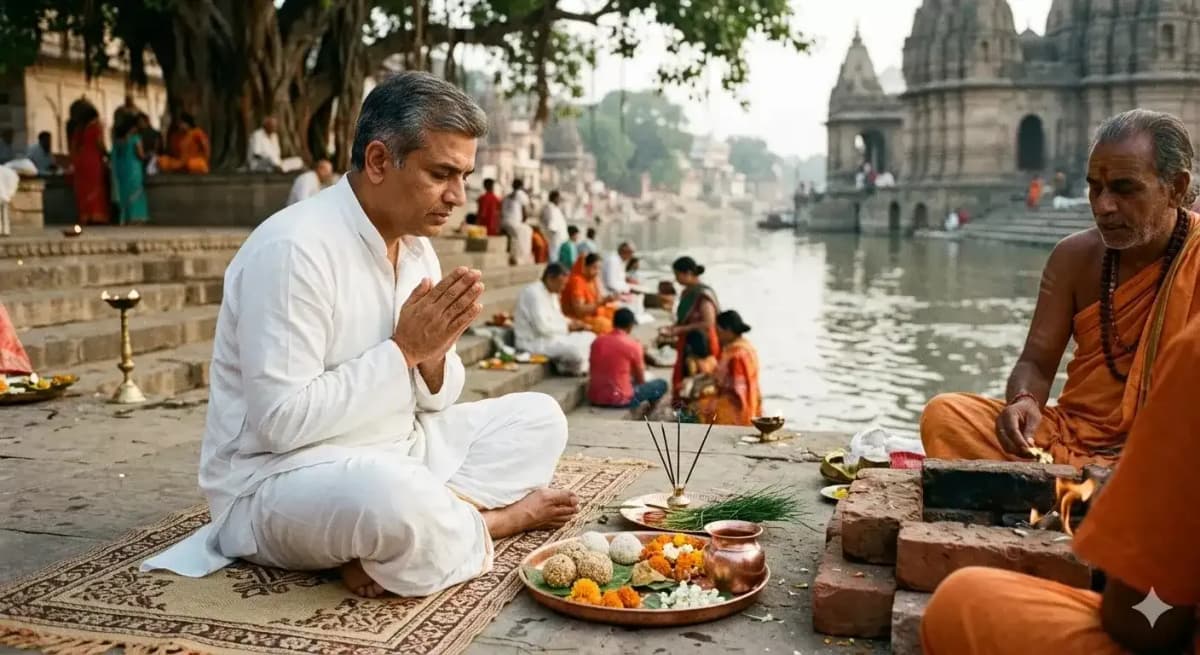
A calm, honest guide to whether a daughter, wife or other relative may perform shraddha and tarpan — the classical emphasis on a son, the scriptural precedents that accept women, and how many priests and families practise today.
Quick answer: During Pitru Paksha 2026 (26 or 27 September to 10 October), a daughter may perform shraddha and tarpan for her parents and ancestors. Classical texts emphasise the son, yet several scriptural precedents accept daughters, wives and other relatives, and many priests and families today honour a daughter's offering with full dignity.
If you are reading this because a parent or elder has passed, and you are wondering whether you — a daughter, perhaps an only daughter, perhaps with no brother available — may perform their shraddha, please take a slow breath first. You are not doing anything improper by wanting to remember and honour them. The desire itself is the heart of the rite.
The honest answer is that Hindu tradition holds a range of views on who may perform shraddha, and this page will lay them out gently and truthfully rather than issue a single ruling. What matters most, in every tradition, is that the offering is made with love, cleanliness of intention, and continuity of memory.
- Occasion: Pitru Paksha 2026 (annual shraddha fortnight)
- Dates: Approx. 26 or 27 September to 10 October 2026
- Sarva Pitru Amavasya: Saturday, 10 October 2026
- Question: May a daughter perform shraddha / tarpan?
- Short answer: Yes — with traditional precedent and wide modern acceptance
- Who decides for you: Your family custom and your local priest
The classical emphasis on the son
It is true and worth stating plainly: much of the classical Dharmashastra literature speaks of the son (putra) as the primary performer of the pinda and shraddha. The word putra is traditionally glossed as one who saves the ancestors, and the funeral and annual rites were structured within a household economy where the son commonly remained the ritual heir. This is the emphasis many elders grew up with, and it deserves respect rather than dismissal.
But an emphasis is not an exclusion. The same tradition that centres the son also names, in several places, a wider circle of people who may perform the rite when circumstances require it — and those circumstances are far from rare.
Scriptural precedents cited for daughters and others
Those who accept daughters and other relatives point to well-known passages and precedents. The most-cited is the episode in the Ramayana where Sita performs the shraddha and pinda-daan for King Dasharatha at Gaya when Rama and the others have stepped away — a woman offering the rite, remembered and retold for centuries. Some Puranic and Dharmashastra passages also enumerate a sequence of eligible performers extending beyond the eldest son to grandsons, wife, daughter, sons-in-law, grandsons through a daughter (dauhitra), brothers and other kin. The dauhitra — a daughter's son — is in fact especially honoured in several traditions, which itself affirms that lineage and merit flow through daughters.
The underlying reasoning offered is simple and humane: the pitru rite exists so that ancestors are remembered and offered water and food; a family should never be left without anyone able to do this. So the tradition names alternatives precisely so that no ancestor goes un-honoured for want of a son.
| Situation | Traditional accommodation |
|---|---|
| A son is present and willing | He commonly performs the rite; others may assist |
| No son, but a daughter | Daughter may perform tarpan and shraddha; widely accepted today |
| Only daughters in the family | An only daughter performing for her parents has clear precedent |
| No children at all | Wife/husband, brother, nephew, grandson or other kin may perform |
| No male relative available | Daughter, wife or the nearest willing relative may perform |
| Ancestor's exact tithi unknown | Offer on Sarva Pitru Amavasya (Mahalaya Amavasya) |
What many priests and families do today
In practice, a large and growing number of purohits, temples and families now welcome a daughter — or a wife, or any close relative — performing tarpan, pind daan and annual shraddha, and will guide her through the sankalpa and offerings with full respect. At major kshetras associated with pitru rites, priests routinely assist daughters and women. If your first instinct is to ask 'am I allowed?', you will often find the priest's answer is a warm 'of course — come, let us begin.'
This does not erase the households where custom still asks a male relative to lead, or where an elder feels strongly about the older form. Both realities are true at once. That is why this page does not hand you a ruling: the right course is the one your own family and your own priest arrive at together, in good conscience.
- Decide gently within the family who feels called and able to perform — there is no shame in a daughter stepping forward.
- Speak to your family priest or a temple purohit; tell them your situation honestly (only daughter, no brother, estranged, abroad).
- Confirm the tithi of your ancestor if known; if unknown, plan for Sarva Pitru Amavasya (10 Oct 2026).
- Keep it simple if resources or knowledge are limited — tarpan with water and til, a sattvik meal offered, and remembrance are enough.
- If you cannot perform the ritual yourself, arranging daan or feeding others in the ancestor's name is a recognised alternative.
If you have no brother, or no male relative at all
Please hear this clearly, because it is the reason many people search for this page: the tradition does not leave you stranded. An only daughter, a family with only daughters, a widow, a household with no available male relative — each of these has recognised, dignified accommodations. A daughter may perform tarpan and shraddha. A wife may perform for her husband. Where no one can perform the ritual form, offering daan and feeding others — brahmins, the needy, or simply guests — in the ancestor's name is itself an honoured way to remember them.
You are not failing your parents by being their daughter. In the spirit of the tradition, a remembrance offered with love is never refused.
Diaspora and distance
If you live abroad and cannot reach India or a family temple, tarpan can be offered at home with clean water and simple ingredients, or through a local Hindu temple that assists with pitru rites. Whether to follow the India tithi or your local-date tithi is a question both defensible ways; the calm resolution is to follow what your family and priest advise. Our companion guides on the panchang and NRI practice can help you think it through.
A note on tone and belief
You may encounter fear-based framing elsewhere — claims that a missed rite will cause specific misfortune. We do not present it that way. Traditional beliefs about pitru rites are held sincerely and described here as beliefs; no ritual is a guarantee and no omission is a curse. Shraddha is, at its warm centre, an act of gratitude and memory. Approached that way — by a son, a daughter, a wife, or a nephew — it is complete.
Related reading
- Pitru Paksha 2026: the complete guide
- Day-by-day tithi calendar for the shraddha fortnight
- Sarva Pitru Amavasya 2026 — the day for an unknown tithi
- When does Pitru Paksha 2026 begin — 26 or 27 September?
- Pitru Paksha guidance for NRIs and families abroad
- Which panchang should NRIs follow?
Frequently Asked Questions
Can a daughter perform shraddha for her parents?
Yes. While classical texts emphasise the son, several scriptural precedents accept daughters, and a large number of priests and families today welcome a daughter performing tarpan and shraddha for her parents with full dignity. Your family custom and local priest are the right guides.
I am an only daughter with no brother — may I still do the rites?
Yes. An only daughter performing for her parents has clear traditional precedent. Speak to a family priest or temple purohit; many will guide you warmly through the sankalpa and offerings. You are not doing anything improper by remembering your parents.
What is the scriptural basis often cited for women performing shraddha?
The most-cited precedent is Sita performing pind-daan for King Dasharatha at Gaya in the Ramayana. Some Puranic and Dharmashastra passages also list a sequence of eligible performers beyond the son — including wife, daughter and other kin — so no ancestor is left un-honoured.
My family has no available male relative at all. What can we do?
The tradition provides accommodations. A daughter or wife may perform the rite. Where no one can perform the ritual form, offering daan and feeding others — the needy or guests — in the ancestor's name is a recognised and honoured way to remember them.
Will something bad happen if a daughter does it instead of a son?
No — that is fear-based framing we do not endorse. Traditional beliefs are held sincerely, but no rite is a guarantee and no arrangement is a curse. A remembrance offered with love and clean intention, by whoever is willing, is considered complete.
I live abroad and cannot travel to India. Can I still perform tarpan?
Yes. Tarpan can be offered at home with clean water and simple ingredients, or through a local temple that assists with pitru rites. Whether to follow the India tithi or your local date is a question with defensible answers — follow what your family and priest advise.
I do not know my ancestor's exact tithi. When should I offer?
When the exact tithi is unknown, tradition points to Sarva Pitru Amavasya (Mahalaya Amavasya), which falls on Saturday, 10 October 2026. It is the day set aside precisely for all ancestors, including those whose day of passing is not remembered.
What if I can perform no ritual at all — is remembrance enough?
Yes. If resources or knowledge are limited, simple tarpan with water and til, a sattvik meal offered, feeding others, or daan in the ancestor's name are all recognised. The essence is gratitude and memory, not the scale of the ritual.
Related guides you may find helpful
You might also like

Indian Temple Flowers: Sacred Blooms & What Each Deity Loves
Indian Flower Festivals: 10 Beautiful Celebrations Beyond Bathukamma

Bathukamma Flowers: Meaning, Symbolism & the Wisdom Behind Each Bloom