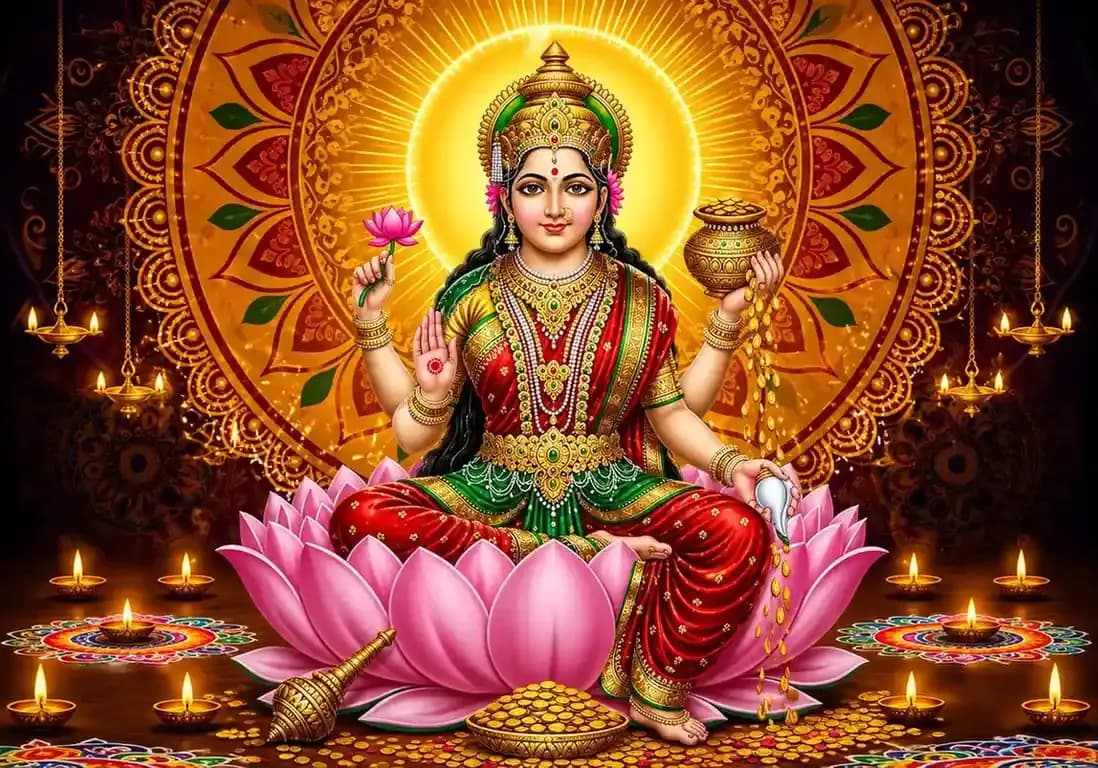
Can Unmarried Women Perform Varalakshmi Vratam? Traditional Views
A caring look at whether unmarried women can keep Varalakshmi Vratam — the classical married-women tradition, the many families and temples where single women, students and devotees participate, and how to follow your own kula and local-temple practice.

A caring look at whether unmarried women can keep Varalakshmi Vratam — the classical married-women tradition, the many families and temples where single women, students and devotees participate, and how to follow your own kula and local-temple practice.
Quick answer: Traditionally, Varalakshmi Vratam is kept by married women for family wellbeing, but there is no single rule. In many families, temples and communities, unmarried women, students and devotees also observe it — often more simply. The kindest guidance is to follow your family (kula) and local-temple custom.
"Can I keep Varalakshmi Vratam if I am not married?" is one of the most heartfelt questions devotees ask each year — often quietly, worried they may be doing something wrong. The honest, reassuring answer is that Hindu tradition holds a range of views, not one rigid rule. Classically the vratam is described as a vow kept by married women (sumangalis) for the long life and prosperity of their household; yet across regions, families and temples, unmarried women, students and single devotees also participate with devotion.
This article gently lays out those traditional views side by side, so you can decide with clarity and without anxiety. Nothing here is a ruling — it is a map. Your own family elders and your local temple priest remain the best guides for what your household follows.
- Festival: Varalakshmi Vratam 2026
- Observed by: Traditionally married women; in practice many households include unmarried women, students and devotees
- Deity: Goddess Lakshmi (Varalakshmi — the boon-granting form)
- 2026 dates: Friday 21 August 2026 (most Telugu/Tamil/Kannada panchangs) and Friday 28 August 2026 (some panchangs)
- Golden rule: Follow your family (kula) and local-temple tradition
First, the 2026 dates
Before the eligibility question, fix the day. Varalakshmi Vratam 2026 falls on Friday, 21 August 2026 in most Telugu, Tamil and Kannada panchangs, while some panchangs mark Friday, 28 August 2026. Neither is "wrong" — the difference comes from how the Shukla-paksha Friday before Shravana Purnima is reckoned. Please confirm the exact date for your family, and if you are abroad, our which-panchang guide for NRIs explains how to choose.
The classical view: a married woman's vratam
In the traditional textual and family framing, Varalakshmi Vratam is a sumangali vratam — a vow undertaken by a married woman, typically praying for the wellbeing, health and longevity of her husband, children and the whole household. This is why the puja is often centred on a decorated kalasam representing the Goddess as the abundance of the home, and why the invited guests are frequently married women who receive tamboolam. This framing is real, widely followed, and worthy of respect — it is the origin of the vratam's popular image.
The wider, lived reality
Alongside that classical picture, everyday practice is far more inclusive than many assume. In countless homes, temples and student hostels, unmarried women observe Varalakshmi Vratam with full devotion — sometimes leading it, sometimes assisting elders, sometimes keeping a simpler personal version. The Goddess is worshipped by all: children, unmarried daughters, widows, single working women and men alike offer prayers to Lakshmi. Devotion (bhakti), not marital status, is what the tradition ultimately honours.
So the two views are not really in conflict. One describes the vratam's classical form and original intention; the other describes the broad, welcoming way communities actually live it out. Both are true at once.
| Situation | Common traditional practice |
|---|---|
| Married woman (sumangali) | Keeps the full vratam with kalasam, often as the household's main observance for family wellbeing |
| Unmarried woman / young woman | Widely participates — assists elders, or keeps a simpler personal puja to Lakshmi; some families reserve the full kalasam vratam for after marriage |
| Student | Commonly offers prayers, prasadam and a short puja; treated as devotion and discipline, not a formal vow |
| Widowed or single devotee | Practice varies by family; many worship Lakshmi warmly on this day in their own way |
| Men / whole family | Join the prayers, help with preparations and receive prasadam |
How families usually decide
If you are unsure whether to keep the vratam this year, most families weigh a few simple things. None of these are tests of worthiness — they are just how households organise their customs.
- Ask your family elders what your kula (family lineage) traditionally does — this is the single most important step.
- Speak to your local temple priest, who knows the customs of your community and region.
- Consider a simpler observance if the full kalasam vratam feels reserved for married women in your family — see our note below on doing it without a kalasam.
- Focus on sincerity: a clean space, a lamp, flowers, a prayer to Lakshmi and prasadam are always welcome.
- Never let anxiety or comparison decide it — the day is meant to bring peace, not pressure.
A gentle, simple way to observe
If you would like to participate but the full kalasam vratam feels beyond your situation this year, a simple, heartfelt puja is entirely appropriate and traditional in spirit. Many devotees do exactly this.
- Clean and tidy your puja space and take a bath before beginning.
- Light a lamp (deepam) and offer flowers, turmeric, kumkum and fruit to Goddess Lakshmi.
- Offer a simple naivedyam (prasadam) — even payasam or fruit is enough.
- Recite prayers you know to Lakshmi; if you are unsure of exact stotra wording, sincere prayer in your own words is always accepted.
- See our Varalakshmi Vratam without kalasam guide for a full simplified method.
A note on eligibility and inclusion
Some older customs describe the vratam as specifically for married women, and you may hear that unmarried women "should not" keep it. It is worth understanding this as one traditional view among several, tied to the vratam's original family-welfare purpose — not as a judgement on anyone's devotion. Just as many families warmly include unmarried daughters and students, others reserve the formal vratam for after marriage. Both come from love and custom. If you belong to a family with the stricter view, honouring it is a beautiful act of respect; if your family is more inclusive, participating is equally beautiful. The Goddess turns no sincere heart away.
Choosing what is right for you
The most peaceful path is simple: follow your family and local-temple tradition, and let devotion — not worry — lead. Whether you keep the full kalasam vratam, a simplified puja, or simply offer a lamp and a prayer, your sincerity is what matters. If elders in your household observe it, joining them and learning from them is a lovely way to begin. And if you are the first in your circumstances to observe it, doing so with a clear, calm heart is entirely honourable.
For the step-by-step ritual, timing and abroad-specific help, the linked guides below cover everything you need for Varalakshmi Vratam 2026.
Related reading
- Varalakshmi Vratam 2026 date — 21 or 28 August?
- Varalakshmi Vratam 2026 — complete festival guide
- Step-by-step Varalakshmi Vratam puja vidhi
- How to do Varalakshmi Vratam without a kalasam
- Varalakshmi Vratam 2026 puja timings
- Varalakshmi Vratam 2026 NRI guide
Frequently Asked Questions
Can unmarried women perform Varalakshmi Vratam?
There is no single rule. Classically the vratam is kept by married women for family wellbeing, but in many families, temples and communities unmarried women, students and devotees also observe it with full devotion, often more simply. The best guidance is to follow your own family (kula) and local-temple tradition.
Why is Varalakshmi Vratam traditionally linked to married women?
The vratam is described as a sumangali vow, in which a married woman prays for the health, longevity and prosperity of her husband, children and household. This family-welfare purpose is why it became associated with married women. It reflects the vratam's original intention rather than any judgement on other devotees' faith.
Can students keep Varalakshmi Vratam?
Yes, students very commonly offer prayers, a lamp, flowers and prasadam to Goddess Lakshmi on this day. This is usually treated as devotion and discipline rather than a formal vow. A simple, sincere puja is entirely appropriate, and elders often welcome students joining the household observance.
What are the Varalakshmi Vratam 2026 dates?
Varalakshmi Vratam 2026 falls on Friday, 21 August 2026 in most Telugu, Tamil and Kannada panchangs, while some panchangs mark Friday, 28 August 2026. Neither is wrong — the difference is in how the panchang is reckoned. Confirm the date on our date page and follow your family and local-temple tradition.
Can I do the vratam without a kalasam if I am unmarried?
Yes. A simplified puja — a clean space, a lamp, flowers, turmeric, kumkum and a simple naivedyam to Lakshmi — is entirely appropriate and traditional in spirit. Many devotees, married or not, observe it this way. See our Varalakshmi Vratam without kalasam guide for a full simplified method.
Is it wrong for an unmarried woman to keep this vratam?
No. While some older customs reserve the formal vratam for married women, this is one traditional view among several, tied to its family-welfare origin. Many families warmly include unmarried daughters and students. Honour whichever view your family follows; the Goddess welcomes every sincere heart regardless of marital status.
Can widowed or single women worship on Varalakshmi Vratam?
Practice varies by family and region, but many widowed and single devotees warmly worship Goddess Lakshmi on this day in their own way. Devotion is what the tradition ultimately honours. If unsure of your household's custom, ask your family elders or your local temple priest for gentle guidance.
How should I decide whether to keep the vratam?
Ask your family elders what your kula traditionally does, and consult your local temple priest. Consider a simpler observance if the full kalasam vratam is reserved for married women in your family. Above all, let devotion rather than anxiety guide you — the day is meant to bring peace, not pressure.
Related guides you may find helpful
You might also like
Bathukamma 2026 in Malaysia: Dates, Kuala Lumpur Celebration & Vijayadasami Guide
Bathukamma & Dasara 2026 in Canada: Dates, Telangana Association Celebrations & City-by-City Guide
Bathukamma and Dasara 2026 in Australia: Dates, Telangana Association Celebrations, Muhurat and City-by-City Guide