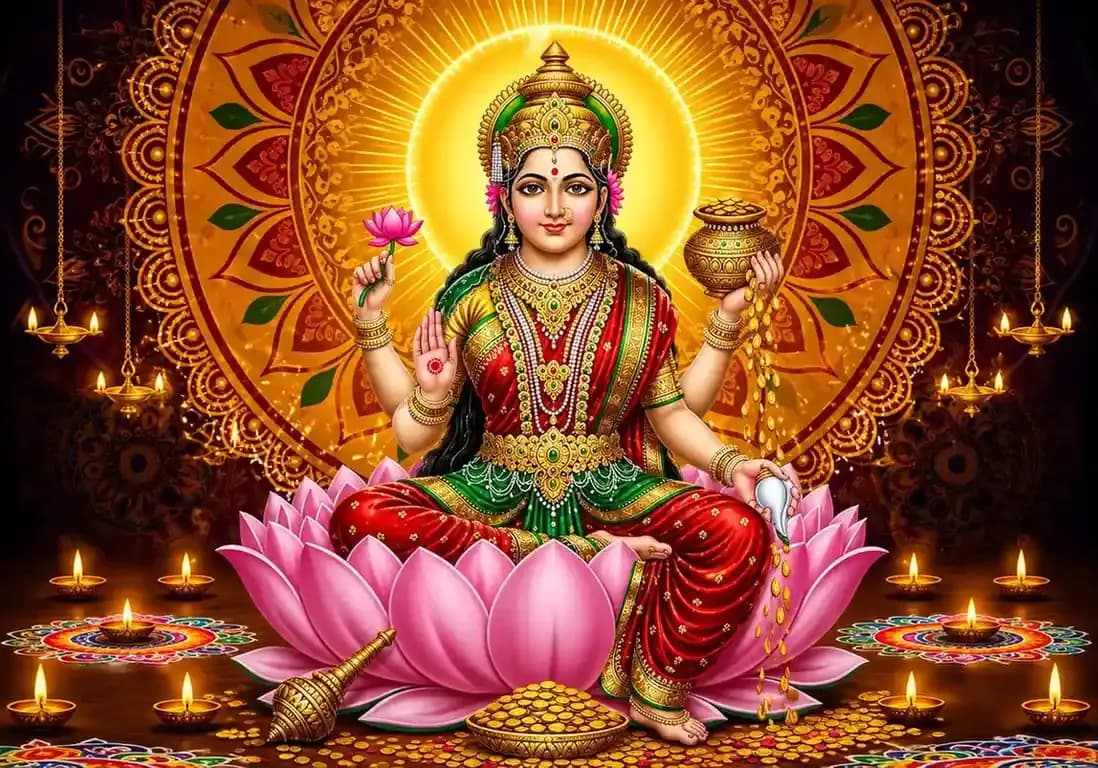
Can Varalakshmi Vratam Be Done Without a Kalasam? Simplified Options
NRIs and busy devotees who cannot source a brass vessel, mango leaves or a mukham can still keep Varalakshmi Vratam with three respectful, simplified alternatives — because sincerity matters most.
NRIs and busy devotees who cannot source a brass vessel, mango leaves or a mukham can still keep Varalakshmi Vratam with three respectful, simplified alternatives — because sincerity matters most.
Quick answer: Yes — Varalakshmi Vratam can be observed without a traditional kalasam. Because the vratam is fixed for Friday 21 August 2026 (most Telugu, Tamil and Kannada panchangs) or Friday 28 August 2026 (some panchangs), and the vessel merely hosts the Goddess, devotees who cannot source one may worship a framed Lakshmi photo, an existing idol, or a minimal coconut-and-cloth kalasam with equal devotion.
Every year, Telugu, Tamil and Kannada households prepare a beautifully adorned kalasam — a metal pot topped with mango leaves and a coconut, dressed as the face (mukham) of Goddess Mahalakshmi — for Varalakshmi Vratam. But if you are a student in a hostel, an NRI far from an Indian grocery, or simply short on time, you may not be able to find a brass or silver vessel, fresh mango leaves, or a ready mukham. A very common and heartfelt question follows: can the vratam still be done?
The reassuring answer from tradition is yes. The kalasam is a sacred host — an invited seat for the Goddess — not the Goddess herself. Where the vessel cannot be arranged, sincerity, cleanliness and devotion carry the puja. Below are three respectful, simplified alternatives, each with the traditional reasoning behind it, so you can keep the vow without anxiety.
First, confirm the date for 2026
Varalakshmi Vratam 2026 is date-contested. It falls on Friday, 21 August 2026 according to most Telugu, Tamil and Kannada panchangs, and on Friday, 28 August 2026 according to some panchangs. Neither is wrong — the difference arises from how the second Friday of the bright half of Sravana is counted in different regional calendars. Follow your family, kula or local-temple tradition, and read our detailed Varalakshmi Vratam 2026 date guide (21 or 28 August) before you fix your day.
| Panchang tradition | Varalakshmi Vratam 2026 date |
|---|---|
| Most Telugu, Tamil, Kannada panchangs | Friday, 21 August 2026 |
| Some panchangs | Friday, 28 August 2026 |
| Guidance | Follow family / kula / local-temple custom |
What is the kalasam, and why is it used?
In the classic setup, a metal pot is filled with water or rice, ringed with mango leaves, and closed with a coconut smeared in turmeric. A silver or paper mukham — the Goddess's face — is tied over it, and the whole vessel is draped in a blouse-piece, jewellery and flowers. The kalasam is treated as the aavahana sthana, the seat into which the Goddess is invoked for the day.
Understanding this purpose is the key to simplifying respectfully. What matters spiritually is that you provide a clean, dignified seat and invite the Goddess with love. The specific material of the seat — pot, photo, or idol — is secondary. This is why substitutes have always been accepted across households, especially during travel, illness, or scarcity.
Three simplified but respectful options
Option 1: Worship a framed Lakshmi photo or picture
If you have no vessel at all, a framed picture or printed image of Goddess Lakshmi (or Ashta Lakshmi / Varalakshmi) is a completely valid focus for the vratam. Place the frame on a clean, raised platform over a fresh cloth, apply turmeric and kumkum, and perform the puja as you normally would — lamp, flowers, and the Varalakshmi Vratam Katha.
- Wipe and dry a small table or shelf; spread a clean red or yellow cloth.
- Stand the framed Lakshmi photo upright, supported so it will not fall.
- Draw a small rangoli or place raw rice in front of the frame as the seat.
- Light a ghee or oil lamp, offer turmeric, kumkum, flowers and fruit.
- Invoke the Goddess, read or listen to the katha, then offer naivedyam.
Traditional reasoning: a consecrated or lovingly-kept image is itself a recognised support (pratima) for worship. The Goddess is invoked into the image just as She would be invoked into the kalasam. This is the simplest path for hostels and small apartments.
Option 2: Use an existing Lakshmi idol
Many homes already keep a small brass, silver or panchaloha idol of Lakshmi in the daily puja space. On Varalakshmi Vratam day, this idol can serve as the main deity. Bathe it in water (and, if you wish, in milk and turmeric water), dress it with a small cloth or flowers, and perform the vratam puja to it directly.
- Give the idol a gentle abhishekam with water, then dry it well.
- Adorn it with turmeric, kumkum, a small cloth or thread, and flowers.
- Offer the same upacharas — lamp, dhupa, naivedyam — as for a kalasam.
- Read the katha and offer the vratam thread (toram) at the idol's feet if you have one.
Traditional reasoning: an idol is a fully accepted seat of the deity. In fact, worshipping an established murti carries the sense of continuity — the same Lakshmi worshipped daily is honoured with special upacharas on this day. No mango leaves or mukham are required.
Option 3: A minimal coconut-and-cloth kalasam
If you would like to keep the kalasam form but cannot find a proper metal pot, mango leaves or a silver mukham, you can build a minimal version. Take any clean glass, tumbler or small bowl, fill it with water or rice, and place a turmeric-smeared coconut on top. Wrap a clean cloth (a new handkerchief, dupatta or blouse-piece) around it to suggest the Goddess's form, and mark eyes and kumkum with turmeric if you wish.
| Traditional item | Simple substitute |
|---|---|
| Brass / silver pot | Clean steel tumbler, glass or bowl |
| Mango leaves (ring) | Omit, or use any clean fresh leaves / betel leaves |
| Silver or paper mukham | Turmeric-coconut with kumkum dot, or a small picture propped in front |
| Rice / water fill | Plain rice or clean water |
| Blouse-piece drape | New handkerchief, small dupatta or clean cloth |
Traditional reasoning: the essence of the kalasam is a filled, closed vessel crowned by a coconut and invoked as the Goddess. Mango leaves and a metal body are auspicious but not indispensable; the coconut-on-vessel form preserves the core symbolism.
How to invoke the Goddess into any of these
Whichever option you choose, the invocation (aavahana) is what makes it the Goddess's seat for the day. Sit facing east or north, take a little water or a flower in your hand, and with folded devotion request Mahalakshmi to be present in the photo, idol or vessel before you. Then proceed with the regular puja steps and the Varalakshmi Vratam Katha.
- Cleanse yourself and the space; wear fresh clothes.
- Light the lamp and offer a short prayer to Ganesha for an obstacle-free puja.
- Perform aavahana — invite the Goddess into your chosen support.
- Offer the sixteen upacharas as far as you are able (lamp, incense, flowers, food).
- Tie or offer the vratam thread, read the katha, and conclude with aarti and pradakshina.
For the full sequence, our Varalakshmi Vratam 2026 puja vidhi walks through every step, and you can adapt it to whichever seat you have arranged.
On muhurat and timings
Auspicious puja windows for Varalakshmi Vratam are location-specific and vary by city, so we do not print a single clock time here. Please confirm the morning, midday and evening muhurats for your own city with a reliable panchang for your chosen date. In general the vratam is performed in the morning after bath, but many working families and NRIs perform it in the evening — both are traditionally accepted.
Sincerity matters most
Across every regional tradition — Telugu, Tamil, Kannada, Marathi and North Indian — the shared teaching is that the Goddess responds to bhava, inner devotion, more than to elaborate materials. A student with a printed picture and a single lamp, offering the katha with a full heart, keeps the vratam as truly as a household with a jewelled kalasam. Do not let a missing vessel stop you; do what you can, cleanly and lovingly, and the vow is complete.
If you are observing abroad and are unsure which calendar to use, our guide on which panchang NRIs should follow explains how to choose a consistent panchang for your timezone and family tradition.
Related reading
- Varalakshmi Vratam 2026: date — 21 or 28 August
- Varalakshmi Vratam 2026 complete guide (pillar)
- Sravana Masam 2026 calendar and dates
Frequently Asked Questions
Can Varalakshmi Vratam really be done without a kalasam?
Yes, Varalakshmi Vratam can be done without a traditional kalasam. The vessel is a sacred seat for the Goddess, not the Goddess herself. Where you cannot source a metal pot, mango leaves or a mukham, you may worship a framed Lakshmi photo, an existing idol, or a minimal coconut-and-cloth setup with equal devotion and a clean, dignified space.
What is the date of Varalakshmi Vratam in 2026?
Varalakshmi Vratam 2026 falls on Friday, 21 August 2026 according to most Telugu, Tamil and Kannada panchangs, and on Friday, 28 August 2026 according to some panchangs. Neither date is wrong; the difference comes from how the Sravana Friday is counted regionally. Follow your family, kula or local-temple tradition, and confirm with a reliable panchang before fixing your day.
Is worshipping a Lakshmi photo instead of a kalasam acceptable?
Yes, worshipping a framed or printed Lakshmi photo is fully acceptable when a kalasam cannot be arranged. A lovingly-kept image is a recognised support for worship, and the Goddess is invoked into it just as into a vessel. Place the frame on a clean raised cloth, offer turmeric, kumkum, lamp and flowers, and read the Varalakshmi Vratam Katha as usual.
Can I use my existing home Lakshmi idol for the vratam?
Yes, an existing brass, silver or panchaloha Lakshmi idol from your daily puja can serve as the main deity for Varalakshmi Vratam. Bathe it in water, adorn it with turmeric, kumkum and flowers, and perform the vratam upacharas directly to it. An idol is a fully accepted seat of the deity, so no mango leaves or separate mukham are required.
Do I need mango leaves and a silver mukham for the puja?
No, mango leaves and a silver or paper mukham are auspicious but not indispensable. If you keep a minimal kalasam, a turmeric-smeared coconut on a clean vessel, with a kumkum dot or a small picture in front, preserves the core symbolism. If you worship a photo or idol instead, neither mango leaves nor a mukham is needed at all.
What time should I perform Varalakshmi Vratam?
Auspicious timings for Varalakshmi Vratam are location-specific and vary by city, so confirm the muhurat for your own city with a reliable panchang for 21 or 28 August 2026. Traditionally the vratam is done in the morning after bath, but many working families and NRIs perform it in the evening. Both morning and evening observance are traditionally accepted.
Is a simplified Varalakshmi Vratam less effective?
No, a simplified vratam is not considered less effective. Across Telugu, Tamil, Kannada, Marathi and North Indian traditions, the shared teaching is that the Goddess responds to inner devotion far more than to elaborate materials. A sincere puja with a photo and a single lamp keeps the vow as truly as an ornate kalasam, so long as it is done with a clean space and a full heart.
How do NRIs keep Varalakshmi Vratam abroad without Indian supplies?
NRIs can keep Varalakshmi Vratam abroad using any of the three simplified options — a framed Lakshmi photo, an existing idol, or a coconut on a clean glass or bowl. Fresh mango leaves and a mukham can be omitted. Confirm your date and timings using a panchang matched to your timezone and family tradition, and perform the puja and katha with devotion.
You might also like
Bathukamma 2026 in Malaysia: Dates, Kuala Lumpur Celebration & Vijayadasami Guide
Bathukamma & Dasara 2026 in Canada: Dates, Telangana Association Celebrations & City-by-City Guide
Bathukamma and Dasara 2026 in Australia: Dates, Telangana Association Celebrations, Muhurat and City-by-City Guide