Varalakshmi Vratam 2026 for NRIs: USA, UK, Canada, Australia, UAE and Singapore Guide
The complete diaspora guide to observing Varalakshmi Vratam 2026 abroad — the 21 vs 28 August date, the day-boundary problem, working-Friday routines, item substitutions and country notes for the USA, UK, Canada, Australia, UAE and Singapore.
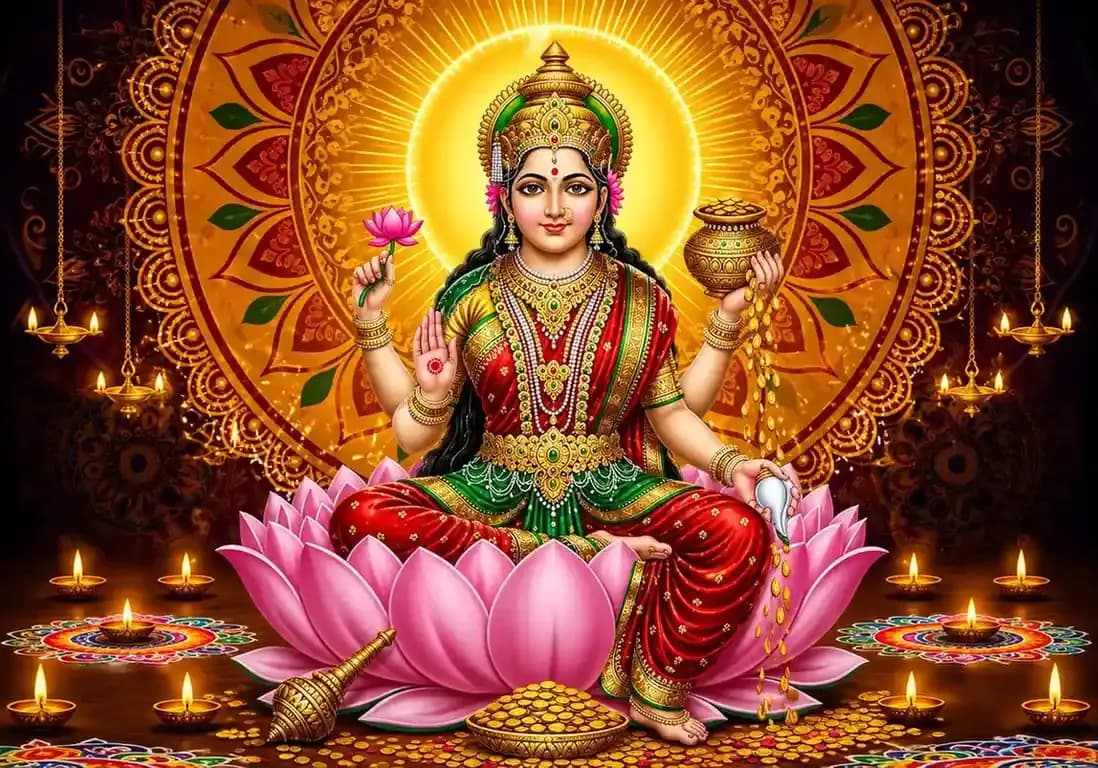
The complete diaspora guide to observing Varalakshmi Vratam 2026 abroad — the 21 vs 28 August date, the day-boundary problem, working-Friday routines, item substitutions and country notes for the USA, UK, Canada, Australia, UAE and Singapore.
Quick answer: Varalakshmi Vratam 2026 falls on Friday 21 August 2026 in most Telugu, Tamil and Kannada panchangs, while some panchangs mark Friday 28 August 2026. NRIs should pick the date their family or kula tradition follows and, crucially, apply their own local sunrise — the tithi can begin on a different calendar day abroad.
Varalakshmi Vratam is one of the most cherished vratams of Sravana Masam, observed chiefly by women to honour Goddess Lakshmi, the consort of Vishnu and the deity of prosperity, well-being and auspiciousness. For families settled in the USA, UK, Canada, Australia, the UAE, Singapore and beyond, keeping this vratam abroad brings its own questions — which date to follow, how the day boundary shifts across time zones, and how to perform a heartfelt puja when neither the temple down the road nor the mango leaves in the market are quite what home offered.
This guide is built for the diaspora. It explains why observing abroad differs, how NRI families settle the contested 2026 date, the day-boundary problem with a worked example, how to fit the vratam around a working Friday, what to substitute when traditional items are hard to find, and short practical notes for six countries. For the underlying date research, see our Varalakshmi Vratam 2026 date — 21 or 28 August page, and for choosing a panchang overseas, our which panchang should NRIs follow guide.
The 2026 date — and why NRIs see it two ways
Varalakshmi Vratam is observed on the Friday that falls before the full-moon (Pournami) of Sravana Masam. In 2026 this maps to two dates across different panchangs, and both are followed by sincere, well-established traditions.
| Date | Who typically follows it | Basis |
|---|---|---|
| Friday 21 August 2026 | Most Telugu, Tamil and Kannada panchangs | The Friday before Sravana Pournami by the widely used reckoning |
| Friday 28 August 2026 | Some panchangs and regional traditions | An alternative reckoning of the qualifying Friday in Sravana |
Neither date is wrong. The variation arises from how different panchangs fix the qualifying Friday relative to the Pournami and the tithi span. The right approach for a family is simple: follow your kula (family) tradition, your parents' or elders' practice, or the panchang your home temple uses. If you have always kept it on the earlier Friday, keep it on 21 August 2026; if your lineage follows the later reckoning, keep it on 28 August 2026.
When elders are far away and you are deciding for yourself for the first time, the safest default is to match the panchang your family in India uses and then adjust it to your local sunrise (explained below). Our Varalakshmi Vratam 2026 pillar guide and the date page carry the full reasoning.
Why observing abroad genuinely differs
Keeping the vratam overseas is not just a matter of missing home. Several real, practical factors change the experience:
- Time zones shift the day boundary — the tithi that governs the vratam can begin or end on a different calendar date where you live.
- A working Friday is normal abroad; India's cultural rhythm of a relaxed festival morning may not apply.
- Traditional items — fresh mango leaves, banana stems, specific flowers, a metal kalasham — may be seasonal, expensive or simply unavailable.
- There may be no nearby temple or priest, or a very long drive to one.
- You may be doing the vratam alone, without the mother, mother-in-law or neighbours who normally guide each step.
The day-boundary problem — a worked example
Hindu vratams are timed by the tithi (lunar day), which is fixed relative to Indian Standard Time but observed by your local sunrise. Because the tithi has a start and end moment in IST, converting it to your time zone can push the observance onto a different calendar day than the one printed in an Indian calendar.
Here is the principle, using an illustrative example (always confirm the actual clock times against your own city's panchang for the year):
- Note the exact start and end of the governing tithi in IST from a trusted panchang for your chosen date.
- Convert those moments to your local time zone (for example, US Eastern is IST minus 9.5 hours; US Pacific is IST minus 12.5 hours).
- Check which local calendar day contains sunrise while the tithi is current, because most families keep Varalakshmi Vratam in the morning after sunrise.
- If the converted tithi window no longer covers your local Friday morning, your family may keep the vratam on the adjacent local day that carries the tithi at sunrise, or on the same weekday, as tradition prefers.
- When in doubt, ask the priest or temple you rely on which local day they are observing, and follow that consistently.
Worked illustration: suppose a panchang shows the qualifying tithi running across the Indian Friday morning. In US Pacific time (IST minus 12.5 hours), that same window falls in the small hours or the previous evening — so a Bay Area family may find their natural sunrise observance lands on the Thursday evening/Friday pre-dawn, or they choose to keep it on the local Friday as the weekday of the vratam. Both are defensible; consistency within the family matters more than perfection.
This is exactly why we say: do not simply read the Indian calendar date. Read the tithi times and apply your own sunrise. If that feels complex, defaulting to the same weekday (Friday) locally, as your family always has, is a perfectly accepted practice for the diaspora.
Observing on a working Friday — three versions
Most NRIs cannot take the day off. The vratam is about bhakti and sincerity, not the length of the ritual. Here are three honest formats; pick the one your schedule allows without guilt.
1. The 30-minute before-work version
- Bathe and wear clean or traditional clothes.
- Set up a simple kalasham or a framed image/idol of Goddess Lakshmi with a lit lamp.
- Offer flowers, kumkum, turmeric and a simple naivedyam (fruit, jaggery, or a quick prasadam).
- Recite a short prayer or the Lakshmi Ashtottara / a few names you know, and light incense.
- Do a brief sankalpam (intention) and namaskaram; distribute prasadam in the evening.
2. The full traditional version
If you have the morning or are off work, keep the complete puja — kalasham with the goddess installed, toram (sacred thread) tied on the wrist, full shodashopachara offerings, the Varalakshmi Vratam katha, aarti and tambulam for married women. For the step order, follow our dedicated vidhi guide linked below.
3. The evening version
If mornings are impossible, many families keep the puja after returning from work, before the day ends, especially where the tithi still holds locally in the evening. An evening puja done with devotion is fully valid; do the sankalpam, main puja, katha and aarti, and share prasadam with family or neighbours.
For the complete ritual sequence in any of these formats, see the Varalakshmi Vratam 2026 puja vidhi.
Substitution table — traditional item to what is available abroad
Tradition values intention (bhava) above material perfection. Where an item is unavailable, a respectful substitute is widely accepted. This table is guidance, not a ruling — follow your family's comfort.
| Traditional item | What is often available abroad | Acceptability |
|---|---|---|
| Fresh mango leaves for the kalasham toranam | Betel leaves, tulsi sprigs, or any clean auspicious green leaves; a printed toranam if none | Widely accepted as a respectful substitute |
| Banana stem / plantain leaf | A clean plate, a fresh green leaf, or a wooden pattem | Accepted; the leaf is a base, not the deity |
| Metal kalasham (silver/brass/copper) | A clean steel or brass pot, a coconut on a small vessel, or a decorated tumbler | Accepted; cleanliness and devotion matter most |
| Specific flowers (lotus, jasmine) | Any fresh, fragrant, unwilted flowers available locally | Fully accepted |
| Fresh coconut | A whole coconut from an Indian/Asian store; if none, a symbolic fruit | Coconut preferred; a fruit is an accepted stand-in |
| Toram (sacred yellow thread) | Turmeric-dyed cotton thread made at home | Fully accepted; homemade toram is traditional |
| Elaborate naivedyam | A simple sweet, fruit, jaggery, or payasam made with what you have | Accepted; a small sincere offering is valued |
Toram, naivedyam and tambulam when resources are limited
Three elements carry special meaning; here is how to keep them simply.
- Toram: a length of cotton thread smeared with turmeric and tied with nine knots (or as your tradition holds) worn on the right wrist. If you cannot find one, make it at home — this is entirely traditional.
- Naivedyam: even a single fruit, a spoon of jaggery, or a quick payasam offered with a clean heart is accepted. Grandeur is not the point.
- Tambulam: betel leaves, areca nut, turmeric, kumkum, a coconut or fruit, and a small gift, exchanged among married women. Where betel leaves are hard to find, offer what you can — the gesture of goodwill is the essence.
Short country notes
These are practical orientation notes, not event listings. Always confirm your own city's timings against a local panchang and check with a temple or priest directly; we do not publish per-city clock times, prices or programmes.
USA and Canada
Time zones span roughly IST minus 9.5 hours (US Eastern) to IST minus 12.5 hours (US Pacific), so the day-boundary check matters most here. Many Telugu, Tamil and Kannada associations and temples observe the vratam; some offer priest booking or online/streamed puja. If observing at home, many families keep the local Friday as the weekday of the vratam and apply their family's panchang. Indian and Asian grocery stores usually stock coconut, turmeric, kumkum and flowers.
UK
At IST minus 4.5 hours (or 3.5 during summer time), the day boundary shifts less, so the calendar date usually aligns closely. Indian communities across London, the Midlands and other cities are well served by temples and stores; priests and community groups often help with the puja. Confirm local timings with your temple's panchang.
Australia
Australia is ahead of IST (for example, Sydney is roughly IST plus 4.5 hours, varying with daylight saving), which can push the tithi window to appear a little later in your day, and occasionally onto the next local date — so run the day-boundary check. Temples and Telugu/Tamil associations in major cities commonly observe the vratam.
UAE
At IST minus 1.5 hours, Gulf timings align closely with India, making the date straightforward. There is a large South Indian community; temples and community groups are active. Fresh flowers, coconut and puja items are readily available in Indian stores.
Singapore
Singapore is IST plus 2.5 hours, a small shift that rarely changes the calendar date. Temples serving the Tamil and Telugu communities are active, and puja items are easy to source. Confirm timings with your temple or a local panchang.
Booking a priest or an online puja
- Ask your nearest temple or a Telugu/Tamil/Kannada association whether they arrange Varalakshmi Vratam pujas or priest visits — many do, especially in larger cities.
- Online or streamed sankalpa pujas (where a priest performs on your behalf with your gotra and sankalpam) are widely offered; confirm the arrangement, what you need to prepare at home, and the timing in your zone.
- Book early — the Friday before Sravana Pournami is a busy day for priests everywhere.
- We do not list specific organisers, prices or phone numbers here; verify directly with the temple or priest.
Doing it alone for the first time
If this is your first vratam without elders guiding you, keep it simple and sincere. Clean your space, set up the goddess with a lamp, do the sankalpam, offer flowers and naivedyam, tie the toram, recite the prayers or katha you know, do the aarti, and share prasadam. Read the puja vidhi the night before, keep your items ready, and remember that devotion, not flawless procedure, is what the vratam honours.
For the wider Sravana Masam context and surrounding dates, see our Sravana Masam 2026 calendar.
Related reading
- Varalakshmi Vratam 2026 date — 21 or 28 August
- Which panchang should NRIs follow?
- Varalakshmi Vratam 2026 puja vidhi
Frequently Asked Questions
When is Varalakshmi Vratam 2026 for NRIs?
Varalakshmi Vratam 2026 falls on Friday 21 August 2026 in most Telugu, Tamil and Kannada panchangs, and on Friday 28 August 2026 in some panchangs. NRIs should follow their family or kula tradition and, importantly, apply their own local sunrise, since the tithi can begin on a different calendar day abroad. Both dates are valid.
Should I follow the Indian calendar date or my local date abroad?
Follow the tithi, applied to your local sunrise, not just the printed Indian date. Note the tithi's start and end in IST, convert to your time zone, and see which local morning carries the tithi at sunrise. Many diaspora families simply keep the vratam on the same weekday (Friday) locally, which is a fully accepted practice.
Can I observe Varalakshmi Vratam on a working Friday?
Yes. The vratam honours devotion, not the length of the ritual. You can do a 30-minute before-work puja, a full traditional puja if you are off, or an evening puja after work. Choose the format your schedule allows without guilt — a sincere short puja is completely valid and traditionally accepted.
What can I substitute if I can't find mango leaves or a kalasham?
Substitutes are widely accepted when items are unavailable abroad. Use betel or tulsi leaves for mango leaves, a clean steel or brass pot for the kalasham, and any fresh fragrant flowers. A homemade turmeric-dyed toram is traditional. Tradition values sincere intention (bhava) over material perfection, so respectful substitutes are fine.
How do I make toram and naivedyam with limited resources?
Make toram from cotton thread smeared with turmeric and knotted, worn on the right wrist — this homemade version is traditional. For naivedyam, even a single fruit, a spoon of jaggery, or a quick payasam offered sincerely is accepted. Grandeur is not required; a small, heartfelt offering is valued in the vratam tradition.
Can I book a priest or do an online puja abroad?
Yes. Many temples and Telugu, Tamil and Kannada associations arrange Varalakshmi Vratam pujas or priest visits, and online or streamed sankalpa pujas with your gotra are widely offered. Book early, as the Friday before Sravana Pournami is busy. Confirm details and your local timing directly with the temple or priest.
Which countries does this NRI guide cover?
This guide covers the USA, UK, Canada, Australia, the UAE and Singapore. It explains how the day-boundary check applies most in North America and Australia, aligns closely for the UK, UAE and Singapore, and offers practical orientation for each. Always confirm your own city's timings against a local panchang or temple, as we do not publish per-city clock times.
Can I do Varalakshmi Vratam alone for the first time?
Yes. Clean your space, install the goddess with a lamp, do the sankalpam, offer flowers and naivedyam, tie the toram, recite the prayers or katha you know, do the aarti and share prasadam. Read the puja vidhi the night before and keep items ready. Devotion, not flawless procedure, is what the vratam honours.
Related guides you may find helpful
You might also like
Bathukamma & Dasara 2026 in Canada: Dates, Telangana Association Celebrations & City-by-City Guide
Bathukamma and Dasara 2026 in Australia: Dates, Telangana Association Celebrations, Muhurat and City-by-City Guide

Jagaddhatri Puja 2026: Dates, Chandannagar's Dazzling Lights & Significance