Pitru Paksha 2026 for NRIs: How to Perform Shraddha and Tarpan Abroad
A calm, practical guide for NRIs whose parent passed away in India — how to honour them during Pitru Paksha 2026 through simple tarpan, shraddha and daan wherever you live.
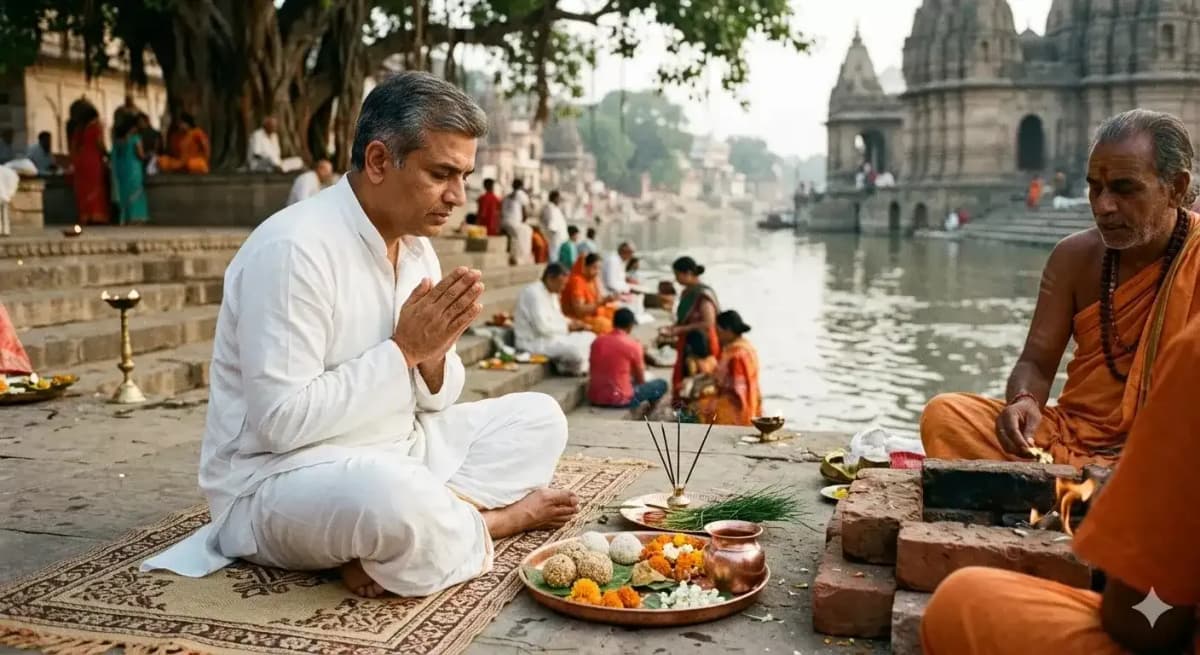
A calm, practical guide for NRIs whose parent passed away in India — how to honour them during Pitru Paksha 2026 through simple tarpan, shraddha and daan wherever you live.
Quick answer: Pitru Paksha 2026 runs 26/27 September to 10 October, with Sarva Pitru (Mahalaya) Amavasya on Saturday, 10 October. NRIs can honour a departed parent from abroad with a simple home tarpan using water and til, feeding beings, giving daan, or joining a priest by video — no travel is required.
If your mother or father passed away in India and you now live abroad, Pitru Paksha can feel heavy. You may not be able to fly home, you may not know the exact tithi, and the familiar sights of a riverbank and a family priest are far away. Please be reassured: our tradition is generous. Shraddha is remembrance and gratitude offered with a clean heart, and it can be observed with dignity wherever you are.
This guide walks through the practical questions NRIs ask most — which tithi to follow, how to do a simple tarpan at home, where to find til and kusha abroad, what to do when there are no crows to feed, how to involve a priest remotely, and how to arrange rites in India without being taken advantage of. Nothing here is a rule about outcomes; these are traditions and options offered gently, for you to adapt.
- Festival: Pitru Paksha (Mahalaya Paksha) 2026
- Dates: 26/27 September to 10 October 2026
- Sarva Pitru Amavasya: Saturday, 10 October 2026
- Core practices: Tarpan, shraddha, pind-daan (where possible), daan, feeding beings
- For NRIs: Home tarpan, remote priest, or rites arranged in India
- Confirm timing: Check a local panchang for your city and country
India tithi or your local tithi — both are defensible
A common worry abroad is the date. Because of time-zone differences, the tithi (lunar day) can begin and end at different clock times in India and in your country. Two reasonable approaches both have support among learned families and priests, and you may choose either with a clear conscience.
| Approach | When you might choose it |
|---|---|
| Follow the India panchang | Your family and priest in India are doing the rites on the Indian date; you want to be in step with them |
| Follow your local panchang | You are performing everything yourself where you live, and prefer the tithi as reckoned at your own location |
If you are unsure which reckoning applies, our which panchang should NRIs follow explainer walks through the reasoning. When in doubt, ask the priest who will guide your rites, and confirm the exact day from a tithi calendar for 2026.
A simple tarpan you can do at home
Tarpan is the offering of water, remembering the departed with love. You do not need a river or a temple. A quiet corner, a clean bowl, water and a little sesame (til) are enough. Face south or east, sit calmly, and let this be a few unhurried minutes of remembrance.
- Bathe and wear clean, simple clothes. Choose a quiet spot and a broad bowl or thali to catch the water.
- Fill a small vessel with clean water; add a pinch of black til (sesame). If you have kusha grass, hold a little; if not, that is acceptable.
- Take the water in your cupped hands and let it flow gently back into the bowl while remembering your parent by name and gotra, offering it to them and to the ancestors.
- Repeat with quiet gratitude for a few rounds. Many recite a simple prayer or the Gayatri; recite whatever you know sincerely.
- Afterwards, offer the water respectfully to a plant or the earth. Then give something in their memory — food, money to those in need, or a meal to someone.
If you follow a specific family sankalpa or mantra from your priest, use that. If you do not know one, sincere remembrance in your own words is dignified and enough.
Sourcing til and kusha abroad — and honest substitutes
Ritual items are easier to find abroad than many expect, and where they are unavailable, tradition allows substitutes made in good faith.
- Black til (sesame): Indian and South-Asian grocery stores usually stock it; larger supermarkets carry sesame seeds that serve the purpose.
- Kusha (darbha) grass: hard to find abroad. Many priests accept skipping it, or using a small blade of clean grass; the intention matters more than the exact species.
- Water: ordinary clean tap or bottled water is fine.
- A vessel: any clean bowl, lota or thali you keep for this purpose.
- A photo or a simple mental image of your parent helps you focus; it is optional.
When there are no crows to feed
Feeding a crow is a beloved part of shraddha in India, symbolising the offering reaching the ancestors. In many countries crows are rare or absent. Do not be distressed — the essence is feeding and giving, not the specific bird.
- Offer food to whatever birds visit your area, or to a dog or other animals, kindly.
- Give a cooked meal to a person in need, or donate to a food bank or community kitchen.
- Keep a small portion of the day's food aside as a symbolic offering, then share it.
- The heart of the act is generosity in your parent's name; the recipient may vary by where you live.
Involving a priest remotely
Many families abroad now join their rites by video call, or ask a priest in India to perform shraddha on their behalf while they participate from home. This is widely accepted and can be deeply comforting.
- Ask your family temple or a priest you trust to guide a live video tarpan or shraddha for your chosen date.
- Have your parent's name, gotra and the date of passing ready so the sankalpa can be made correctly.
- If a priest performs pind-daan in India for you, you can sit in tarpan at home at the same time to feel connected.
- Agree the scope and any dakshina clearly and in advance, so there are no misunderstandings.
Arranging rites in India from abroad — a gentle caution
Some NRIs arrange pind-daan or shraddha at a tirtha such as Gaya through relatives or a priest back home. This is a valid and time-honoured choice. A calm word of care: because you are far away, confirm who is doing what, agree costs beforehand, and prefer a priest known to your family or verified by relatives you trust. Do not feel pressured into elaborate or expensive packages; a simple, sincere rite is complete. We do not recommend or link any paid service — please rely on your own family's trusted contacts.
When work makes the exact tithi impossible
If your job or life abroad means you cannot observe on your parent's exact tithi, you are not failing them. Tradition itself provides for this.
- Observe on the nearest weekend, doing your tarpan and daan with full attention.
- Or observe on
- Sarva Pitru Amavasya
- — Saturday, 10 October 2026 — which is meant precisely for all ancestors, including those whose tithi is unknown or was missed.
- Even a few minutes of sincere remembrance on the day you can manage is honoured.
The minimum dignified observance
If you can do only one small thing, let it be this, offered with love. It is complete in itself.
- Sit quietly, remember your parent, and offer water with a little til from a bowl at home.
- Give something in their name — feed a being, share a meal, or donate to those in need.
- Speak or think a few words of gratitude and blessing for their soul.
For those who do not know the tithi, or have no male relative
Please do not carry guilt if you cannot recall the exact tithi, or if there is no son or male relative to perform the rites. Sarva Pitru Amavasya exists exactly so that every ancestor is remembered, including those whose day is unknown. On who may perform shraddha, families and priests differ: many today welcome daughters, women and other relatives to offer tarpan and daan, while some follow older customs. We do not rule on this — do what your conscience and your priest guide, with love. What is never in doubt is that sincere remembrance, water, and generosity honour your parent fully.
Related reading
Frequently Asked Questions
When is Pitru Paksha 2026 for NRIs?
Pitru Paksha 2026 runs from 26/27 September to 10 October, with Sarva Pitru (Mahalaya) Amavasya on Saturday, 10 October. Because of time zones the tithi may shift by a day at your location, so confirm the exact day from a local panchang or your priest.
Should I follow the India tithi or my local tithi abroad?
Both are defensible. Follow the India panchang if your family and priest are doing the rites there and you want to be in step; follow your local panchang if you are performing everything yourself where you live. When unsure, ask your priest.
Can I perform tarpan at home without a river?
Yes. A quiet spot, a clean bowl, water and a little til are enough. Offer the water with remembrance of your parent by name and gotra, then give it to a plant or the earth and share food or daan in their memory.
Where can I find til and kusha grass abroad?
Black til (sesame) is usually available in Indian or South-Asian grocery stores, and regular sesame works too. Kusha grass is hard to find abroad; many priests accept skipping it. The sincere intention matters more than the exact item.
What if there are no crows to feed where I live?
Offer food to any birds or animals nearby, give a meal to a person in need, or donate to a food bank. The essence of the act is generosity and feeding in your parent's name, not the specific bird.
Can a priest perform the rites for me by video or in India?
Yes. Many families join a live video tarpan or shraddha, or ask a trusted priest in India to perform it on their behalf while they sit in tarpan at home. Keep your parent's name, gotra and date of passing ready, and agree the scope in advance.
What if I cannot observe on the exact tithi because of work?
Observe on the nearest weekend, or on Sarva Pitru Amavasya (Saturday, 10 October 2026), which is meant for all ancestors, including those whose tithi is unknown or missed. Even a few minutes of sincere remembrance is honoured.
Can a daughter or someone with no male relative perform shraddha?
Sarva Pitru Amavasya exists so every ancestor is remembered even when the tithi is unknown or there is no son. Families and priests differ: many today welcome daughters and women to offer tarpan and daan. Do what your conscience and priest guide, with love.
Related guides you may find helpful
You might also like

Jagaddhatri Puja 2026: Dates, Chandannagar's Dazzling Lights & Significance

Rama Ekadashi 2026: Date, Vrat Katha, Puja Vidhi & Significance
Navratri 2026 USA: Dates, Garba, Dandiya, Durga Puja & NRI Celebration Guide