

Pitru Paksha 2026 — Sun 6 Sep to Mon 21 Sep: Full 16-Tithi Calendar, Tarpan Vidhi, Pinda Daan & NRI Guide
Pitru Paksha 2026 runs Sun 6 Sep to Mon 21 Sep (Mahalaya Amavasya). Full 16-tithi calendar, home Tarpan Vidhi, Pinda Daan guide, food & conduct rules, daughters' Shraddha rights, and NRI observance without a priest.
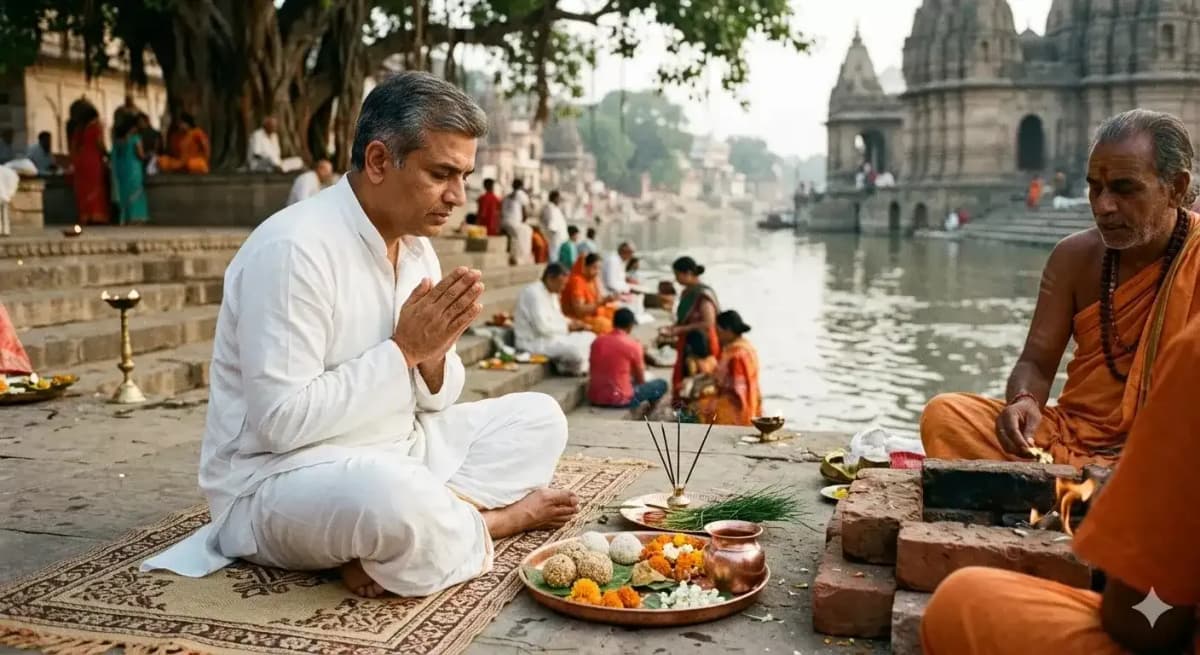
Pitru Paksha 2026 runs Sun 6 Sep to Mon 21 Sep (Mahalaya Amavasya). Full 16-tithi calendar, home Tarpan Vidhi, Pinda Daan guide, food & conduct rules, daughters' Shraddha rights, and NRI observance without a priest.
Pitru Paksha 2026 runs from Sunday, 6 September 2026 (Bhadrapada Purnima) through Monday, 21 September 2026 (Mahalaya Amavasya). The 16-day fortnight when Hindus honour their departed ancestors (pitrus) through Shraddha, Tarpan, and Pinda Daan. This guide covers verified dates, the full 16-tithi calendar, home-tarpan vidhi, food-and-conduct rules, and NRI observance without access to a Hindu priest.
Pitru Paksha 2026 — Date Range
Begins: Sunday, 6 September 2026 (Bhadrapada Purnima).
Ends: Monday, 21 September 2026 (Mahalaya Amavasya — the peak day).
Duration: 16 tithis of the dark fortnight of Bhadrapada month.
The 16-Tithi Calendar
Each ancestor is remembered on the tithi of their death (or on Mahalaya if unknown). The 16-day calendar for 2026:
- Sun 6 Sep — Purnima: Bhadrapada Purnima Shraddha (for those who died on Purnima).
- Mon 7 Sep — Pratipada Shraddha
- Tue 8 Sep — Dwitiya Shraddha
- Wed 9 Sep — Tritiya Shraddha
- Thu 10 Sep — Chaturthi + Maha Bharani Shraddha
- Fri 11 Sep — Panchami Shraddha (Bharani Shraddha; for those who died in 1st year)
- Sat 12 Sep — Shashthi Shraddha
- Sun 13 Sep — Saptami Shraddha
- Mon 14 Sep — Ashtami Shraddha
- Tue 15 Sep — Navami Shraddha (Avidhava Navami — for married women who died with husband alive)
- Wed 16 Sep — Dashami Shraddha
- Thu 17 Sep — Ekadashi Shraddha
- Fri 18 Sep — Dwadashi + Sanyasi Shraddha
- Sat 19 Sep — Trayodashi Shraddha
- Sun 20 Sep — Chaturdashi Shraddha (Ghata Chaturdashi — for those who died violent/accidental death)
- Mon 21 Sep — Sarva Pitru Amavasya / Mahalaya Amavasya (peak day — for ALL ancestors, and those whose tithi is unknown)
Ghata Chaturdashi vs Mahalaya Amavasya
Ghata Chaturdashi (Sun 20 Sep 2026): For pitrus who met violent, unnatural or accidental deaths. Special rituals for peace.
Mahalaya Amavasya (Mon 21 Sep 2026): The single most important day — Shraddha performed for ALL ancestors regardless of tithi. If a family cannot perform Shraddha on the exact death tithi, Mahalaya Amavasya covers it. This day marks the end of Pitru Paksha and the beginning of Sharad Navratri (Sun 20 Sep → Devi Paksha).
Tarpan Vidhi — The Sacred Water Offering
Tarpan is the daily water-offering to ancestors performed by the eldest male member of the family (or in some traditions, any devout family member including daughters — see below).
- Bathe before sunrise.
- Wear a clean dhoti (men) or sari (women); remove leather belt/watch.
- Face south (the direction of Yama, ruler of ancestors).
- Sit on a kush-grass asana (or clean mat).
- Prepare tarpan water: pure water + black til (sesame) + a few drops of pure ghee + white flower petals.
- Wear the yagnopavita (sacred thread) in apasavya position — over right shoulder, under left arm (opposite of daily position).
- Cup the water in both palms; pour it out through the pitr-tirtha (the space between thumb and index finger).
- While pouring, recite the ancestor's name + gotra + "trupyat" (may they be satisfied). Include father, grandfather, great-grandfather (paternal lineage) — and separately mother, grandmother, great-grandmother (maternal lineage).
- On Mahalaya, expand to ALL ancestors: "Sarvebhyah pitrubhyo namah / Trupyat."
- Repeat 3 times per ancestor.
- Close: pray for their peace and blessings; touch forehead to the ground.
Pinda Daan — The Rice-Ball Offering
Pinda Daan is the offering of cooked rice balls (pindas) to ancestors, typically performed at sacred sites (Gaya, Prayagraj, Varanasi, Rameshwaram, or the family's riverbank) OR at home for those who cannot travel:
- Cook plain rice (no salt, no spices) — traditionally with black til.
- Roll into 3 or 5 balls (pindas), each about lemon-sized.
- Place on a banana leaf or dry kush-grass.
- Offer with mantras + water + black til.
- After the ritual, feed the pindas to cows, crows, or dogs (all considered messengers between the worlds).
- Modern home practice: pindas can be placed under a peepal tree or immersed in flowing water.
Food & Conduct Rules During Pitru Paksha
- Only sattvic (pure vegetarian) food — no onion, garlic, or non-vegetarian items
- No new clothes purchases or wearing brand-new garments (except for Shraddha attire)
- No new home purchases, weddings, or major auspicious events
- No hair-cutting, nail-clipping, or grooming (traditional; check family)
- Do not shave (men) — grow beard as sign of mourning
- No festival celebrations except those pre-scheduled
- Feed a Brahmin (or any needy person) before eating yourself on any Shraddha day
- Feed crows first — they are considered pitru messengers
Can Daughters Perform Shraddha?
Yes. Traditional Sanskrit texts including the Bhavishya Purana and Garuda Purana explicitly permit daughters to perform Shraddha when no son is available (or when the son is unable). Modern Hindu tradition — with support from major Peeths — increasingly recognizes daughters' rights to perform full Shraddha rites. If your family follows a strict tradition, consult the family priest. Practically: any devout family member with pure sankalpa can perform Tarpan at home. Full guide: Can Daughter Perform Shraddha?.
Pitru Paksha for NRI Families
If you can't reach a Hindu priest or river:
- Home tarpan is fully accepted in traditional shastra — see the Tarpan Vidhi above
- Feed crows, cows, or dogs if reachable — otherwise, pindas can be placed under any tree (peepal preferred)
- On Mahalaya (Mon 21 Sep 2026), perform the Sarva Pitru tarpan for all lineages
- Recite Vishnu Sahasranama or Garuda Purana chapters if you cannot chant Shraddha mantras
- Video-call a family priest in India for real-time guidance — increasingly common for USA/UK/Canada NRIs
- Feed a Brahmin (or any needy person) at your local temple — donation counts as "brahmana bhojana"
Full NRI guide: Pitru Paksha 2026 NRI Guide • Shraddha & Pitru Paksha Tarpanam NRI Guide.
Deep-dive: Home Tarpan Vidhi • Shraddha Vidhi Complete Guide • Pitru Paksha Rules • Why Crows are Fed • Pitru Paksha Mantras.
You might also like

Navratri 2026 USA: Dates, Garba, Dandiya, Durga Puja & NRI Celebration Guide
Rama Ekadashi 2026: Date, Vrat Katha, Puja Vidhi & Significance
Navratri 2026: 9 Days, Colors, Goddess Names, Puja & Significance