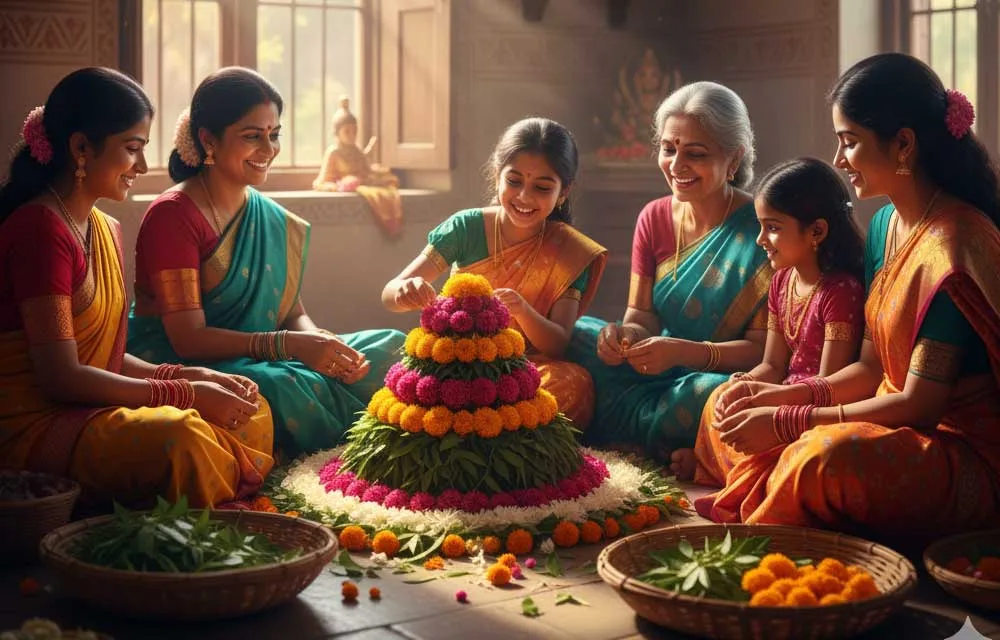
Navratri 2026 Singapore: Navarathri Dates, Ghatasthapana Time, Colours and Golu Guide
Navarathri 2026 begins on Sunday 11 October in Singapore. Here is the Ghatasthapana window, the day-by-day Devi and colour list, why Durga Ashtami and Maha Navami both fall on Monday 19 October this year, and a practical guide to Golu, Saraswathi and Ayutha Pooja, Garba and fasting in Singapore.

Navarathri 2026 begins on Sunday 11 October in Singapore. Here is the Ghatasthapana window, the day-by-day Devi and colour list, why Durga Ashtami and Maha Navami both fall on Monday 19 October this year, and a practical guide to Golu, Saraswathi and Ayutha Pooja, Garba and fasting in Singapore.
Quick answer: Navarathri 2026 in Singapore runs from Sunday 11 October to Monday 19 October. Ghatasthapana is on Sunday 11 October, with a sunrise-based window of 6:48 AM – 10:50 AM (Abhijit alternative 12:27 PM – 1:15 PM). Because a tithi is skipped this year, Durga Ashtami and Maha Navami both fall on Monday 19 October (Drik Panchang for Singapore), which is also Saraswathi and Ayutha Pooja. Vijayadashami is on Tuesday 20 October. Set up the Golu by Sunday evening and plan the big visits for the weekend of 17–18 October.
Singapore celebrates Navarathri in many voices: Golu steps in HDB flats, nightly Devi pujas in the Tamil temples, Saraswathi Pooja in homes and shops, Garba circles in community halls, Durga Puja among Bengali families and Bathukamma among Telangana families. This guide gives the 2026 dates for Singapore, the Ghatasthapana time, the nine Devis and colours, and practical advice for keeping the festival on a working week. For Vijayadashami in detail, see our Dussehra 2026 Singapore guide, area by area.
Navarathri 2026 dates in Singapore
| Occasion | Date in Singapore | Notes |
|---|---|---|
| Navarathri begins: Ghatasthapana | Sun 11 Oct | 6:48 AM – 10:50 AM (sunrise-based) |
| Navarathri, Days 2–7 | Mon 12 – Sat 17 Oct | One Devi and colour per day (table below) |
| Saddula Bathukamma | Sun 18 Oct | Telangana calendar only |
| Durga Ashtami | Mon 19 Oct | Drik Panchang, Singapore |
| Maha Navami: Saraswathi and Ayutha Pooja | Mon 19 Oct | Same day as Ashtami this year |
| Vijayadashami / Dussehra | Tue 20 Oct | Vidyarambham; Vijay Muhurat 2:50–3:38 PM (Dashami begins 3:20 PM, so only 3:20 PM to 3:38 PM falls inside Dashami) |
| Deepavali | Sun 8 Nov | Public holiday |
Singapore and Malaysia share the same dates this year. Singapore is small enough that one set of timings applies to the whole island, from Woodlands to Jurong to Tampines.
Ghatasthapana 2026 time in Singapore
Ghatasthapana, or Kalash Sthapana, installs the sacred pot that invokes the Goddess on the first morning of Navarathri. It is a North Indian custom above all, but many South Indian families in Singapore also begin the festival with a kalasam or a lamp on the first day. The preferred time is the first third of the daytime from local sunrise; the Abhijit Muhurat around midday is the usual alternative.
| Place | Date | Ghatasthapana (first third of the day) | Abhijit Muhurat (alternative) |
|---|---|---|---|
| Singapore (whole island) | Sun 11 Oct | 6:48 AM – 10:50 AM | 12:27 PM – 1:15 PM |
Please note: these windows were calculated from Singapore's sunrise and sunset and agree with Drik Panchang to within about a minute. They are sunrise-based, so confirm on Drik Panchang for Singapore, or follow the time your priest or temple announces. As 11 October is a Sunday, most families can complete the kalash comfortably in the morning.
Navarathri 2026 colours and Devis, day by day
Each day honours one of the nine forms of Durga (Navadurga), and the colour of the day is widely followed by families, offices and dance groups. In Singapore, the first seven days are:
| Day | Date | Devi | Colour | In Singapore |
|---|---|---|---|---|
| Day 1 | Sun 11 Oct | Shailaputri | Orange | Ghatasthapana; Golu goes up |
| Day 2 | Mon 12 Oct | Brahmacharini | White | Working day; evening puja |
| Day 3 | Tue 13 Oct | Chandraghanta | Red | Working day |
| Day 4 | Wed 14 Oct | Kushmanda | Royal Blue | Working day |
| Day 5 | Thu 15 Oct | Skandamata | Yellow | Working day |
| Day 6 | Fri 16 Oct | Katyayani | Green | Friday evening Golu visits |
| Day 7 | Sat 17 Oct | Kalaratri | Grey | Weekend; busiest Golu and Garba evening |
Important for 2026: because a tithi is skipped this year, Ashtami (Mahagauri, Purple) and Navami (Siddhidatri, Pink) are both observed on Monday 19 October in Singapore. You can worship Mahagauri in the morning and Siddhidatri in the evening, or combine both pujas. Purple in the morning and pink in the evening, or the two together, keeps the colour tradition.
What about Sunday 18 October? At sunrise in Singapore that day the tithi is still Saptami; Ashtami only begins at 10:57 AM. Families following a Singapore panchang usually continue the Day 7 (Kalaratri) worship and use the Sunday for Golu visits. Families following the Telangana calendar mark Durga Ashtami and Saddula Bathukamma on the 18th. Both are correct for their own calendars; ask your temple which date it is using for Ashtami pujas.
In the Tamil tradition the nine nights are often grouped in threes: the first three for Durga, the next three for Lakshmi and the last three for Saraswathi. The skipped tithi simply means the Saraswathi nights are a little compressed this year, culminating in Saraswathi Pooja on Monday 19 October.
Why Ashtami and Navami fall together this year
Ashtami tithi begins at 8:27 AM IST on 18 October. In Singapore, two and a half hours ahead of India, that is 10:57 AM, long after sunrise. By sunrise on Monday 19 October, Navami is already running. Since Ashtami does not prevail at any Singapore sunrise, panchangs calculated for Singapore list Durga Ashtami and Maha Navami together on Monday 19 October. India (Drik Delhi), Malaysia, the UAE and Australia show the same, while the USA, Canada and the UK keep Ashtami on Sunday 18 October.
Golu (Kolu) at home: a Singapore guide
Golu, also written Kolu or Bommai Kolu, is the heart of Navarathri for many Tamil, Telugu (Bommala Koluvu) and Kannada (Bombe Habba) households. Dolls of deities, saints, village life and festival scenes are arranged on an odd number of steps, traditionally three, five, seven or nine.
- Setting up: build the steps by the evening of Sunday 11 October. In an HDB flat or condominium, a sturdy foldable stand or stacked boxes covered with a white or coloured cloth work well. Place the Marapachi dolls and the kalasam on the top step with the principal deities.
- Daily rhythm: light the lamp each evening, offer a simple naivedyam and sundal (spiced chickpeas or lentils), and sing or play devotional songs.
- Visits: invite friends, neighbours and colleagues. Weekday visits after work are usually short; Friday 16, Saturday 17 and Sunday 18 October are ideal for longer gatherings this year.
- Thamboolam: guests, especially women and girls, traditionally receive a small return gift with betel leaves, kumkum, turmeric and a little present.
- Shopping: Little India shops typically stock Golu dolls, puja items and flowers in the weeks before Navarathri; buy early, as the popular sets sell out.
- Taking it down: keep the Golu until Vijayadashami. Many families lay one doll down symbolically on the night of 20 October and pack the display over the following days.
Saraswathi and Ayutha Pooja on Monday 19 October
With Navami on Monday 19 October, Saraswathi Pooja and Ayutha Pooja are on the same day as Durga Ashtami in Singapore. Books, musical instruments, children's schoolbags, laptops, tools and vehicles are cleaned, decorated and placed before the Goddess. They are traditionally left untouched until Vijayadashami morning, when they are taken back with a short prayer.
- Students preparing for exams can place a token book or pen rather than everything they need that day.
- Shops, workshops and small businesses often hold a short Ayutha Pooja; offices may simply do a quick prayer.
- On Tuesday 20 October, Vidyarambham, a child's first letters written in rice or sand, is usually held at temples in the morning. Ask in advance if registration is needed.
How to do Ghatasthapana at home
- Prepare the space: clean a corner, ideally facing east or north, and set a low stool covered with a red or yellow cloth.
- Sow the grain: spread clean soil in a shallow tray and scatter barley or wheat seeds; they sprout over the nine days.
- Fill the kalash: use a copper, brass or clay pot with clean water, a coin, a betel nut, rice, durva grass and turmeric. Tie a sacred thread around the neck.
- Crown it: arrange five or seven mango leaves around the mouth and place a coconut wrapped in red cloth on top.
- Invoke: pray to Ganesha first, then invite the Goddess into the kalash, light a ghee lamp and offer flowers, kumkum, rice and fruit, all within the Ghatasthapana window.
In a flat: keep any lamp in a deep holder, away from curtains and children, and never leave a flame unattended. Many families use a covered diya or an electric lamp for a continuous nine-day light. For mantras and aarti, see our Sharad Navratri to Dussehra 2026 guide.
Fasting (only if your health allows)
- Fasting styles vary: a full nine-day fast, fasting on the first and last days, a fruit-and-milk fast, or simply avoiding grains, onion and garlic. Choose what suits your health and work.
- Anyone pregnant, breastfeeding, diabetic or with a medical condition, as well as older people and children, should consult a doctor and choose a lighter observance.
- Singapore's heat and humidity make dehydration easy. Drink water through the day, especially if you commute or walk between temples.
- Sabudana, kuttu flour, samak rice, rock salt, peanuts and makhana are available in Little India and Indian grocery stores; stock up before Sunday 11 October.
- With Ashtami and Navami on the same day, decide in advance when you will break the fast on Monday 19 October.
Garba, Dandiya and Durga Puja
Gujarati and wider North Indian associations in Singapore often hire community halls, school halls or function rooms for Garba and Dandiya Raas evenings, and Bengali associations typically hold Durga Puja over the last days of the festival. We have not confirmed any specific 2026 Garba or Durga Puja event in Singapore, so we do not list venues, dates or ticket prices. Ask your regional association, residents' committee or temple, confirm details directly with the organiser, and plan for the weekend of 17–18 October, which falls in the heart of the festival.
Bathukamma in Singapore
Telangana families celebrate Bathukamma from 10 to 18 October, with Saddula Bathukamma on Sunday 18 October. The Telangana Cultural Society Singapore (TCSS) has held Bathukamma in past years, but its 2026 date had not been announced when we last checked. See our Bathukamma and Dasara 2026 Singapore guide for details.
Temples during Navarathri
Singapore's well-known Hindu temples, among them the Sri Mariamman Temple in Chinatown, the Sri Srinivasa Perumal and Sri Veeramakaliamman temples in Little India, and the Sri Thendayuthapani Temple on Tank Road, hold Navarathri pujas and programmes through the nine nights. Each temple publishes its own schedule, so check its official notices for 2026 timings. Dress modestly, remove footwear at the entrance, follow each temple's photography rules, and expect large crowds on the evenings of Monday 19 and Tuesday 20 October. The MRT is usually the easiest way to reach Little India and Chinatown on festival nights.
Practical tips for NRIs in Singapore
- Work around the week: only Day 1 and Day 7 fall on the weekend. Keep weekday pujas short and save the larger Golu gatherings for 16–18 October.
- Use local timings: all muhurats depend on Singapore's sunrise and sunset. Do not convert India's times; use the windows on this page or your temple's.
- Kanya Puja: Monday 19 October is a school day, so an evening Kanya Puja is often easiest.
- Cross-border families: Johor Bahru follows the same dates as Singapore this year.
- Vijayadashami afternoon: the Vijay Muhurat is 2:50–3:38 PM, but Dashami begins at 3:20 PM, so only 3:20 PM to 3:38 PM falls inside Dashami. If you cannot step out, the temple's evening puja is a perfectly good way to mark the day.
Looking ahead: Vijayadashami and Deepavali
Vijayadashami falls on Tuesday 20 October; our Dussehra 2026 Singapore guide explains the 3:20 PM caution in full. Deepavali is on Sunday 8 November 2026. See our Diwali 2026 guide for Australia, the UAE and Singapore and the November 2026 festival calendar.
Frequently asked questions
When is Navarathri 2026 in Singapore?
Navarathri 2026 begins on Sunday 11 October in Singapore and runs to Monday 19 October, when Durga Ashtami and Maha Navami (Saraswathi and Ayutha Pooja) are both observed, according to Drik Panchang for Singapore. Vijayadashami follows on Tuesday 20 October.
What is the Ghatasthapana time in Singapore in 2026?
On Sunday 11 October 2026 the Ghatasthapana window in Singapore is 6:48 AM – 10:50 AM, the first third of the day from sunrise. The Abhijit Muhurat, 12:27 PM – 1:15 PM, is the midday alternative. These are calculated from sunrise and sunset; confirm on Drik Panchang or with your temple.
Why are Ashtami and Navami on the same day in Singapore?
Ashtami tithi begins at 10:57 AM Singapore time on Sunday 18 October, well after sunrise, and Navami is already running by sunrise on Monday 19 October. Because Ashtami never prevails at a Singapore sunrise, a tithi is effectively skipped and both Durga Ashtami and Maha Navami are listed on Monday 19 October.
When should I set up and take down the Golu?
Most families set up the Golu by the evening of Sunday 11 October and keep it until Vijayadashami, Tuesday 20 October. Many lay one doll down symbolically on Vijayadashami night and pack the display away over the following days.
Is Navarathri a public holiday in Singapore?
No. Navarathri, Saraswathi Pooja and Vijayadashami are working days in Singapore. Deepavali, on Sunday 8 November 2026, is the Hindu festival marked by a public holiday.
What is the Vijay Muhurat in Singapore on Vijayadashami?
The Vijay Muhurat on Tuesday 20 October is 2:50–3:38 PM Singapore time. Dashami begins at 3:20 PM, so only 3:20 PM to 3:38 PM falls inside Dashami. Do not convert India's window to Singapore time.
Editor's note (5 October 2026): Dates follow Drik Panchang for Singapore. The Ghatasthapana and Abhijit windows were calculated from Singapore's sunrise and sunset and agree with Drik Panchang to within about a minute; please confirm before your puja. The Vijay Muhurat (2:50–3:38 PM) matches Drik's published window. Temple schedules, Garba nights, Durga Pujas and the TCSS Bathukamma date are not yet confirmed — organisers are still publishing 2026 flyers; we will update this guide.
Related guides
- Dussehra 2026 in Singapore, area by area
- Bathukamma and Dasara 2026 Singapore
- Navratri 2026 in Dubai and the UAE: dates, Ghatasthapana and Garba
- Dussehra 2026 in Malaysia, state by state
- Navarathri 2026 Tamil Nadu, district wise
- Dussehra / Vijayadashami 2026 (main guide)
- Navratri 2026: the NRI and diaspora guide
- Diwali 2026 in Australia, the UAE and Singapore
- October 2026 Hindu festivals calendar
You might also like
Navratri 2026 in Dubai & UAE: Dates, Ghatasthapana Time, Colours and Garba Guide
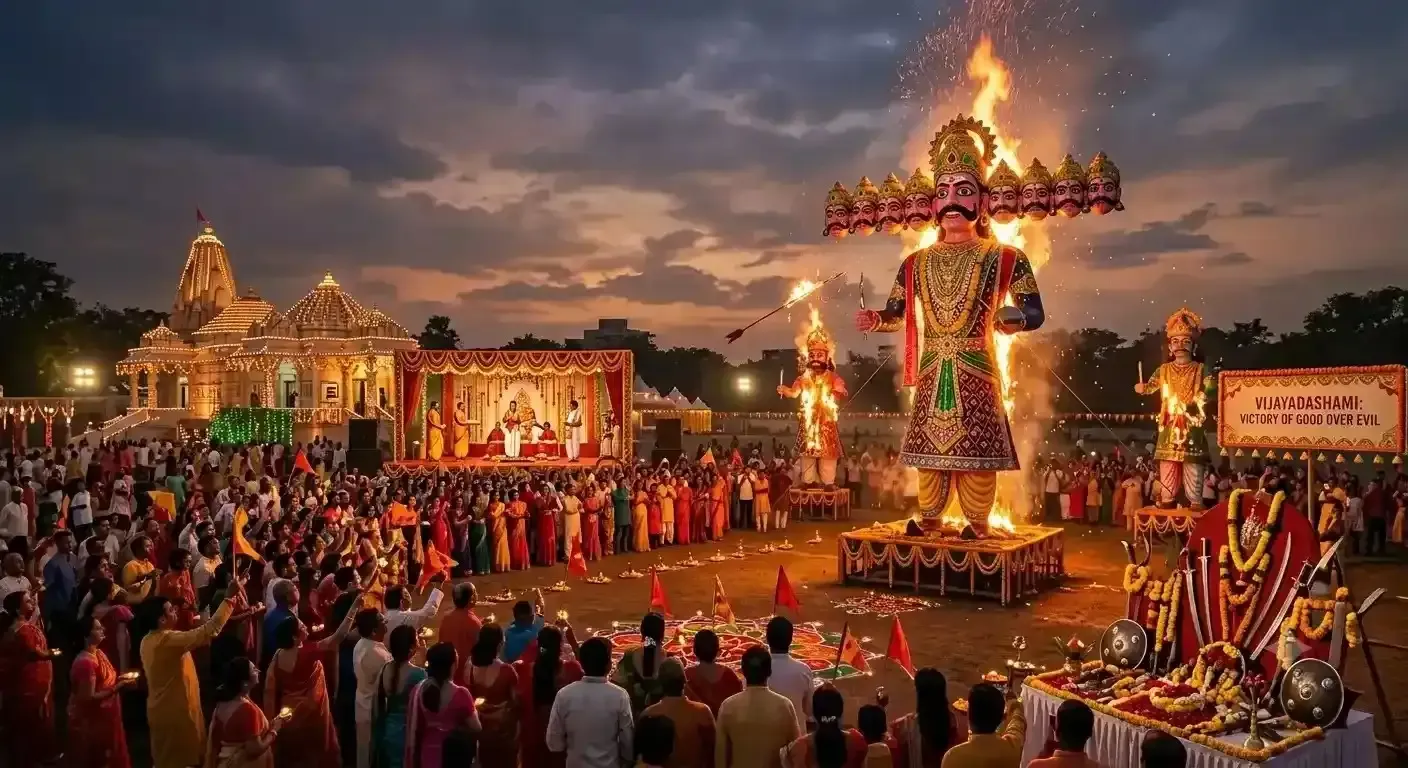
Dussehra 2026 Singapore: Area-by-Area Guide, Dates and Vijay Muhurat
Navratri 2026 in the UK, City by City: Ghatasthapana Times, Garba, Dandiya and Durga Puja