
Jagaddhatri Puja 2026: Date (18 November), Navami Tithi, Chandannagar and Krishnanagar Traditions
Jagaddhatri Puja 2026 falls on Wednesday 18 November 2026, Kartika Shukla Navami, per Drik Panchang. Learn who Goddess Jagaddhatri is, the story behind her worship as commonly told, how Chandannagar and Krishnanagar celebrate, how the puja is done at home, and how Bengali families abroad can take part.
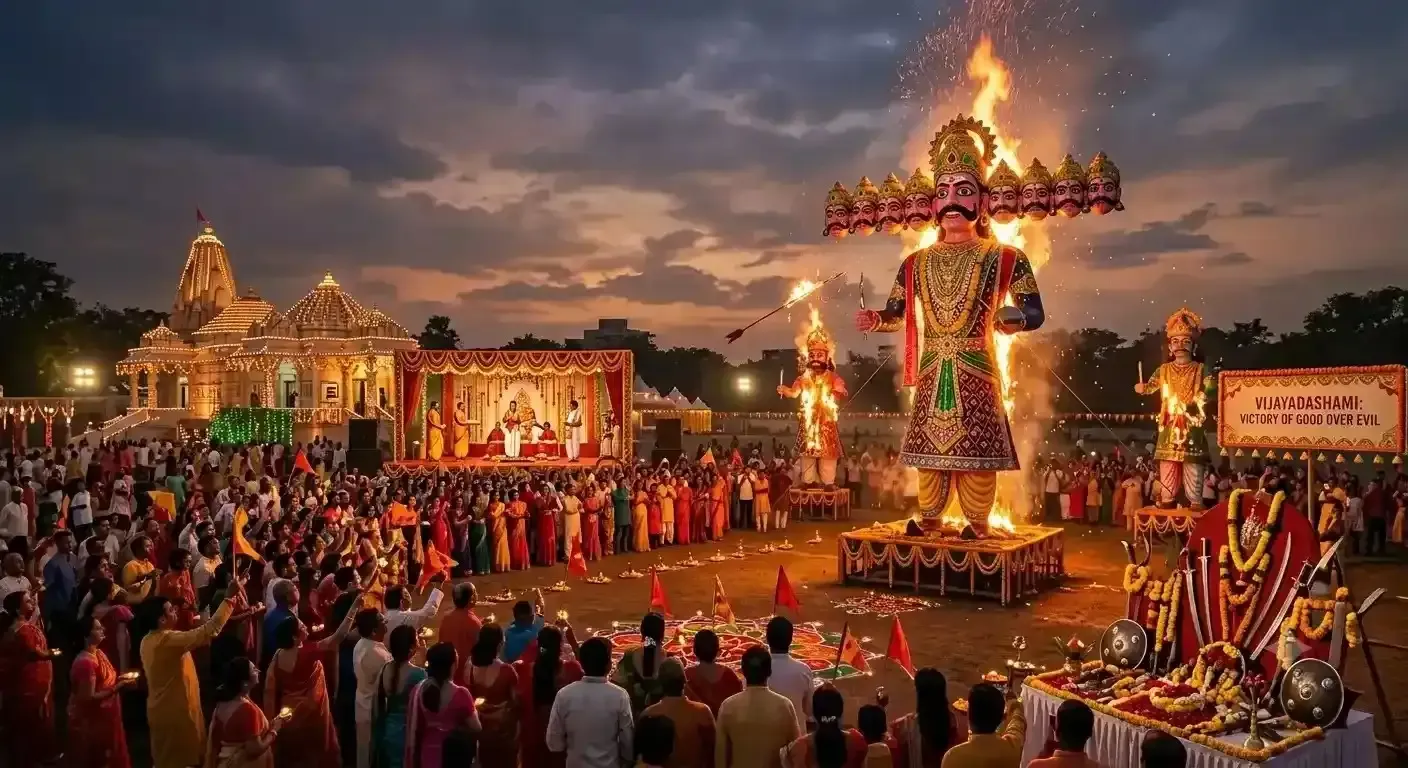
Jagaddhatri Puja 2026 falls on Wednesday 18 November 2026, Kartika Shukla Navami, per Drik Panchang. Learn who Goddess Jagaddhatri is, the story behind her worship as commonly told, how Chandannagar and Krishnanagar celebrate, how the puja is done at home, and how Bengali families abroad can take part.
Quick answer: Jagaddhatri Puja 2026 falls on Wednesday 18 November 2026, which is Kartika Shukla Navami. Drik Panchang for New Delhi lists Jagaddhatri Puja on this day. Navami tithi begins at 06:04 AM on 18 November and ends at 07:05 AM on 19 November (New Delhi, IST). The best-known celebrations are in Chandannagar and Krishnanagar in West Bengal, where many pujas run for several days.
Jagaddhatri Puja comes about four weeks after Durga Puja and Kali Puja. For many Bengali families it is the last great Devi festival of the autumn season. This guide has been restored at its original hindutone.com address.
Jagaddhatri Puja 2026 date and tithi
The table below follows Drik Panchang for New Delhi. All times are IST and apply to New Delhi. Bengali panjikas and puja committees in Kolkata, Chandannagar and Krishnanagar may use their own calculations and local sunrise. Follow your local panjika or puja committee for the exact puja schedule.
| Date (2026) | Day | Tithi (New Delhi, IST) | Sunrise / sunset (New Delhi) |
|---|---|---|---|
| Tue 17 Nov | Gopashtami, Masik Durgashtami | Shukla Ashtami upto 06:04 AM, 18 Nov | 06:45 AM / 05:27 PM |
| Wed 18 Nov | Jagaddhatri Puja, Akshaya Navami | Navami from 06:04 AM | 06:46 AM / 05:26 PM |
| Thu 19 Nov | Navami ends | Navami upto 07:05 AM, then Dashami | 06:47 AM / 05:26 PM |
Navami is in effect at sunrise on both 18 and 19 November in New Delhi. Drik Panchang lists the festival on Wednesday 18 November. We do not give a puja muhurat clock time. Your family priest, panjika or local puja committee will give the timing they follow.
Who is Goddess Jagaddhatri?
The name Jagaddhatri means "the one who holds and sustains the world" (jagat = world, dhatri = holder or nurturer). She is worshipped as a form of Durga, and she is seen as the power that keeps creation in balance.
- Form: She is usually shown with four arms, holding a conch, a discus, a bow and arrows. Her complexion is often shown as golden, like the rising sun.
- Vehicle: She rides a lion. Under the lion lies an elephant, which many people link to a demon in elephant form, often called Karindrasura.
- Meaning: The elephant is often read as pride or the uncontrolled mind, and the lion as the strength that controls it. The goddess sits calmly above both.
- Sacred thread: In many images a serpent is shown as her sacred thread.
The story behind Jagaddhatri Puja, as commonly told
Several stories are linked with this goddess. The best known, as commonly told, comes from the Kena Upanishad.
After a victory over the asuras, the gods Agni, Vayu and Indra became proud. They believed the victory was their own. Brahman, the supreme reality, appeared before them as a mysterious being and placed a single blade of grass in front of them. Agni could not burn it, and Vayu could not blow it away. Then a radiant goddess, Uma Haimavati, appeared and told Indra that the victory belonged to Brahman, not to the gods. Their pride was removed.
In Bengal this goddess, who reveals that all power comes from one source, is often identified with Jagaddhatri. The lesson of the festival is humility: our strength is held and supported by something greater than ourselves.
Chandannagar: the city of lights
Chandannagar, in Hooghly district, is a former French settlement on the Hooghly river. It is the town most closely linked with Jagaddhatri Puja. Its community pujas (barowari pujas) are among the oldest and largest of the festival.
- Lighting: Chandannagar is known across India for its decorative lighting. Local light artists build large illuminated designs along the streets. Many of the same artists also create lights for Durga Puja and other festivals.
- Large idols: Many pandals install tall images of the goddess, often in traditional Bengali styles.
- Immersion processions: The festival ends with immersion processions, which draw large crowds.
- Several days: Many Chandannagar pujas are celebrated over several days around Navami, not only on one day.
We do not list pandals, procession routes or schedules. These change every year. Follow the announcements of the Chandannagar puja committees and the local administration for dates, routes, traffic and safety rules.
Krishnanagar and other traditions
Krishnanagar, in Nadia district, has its own old tradition. As commonly told, Maharaja Krishnachandra Roy of Nadia promoted Jagaddhatri Puja in the 18th century, and it spread from his court to the town and the region. Krishnanagar is also known for its clay-modelling craft, and its pujas and immersion processions are well known.
Jagaddhatri Puja also has a special place in the Ramakrishna tradition. As commonly told, Sri Sarada Devi's family worshipped Jagaddhatri at her birthplace, Jayrambati, and the puja continues there. Many Ramakrishna Math and Mission centres also mark the day.
Smaller pujas take place in homes and neighbourhoods across West Bengal, and in Bengali communities in other states.
How to do a simple Jagaddhatri Puja at home
Family customs differ. Some families do a single-day puja on Navami, in which the Saptami, Ashtami and Navami pujas are performed together. A priest is usually invited for a full puja. For a simple home prayer:
- Clean the puja space. Place a picture or small image of Goddess Jagaddhatri, or of Durga, on a clean cloth.
- Light a ghee or oil lamp and incense.
- Offer red flowers, sandal paste, sindoor, fruit and sweets. Many families also offer the bhog they prepare for Durga Puja.
- Recite a Durga prayer or stotra that your family knows, or simply chant the goddess's name with attention.
- End with aarti and share the prasad with the family.
If you know a Durga or Devi mantra from your family or teacher, use it. Our Lalita Sahasranama guide is a good companion for Devi worship.
Jagaddhatri Puja for Bengali families abroad
Bengali associations in the UK, the USA, Canada, Australia and other countries often hold Durga Puja and Kali Puja. Some also hold a Jagaddhatri Puja, but this is less common.
- Ask your local Bengali association or temple whether they plan a Jagaddhatri Puja. Many community pujas abroad are held on the nearest weekend.
- Use a panchang set to your own city for local Navami times. Do not convert New Delhi IST times to your time zone.
- A home puja on the evening of 18 November, with a lamp, flowers and sweets, is a simple way to keep the day.
- Share photos or a video call with family in Chandannagar or Krishnanagar if you have roots there. It keeps children connected to the tradition.
Other festivals in the same week
Jagaddhatri Puja falls in the Karthika month (amanta). In 2026 the same week includes Gopashtami on 17 November, Akshaya Navami on 18 November and Devutthana Ekadashi on 20 November. See our November 2026 Hindu festival calendar and our Karthika Masam 2026 guide.
Frequently asked questions
When is Jagaddhatri Puja 2026?
Drik Panchang lists Jagaddhatri Puja on Wednesday 18 November 2026. This is Kartika Shukla Navami. In New Delhi, Navami tithi begins at 06:04 AM on 18 November and lasts until 07:05 AM on 19 November (IST).
Who is Goddess Jagaddhatri?
Jagaddhatri means 'the one who holds and sustains the world'. She is a form of Durga. She is usually shown with four arms, riding a lion, with an elephant beneath the lion. She is worshipped mainly in West Bengal.
Why are Chandannagar and Krishnanagar famous for Jagaddhatri Puja?
Both towns have very old Jagaddhatri Puja traditions. Chandannagar is known for its large community pujas and elaborate decorative lighting. Krishnanagar's tradition is commonly linked with Maharaja Krishnachandra Roy of Nadia in the 18th century.
How many days does Jagaddhatri Puja last?
It depends on the place. Some families and committees perform the Saptami, Ashtami and Navami pujas together on Navami day. Others, especially in Chandannagar, celebrate over several days. Follow the schedule announced by your local puja committee.
Is Jagaddhatri Puja the same day as Akshaya Navami?
Yes, in 2026 both fall on Kartika Shukla Navami. Drik Panchang lists Jagaddhatri Puja and Akshaya Navami together on Wednesday 18 November 2026.
Can I do Jagaddhatri Puja at home abroad?
Yes. A simple puja with a picture of the goddess, a lamp, flowers, fruit and sweets is enough for a family. Use a panchang set to your own city for local tithi times, and do not convert India's times to your time zone.
Editor's note
Editor's note (6 October 2026): This guide has been restored at its original address after the earlier version was lost. The date and tithi times come from Drik Panchang for New Delhi and are given in IST. They are not converted to other time zones. Bengali panjikas and puja committees may follow their own schedules, and many pujas run over several days. We do not list events, pandals, routes or timings, which are set by local committees each year. Legends and historical links are given as commonly told.
Related guides
You might also like
Ksheerabdi Dwadashi and Tulasi Vivah 2026 in the UK: Saturday 21 November, a 4 PM Sunset and a Windowsill Tulasi
Karthika Pournami 2026 in Singapore: Date, Purnima Time, Sunset and Deepam Guide
Nagula Chavithi 2026 in Canada: Thursday 12 November, a Day Before India, and How to Keep It in a Canadian November