
Gopashtami 2026: Date, Story of Krishna the Cowherd and Puja Vidhi
Gopashtami 2026 falls on Tuesday 17 November 2026, on Kartika Shukla Ashtami. As commonly told, this is the day young Krishna was first sent to graze the cows. Learn the date and tithi, the story, how cows and calves are worshipped, Braj traditions, and how families abroad can support gaushalas.
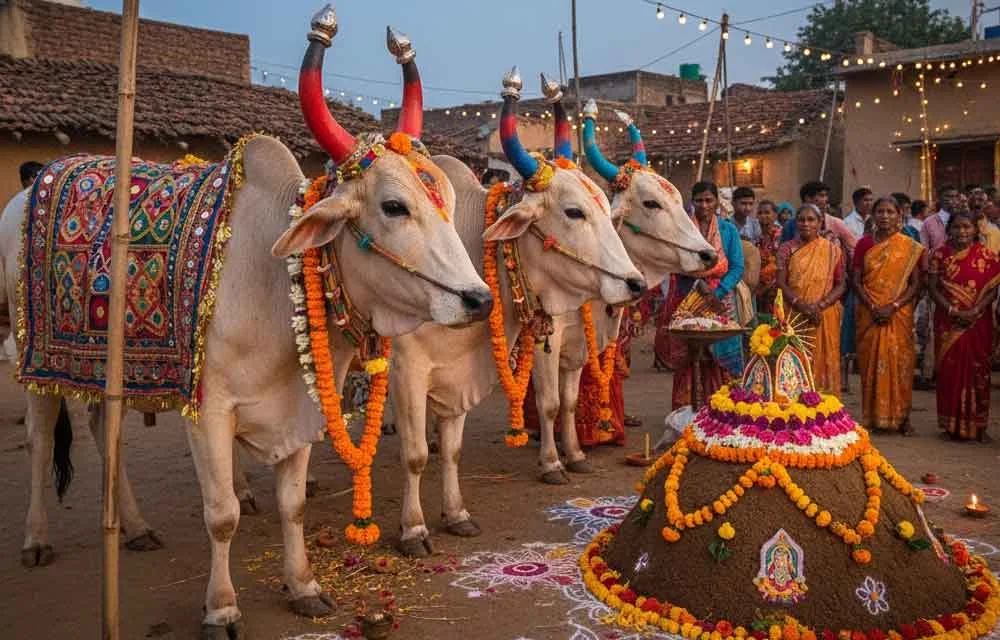
Gopashtami 2026 falls on Tuesday 17 November 2026, on Kartika Shukla Ashtami. As commonly told, this is the day young Krishna was first sent to graze the cows.
Quick answer: Gopashtami 2026 falls on Tuesday 17 November 2026 in India, on Kartika Shukla Ashtami. As commonly told, this is the day young Krishna was first sent out to graze the cows, becoming Gopala, the cowherd. Devotees bathe, decorate and worship cows and calves, feed them, and serve at gaushalas (cow shelters).
This guide has been restored at its original hindutone.com address. Dates and times below are from Drik Panchang for New Delhi. Outside India the date can differ by a day, so check Drik Panchang for your own city.
Gopashtami 2026 date and tithi
| Detail (New Delhi, IST) | 2026 |
|---|---|
| Gopashtami | Tuesday 17 November 2026 |
| Tithi | Kartika Shukla Ashtami, up to 06:04 AM on 18 November |
| Sunrise / sunset | 06:45 AM / 05:27 PM |
| Next day | Akshaya Navami, Wednesday 18 November 2026 |
Source: Drik Panchang, New Delhi. We do not list muhurat clock times. For local timings, check Drik Panchang for your city.
The story of Gopashtami
As commonly told in the Braj tradition, Krishna grew up in Gokul and Vrindavan in the home of Nanda and Yashoda. As a small boy he was only allowed to take the calves out to graze near the village. When he grew a little older, he asked to take the full herd of cows to the forest, like the older cowherds.
Nanda consulted the family priest, who chose Kartika Shukla Ashtami as an auspicious day. That morning Yashoda dressed Krishna and Balarama, and they set out with the cows and the other cowherd boys for the first time. From then on Krishna was Gopala, the protector of cows, and Govinda, the one who gives joy to the cows. Gopashtami remembers this day.
Some tellings also link the day to the Govardhan story, when Krishna lifted Govardhan hill to shelter the people and cattle of Braj from Indra's storm. Details differ between tellings. For that story, see our Govardhan Puja and Annakut 2026 guide.
Why the cow is honoured
In Hindu tradition the cow is seen as a mother figure, called Gau Mata. She gives milk, and in rural life her dung and the labour of oxen once supported farming and the home. She is gentle and gives more than she takes. Many texts and teachers describe serving cows as a meritorious act. Gopashtami is a day to give thanks to her and to Krishna, who loved and protected cows.
Gopashtami puja vidhi
Customs vary between regions and families. A simple, widely followed method where a cow is nearby:
- Wake early, bathe and clean the cowshed or the area where the cow is kept.
- Gently bathe the cow and calf. Decorate them with a garland, a little turmeric or kumkum on the forehead, and a cloth or colourful ribbons if they are comfortable with it.
- Offer worship with incense, a lamp, flowers, akshata (rice) and water.
- Feed the cow fresh green grass, jaggery, chapati or other wholesome food. Do not offer anything that may harm her.
- Do aarti and walk around the cow respectfully (parikrama), keeping a safe distance from her legs.
- Pray to Krishna as Gopala, and touch the cow's back or seek her blessing if she is calm.
- In the evening, when the cows come home, many families greet them again and offer a lamp.
You can chant the name of Krishna, for example 'Om Namo Bhagavate Vasudevaya', or simply sing a Krishna bhajan. If your family has its own Gopashtami prayer, use that.
Gopashtami in Braj and at gaushalas
Gopashtami is especially loved in the Braj region around Mathura, Vrindavan and Govardhan, where Krishna's childhood stories are set. Temples and gaushalas there decorate cows and hold special worship. In many parts of North and West India, gaushalas welcome visitors who come to feed and serve the cows. Some people also visit the cows in their neighbourhood or village.
Gaushala seva can mean feeding the cows, donating fodder, helping clean the shelter, or giving money for medical care of old and sick animals. If you visit a gaushala, follow the staff's guidance.
Gopashtami for NRI families
Most NRI families do not live near cows, but the spirit of the day can still be kept:
- Check your local date: Use Drik Panchang for your city. Do not convert India's times.
- Home puja to Gopala: Place a picture of Krishna with a cow or calf, offer a lamp, tulsi leaves, flowers and a milk sweet, and sing a bhajan.
- Support a gaushala: Many families donate to a gaushala in India or to a temple cow shelter. Choose a shelter you know and trust, and check how donations are used.
- Temple visit: Some Hindu temples abroad keep cows or hold a Gopashtami puja. Check your temple's own website or notice board.
- Kindness to animals: Donating to a local animal shelter or volunteering is a fitting way to honour the meaning of the day.
- Teach children: Tell the story of little Krishna going out with the cows for the first time, and talk about caring for animals.
Frequently asked questions
When is Gopashtami 2026?
Gopashtami 2026 is on Tuesday 17 November 2026 in India, per Drik Panchang for New Delhi. It falls on Kartika Shukla Ashtami.
Why is Gopashtami celebrated?
As commonly told, on this day young Krishna, with his brother Balarama, was first allowed to take the cows out to graze. Before this he had looked after only the calves. The day honours Krishna as Gopala, the protector of cows, and the cow as a giver of life.
How is cow puja done on Gopashtami?
Cows and calves are bathed, decorated, given tilak and garlands, and fed fresh grass, jaggery and other wholesome food. Devotees then pray, do aarti, walk around the cow with respect and seek her blessings.
What can I do if there is no cow near me?
You can worship Krishna as Gopala with a picture of him with a cow, offer food or a donation to a gaushala, or feed animals in need. Sincere seva counts more than the place.
Is there a muhurat time for Gopashtami 2026?
We do not give a muhurat clock time here. In New Delhi the Ashtami tithi lasts until 06:04 AM IST on 18 November, per Drik Panchang. For local timings, check Drik Panchang for your city.
Is the date the same outside India?
Not always. The date abroad can differ by a day from India. Check Drik Panchang for your own city.
Editor's note
Editor's note (6 October 2026): This guide has been restored at its original address after the earlier version was lost. The date, tithi end time and sunrise and sunset times are from Drik Panchang for New Delhi and are given in IST only. We have not listed muhurat clock times, events or venues. The stories are presented as commonly told, and customs vary by region. Readers outside India should check Drik Panchang for their city.
Related guides
You might also like
Bhai Dooj 2026 in the UK: Tuesday 10 November, a Day Before India, with Tilak Vidhi, Story and Ideas for Siblings Apart
Bhai Dooj 2026 in Australia: Wednesday 11 November, the Same Day as India, with Tilak Vidhi and Tips for Siblings Overseas
Bhai Dooj 2026 in the UAE: Tuesday 10 November, a Day Before India, with Tilak Vidhi and Ideas for Siblings Back Home