
Krishna in the Mahabharata: His Role, Book by Book
Quick answer: Krishna in the Mahabharata is the Pandavas' cousin, friend and guide. He takes no weapon in the Kurukshetra war but serves as Arjuna's charioteer, and before the battle he teaches him the Bhagavad Gita. Earlier he goes to the Kuru court as a peace envoy; afterwards he accepts Gandhari'
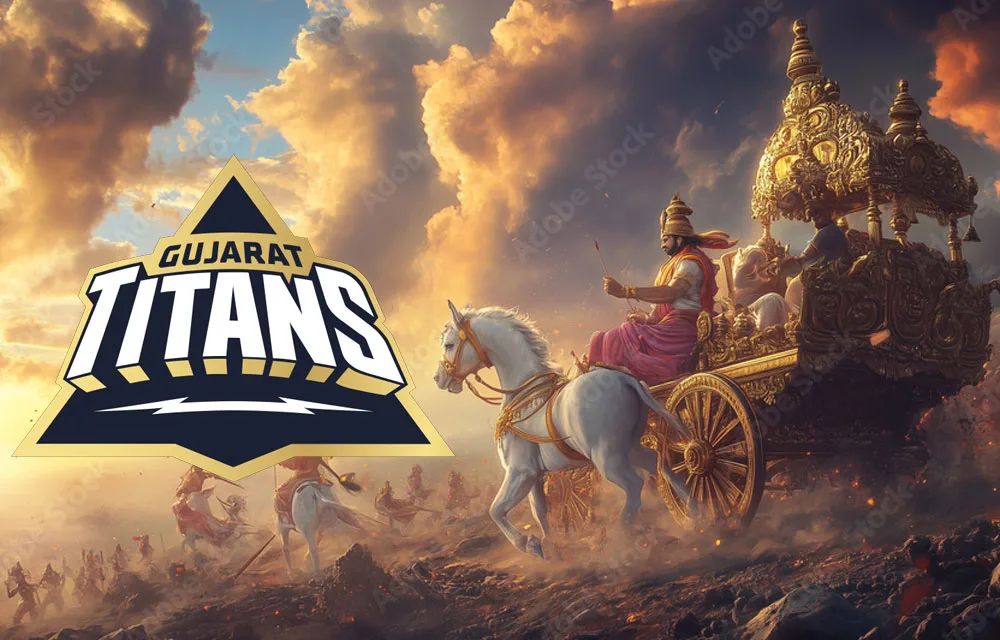
Quick answer: Krishna in the Mahabharata is the Pandavas' cousin, friend and guide. He takes no weapon in the Kurukshetra war but serves as Arjuna's charioteer, and before the battle he teaches him the Bhagavad Gita. Earlier he goes to the Kuru court as a peace envoy; afterwards he accepts Gandhari's curse, and he dies at the end of the epic, struck in the foot by a hunter's arrow.
This page follows Vyasa's Mahabharata in the critical edition (Bhandarkar Oriental Research Institute, Pune). References are book.chapter.verse in that edition. Krishna's childhood in Gokula and Mathura is not told in the main epic; it comes from the Harivamsha, an appendix to the Mahabharata, and from the Puranas. For Krishna as the eighth avatar of Vishnu, see Krishna Avatar.
| Krishna in the Mahabharata at a glance | |
|---|---|
| Also called | Vasudeva, Keshava, Govinda, Janardana, Madhava, Hrishikesha |
| Family | Son of Vasudeva and Devaki; brother of Balarama and Subhadra; cousin of the Pandavas (Kunti was Vasudeva's sister) |
| City | Dvaraka (Dvaravati), on the western sea |
| Role in the war | Arjuna's charioteer; took no weapon |
| Main episodes | Draupadi's svayamvara, Khandava forest, Rajasuya, peace mission, Bhagavad Gita, the war, Gandhari's curse, death at Dvaraka |
| Teachings | Bhagavad Gita (6.23 to 6.40); Anugita (Ashvamedhika Parva) |
When does Krishna first meet the Pandavas?
At Draupadi's svayamvara in Panchala. After Arjuna wins Draupadi, Krishna and Balarama go to the potter's house where the Pandavas are staying in disguise. Krishna touches Yudhishthira's feet and says, "I am Krishna." Asked how he recognised them, he laughs: a fire stays a fire even when it is hidden (1.183.1 to 9).
Krishna and Arjuna before the war
Krishna and Arjuna are close friends from then on.
- Subhadra. When Arjuna falls in love with Krishna's sister Subhadra, Krishna advises him to carry her off, as a kshatriya may, and the two later marry (1.211 to 1.213).
- The Khandava forest. The fire god Agni asks Krishna and Arjuna to help him burn the Khandava forest. For the task Agni gives Arjuna the bow Gandiva and Krishna the discus (chakra) with a diamond nave, and Varuna gives Krishna a mace (1.216.4 to 25).
- The Rajasuya. Before Yudhishthira's royal sacrifice, Krishna says that King Jarasandha of Magadha must first be removed, and goes with Bhima and Arjuna to Girivraja, where Bhima kills Jarasandha in a wrestling match (2.13 to 2.22). At the sacrifice itself, Bhishma names Krishna for the first honour. Shishupala, king of Chedi, objects and insults Krishna at length; Krishna cuts off his head with the discus (2.42.21).
Where was Krishna during the game of dice?
Not at Hastinapura. In the critical edition, Krishna is not called upon in the dice hall; when Draupadi is dragged in and Duhshasana pulls at her garment, new garments simply keep appearing (2.61.41). The scene in which Draupadi prays to Krishna and he sends the cloth belongs to later versions of the text. See Draupadi in the Mahabharata.
When Krishna later visits the Pandavas in the forest, he tells Yudhishthira that this disaster would not have happened had he been in Dvaraka: he would have come unasked and stopped the game. He had been away fighting King Shalva of the flying city Saubha (3.14.1 to 4 and the chapters that follow).
Arjuna chooses Krishna, Duryodhana takes his army
Before the war, Arjuna and Duryodhana both came to Dvaraka on the same day to ask Krishna for help. Duryodhana arrived first and sat at the head of the sleeping Krishna; Arjuna stood at his feet. Krishna, seeing Arjuna first on waking, offered a choice: on one side a great army of cowherd warriors, the Narayanas; on the other, himself alone, taking no part in the fighting. Arjuna, as the younger, chose first, and chose Krishna. Duryodhana took the army and went away pleased (5.7.5 to 21). Arjuna then asked Krishna to be his charioteer, and Krishna agreed (5.7.34 to 35).
The peace mission to Hastinapura
The Pandavas had asked for as little as five villages, one for each brother (5.31.20). Krishna went to the Kuru court himself to seek peace. He refused Duryodhana's hospitality and stayed in the house of Vidura (5.89). In the assembly he urged the Kauravas to make peace; Duryodhana refused, and planned to seize him. Krishna laughed and showed his divine form: gods came forth from his body, Brahma on his forehead and Rudra on his chest, with Arjuna, Balarama and the Pandavas around him. The kings shut their eyes in fear; only Drona, Bhishma, Vidura, Sanjaya and the sages were given divine sight to see it (5.129.1 to 15).
On his way back he took Karna in his chariot and told him that he was Kunti's eldest son, so that the Pandavas would accept him as their king if he joined them (5.138). Karna refused. See Karna's story.
The Bhagavad Gita
As the armies stood ready at Kurukshetra, Arjuna saw his grandfather, teacher and kinsmen ranged against him and put down his bow. Krishna's reply is the Bhagavad Gita, chapters 6.23 to 6.40 of the critical edition. In it he reveals himself to Arjuna as the supreme being, and shows him the universal form. Two of its best-known verses are explained on separate pages: 2.47, on action without attachment to results, and 4.7 and 4.8, on why he comes age after age.
Krishna during the war
Krishna keeps his promise not to fight, with two near-exceptions, and his advice decides several turns of the war.
- Against Bhishma. On the third day, and again on the ninth, angry that Arjuna was holding back, Krishna jumped down from the chariot and rushed at Bhishma, first with his discus and then with his whip; Arjuna stopped him the first time by promising to fight in earnest (6.55, 6.102). See the Bhishma Parva summary.
- Jayadratha. On the fourteenth day Arjuna had sworn to kill Jayadratha before sunset. In the critical edition Krishna urges him on as the sun sinks, and Arjuna kills Jayadratha just before it sets (7.121). The popular story that Krishna hid the sun with darkness to draw Jayadratha out is not in this edition's text.
- Ghatotkacha. When Karna used his one-time divine spear to kill Bhima's son Ghatotkacha, Krishna danced for joy, because the weapon that Karna had kept for Arjuna was now spent (7.155.2 to 3).
- Drona. Krishna advised that Drona could be stopped only by news of his son's death. Bhima killed an elephant named Ashvatthaman and shouted that "Ashvatthaman is dead" (7.164.72), and Yudhishthira confirmed it to Drona. See Drona and Ashwatthama.
- Karna. When Karna's chariot wheel sank and he appealed to fair play, Krishna asked him where his sense of dharma had been when Draupadi was mocked in the assembly and when the dice were played with Shakuni's help (8.67.1 to 5).
- Duryodhana. In the final mace fight, Krishna told Arjuna that Bhima could not win fairly; Arjuna struck his own thigh as a signal, and Bhima broke Duryodhana's thighs (9.57). See Duryodhana in the Mahabharata.
The epic does not hide that some of these moves broke the rules of fair combat. The dying Duryodhana accuses Krishna of them (9.60.26 to 30), and Krishna tells the troubled Pandavas that Bhishma, Drona, Karna and Duryodhana could not have been killed in a fair fight, so he had devised these means (9.60.57 to 60).
After the war
- Ashvatthaman's weapon. Ashvatthaman turned his weapon against the unborn children of the Pandava line. Krishna cursed him to wander for three thousand years (10.16.10) and later revived Parikshit, Abhimanyu's son, who was born dead (14.66 to 14.69).
- Gandhari's curse. Grieving over her hundred sons, Gandhari blamed Krishna for not stopping the war, and cursed him: in the thirty-sixth year his own kinsmen would kill one another, and he would die in the forest by an ignoble means (11.25.36 to 42). Krishna answered with a slight smile that he already knew no one but he could end the Vrishni clan (11.25.43 to 44).
- The Anugita. When Arjuna admits he has forgotten what he heard on the battlefield, Krishna teaches him again, in the Anugita of the Ashvamedhika Parva.
- Bhishma's teaching. Krishna sends Yudhishthira to the dying Bhishma for instruction, which fills the Shanti and Anushasana Parvas.
How did Krishna die?
In the Mausala Parva, thirty-six years after the war, the Vrishni and Andhaka clans destroyed each other in a drunken brawl, as Gandhari had foretold. Balarama left his body in yoga. Krishna lay down in the forest, absorbed in meditation, and a hunter named Jara, mistaking him for a deer, shot an arrow into the sole of his foot (16.5.19 to 20). When the hunter saw whom he had struck and fell at his feet, Krishna comforted him and rose to his own abode (16.5.21 to 23). Arjuna came to Dvaraka, performed the last rites and led the survivors away; the sea then covered the city (16.8). Hearing this, the Pandavas set out on their final journey.
Frequently asked questions
Did Krishna fight in the Mahabharata war?
No. He chose to take no weapon and served as Arjuna's charioteer (5.7.17, 5.7.35). Twice he rushed at Bhishma in anger, and twice Arjuna or events held him back.
Who chose Krishna's army?
Duryodhana. Arjuna chose Krishna alone; Duryodhana took the Narayana army (5.7.19 to 21).
Did Krishna save Draupadi in the dice hall?
In the critical edition, Krishna is not invoked; the garments keep appearing without explanation (2.61.41). The prayer to Krishna is a later addition that is now the best-known form of the story.
Did Krishna show the universal form only to Arjuna?
No. He shows a divine form in the Kuru court during the peace mission (5.129), and the universal form to Arjuna in the Gita (chapter 11).
How old was Krishna at the time of the Mahabharata war?
The text does not say. Ages for Krishna that circulate online are later calculations, not statements of the epic.
What was Gandhari's curse on Krishna?
That in the thirty-sixth year his kinsmen would destroy one another and he would die in the forest by an ignoble means (11.25.40 to 41).
Where is the story of Krishna's childhood?
In the Harivamsha, an appendix to the Mahabharata, and in the Bhagavata and Vishnu Puranas, not in the eighteen books of the epic.
Related reading
- Mahabharata: The Complete Guide
- Mahabharata story summary
- Arjuna in the Mahabharata
- Draupadi in the Mahabharata
- Who survived the Kurukshetra war?
- Bhagavad Gita 18.66 meaning
Sources
- The Mahabharata, critical edition (Bhandarkar Oriental Research Institute, Pune, 1933 to 1966); electronic text BORI 1999, via Indology: indology.info/bombay/mahabharata. References are book.chapter.verse in this edition.
Last reviewed: 12 November 2026.
Share this with family and friends
Send it on WhatsApp, post it, or copy the link.
More from Stories
- The Ramayana Beyond India: Ramakien, Reamker, Kakawin and More
- Adhyatma Ramayana and Kerala's Ramayana Month
- Telugu Ramayanas: Ranganatha Ramayanam, Bhaskara Ramayanam and Molla Ramayanam
- Kamba Ramayanam: Kambar's Tamil Ramayana
- Ramayana Quotes with Source and Meaning